
A dual-threat quarterback is a passer who can beat defenses both from the pocket and as a designed or improvised runner, while still executing a full offense. In modern college and NFL play, “dual-threat” describes a complete decision‑maker whose mobility amplifies, not replaces, high‑level reading, timing, accuracy, and situational control.
Defining the modern dual-threat quarterback
- Primary identity is still a quarterback: process coverage, manage protections, throw with timing and anticipation.
- Run threat is both designed (zone read, QB power, RPO keepers) and improvised (scramble, escape, relocate).
- Forces defenses to allocate an extra hat to quarterback run, changing math in the box and coverage choices.
- Extends plays horizontally and vertically, turning broken plays into explosives rather than sacks.
- Requires tailored weekly game plans, not a separate playbook, to leverage mobility against specific defenses.
- Durability and decision discipline (when to slide, throw away, or check down) are core to long‑term value.
Debunking common myths about dual-threat quarterbacks
Dual-threat does not mean “run-first” or “can’t read the field.” The label often gets misused for any athletic passer, but at serious college and NFL levels it marks someone who meets traditional quarterback standards and adds a credible designed run and off‑script layer.
Another myth: dual-threat quarterbacks are only products of spread systems. In reality, their tools translate into under‑center, pistol, and condensed formations as long as protections and route structures respect the added run threat. They can operate full-field progressions and timing concepts while still stressing edges with keeper and boot action.
A final misconception is that you must completely redesign your offense. Most staffs instead build a modular package: 8-15 core concepts that tag into existing calls. When you watch the best dual threat quarterbacks in college football, you rarely see a brand‑new playbook; you see familiar concepts with movement, RPO tags, and QB run attachments.
Practical implications for coaches and scouts:
- Evaluate dual-threat prospects on passing floor first; mobility is a force multiplier, not a substitute.
- When building a dual threat quarterback training program, prioritize coverage ID, protection rules, and decision‑making ahead of fancy scramble drills.
The evolution of the dual-threat archetype in college and the NFL
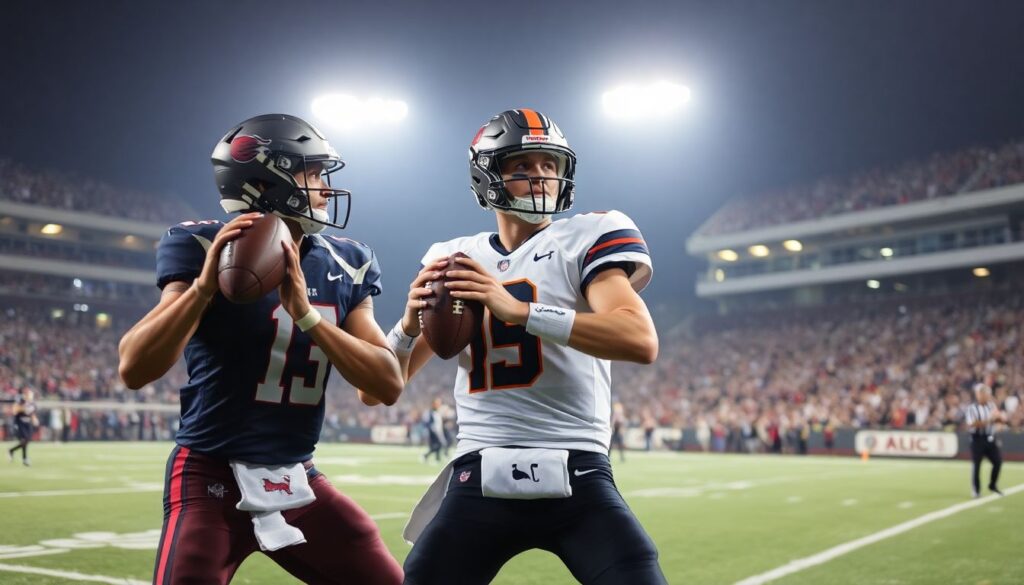
- Option roots in college football: Early dual-threats came from option and wishbone systems where the quarterback was a primary runner. Passing concepts were limited, but defenses already had to allocate a “QB player,” foreshadowing today’s conflict defenders.
- Spread and zone read integration: As shotgun spread offenses grew, quarterbacks began reading a single defender post‑snap (DE or OLB) to decide handoff or keep. This created simple dual‑threat decisions while keeping the playbook manageable.
- RPO and quick‑game marriage: Offenses added backside slants, hitches, and glance routes to run actions. Now dual-threats made run / keep / throw decisions in one concept, demanding better processing and ball handling.
- Pro-style hybrids in the NFL: NFL coordinators imported college staples-zone read, QB power, sprint‑outs-then layered full‑field progressions and protection shifts. Mobile quarterbacks now run condensed sets, under‑center play‑action, and traditional dropback alongside movement plays.
- Data-driven fourth down and red zone usage: Teams increasingly call QB runs in high‑leverage spots where one extra hat in the run game swings the numbers. Dual‑threats became central tools in short yardage, goal line, and two‑point situations.
- Scouting and cap strategy: With rookie contracts and athletic quarterbacks, teams build entire personnel groupings around the quarterback’s mobility window, then adjust as he ages and running volume naturally declines.
For practitioners this history matters because it shows you do not need to copy a whole system. You can layer zone read, boot, and RPOs onto your existing language in stages, aligning them with your quarterback’s current comfort level.
Athletic and cognitive skillset that separates true dual-threats
True dual-threat value comes from a blended toolbox, not just a 40‑yard dash time. Below are key application scenarios where skills show up clearly on film and in practice.
- Post-snap conflict reads: Quarterback meshes with the back, eyes on a defined defender (end, overhang, safety). He must process that defender’s leverage, react in real time, and choose give / keep / throw. This showcases short‑range decision‑making and ball-handling under pressure.
- Pocket movement with eyes up: Sliding, stepping up, and escaping laterally while retaining throwing posture is more valuable than pure top‑end speed. The best dual-threat quarterbacks in college football consistently turn free rushers into off‑schedule completions, not just scrambles.
- Structured QB run concepts: QB power, counter, draw, and speed option require vision, pad level, and contact balance similar to a running back. Dual-threats also must understand blocking schemes and landmarks to set up pullers and use their linemen effectively.
- Coverage recognition into answers: Pre‑snap, the quarterback must identify shell, pressure indicators, and weak spots. Post‑snap, he confirms and gets to his answers: hot throws, checkdowns, or run escapes. The cognitive load increases because defensive coordinators treat him as both runner and passer.
- Situational management: On third‑and‑medium or red zone, a dual-threat must understand when the most efficient play is a quick scramble for a first down versus forcing a contested throw. That situational awareness is heavily weighted in dual threat quarterback scouting reports NFL draft processes.
- Durability decisions: Sliding, stepping out of bounds, or throwing the ball away are skill decisions that protect the quarterback. Coaching this discipline is essential in any dual threat quarterback training program if you want a sustainable offensive identity.
For coaches and trainers, tie each physical drill to one of these scenarios: if you cannot describe where a drill shows up on Saturdays or Sundays, it is probably not worth the reps.
Offensive schemes and play-calling built for mobile quarterbacks
Designing for a dual-threat quarterback is less about creating exotic plays and more about sequencing concepts that make the same defenders wrong repeatedly. Below are common advantages and constraints to manage.
Strategic advantages of dual-threat offense design
- Numbers in the run game: Quarterback run eliminates the “unblocked” defender, allowing five linemen to handle five defenders and the quarterback plus back to outnumber remaining hats.
- Stress on edges and flats: Boot, sprint‑out, and read-option force flat defenders to choose between run fit and coverage, opening quick throws or QB keepers.
- Explosives from broken plays: Scramble rules and receivers converting routes punish man coverage and heavy blitz, turning potential sacks into chunk gains.
- Red zone efficiency: In compressed space, quarterback draw, power, and shovel options turn stalled drives into touchdowns, especially near the goal line.
- Protection flexibility: Movement pockets and quick-game with run action can neutralize elite pass rushers without always sliding help or chipping.
Structural limitations and coaching constraints
- Hit volume and cumulative wear: Frequent designed QB runs and late scrambles increase contact. You must cap weekly carry counts and teach clear rules for contact avoidance.
- Scheme dependency on one player: If your backup lacks similar mobility, your offense may shrink dramatically after an injury. Install a pared‑down package your QB2 can handle.
- Complex practice scripting: Defenses need extra scout‑team time to simulate reads and QB runs, which can compress installation windows for other concepts.
- Passing development risk: If play calls lean too heavily on QB run early in a player’s career, he may lag in progression reads and pocket mechanics.
- Game‑plan predictability: Overusing the same read or QB power concept in key situations lets defenses “chase ghosts” less and trigger aggressively.
Practical application: tag QB run and movement concepts to specific situations-short yardage, red zone, two‑minute changeups-rather than spamming them. Build weekly menus that protect your quarterback while stressing the exact defenders you want to attack.
Recruiting, coaching and development pathways from college to pros
From high school to the NFL, mislabeling and misuse can stall or even derail a dual-threat quarterback’s career. Understanding common mistakes helps you design better paths.
- Overweighting track speed in recruiting: Many staffs lean too heavily on straight‑line athletic testing when scanning dual threat quarterback recruiting rankings. You need game tape of processing, anticipation, and base‑level accuracy before betting on mobility.
- Underdeveloped pass-game curriculum: Some programs give their mobile quarterback a watered‑down passing tree, which stunts growth. Instead, install core dropback concepts, then add QB run and RPOs, not the other way around.
- No bridge between high school and college systems: A dual threat quarterback camp for high school players should introduce language and structures they will see at the next level: protections, hot rules, and simple coverage tags, not just combine testing and 7‑on‑7 fades.
- Fragmented offseason development: Quarterbacks often bounce between private trainers, team coaches, and camps without a shared plan. Align these around a written development map for footwork, reads, and situational mastery.
- Misread NFL projection: Dual threat quarterback scouting reports NFL draft evaluators respect usually emphasize how a player wins as a passer on third‑and‑long and two‑minute. College coaches should intentionally script reps in those situations to build a translatable portfolio.
- Poor communication on role and timeline: Without honest conversations about short‑term packages versus long‑term starter plans, a mobile quarterback may be pigeonholed as a gadget player. Clear phased roles keep buy‑in and development aligned.
Coaches at every level should connect recruiting pitches, in‑season usage, and offseason work into one coherent path; otherwise you risk burning the athlete’s body without raising his quarterbacking ceiling.
Quantifying value: metrics, situational impact and draft consequences
To properly value a dual-threat quarterback you must go beyond total rushing yards. Focus on how his mobility changes outcomes on key downs, forces defensive calls, and sustains drives.
- Conversion-focused metrics: Track third‑ and fourth‑down conversion rate when the quarterback runs, scrambles, or extends a play versus when he stays static.
- Red zone and goal-line impact: Measure touchdown rate on drives that include at least one designed QB run or scramble compared to drives without such plays.
- Pressure response: Record EPA (or simple yardage differential) on plays with unblocked or free rushers when the quarterback is mobile versus non‑mobile options.
- Defensive behavior shifts: Chart how often defenses use spies, mush‑rush, or zone‑heavy calls; note how this opens specific route concepts for explosives.
- Durability-adjusted value: Weigh all of the above against games started and missed due to injury to understand sustainable usage levels.
Here is a simplified way a staff might evaluate drive outcomes with and without QB mobility involvement:
// Pseudocode for internal self-scout
for each drive in season:
    if drive.includesDesignedQbRun or drive.includesScrambleExplosive:
        mobilityBucket.drives += 1
        mobilityBucket.points += drive.points
    else:
        staticBucket.drives += 1
        staticBucket.points += drive.points

mobilityPPD = mobilityBucket.points / mobilityBucket.drives
staticPPD   = staticBucket.points / staticBucket.drives
If your mobilityPPD meaningfully exceeds staticPPD without a spike in missed games, you likely have room to feature your quarterback’s legs more. This type of internal study should then inform how you design your dual threat quarterback training program and in‑season load management.
Quick clarifications and persistent misconceptions
Is a dual-threat quarterback just any fast quarterback?
No. Dual-threat status implies a quarterback can execute a full passing offense and also function as a designed and improvised runner. Pure speed without reading coverage, managing protections, and throwing accurately does not meet the standard at serious college or NFL levels.
Do dual-threat quarterbacks get hurt more often than pocket passers?
They are exposed to more hits if you overuse designed runs or if they do not slide and get out of bounds. With smart play‑calling and strict contact rules, many dual-threats manage healthy seasons, but durability planning must be part of your offensive design.
Can a high school dual-threat succeed in a pro-style college system?
Yes, if development emphasizes protections, progression reads, and timing throws early. A dual threat quarterback camp for high school players should introduce these elements so the athlete is not shocked by terminology and mental load on day one of college.
How should I design a training plan for a dual-threat quarterback?
Start with core quarterback skills: footwork tied to routes, coverage ID, and progression work. Then integrate movement drills and structured QB run reads. A well‑built dual threat quarterback training program balances passing volume with situational run and scramble practice.
Are dual-threat traits valued in NFL draft evaluations?
Yes, but as a complement to passing skill. Dual threat quarterback scouting reports NFL draft decision‑makers trust highlight how mobility extends plays, unlocks certain schemes, and affects key downs, while still grading ball placement, decision‑making, and pocket feel as primary factors.
Do recruiting rankings accurately capture dual-threat potential?
Recruiting services offer a snapshot, but dual threat quarterback recruiting rankings often overweight pure athletic traits and highlight tape. College staffs still need independent evaluations focused on processing, accuracy, and how the player wins in high‑leverage situations.
Should every offense chase a dual-threat quarterback?
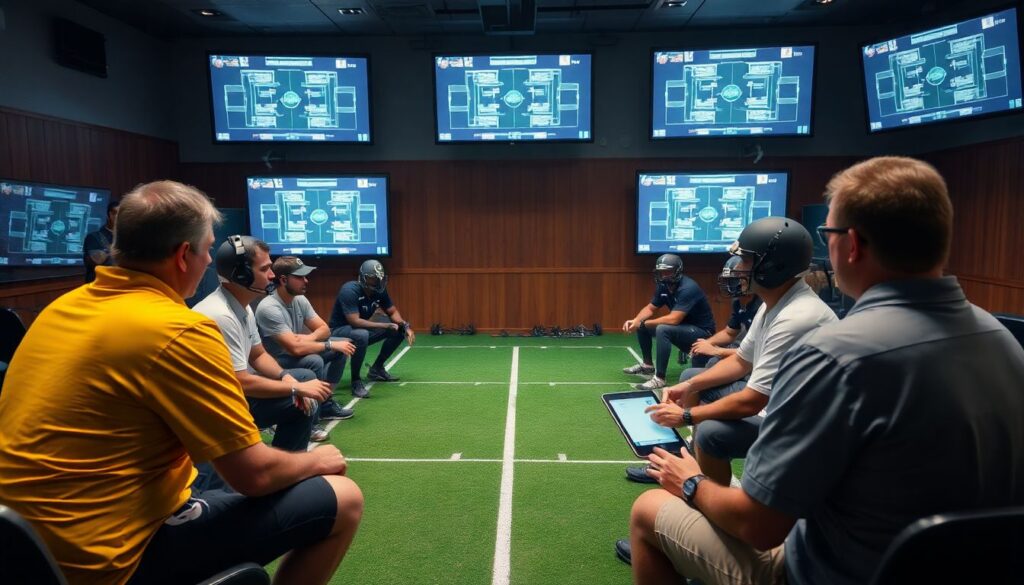
Not necessarily. Personnel, coordinator experience, and depth at quarterback and offensive line all matter. If you cannot protect a mobile quarterback or do not have time to teach post‑snap run‑pass reads, a more traditional profile might be safer for your program.