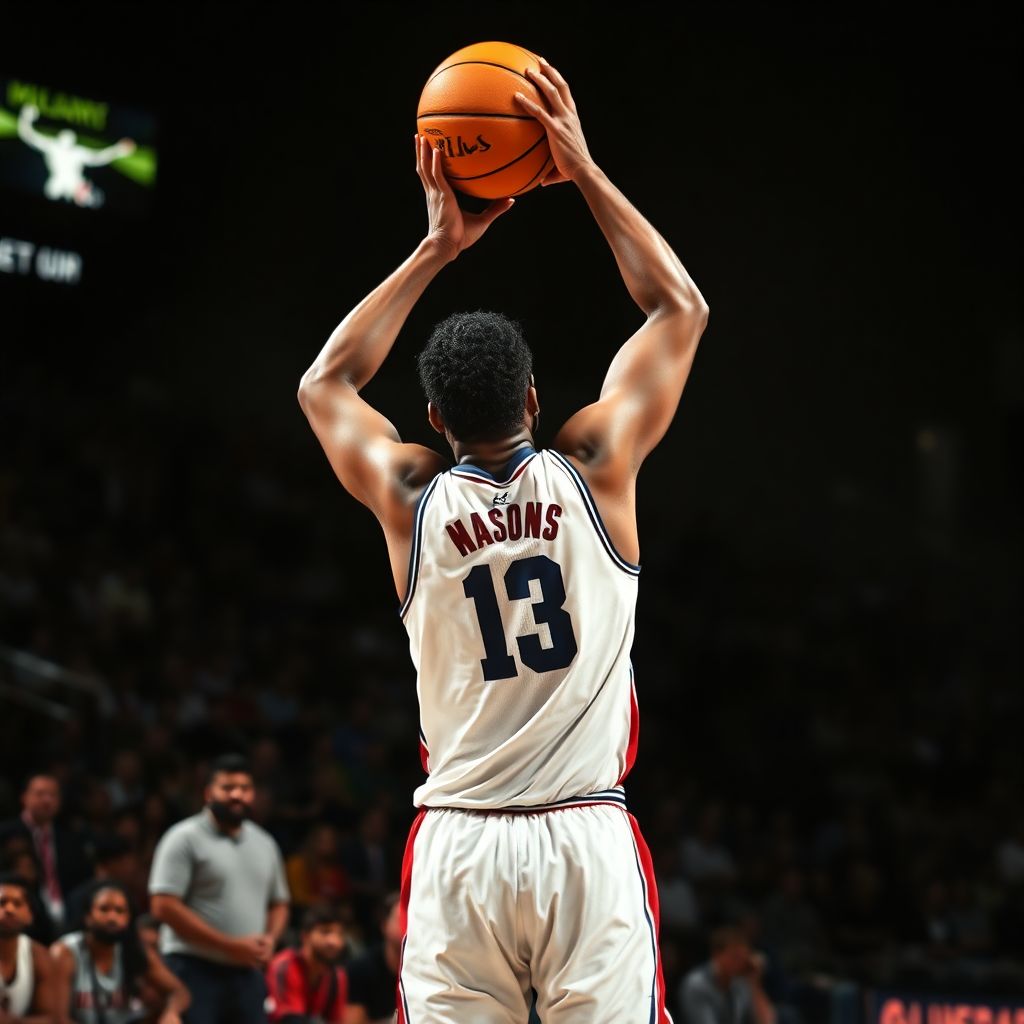
Clutch performance in high-stakes playoff games is the ability to execute at or above one’s typical level precisely when the outcome is most consequential. It involves maintaining effective attention, emotion regulation, and decision-making under intense pressure, so that well-learned skills emerge reliably instead of collapsing into hesitation, panic, or overcontrol.
Core Psychological Mechanisms Behind Clutch Moments
- If an athlete can narrow attention to task-relevant cues, then distractions from crowd, stakes, and consequences have less impact on execution.
- If arousal is interpreted as readiness instead of danger, then physiological stress supports, rather than disrupts, coordinated movement.
- If skills are automated through deliberate practice, then high-pressure situations trigger fluent action instead of self-conscious overthinking.
- If the athlete holds a clear, simple performance cue (process goal), then decision-making under pressure becomes faster and more accurate.
- If confidence is grounded in prior successes and preparation, then momentary mistakes are less likely to spiral into panic or shutdown.
- If the team shares a practiced late-game script, then individual stress is reduced because roles and responses are predictable.
Defining Clutch Performance: Cognitive and Emotional Markers
Clutch performance refers to reliably strong execution during critical, high-pressure phases of competition, such as playoff elimination games or final possessions. It is not luck or streakiness; it is the capacity to access one’s existing skill under extreme stakes, rather than a mysterious extra gear that appears from nowhere.
Cognitively, clutch moments are marked by selective attention, simplified thinking, and rapid pattern recognition. If an athlete can keep working memory focused on one or two controllable cues (for example, follow-through and breath), then intrusive thoughts like “do not miss” or “what if we lose” have less bandwidth to interfere.
Emotionally, clutch performance combines high intensity with relative calm. The athlete may feel the magnitude of the moment, but emotions are channeled into determination, challenge, and commitment. If fear, shame, or catastrophizing dominate, then the same physiological arousal that could help performance instead amplifies muscle tension and decision paralysis.
For coaches seeking practical sports psychology for athletes, it is useful to frame clutch as the ability to reproduce normal training performance in abnormal, playoff-level conditions. If you define “success” as consistent execution of controllable behaviors rather than only outcomes, then players have a clearer, trainable target for clutch behavior.
Stress Physiology and Decision-Making Under Playoff Pressure
-
Arousal and the body’s threat response
If an athlete interprets pre-game nerves as a sign of danger, then heart rate, muscle tension, and breathing become chaotic, increasing the risk of rushed decisions. If they reinterpret the same sensations as readiness (“my body is primed”), then arousal supports explosiveness and focus. -
Attentional narrowing and tunnel vision
Under playoff pressure, attentional focus often narrows. If the athlete has been trained to lock onto the right cues (ball, target, read), then this narrowing filters out noise. If they fixate on outcome or fear, then tunnel vision blinds them to open teammates, tactical options, or timing windows. -
Working memory overload
Stress adds extra thoughts about consequence and judgment. If the athlete tries to consciously control every technical detail, then working memory overloads and movement becomes stiff. If they use one or two simple performance cues, then the brain can allocate resources to perception and decision speed. -
Risk perception and decision bias
In high-stakes playoff situations, players often overweigh potential failure. If a player is anchored to “do not make a mistake,” then they will avoid necessary risks, pass up open looks, or hesitate. If they are anchored to “commit to the best available option,” then they choose assertively and live with the result. -
Time pressure and anticipation
When the game clock or shot clock is low, decision windows shrink. If athletes have trained under simulated time pressures, then their brains anticipate patterns and decide almost automatically. If they rarely experience tight clocks in practice, then playoff time pressure feels novel and overwhelming. -
Team contagion effects
Stress is contagious. If key leaders regulate their breath, posture, and tone, then teammates often mirror calm and clarity. If leaders show visible panic or blame, then group physiology rises and collective decision-making deteriorates at the exact moment it is most needed.
Experience, Skill Automation, and Mental Representation
Clutch performance rests heavily on automaticity. When core skills are overlearned, the brain can execute them with minimal conscious control, even under stress. If an athlete requires conscious step-by-step self-talk for basic skills, then pressure will slow or disrupt those sequences at the worst time.
Mental representations are internal models of plays, patterns, and solutions. If athletes have rich mental maps of game situations, then late-game chaos feels familiar. This is where structured playoff performance mindset training overlaps with tactical repetition: the mind rehearses not just technique, but entire scenarios and responses.
Typical scenarios where automation and representation drive clutch outcomes include the following.
-
End-of-game set plays
If your team has repeatedly walked through the last-shot play under noise and time pressure, then players will recognize the pattern quickly and execute roles without confusion. -
Penalty shots, free throws, and set pieces
If an athlete has a stable routine tied to a clear cue (breath, target, follow-through), then each attempt feels like a copy-paste from training, even in elimination games. -
Defensive rotations and help decisions
If defenders have automated rotation rules through small-sided drills, then they can help and recover instinctively instead of freezing between options when the crowd roars. -
Transition decisions after turnovers
If teams have rehearsed “immediate response” rules after mistakes, then players transition quickly into the next task, instead of mentally replaying the turnover and losing steps. -
Leadership and communication scripts
If captains have practiced specific huddle phrases and body language for crunch time, then they do not need to invent leadership on the spot when emotions are high.
In practical mental performance coaching for athletes, a helpful rule is: if a behavior must be perfect under pressure, then it must be rehearsed until it is boring under normal conditions. Boredom in practice is often the price of composure in playoffs.
Situational Modulators: Stakes, Momentum, and Audience Effects
Specific situational factors amplify or dampen clutch behavior. Coaches should read them as levers, not excuses. If you can map which situations elevate your athletes and which derail them, then you can design targeted rehearsal instead of generic “toughness” speeches.
-
Stakes and elimination context
If a game is framed as do-or-die, then some players will tighten, especially if the narrative is about legacy or blame. If you reframe it as a chance to express identity and preparation, then the same stakes can increase commitment without excess fear. -
Momentum swings
If your team interprets opponent runs as proof of inferiority, then they will chase the game with rushed shots or hero ball. If you normalize swings (“they made a run, we respond with our rules”), then momentum is a signal for structure, not panic. -
Home crowd and noise
If athletes are unaccustomed to intense noise, then communication breaks down and self-consciousness grows. If you simulate noise in training and pre-plan nonverbal signals, then crowd energy becomes fuel, not interference. -
Media and narrative pressure
If players internalize media storylines about being chokers or saviors, then they carry extra cognitive load into games. If the staff actively redirects attention to controllable actions, then external narratives lose impact. -
Officiating and perceived injustice
If players fixate on referees and bad calls, then emotional energy shifts away from problem-solving. If you practice “one-breath reset” after perceived injustices, then athletes respond faster to the next live play.
Practical if-then guidelines on situational strengths and limits
- If a player consistently rises in big games but coasts in low-stakes matches, then emphasize internal standards and accountability to stabilize effort year-round.
- If a usually reliable athlete struggles only in televised or heavily attended playoff games, then prioritize gradual exposure to audience pressure in practice environments.
- If your team thrives when behind but tightens when protecting a lead, then build “playing from ahead” scenarios with clear aggression rules and reward continued assertiveness.
- If leaders lose emotional control during momentum swings, then assign an assistant coach to cue them with a single reset word or gesture as soon as signs of escalation appear.
- If specific opponents or arenas trigger anxiety due to history, then integrate brief visualization scripts where athletes see themselves executing calmly in those exact contexts.
Evidence-Based Interventions: Arousal Regulation and Pre-Performance Routines

Several recurring myths and errors undermine attempts to build clutch performance. Reframing them into conditional rules helps athletes and coaches adjust quickly during playoff runs.
-
Myth: “Real competitors should want zero nerves”
If you teach athletes that nerves are bad, then every sign of arousal becomes proof something is wrong, which increases anxiety. If you normalize nerves as fuel and focus on managing, not eliminating, them, then players stop fighting their own bodies. -
Error: Overcomplicated routines
If a pre-shot or pre-serve routine has too many steps, then it cannot be executed consistently under pressure or time constraints. If you cut routines down to three to five simple, repeatable actions (for example, breath, look, cue word, go), then athletes can rely on them in any playoff context. -
Myth: “Clutch is just a personality trait”
If you label athletes as clutch or chokers, then you reduce motivation to train the underlying skills. If you frame clutch behavior as a set of trainable psychological and tactical habits, then even role players can meaningfully increase their reliability in key moments. -
Error: Ignoring recovery between big moments
If athletes stay mentally “on” for an entire game, then cognitive and emotional resources are drained by crunch time. If you teach in-game micro-recovery (for example, one breath and shoulder release on dead balls), then they arrive at clutch moments with usable bandwidth. -
Myth: “Talking more in huddles always helps”
If huddles become crowded with instructions and emotional speeches, then essential cues are lost. If you designate one tactical voice and one emotional voice, then players receive clear, manageable input before returning to high-pressure play. -
Error: Training only at “practice speed”
If practices never reach playoff-level intensity and consequence, then psychological skills built there will not fully transfer. If you deliberately raise stakes in select drills (keep score, consequences, time pressure), then athletes rehearse the mental demands of real playoffs, not just the physical ones.
From Theory to Training: Designing Drills and Coaching Protocols for High-Stakes Play
Translating theory into practice means embedding mental skills directly into drills, not treating them as separate classroom content. A simple rule: if a skill must hold under pressure, then pressure must appear systematically in its training environment.
Below is an example micro-protocol for a late-game free-throw drill in basketball that illustrates how to perform under pressure in sports using clear if-then rules.
-
Context setup
Explain the scenario: “Down by one, two shots, playoff elimination.” If players roll their eyes at imagined stakes, then remind them that emotional rehearsal is as important as motor rehearsal. -
Routine definition
Each athlete defines a simple routine: for example, deep breath, two dribbles, eyes to back rim, cue word, shoot. If the routine exceeds five steps, then have the athlete cut it down until they can describe it in one short sentence. -
Pressure insertion
Create consequence: if the shooter misses two in a row, then the whole team runs a sprint; if they make both, then the team earns a small reward or rest. Add noise from teammates to simulate crowd pressure. -
Self-regulation cueing
Before each shot, coach gives one cue: “If your heart is racing, then extend your exhale for one extra count.” After the shot, athlete briefly rates focus on a simple scale (for example, one to three) to connect regulation with performance. -
Debrief and transfer
After several reps, ask: “In real playoffs, if you feel like you did on your worst rep today, then what will you do?” Athletes answer using their own if-then scripts, which become personalized mental plans.
This structure can be adapted across sports and contexts: penalty kicks, clutch serves, final drives, or last defensive stands. If you are unsure how to design such scenarios, then consulting a qualified sports psychologist near me or a specialist in sports psychology for athletes can accelerate your system-building and ensure that mental skills training integrates cleanly with tactical and physical work.
Practical Clarifications for Coaches and Players
How is clutch performance different from simply “being talented”?
Talent provides a higher baseline, but clutch performance is about accessing that baseline under extreme pressure. If a highly talented athlete repeatedly underperforms in playoffs, then their clutch skills are underdeveloped, regardless of physical gifts.
Can clutch performance really be trained during a single season?
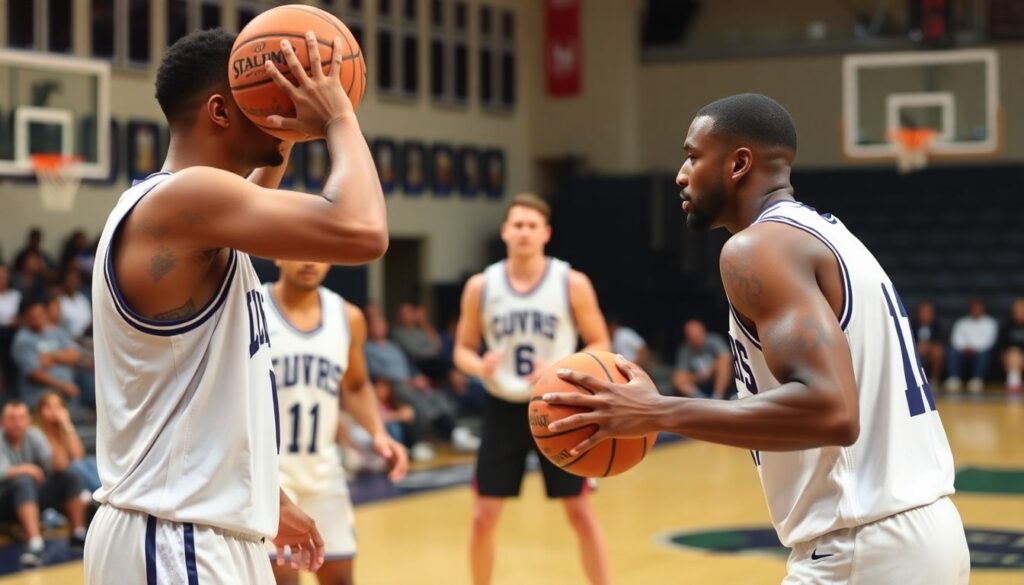
Meaningful gains are possible within one playoff run if training is deliberate. If you integrate short, high-stakes scenarios and clear if-then mental plans into existing drills, then athletes can quickly improve their responses to pressure.
What role does a mental performance coach play with a playoff team?
They design and refine psychological skills programs around the team’s style and schedule. If your staff lacks expertise in mental training, then bringing in mental performance coaching for athletes helps translate theory into daily habits and playoff-ready routines.
Do all players need the same clutch-performance tools?
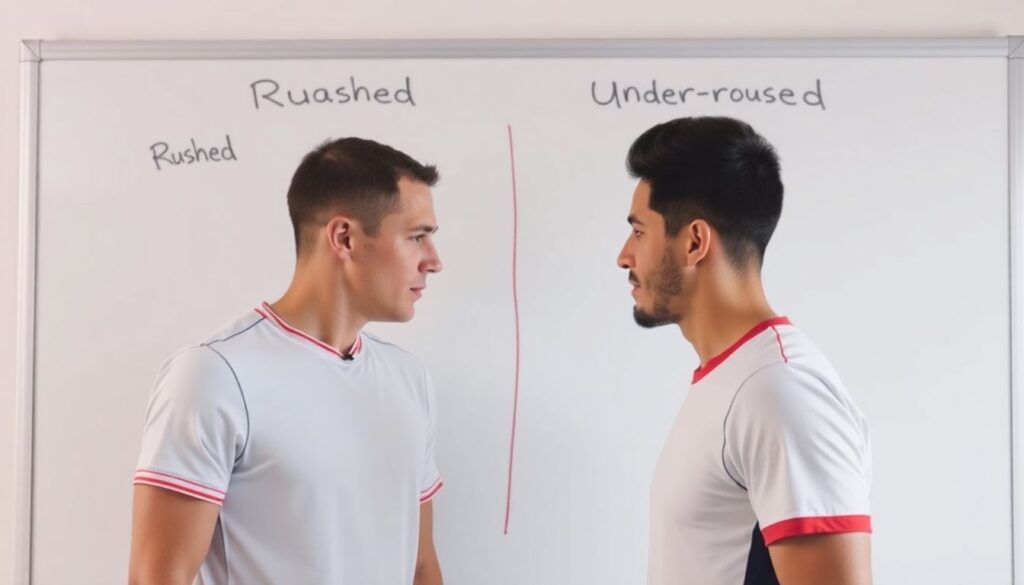
No, individual profiles differ. If a player tends to over-arouse and rush, then calming and pacing tools are priorities. If another tends to hesitate and under-arouse, then activation, assertiveness, and aggressive cueing matter more.
How can a coach support a player who recently “choked” in a big game?
Respond with curiosity and structure, not labels. If you turn the event into a joint learning review and build a concrete if-then plan for next time, then the experience becomes a source of growth instead of a lasting identity wound.
Is it necessary to separate mental training sessions from physical practice?
Not always. If you embed brief mental cues, breathing work, and routines into existing drills, then athletes learn to use psychological tools in the same environment where performance actually occurs.
When should a team consider external help for playoff mindset issues?
If repeated playoff failures follow the same psychological patterns, or internal efforts stall, then collaborating with a specialist in playoff performance mindset training or a licensed sports psychologist near me is often the most efficient route.