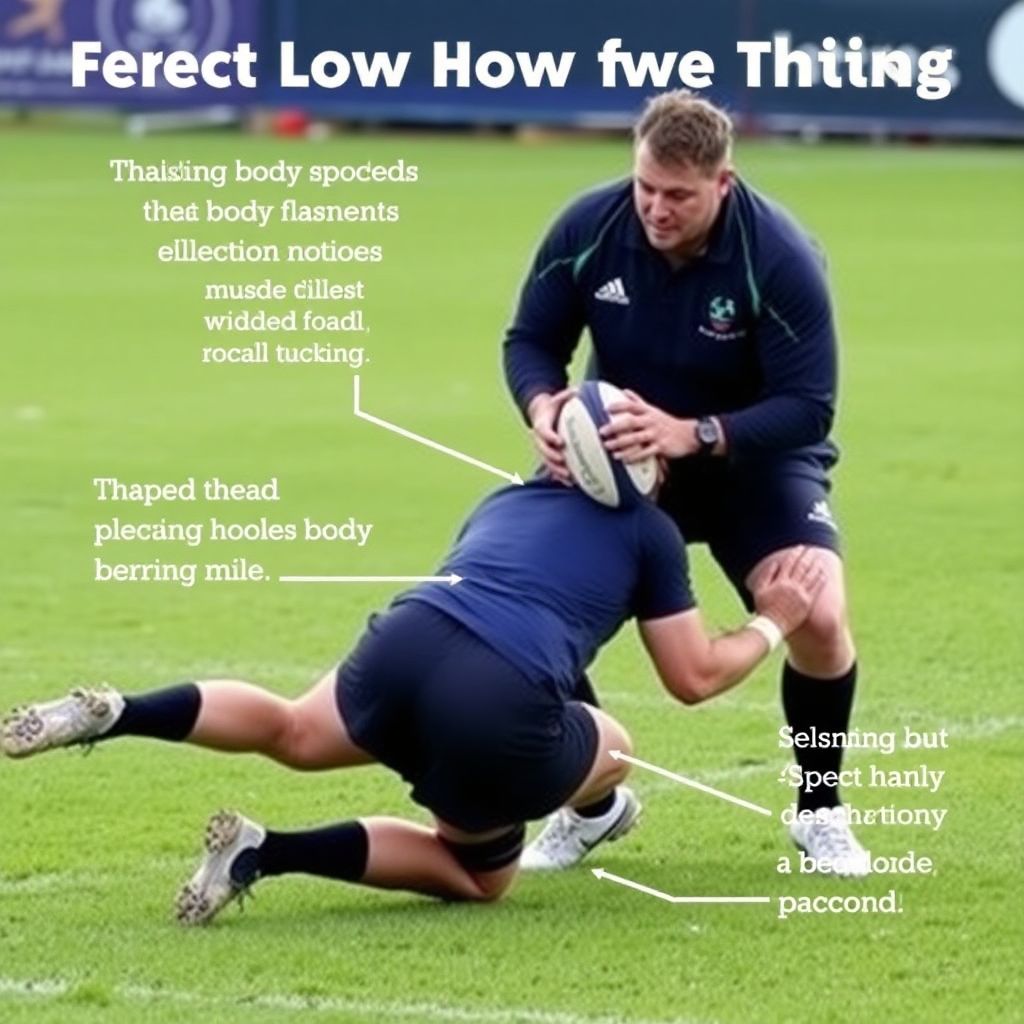
A perfect rugby tackle combines low, safe body position, controlled footwork, and precise head placement to stop the ball-carrier without exposing either player to unnecessary risk. This guide explains the biomechanics, step-by-step neck and head safety, progressive drills, and how recent tackle-height law changes affect day-to-day coaching and player behavior.
Essential Principles Behind a Safe, Effective Tackle
- Keep the head out of contact: cheek-to-hip or shoulder, never across the ball-carrier’s body line.
- Generate force from the legs and hips, not the neck or upper back.
- Target legal, chest-and-below contact in line with current tackle-height laws.
- Accelerate into contact under control; shorten your steps, do not dive.
- Wrap firmly with the arms and finish by driving through the tackle, not twisting or yanking.
- Use progressive, low-impact drills before live contact, especially with youth and developing players.
- Continuously review video and adjust technique as rules and interpretations evolve.
Biomechanics of the Ideal Tackle: Body Position and Force Transfer
This approach suits intermediate players and coaches who already understand basic contact and want to refine rugby tackling technique training with a safety-first mindset. It is not appropriate for players with unresolved concussion symptoms, serious neck issues, or anyone lacking medical clearance for collision sports.
From a biomechanical perspective, the perfect tackle is about stacking major joints so that ground reaction force travels efficiently from the feet into the target:
- Base of support – Feet slightly wider than hip-width, knees flexed, weight on the balls of the feet to allow quick adjustment.
- Hip hinge, not back bend – Hips pushed back, neutral spine, chest up; this creates a strong line from hips to shoulders.
- Neutral neck alignment – Chin slightly tucked, eyes up; you see what you hit without extending the neck.
- Shoulder as the contact point – Force travels from legs into the hip, torso, and finally the near shoulder, which makes primary contact.
- Low center of mass – Knees and hips bent so your shoulders are below the ball-carrier’s center of mass, improving leverage and safety.
When these elements synchronize, you transfer force through the skeleton instead of overloading vulnerable soft tissue, particularly in the neck and upper back.
Approach and Contact: Footwork, Angling, and Wrap Techniques
To apply this safely, you need an appropriate environment, equipment, and coaching structure. The same principles work in rugby and in safe tackling drills for youth football when adapted for age and contact limits.
Recommended requirements before progressing to full-contact tackle training:
- Environment and surface
- Use a flat, well-maintained grass or synthetic surface with no hard objects nearby.
- Warm-up area available for mobility and neck-prep work.
- Protective and training equipment
- Well-fitted mouthguard and, where appropriate, padded headgear as part of the best protective gear for rugby tackles.
- Tackle bags, shields, and hit pads to teach contact patterns before live tackling.
- Cones, agility ladders, and bands for footwork and strength preparation.
- Coaching and educational resources
- Access to qualified coaches or structured resources, including rugby tackle coaching courses online for current best practices.
- Clear progression policy: no player moves to live contact until demonstrating safe technique on pads and in controlled drills.
- Technical checkpoints for approach and wrap
- Track the near hip of the ball-carrier; close down space with small, fast steps.
- Hit with the same-side shoulder and leg: near foot plants close to the target just before contact.
- Arms wrap tight around legs, hips, or torso (depending on legal tackle height), pulling the carrier into your body.
Head Placement, Neck Safety, and Concussion Risk Management
Before the step-by-step process, recognize critical risks and limits:
- Never train live head-in-front tackles; this dramatically increases concussion and neck-injury risk.
- Any player with headache, dizziness, or confusion after contact must stop immediately and be evaluated.
- Limit full-speed contact volume in a session; prioritize quality of technique over number of repetitions.
- Coaches should understand and align with local return-to-play concussion protocols.
- Prepare the neck and upper body – Start every session with targeted warm-up.
- Include isometric neck holds (front, back, sides) and scapular activation drills.
- Rehearse “eyes up, chin tucked” in non-contact movements to build habit.
- Establish visual focus – Players must see the target clearly before committing.
- Coach the cue: “See the hip, not the ground.”
- If vision is obscured, players are instructed to pull out rather than dive blindly.
- Set safe head position relative to the ball-carrier – Head on the correct side and out of the impact line.
- For a side-on tackle, aim for cheek-to-hip or cheek behind the torso, never across the front of the knees.
- Keep the neck in line with the spine; avoid twisting or reaching with the head to make contact.
- Use the shoulder as the striking surface – Shoulder, not head, makes primary contact.
- Drive off the near leg, punching the shoulder through the legal tackle zone.
- Keep the head tight to the body, outside the main impact, to reduce whiplash.
- Wrap and roll safely – Arms secure the ball-carrier while the body does the work.
- Wrap both arms fully around the target area, pulling in; avoid arm-only “arm tackles.”
- Finish by driving with the legs and, if needed, rotating your hips to guide the carrier down, not slamming them.
- Immediate post-contact assessment – After any significant collision, scan for danger signs.
- Ask players about headache, neck pain, dizziness, or visual changes.
- Remove from contact if any red flags appear; no “playing through” head or neck symptoms.
Progressive Drill Sequences to Teach Technique Without Excessive Risk
Use these checkpoints to verify that your progressive drills are delivering safe, reliable technique before increasing intensity. This applies equally to rugby tackling technique training and adapted safe tackling drills for youth football.
- Players consistently maintain a neutral spine and eyes up during non-contact movement and walkthroughs.
- On tackle bags and shields, contact is always with the shoulder, never the head or neck.
- Head placement remains on the safe side of the pad or partner, with no “head across the bow” positions.
- Wraps are full and tight; there are no reaching, arm-only attempts, even at reduced speed.
- Footwork stays under control: short, balanced steps into contact, with no leaping or diving.
- Players can demonstrate the technique at half-speed and three-quarter speed before full-speed attempts.
- Contact volume is capped per session, with adequate rest and technical feedback between reps.
- Coaches can identify at least one specific coaching cue for each player from video or live observation.
- No player reports neck pain, stingers, or repeated headaches during or after tackling blocks.
- Drill intensity and complexity increase only when all players in the group meet prior-stage standards.
Analyzing Penalties and Recent Rule Changes That Reshape Tackling
Understanding how laws are applied is essential for translating safe technique into legal tackles. Many unions are tightening interpretations around head contact and tackle height, including rugby law changes 2024 tackle height initiatives in some competitions.
- Entering too high, with upright posture, leading to accidental head contact and high-tackle penalties.
- Failing to bend at the hips and knees, making it impossible to adjust tackle height late.
- Attempting dominant hits that prioritize impact over control, increasing force to the head/neck area.
- Poor tracking angles that force last-second arm grabs, often slipping into the head or neck.
- Diving from distance, leaving feet early and losing control of body height and head position.
- Not using the arms to wrap, resulting in shoulder-charge or no-arms tackle sanctions.
- Ignoring the ball-carrier’s sudden drop in height, instead of reacting and lowering further.
- Coaches teaching outdated techniques that do not reflect lower legal tackle zones and stricter head-contact frameworks.
Coaching Cues, Video Analysis, and Objective Performance Metrics
When full-contact tackling is not appropriate or must be limited, alternative methods can still build skill and safety awareness.
- Technical walk-throughs and shadow tackling – Players practice footwork, hip hinge, and head placement without a partner, reinforcing patterns with minimal risk.
- Bag and shield-only blocks – Extended periods of work on pads allow coaches to refine body height and tracking angles without player-to-player collisions.
- Video-based micro-analysis – Short clips from training and games are reviewed with clear coaching cues such as “bend earlier” or “head to safe side,” creating objective metrics like tackle height and shoulder contact point.
- Non-contact decision-making games – Tag or grab-belt variants develop line speed, tracking, and angle decisions while removing the collision itself, particularly useful in youth and return-to-play phases.
Combining these options with structured, up-to-date education from rugby tackle coaching courses online helps coaches adjust quickly as rules evolve and ensures tackling systems remain both effective and aligned with player welfare priorities.
Common Practical Concerns: Liability, Equipment, and Coaching Limits
How much full-contact tackling should we do in a typical training week?
Keep full-contact volume modest and focus on quality. Most sessions should rely on controlled, low-impact drills, pads, and technical walkthroughs, with only a limited block of live tackling to confirm transfer under game-like conditions.
What protective equipment is realistically useful for reducing tackle risk?
A properly fitted mouthguard is essential, and appropriately sized shoulder pads and optional padded headgear can provide additional protection. None of these replace sound technique; they are a final layer on top of good coaching and sensible contact limits.
How do rule changes around tackle height affect how I should coach?
Coach players to start lower earlier, bend at the hips and knees, and aim the shoulder below the chest as a default. Emphasize adaptability so they can safely adjust when a ball-carrier suddenly dips or steps.
Are youth players ready for live tackling, and when should they start?
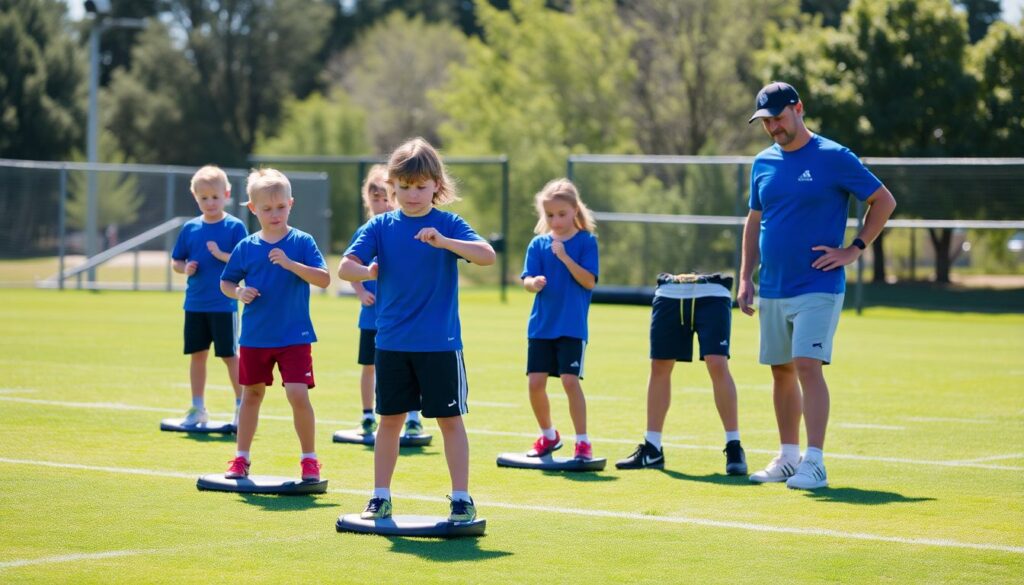
Youth should progress only after demonstrating consistent control on pads and in non-collision drills. Age-group rules and local regulations vary, so align your progression with governing-body guidance and medical advice for your region.
What are my legal and ethical responsibilities as a coach during tackle training?
You are responsible for providing a reasonably safe environment, teaching current best-practice technique, respecting medical guidance, and following competition rules. Document your progressions and safety policies to support accountability and continuous improvement.
How can I involve parents in understanding tackle safety for young players?
Explain your progression model, show examples of drills, and share governing-body resources about head safety. Invite questions, clarify how you monitor players for signs of concussion, and encourage parents to report any symptoms they notice at home.
Can non-contact players or those returning from injury still participate in tackle sessions?
Yes, with modified roles. They can work on footwork, body height, and tracking without absorbing collisions, and they can support video review and feedback until cleared for contact by medical staff.