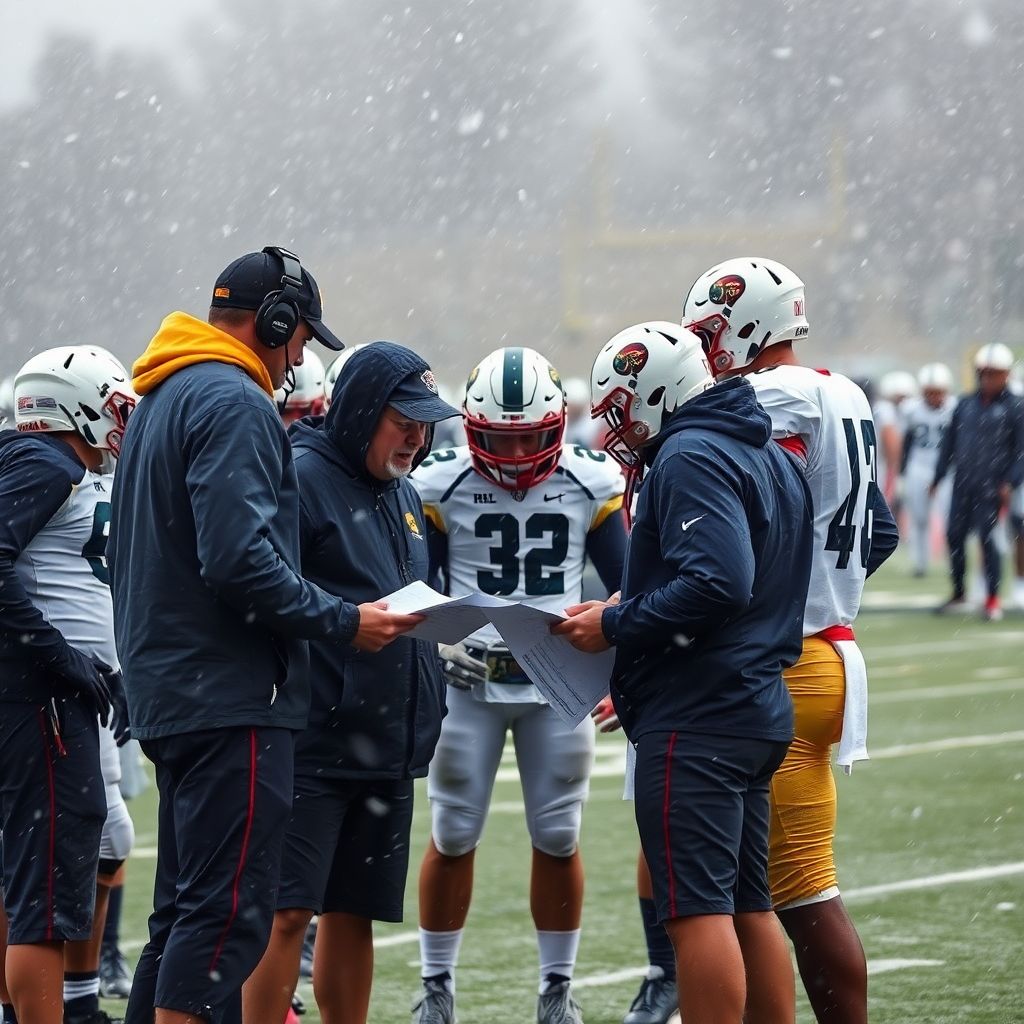
Weather changes game plans by shifting priorities: from explosive plays to ball security, from vertical passing to field position, and from finesse to leverage and angles. Coaches need clear thresholds for wind, snow, and rain, plus simple adjustments for personnel, playcalling, and special teams so players execute confidently and safely.
Weather-Driven Game Plan Essentials
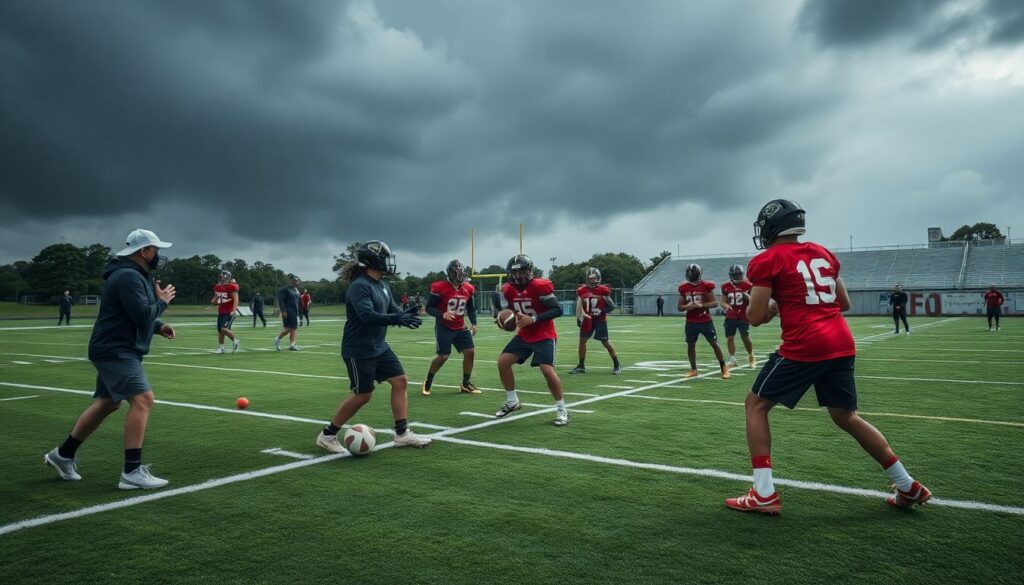
- Define specific wind, temperature, and precipitation thresholds that automatically trigger plan adjustments.
- Pre-build weather-specific call sheets focused on ball security, protection, and field position.
- Drill snaps, exchanges, and screens every week as a core response to how weather affects football games.
- Assign a coach to track real-time field conditions and kicking range by quarter.
- Use simple, repeatable rules so players know exactly what changes in snow, rain, or heavy wind.
- Emphasize communication, conservative risk management, and injury prevention in every weather scenario.
Identifying Weather Thresholds That Alter Strategy
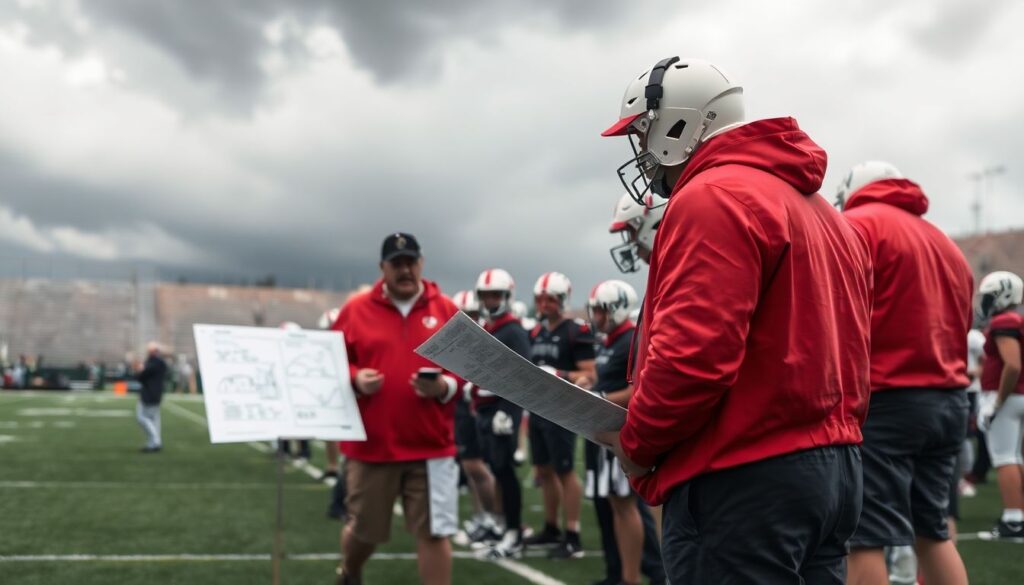
Problem: Coaches overreact or underreact because they rely on feel instead of clear rules for when weather truly changes the plan. Set simple, objective thresholds so everyone knows when your approach must shift.
This approach fits intermediate-level staffs who already run a stable scheme and can build a few weather variants into weekly preparation. It is not ideal for youth programs with zero practice time or teams already overwhelmed by basic installs; in those cases, keep the base plan and only tighten ball-security rules.
- Wind thresholds (passing and kicking):
- Mild breeze: Use normal plan; just note direction for deep balls and punts.
- Noticeable gusts: Limit long sideline outs, deep field-goal attempts, and high-arching punts; emphasize crossers and in-breakers.
- Strong, swirling wind: Treat as a run-first game; build the core of your game planning for extreme weather conditions in football around ground game and short, safe throws.
- Precipitation thresholds (ball handling):
- Light rain/snow: Normal call sheet, but elevate ball-security emphasis and warm, dry towels.
- Steady rain or active snowfall: Fewer ball-handling exchanges, more screens and quick game, heavier personnel.
- Driving rain or heavy wet snow: Minimal shotgun and perimeter option; prioritize direct runs and safe, high-percentage throws.
- Field condition thresholds (traction and safety):
- Firm but damp: Most concepts work; lean on inside cuts and vertical stems.
- Soft or muddy: Avoid long-developing perimeter plays; keep runs vertical and routes simple.
- Slick or icy: Reduce hard-breaking routes and cutback runs; emphasize staying on feet ahead of extra yards.
- Temperature thresholds (player safety and stamina):
- Cold but manageable: Rotate skill players; stress full warm-up for muscles and hands.
- Very cold: Shorten play calls, rotate linemen if possible, and increase sideline movement to stay warm.
- Extremely cold with wind: Treat as a safety-first game; simplify everything and accept lower scoring.
- Decision rule for major adjustments:
- If two or more factors (wind, heavy precipitation, or unsafe footing) hit your top threshold, switch to your pre-built weather game plan.
- Make this rule part of your best strategies for playing football in bad weather so players expect the change.
Adjusting Playcalling for Snow and Low Visibility
Problem: In snow and low visibility, timing routes, long-developing concepts, and complex motions break down, and defenders often get the first move advantage. You need a trimmed call sheet that works when footing and vision are compromised.
- Personnel and formations for snow:
- Favor bigger groupings (e.g., 12/21 personnel) to run downhill and control the line of scrimmage.
- Condense formations to reduce long, slippery splits and shorten the throw distance.
- Keep motions simple and mostly lateral to avoid off-schedule timing.
- Passing concepts that survive low visibility:
- Quick game: hitches, slants, sticks, flats to nearby landmarks.
- Flooding one side of the field where the QB has a clear picture pre-snap.
- Play-action shots only if the wind allows, preferably inside-breaking posts or seams, not long sideline fades.
- Run game tweaks for snow and slush:
- Use north-south runs with clear aiming points; limit wide, bouncing runs that rely on cuts.
- Emphasize double teams and combo blocks; allow backs to choose safer paths instead of forcing sharp cuts.
- Add QB sneaks and wedges in short yardage where traction is poor for defenders too.
- Protection and snap mechanics:
- Under-center snaps can be safer than shotgun in heavy snow; if you stay in gun, rep wet-ball snaps heavily.
- Simplify protections to half-slide or full-slide rules so linemen can play with shorter, more controlled steps.
- Use max protection on obvious passing downs; send fewer receivers but give the QB a stable pocket.
- Defensive calls in low visibility:
- Lean on simple zone coverages so defenders keep eyes on the QB and backfield.
- Bring controlled pressure with inside lanes instead of wide, slippery edge rushes.
- Coach DBs to play through the hands, not to guess on double moves that are hard to see.
- Communication and safety:
- Use shorter wristband calls or one-word tags to reduce communication errors in noisy, low-visibility games.
- Assign a coach to monitor players for hypothermia signs and limit exposure during long delays.
- Frame adjustments as standard football coaching tips for snow and rain games so players stay confident.
Tactical Designs for High-Wind Conditions
Problem: Wind quietly destroys deep passing, field goals, and directional punts, leading to hidden yardage and turnovers. You need a structured, safe process to redesign the plan around wind before and during the game.
Before you change tactics for wind, consider these risks and constraints:
- Overreacting to warm-up wind that later calms can leave you too conservative on offense.
- Excessive passing into a strong headwind increases interception and strip-sack risk.
- Special-teams misjudgment in wind can flip field position or cause dangerous pileups on muffed kicks.
- Players straining to throw or kick against wind can aggravate shoulder or hip issues.
- Complex mid-game changes that players do not understand create confusion and free runners.
- Evaluate wind direction and consistency pregame
Spend warm-ups testing punts, kicks, and basic passes each way. Note which side is the “wind at your back” end and how much the ball drifts, then mark this clearly on your call sheet for each quarter. - Redefine your passing tree for headwind and tailwind
Into a headwind, lean on short, drive throws: slants, quick outs, unders, and running back checkdowns. With a tailwind, add a few vertical shots and deeper crossers, but still avoid long throws that hang near the sideline where gusts are worst. - Shift field-goal and punt decision lines
Meet with the kicker and punter to set realistic ranges in both directions. Into the wind, be ready to go for it on manageable fourth downs or pooch punt; with the wind, extend your field-goal range and take more shots at pinning the opponent deep. - Alter run game emphasis to match wind conditions
In strong headwinds, treat the game like a run-dominant contest focused on ball security and field position. Call more direct runs, QB sneaks, and safe RPOs where the run is the primary option and the pass is a high-percentage outlet only. - Rebuild the punt and kickoff plan
On punts into the wind, favor lower-trajectory, directional kicks with strong coverage lanes. With the wind behind, allow more hang time and distance, but explicitly coach gunners on tracking the ball’s drift to avoid dangerous collisions on misjudged catches. - Set in-game adjustment rules between quarters
Before kickoff, decide how aggressiveness changes when you switch directions. Examples: with the wind, you may be more willing to throw on early downs or attempt long field goals; against the wind, you may call conservative plays on your own side of midfield and protect the ball at all costs. - Communicate simple player rules for windy games
Teach QBs to throw on a flatter trajectory and aim a bit inside on out-breaking routes. Instruct receivers and returners to attack the ball in the air and never assume its flight path; this reduces the impact of wind rain and snow on football performance by focusing on controllable behaviors.
Ball-Handling and Footwork in Heavy Rain and Slush
Problem: In heavy rain or slush, the game is defined by who can safely snap, exchange, and stay upright. Use this checklist to evaluate whether your team is technically prepared.
- The center-QB exchange (under center and shotgun) is clean on at least several consecutive wet-ball reps in warm-ups.
- Ball carriers use high-and-tight, two-point or four-point contact in traffic, with coaches actively checking grip on the sideline.
- Receivers and backs adjust routes with flatter breaks and wider, controlled steps instead of sharp, risky cuts.
- QBs are coached to prioritize firm, shorter throws over maximum velocity that can slip from the hand.
- Every position group has a clear “don’t” list (no blind spin moves, no sudden stop-and-go on slick surfaces).
- Players are using appropriate footwear for the surface, with staff checking for worn-down studs that lose traction in slush.
- Ball rotation on the sideline is organized: towels, dry balls (where allowed), and a clear person responsible for this task.
- Screen game and quick perimeter throws are practiced with wet balls to simulate live conditions, not just walked through dry.
- Defenders are drilled on secure wrap-and-roll tackling rather than high-speed collisions that can lead to slips and missed tackles.
- Coaches can clearly explain their best strategies for playing football in bad weather in one or two sentences to reassure players and keep focus on execution, not fear of mistakes.
Special Teams and Field Management in Extreme Conditions
Problem: Special teams and basic field management often decide weather games, yet are overlooked in weekly prep. Avoid these frequent mistakes when game planning for extreme weather conditions in football.
- Ignoring real-time kicker feedback and stubbornly attempting field goals at normal range despite wind or slick footing.
- Failing to adjust punt depth and alignment, leading to blocked punts when footing slows the punter’s steps.
- Allowing returners to stand too deep in heavy wind or rain, increasing muff risk and blind scrambles for loose balls.
- Not teaching “poison” rules clearly enough, causing players to chase bouncing balls on dangerous, muddy fields.
- Underestimating how quickly painted lines and logo areas get slick and failing to warn players about those hot spots.
- Wasting a good field-position edge by calling slow-developing plays that lead to sacks or fumbles near your own goal line.
- Leaving the same sideline organization in storms: no tent, no dry-ball process, no systematic towel and glove check.
- Overcomplicating special-teams calls, adding fakes or trick plays when basic execution is already hard in bad weather.
- Ignoring injury risk on extra-long, sliding piles during onside kicks instead of coaching controlled recovery techniques.
- Overlooking that how weather affects football games is often most visible on special teams, where a single misplayed ball can swing momentum and field position.
In-Game Decision Matrix: When to Adapt vs. Stay the Course
Problem: Once the game starts, conditions and confidence change. Coaches need a simple decision matrix to know when to lean into the weather plan versus trusting the original script.
- Option 1: Fully commit to the weather-centric plan
Use when conditions match or exceed your top thresholds and ball security is clearly at risk. Emphasize runs, quick game, and conservative special teams. This is especially appropriate when your team is more physical than the opponent or when injuries make complex passing less realistic. - Option 2: Hybrid approach with situational aggression
Use when weather is inconsistent or improving, or when you are evenly matched. Run your weather adjustments on your own side of the field and in long-yardage; open the call sheet slightly in plus territory or with the wind. This option balances the impact of wind rain and snow on football performance with the need to score. - Option 3: Stay mostly with the original game plan
Use when conditions are marginally bad but your team’s identity and preparation favor skill and timing (for example, a polished passing team in light drizzle). Keep your core concepts, but enforce strict ball-security rules and minor route and protection tweaks to stay safe. - Option 4: Scoreboard-driven weather adjustment
Use when the game script forces your hand: if you’re behind multiple scores, you may have to accept more risk; if you’re ahead, lean harder into clock control and field position. Make this part of your standard football coaching tips for snow and rain games so players understand why risk levels change late.
Whichever option you choose, explain it clearly on the sideline. Players execute better in weather when they know the logic behind your choices and how game planning for extreme weather conditions in football fits into the bigger picture.
Coaches’ Top Practical Concerns About Weather
How early in the week should we plan for a possible weather game?
Build a small weather package into the game plan by midweek based on the forecast, then finalize on the walkthrough day. You can always trim calls if conditions improve, but you cannot invent safe, well-practiced ideas on game day.
What is the safest way to handle shotgun snaps in heavy rain or snow?
Decide early whether you trust your center-QB shotgun mechanics with a wet ball. If there is any doubt, move under center for core run concepts and short-yardage, and keep shotgun only for select, must-have plays you have repped extensively in bad conditions.
How should cleat choice change for mud, snow, or slick turf?
Prioritize longer, well-defined studs on soft natural grass and slush to maintain traction, and more moderate studs on turf to avoid getting stuck. Check cleats pregame and at halftime; replace worn studs and avoid last-minute changes that players have never tested in practice.
When is it better to go for it on fourth down instead of attempting a field goal in bad weather?
If wind, footing, or ball condition significantly reduces your kicker’s normal range or plant-foot stability, lean toward going for it on manageable fourth downs. Use pregame tests to define a safe, realistic range in each direction and stick to those lines during the game.
How can we keep players’ hands effective in cold, wet games?
Rotate dry towels and, where allowed, hand-warming packets; encourage players to switch gloves if they become soaked. Build in time on the sideline for QBs, centers, and receivers to keep working with a ball to maintain feel and confidence between series.
Should defensive playcalling change as much as offensive playcalling in bad weather?
Defensive changes are usually simpler: favor zones, reduce complicated checks, and emphasize tackling and leverage. The main shift is mental-defenders should understand that a single slip or missed tackle has a bigger cost when the ball is harder to control.
How do we practice for weather without always having bad conditions?
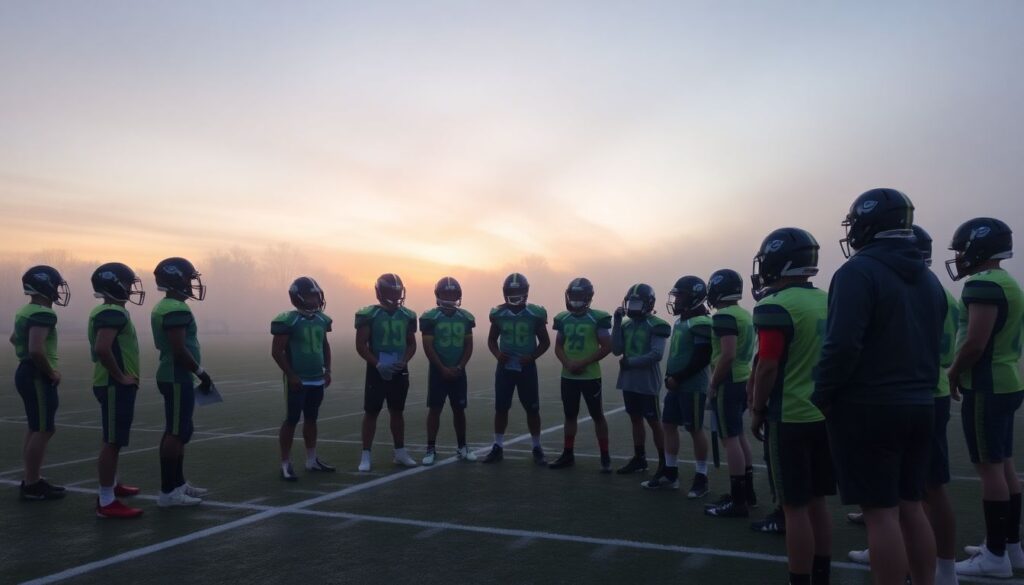
Simulate with wet-ball drills, reduced-visibility scenarios (for example, evening practices), and limited-traction work using controlled, safe movements. Integrate a short weather segment into weekly practice so that when true storms come, your players recognize the adjustments as normal, not new.