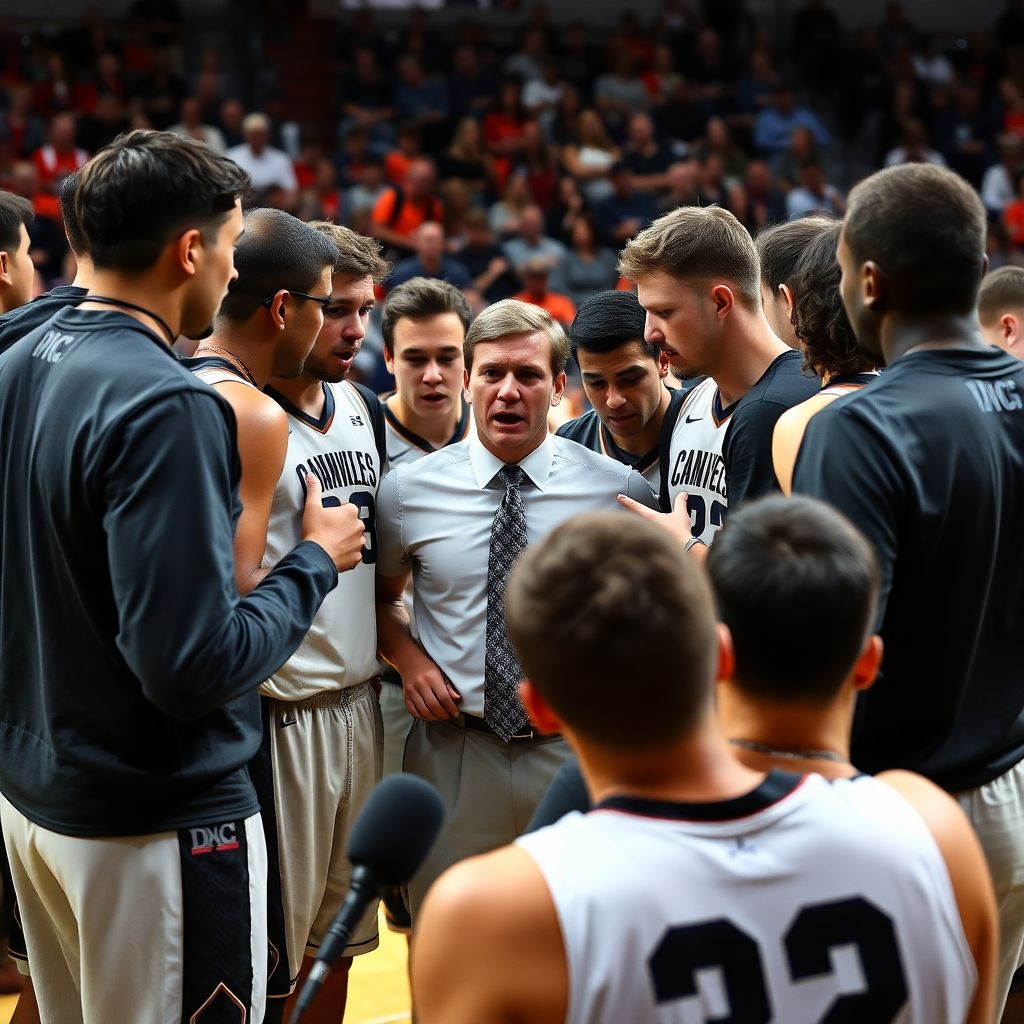
Mic’d up moments are live audio clips from players and coaches that reveal how a team actually communicates under pressure. They highlight leadership habits, trust, conflict styles, and standards in real time. Used well, they become powerful film for coaches, analysts, and athletes to build healthier, more competitive team culture.
What Mic’d Up Moments Make Visible
- Who really leads on the sideline and how clearly they communicate.
- Whether conflict is avoided, explosive, or calmly resolved in the moment.
- How consistently standards, roles, and expectations are reinforced under stress.
- Levels of trust, encouragement, and psychological safety between teammates.
- Nonverbal cues: tone, pacing, sarcasm, silence, and what they imply.
- Gaps between the team culture a coach wants and the one players actually live.
Defining Mic’d Up: Scope, Limits, and Methodology
In sport, “mic’d up” refers to recording live sideline or on-field conversations with hidden microphones placed on coaches, players, or officials. These clips are later used for broadcast content, internal review, or education. They offer raw access to in-game communication, but always through a curated, edited lens.
Mic’d up sessions typically capture short windows: a game, a practice, or specific drills. A player might wear a lavalier mic during a scrimmage, or a coach might be wired for sound in a playoff game. Editors then select brief, compelling segments-sometimes emotional, sometimes tactical-to highlight for viewers or for internal team review.
The limits matter. Not every conversation is recorded, and not every recorded moment is shared. Audio can miss context: looks between players, previous meetings, or long-term tensions. For that reason, mic’d up content is best treated as qualitative evidence: powerful snapshots that suggest patterns in team culture, not full proof of everything that happens behind the scenes.
For coaches using mic’d up clips inside team culture training for sports coaches or broader sports leadership coaching programs, the key is to treat them like any other film: define what you are looking for, set clear learning goals, and always pair observation with follow-up action on your practice plan.
Verbal Cues and Leadership Signatures: Who Sets the Tone
Mic’d up audio makes verbal leadership patterns obvious, often within a few seconds of listening. You can hear who takes charge, who clarifies roles, and who disappears when the pressure spikes. Below are practical cues to track when reviewing clips.
- Who speaks first after a mistake
Example: After a turnover, one athlete says, “My bad, next one is ours-same play, but I’ll seal harder.” Evidence of personal accountability plus a clear plan. Cultural implication: teams where athletes own errors quickly usually reset faster and keep trust intact. - Frequency of clear, concise instructions
Example: A captain repeats, “Two passes before a shot, stack left, talk through switches.” Evidence of structured communication. Cultural implication: consistent, simple language helps newer players align and is a core behavior in how to build winning team culture in sports. - Balance of tactical talk vs. emotional noise
Example: One bench is full of “Let’s go!” with no specifics, while the opponent calmly calls coverages by name. Evidence that hype may be replacing substance. Cultural implication: competitive cultures keep emotional energy, but anchor it to cues that actually impact performance. - Who translates the coach’s message
Example: Coach gives a fast, complex instruction, and a veteran turns, “That means we’re switching everything on the weak side.” Evidence of player-leaders acting as amplifiers. Cultural implication: in strong cultures, informal leaders make the system simpler for teammates instead of adding confusion. - Language around effort and standards
Example: “Sprints between whistles, not when they’re watching,” vs. “Come on, at least make it look like you’re trying.” Evidence of either intrinsic standards or bare-minimum compliance. Cultural implication: mic’d up standards language often predicts how the team trains when cameras are off. - Ownership pronouns: “I”, “you”, “we”
Example: “You blew that” vs. “We got split there-next time I’ll force wide, you stay middle.” Evidence of blame vs. shared responsibility. Cultural implication: teams that default to “we” usually handle adversity as a unit instead of fragmenting into cliques.
When building sports psychology courses for teams and coaches, these verbal patterns become case studies. Coaches can pause a clip, identify which phrases help or hurt, and then script better sideline language to rehearse in practice.
Conflict, Correction, and Accountability Observed Live
Conflict on the sideline is not automatically negative; mic’d up audio shows whether disagreements become constructive correction or corrosive drama. Focusing on specific scenarios helps coaches turn tense moments into teachable ones.
- Heat-of-the-moment frustration between teammates
Example: “Why didn’t you slide? I’ve told you all game!” said with a sharp, public tone. Cultural implication: unresolved role clarity; frustration replaces problem-solving. Action: review the clip and rehearse a reset phrase like, “What did you see? Next time, I’ll call it earlier.” - Coach-to-player correction immediately after a mistake
Example: “You’re killing us with those fouls” vs. “Hands back, same aggression-channel it into chest, not reach.” Cultural implication: specific, behavior-focused feedback keeps players engaged; vague criticism increases fear and confusion. - Calling out effort and focus
Example: A bench player says, “Lock in. If you’re on the floor, we’re trusting you to sprint both ways.” Cultural implication: when peers enforce standards respectfully, culture is shared-not just imposed from the staff. - Micro-resolutions after conflict
Example: Two players clash, then one says, “We’re good. Next possession, I’ll switch earlier.” Cultural implication: a culture of rapid repair; people can disagree without carrying grudges into the next play. - Silence where confrontation is needed
Example: A player repeatedly breaks coverage and nobody speaks up on the sideline. Cultural implication: conflict-avoidant environment; politeness outweighs competitiveness, and standards quietly erode.
Teams in online workshops on communication for sports teams can use such scenarios as role-play material. Athletes practice turning raw, emotional reactions into concise, solution-focused statements that protect both relationships and standards.
Moments of Trust: Encouragement, Risk‑Taking, and Bonding
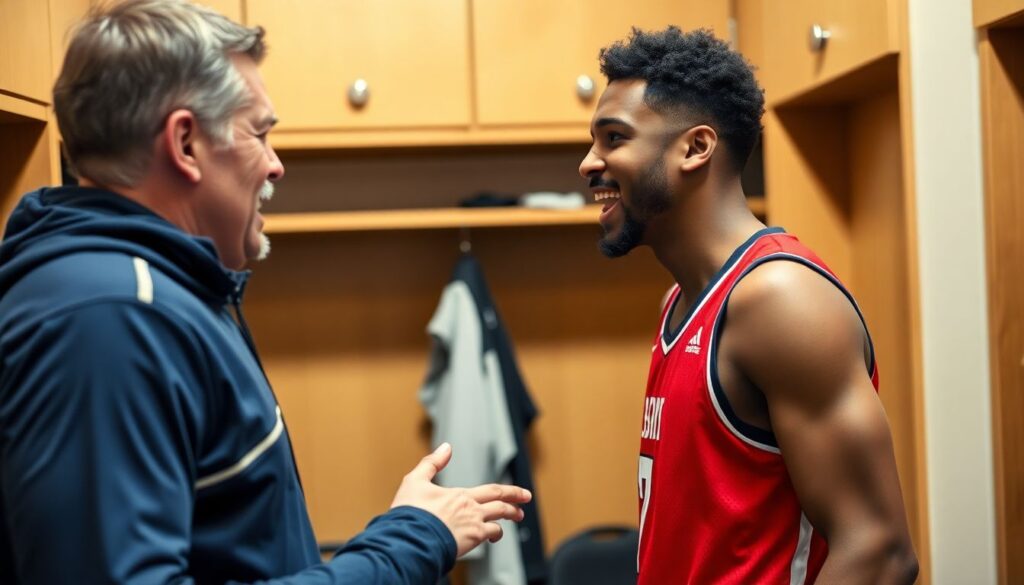
Trust is one of the clearest patterns revealed by mic’d up sessions. You hear whether athletes feel safe to speak up, take risks, and recover from errors. Encouragement, humor, and vulnerability all show up in the tiny, unscripted side comments that cameras usually miss.
Advantages of Using Mic’d Up Moments for Culture Work
- Turns abstract ideas from team culture training for sports coaches into concrete, audible behaviors to model or replace.
- Provides real examples of positive risk-taking language, such as “If you see it, shoot it-we’ll live with that miss.”
- Highlights genuine encouragement and reassurance after mistakes, reinforcing psychological safety.
- Shows who checks in on quieter or struggling teammates, revealing hidden leaders.
- Creates shared language for bonding rituals-nicknames, inside jokes, pre-game phrases-that can be intentionally nurtured.
Constraints and Misuses to Watch Out For
- Editing bias: a few emotional outbursts may be over-represented, making the culture look more chaotic than it is.
- Performing for the mic: some players change their behavior because they know they are being recorded.
- Over-indexing on hype: focusing only on motivational soundbites instead of deeper communication habits.
- Using clips for punishment or public shaming instead of learning and improvement.
- Ignoring cultural or personality differences in how athletes express support, joking, or intensity.
For programs exploring how to build winning team culture in sports, mic’d up trust moments should be linked to daily habits: how captains greet teammates, how the bench talks during drills, and how quickly teammates offer constructive support after errors.
Nonverbal Layers: Tone, Timing, Pauses and Subtext
Words are only part of the message. Mic’d up clips also reveal tone, timing, and silence, which often carry more weight than the literal script. Misreading or overreading these signals leads to common mistakes and myths.
- Assuming volume equals leadership
Myth: the loudest voice is the true leader. Reality: some of the most influential teammates speak rarely but with calm authority. Coaches should track impact, not decibels. - Ignoring timing of comments
Mistake: good feedback delivered at the wrong moment (during free throws, in a teammate’s face) creates defensiveness. Evaluating clips should include, “Was this the right time for that message?” - Mislabeling sarcasm as toxicity
Myth: all teasing is harmful. In some groups, light sarcasm signals closeness; in others, it cuts deep. The key is whether everyone is laughing or one person goes quiet. - Overvaluing motivational catchphrases
Mistake: treating slogans like “no excuses” as proof of toughness. Without aligned actions, repeated slogans become background noise or even eye-roll triggers. - Overlooking strategic silence
Myth: strong leaders always talk. In reality, a captain who stays quiet after a costly mistake might be giving a teammate space to reset. Silence can be intentional and supportive. - Reading one clip as the whole truth
Mistake: judging a coach or player entirely from one heated moment. Ethical interpretation requires patterns over multiple games and contexts.
When integrating mic’d up material into sports leadership coaching programs, include deliberate pauses during review sessions and ask, “If we muted the words, what would you think is happening based just on tone and timing?” This builds athletes’ ability to read and regulate nonverbal cues.
Ethics, Privacy, and How Public Clips Shape Perception
Mic’d up audio sits at the intersection of storytelling, performance analysis, and privacy. Athletes and coaches deserve clarity on how recordings will be used, who controls the footage, and how public sharing might affect reputations, recruitment, or team dynamics.
Consider a simple case: a coach agrees to be mic’d for a televised game. Early in the second half, the coach delivers a blunt message to a veteran, “If you don’t sprint back, you’re done for the night.” The broadcast later airs this clip without the follow-up sequence where the player responds positively, locks in, and becomes a key defender.
To handle this ethically in your own environment, you can apply a basic internal protocol:
1. Inform: Explain who is mic'd, when, and why before recording.
2. Protect: Limit raw audio access to staff who genuinely need it.
3. Contextualize: When sharing clips, explain score, situation, and prior events.
4. De-identify: For teaching, blur faces or change names when possible.
5. Debrief: Ask recorded athletes how it felt and what they learned.
Used responsibly, mic’d up content becomes a valuable layer inside sports psychology courses for teams and coaches and online workshops on communication for sports teams, not a source of fear or embarrassment. The aim is always better communication and stronger culture, not viral drama.
Practical Clarifications on Sideline Audio and Its Interpretation
Is mic’d up audio a reliable measure of our true team culture?
It is a useful snapshot, not a full picture. Treat it like game film: helpful for spotting patterns in communication, but always combine it with practice observations, one-on-one conversations, and anonymous feedback tools.
How often should we record practices or games for culture review?
Quality matters more than volume. A few targeted sessions per season, tied to specific goals such as improving huddles or bench engagement, are usually enough to create meaningful teaching clips without overwhelming staff or players.
What is the best way to introduce mic’d up recording to athletes?
Be transparent. Explain what will be recorded, how clips will be used, and who will see them. Emphasize learning, not punishment, and invite questions so athletes feel respected rather than monitored.
Can mic’d up sessions backfire and make players more anxious?
Yes, if athletes fear clips will be used to embarrass them or shared publicly without consent. Reduce anxiety by keeping most footage internal, celebrating positive examples, and allowing opt-out options when appropriate.
How do we turn mic’d up insights into concrete training changes?
Identify one or two communication habits from the clips, rewrite them into preferred phrases or behaviors, and then practice those in drills, scrimmages, and huddle routines. Revisit new clips later to check if habits are actually changing.
Should youth teams use mic’d up recordings as well?
They can, if done with strong safeguards and parental consent. Keep clips short, focus on positive modeling, and avoid sharing youth audio on social media. The priority is teaching healthy communication, not creating entertainment content.
How do mic’d up reviews fit into existing culture or leadership programs?
They work best as an applied layer: use clips to illustrate concepts you already teach in leadership meetings, classroom sessions, or workshops. Short, focused audio moments make abstract ideas about culture and communication easier to grasp.