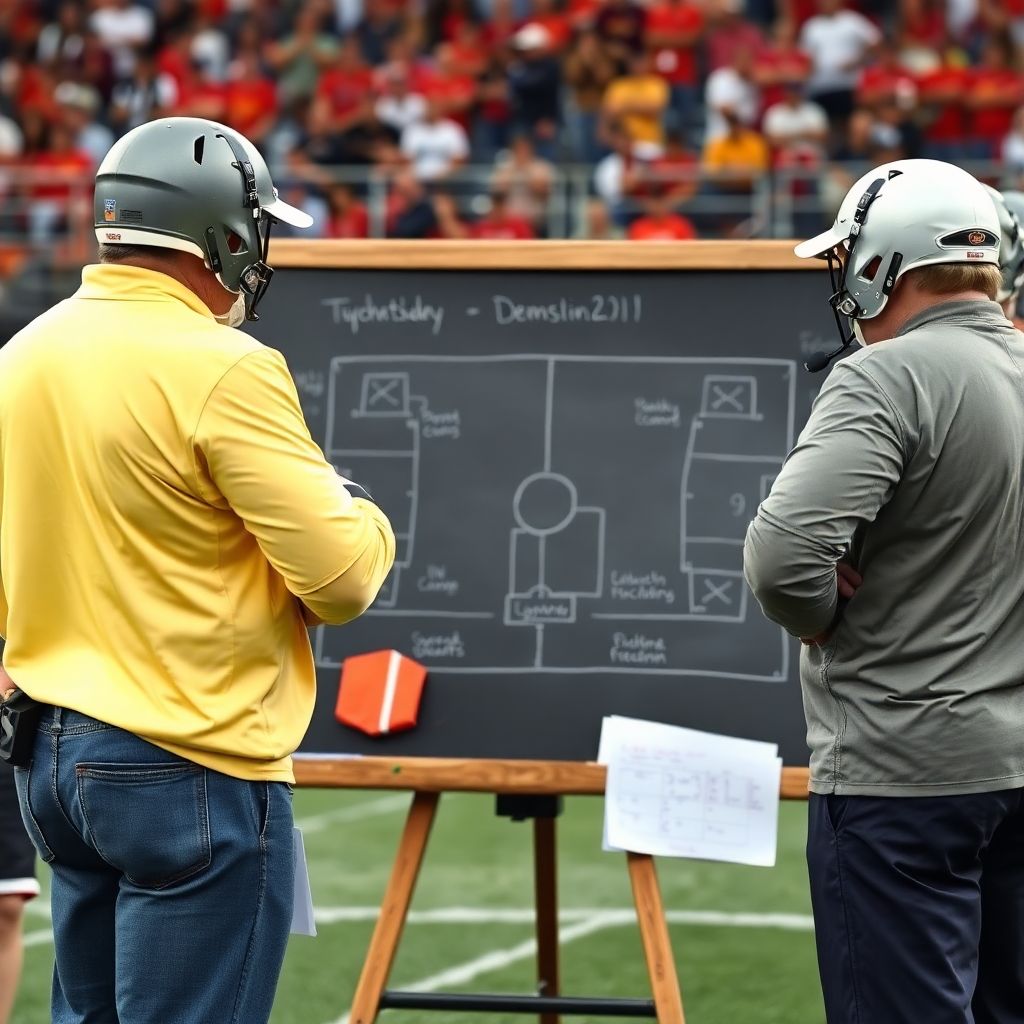
Defensive coordinators are returning to 3-4 and 4-2-5 hybrid fronts because they solve a practical problem: defend spread tempo offenses and heavy sets with one flexible structure. Hybrids are relatively install-friendly if you already run either front, offer low-cost disguise and pressure, but carry communication and fit-risk if teaching is sloppy.
Core Conclusions on Why Modern Defenses Re-adopt Hybrid Fronts
- Modern hybrids let you live in one language while presenting multiple fronts (3-4, 4-2-5, mint/tite, bear) to the offense.
- Compared with constant sub-packages, hybrids cut substitution stress but demand higher mental processing from box players.
- 3-4 structures make it easier to build simulated and creeper pressure; 4-2-5 spacing simplifies day-one run fits and coverage rules.
- The main risk is fit busts when players treat each look as a new defense instead of a rules-based system.
- Implementation is smoother when your teaching tools (defensive playbook download 3-4 and 4-2-5 hybrid, cutups, walk-through scripts) are unified, not separate books.
- Success depends less on scheme choice and more on install sequencing, communication words, and how you drill transitions between fronts.
Myths First: Addressing Common Misconceptions About the 3-4 and 4-2-5
Myth: the 3-4 and 4-2-5 are completely different worlds, so you must choose one. In reality, modern hybrids marry 3-4 personnel (three down, two stand-up OLBs) with 4-2-5 spacing (two stacked inside backers and five DBs) under a single rules-based system.
Another myth: you need elite edge rushers or a full new 3-4 defense playbook pdf to run these structures. Most successful hybrids are built by re-labeling your current front, defining gap rules, and gradually expanding tags rather than importing an entire external playbook.
A third misconception: 4-2-5 is only a passing-down defense and 3-4 is only for run-first teams. Hybrids deliberately blur that line-using tight 3-4 spacing versus heavy sets and sliding into spread-friendly 4-2-5 shells with the same personnel, especially when facing tempo.
From an implementation and risk standpoint, the real distinction is teaching model, not diagram: are you coaching a menu of unrelated calls, or one coverage and front family that can shift between 3-4 and the best hybrid 4-2-5 defensive schemes with simple tags?
Personnel and Gap Responsibility: What Each Front Demands
Myth: 3-4 requires gigantic two-gapping linemen, while 4-2-5 only fits fast, undersized defenders. Most high school and college hybrids are actually one-gap in nature with occasional two-gap elements for specific players or situations.
- Base 3-4 hybrid structure. Definition: three down linemen (often two 4i and a nose) with two stand-up OLBs. Example: mint/tite front versus 11 personnel. Tactical takeaway: nose and 4i’s anchor interior gaps; OLBs become the flexible piece (edge, dropper, or interior fitter) with clear gap rules.
- Base 4-2-5 hybrid structure. Definition: four-down spacing with two stacked backers and a nickel or hybrid safety. Example: over/under fronts versus 2×2 spread. Tactical takeaway: day-one teaching is cleaner for box fits; the nickel handles force/flat rules tied to coverage.
- Hybrid personnel overlap. Definition: key positions are the Jack/Buck (stand-up edge) and the Star/Nickel (space defender). Example: one player aligns as 4-2-5 defensive end in some calls and as 3-4 OLB in others. Tactical takeaway: recruiting and developing multi-tool edges and nickels reduces sub-package complexity.
- Gap responsibility in hybrids. Definition: mostly single-gap with tagged exceptions. Example: “G” call makes the nose two-gap on early downs; “Pirate” slant creates movement fronts with second-level overlap. Tactical takeaway: minimizing true two-gap calls lowers teaching load and bust risk.
- Risk profile when shifting between fronts. Definition: front changes with constant personnel. Example: move from 3-4 mint to 4-2-5 over by walking an OLB down and bumping the front. Tactical takeaway: alignment errors, not talent, cause most big plays; consistent gap language (“you own the B unless tagged otherwise”) is insurance.
- Implementation load for staff. Definition: coaching language, meetings, and cutups. Example: using one board and one defensive playbook download 3-4 and 4-2-5 hybrid instead of separate sections. Tactical takeaway: unified terminology (“field OLB”, “boundary OLB”, “Star”) reduces install time across both structures.
Pass-Rush Versatility: Creating Pressure Without Pure Edge Sets
Myth: only four-down fronts can generate consistent pressure, and 3-4 is blitz-or-bust. Modern hybrids rely heavily on simulated and creeper pressures, sending four but changing which four rush to stress protections while keeping coverage sound.
- Simulated pressure versus spread. Scenario: 4-2-5 spacing, drop an end and bring a boundary inside backer plus Nickel. Tactical takeaway: looks like a six-man pressure to the QB, but you still rush four; low explosive-play risk if coverage rules are clear.
- Five-man fire zones from 3-4. Scenario: football defensive coordinator clinic 3-4 defense style pressures, like weak dog or America’s fire zone. Tactical takeaway: 3-4 structure naturally hides which OLB or ILB is coming, allowing safer five-man pressures with three-deep, three-under spacing.
- Creepers from hybrid fronts. Scenario: stand-up OLB drops, interior backer or nickel blitzes his vacated seam. Tactical takeaway: you present edge rush, then attack interior protection rules; disguise is high, coverage risk moderate if droppers understand route distribution.
- Third-down sub vs staying in base hybrid. Scenario: instead of a true dime package, shift from mint 3-4 look into wide-9 4-2-5 spacing with the same 11. Tactical takeaway: reduces substitution and tempo risk, but requires edges who can both rush and cover RBs.
- Implementation and teaching risk. Scenario: installing too many named pressures from an online course coaching 4-2-5 defense without tying them to existing rules. Tactical takeaway: limit pressure menu; package calls so that new blitzes borrow familiar coverage and drop patterns to avoid mental overload.
Coverage Architecture: Matching Blitz Concepts to Hybrid Fronts
Myth: 3-4 equals pure man-blitz, while 4-2-5 equals soft zone. In practice, both fronts can carry quarters, cover 3, match coverage, and man-free; the difference is how you attach them to your pressures and who carries verticals.
Benefits Coordinators Seek in Hybrid Coverage Structures
- Ability to play split-safety coverages (quarters, palms) against 11 and 10 personnel without vacating the box, thanks to a hybrid nickel/Star.
- Clean pattern-match rules tied to formations, not fronts, so you can move between 3-4 and 4-2-5 looks without re-teaching the back end.
- Flexibility to bluff man-free pressure from 3-4 spacing, then drop into three-deep creepers using four-man rush.
- Better coverage disguise when stand-up OLBs and the Star align in interchangeable positions (apex, LOS, or depth).
- Streamlined install for clinics and staff development, because the same coverage menu serves multiple fronts.
Structural Limitations and Risk Areas in Hybrid Coverage
- Heavier mental load on the nickel/Star and boundary OLB, who must handle both coverage and fit roles depending on the call.
- Greater bust risk versus fast-tempo when front changes also alter fit responsibility for apex defenders or safeties.
- Potential conflict between run support and RPO coverage, especially when playing split safeties out of a light 3-4 box.
- Communication strain if your call system signals both coverage and front, leading to delays or mis-heard tags.
- Inexperienced position coaches may prioritize diagram variety over coverage integrity, adding pressures that do not mesh with your core coverage family.
Run Defense Mechanics: Alignments, Fits and Block-Counting
Myth: adding hybrids automatically fixes the run game because you “have answers to everything.” In reality, hybrids widen your options but also widen the range of possible fit errors if you do not nail down base alignments and simple block-count rules.
- Mistake: treating each front as a new defense. Players memorize looks instead of learning rules like “I fit inside the pull” or “tight to the hip equals C-gap.” This balloons the install and raises game-day bust probability.
- Mistake: moving the front without re-counting the box. Shifting from 4-2-5 over to a mint 3-4 look changes who is the conflict player versus split zone or GT counter. If the Star and OLB do not re-count, seams open fast.
- Mistake: unclear force and spill rules for hybrid edges. When the same player is force in 4-2-5 but spill/box in 3-4, labels must be explicit in the huddle call, or he will free-release blocks or overlap interior fits.
- Mistake: ignoring boundary run fits against condensed formations. Hybrids often over-focus on field-side adjustments. Tight bunch, nub, or unbalanced sets into the boundary punish unclear fits by the boundary OLB and safety.
- Mistake: overloading players with checks to motion. When every motion flips the front or coverage, linebackers and nickels spend their mental energy on checks, not keys. The safer option is a few well-defined “no-check” calls versus heavy motion teams.
Adoption Roadmap: Installing Hybrids in Game Plans and Practices
Myth: you must overhaul the entire system in one offseason. A safer, more realistic path is incremental adoption-start from your current front, add hybrid looks with consistent rules, then grow the menu only after execution stabilizes.
A simple comparison helps frame the implementation and risk profile when deciding how aggressively to adopt hybrid 3-4 and 4-2-5 structures.
| Aspect | 3-4-Centric Hybrid Path | 4-2-5-Centric Hybrid Path |
|---|---|---|
| Starting point | Existing odd front; add 4-2-5 spacing tags | Existing even front; add 3-4/mint tags |
| Install convenience | Easier for staffs used to OLB structures and fire zones | Easier for staffs used to four-down spacing and quarters |
| Primary risk | Coverage busts when OLBs must carry verticals and fit run | Light box issues and D-gap edges versus heavy personnel |
| Best first step | Add a 4-2-5 “third-down” package from 3-4 rules | Add a mint/tite “run-down” package from 4-2-5 rules |
| Teaching emphasis | Pressure paths and pattern-match drops for OLBs | Nickel/Star fits and interior backer gap integrity |
A practical mini-case for phased adoption could look like this:
- Spring: Keep your main front. Add one hybrid call per period: for even-front teams, introduce a mint front versus 11 personnel; for odd-front teams, introduce a 4-2-5 over front versus 2×2.
- Summer: Tie 2-3 simple pressures and one coverage to each new front. Re-use your existing terminology wherever possible so players feel like they are extending, not replacing, the system.
- Preseason camp: Script practice blocks where you stay in one personnel and shift between hybrid looks versus common offensive families-spread, condensed, empty, and heavy-focusing on communication and fit integrity.
- In-season: Expand only when execution is stable. New wrinkles should almost always be tags off something the players already know, not brand-new structures lifted from a clinic talk or online course coaching 4-2-5 defense.
For staff study, clinic season materials, and self-scout, it is fine to collect a full 3-4 defense playbook pdf and different 4-2-5 resources. Just resist the urge to import every page; translate the best hybrid 4-2-5 defensive schemes and 3-4 ideas into your existing language and install them slowly.
Practical Clarifications Coordinators Ask Most Often
Is it better to start hybrid work from a 3-4 or from a 4-2-5 base?
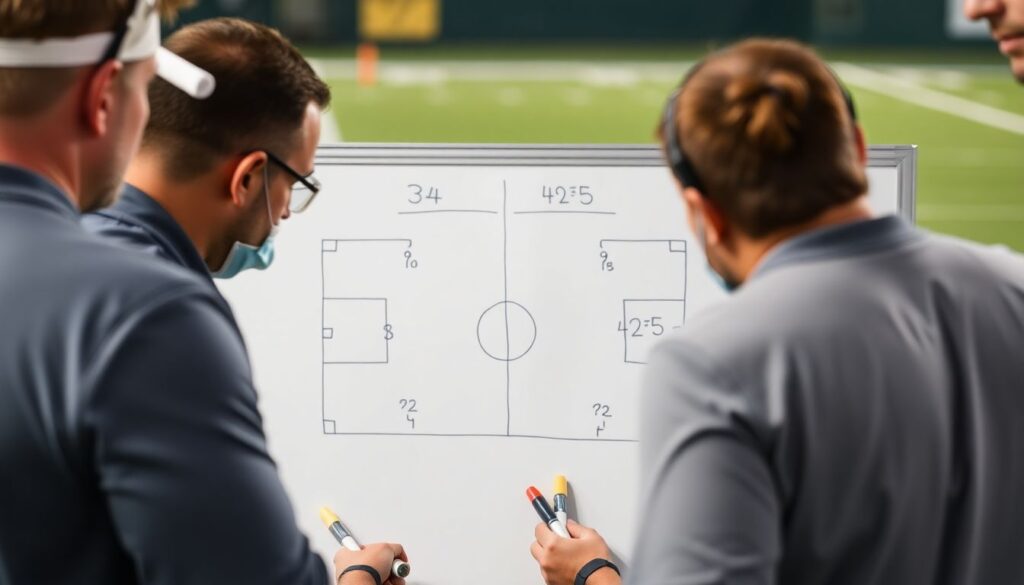
Start from whatever your staff and roster already understand. If you have true OLB types and fire-zone background, a 3-4-centric path is easier. If you are built around four-down spacing and quarters, evolve toward hybrid 4-2-5 first, then add mint/3-4 tags.
Do I need new personnel to run 3-4 and 4-2-5 hybrids effectively?
Usually no. You need clear roles more than different body types. Identify your hybrid edge (Jack/Buck) and space defender (Star/Nickel) from existing players, then adjust techniques and alignments rather than chasing an idealized prototype.
How many hybrid looks can I realistically install in one offseason?
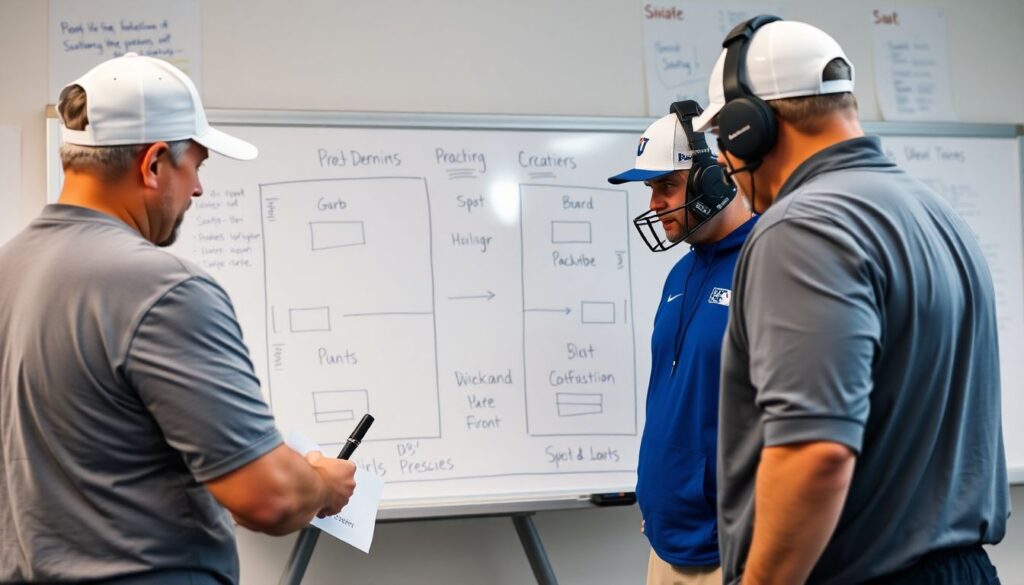
For most intermediate programs, one new front family and two to three pressures attached to it is a healthy target. Add more only after those calls hold up in scrimmages without major fit or communication errors.
Are hybrids riskier against tempo offenses than traditional sub-packages?
Done well, hybrids are safer versus tempo because you can change the picture without changing personnel. They become risky if each look has different rules; tempo punishes complexity, so lean on consistent language and minimal checks.
Can I run my existing coverage package with new hybrid fronts?
In many cases yes, especially if you are already a quarters or match-3 team. Focus on how front changes affect force and interior fits so coverage drops stay intact while the box adjusts to new spacing.
What is the most common mistake when copying clinic or online course material?
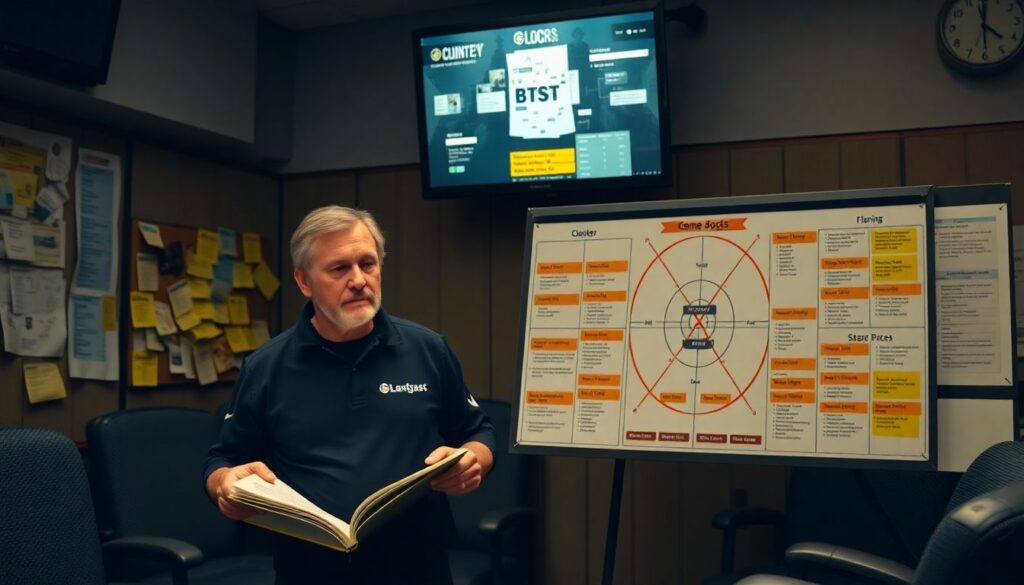
The most common mistake is importing entire playbooks or pressure menus without translating them into your terminology and practice structure. Use external resources as idea banks, not as wholesale replacements for your system.
How do I evaluate if my hybrid experiment is working?
Track explosive runs allowed, communication errors, and substitution issues rather than just points. If busts decrease and you handle multiple personnel groups without constant subbing, your hybrid direction is probably sound.