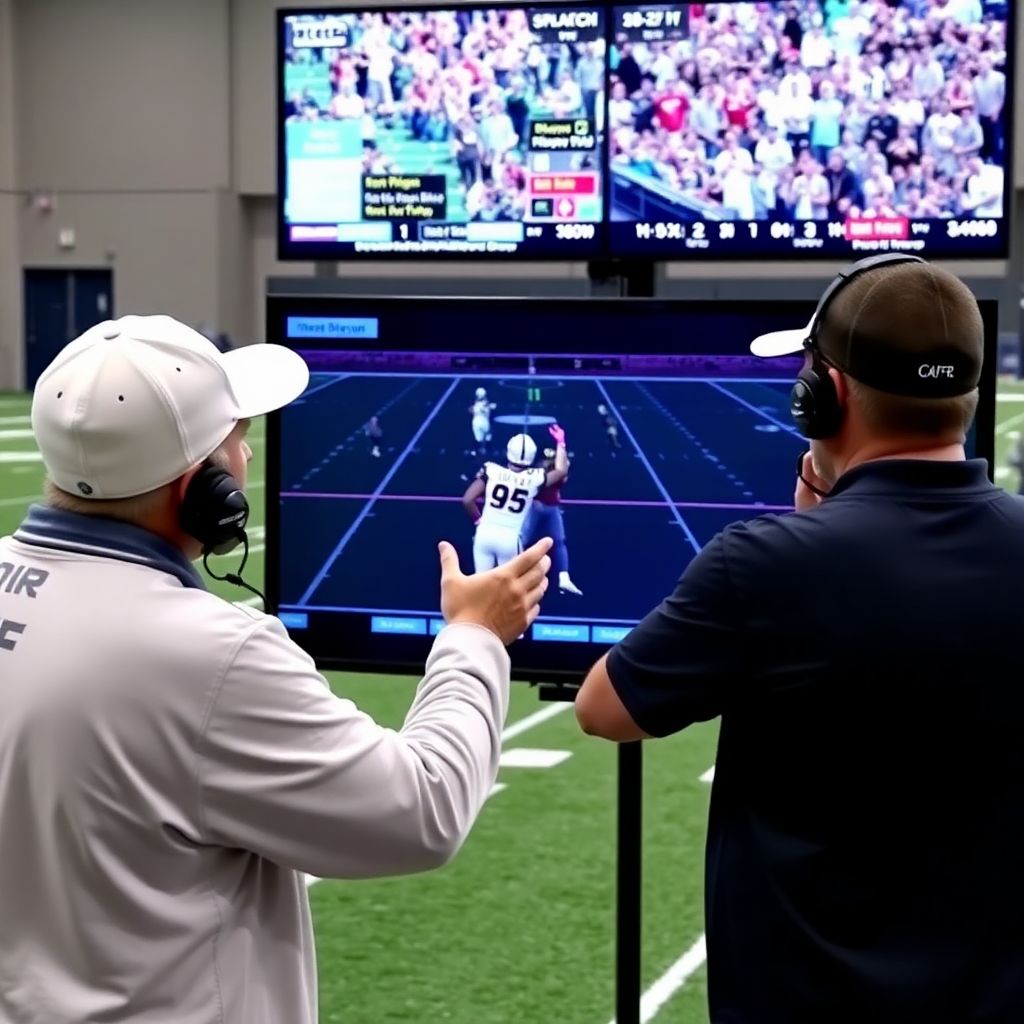
All-22 film shows exactly how elite wide receivers create separation, hit precise depths, and sync with the quarterback within the coverage structure. By tracking stems, leverage, timing, and on-the-fly adjustments, coaches can turn wide receiver route running training into targeted, measurable work that directly translates from film room to field.
Film Room Essentials: What to Watch on All-22
- Identify how the route stem and depth relate to coverage structure and concept.
- Measure separation at top of route and at catch point, not just release wins.
- Match receiver breaks to quarterback drop timing and progression order.
- Study how receivers read leverage and adjust versus press, off, and zone.
- Track situational performance: third down, red zone, and vs specific coverages.
Decoding Route Stem and Vertical/Horizontal Depth

On All-22, the route stem is the initial vertical or diagonal path before a receiver makes a decisive break. It sets up the defender, tells the quarterback where the receiver will be, and ties into the spacing of the overall concept. Elite route runners win the rep during the stem, not only at the catch.
Vertical depth is how far downfield the receiver gets before breaking; horizontal depth is how far they work inside or outside relative to landmarks such as numbers, hash marks, and sideline. In an all-22 film breakdown wide receivers should be evaluated on whether they consistently arrive at the correct landmark and depth for the play call.
The key is consistency: a 12-yard dig should look like 12 yards every time, regardless of coverage. All-22 lets you compare the receiver’s depth to others in the concept and to the sticks, red zone markers, or expected target window. Deviations in depth or stem angle often explain why a route “looked open” on broadcast but the ball went elsewhere.
- Check if stems are vertical enough before breaking, instead of drifting too early.
- Confirm break depth vs playbook rules (e.g., 10, 12, or 15 yards) using field lines.
- Note horizontal landmarks: outside/inside the numbers, on/off the hash, near sideline.
- Compare route depth and landmark to other receivers in the same concept for spacing.
Separation Mechanics: Footwork, Hip Alignment and Hand Use
Separation is created with controlled footwork, efficient hip mechanics, and legal hand use, not just speed. When you evaluate wide receiver route running training on All-22, focus on how these pieces work together at three phases: release, stem, and break.
- Release footwork: Look for purposeful foot fire, jab, or split release that moves the defender’s hips, not random dancing. Elite wide receiver drills for route running often isolate single- and two-step releases because adding extra steps usually slows the route and throws off timing.
- Hip and pad-level control: Elite receivers keep pads down and hips coiled through the stem, then snap hips and shoulders together at the break. On film, a sharp break is one or two steps with a clear change of direction, not rounded drifting steps that “bubble” the route.
- Hand usage vs contact: Against press or collision in the stem, watch for quick, violent swipes, chops, or swims that clear the defender’s near arm. Hands should be compact and on-time, not wide swings that cause balance issues or draw flags.
- Body lean and leverage selling: Before breaking out, the receiver should lean and sell in; before breaking in, he should lean and sell vertical or out. On All-22, you should see defenders committing their hips one way before the receiver breaks the opposite direction.
- Acceleration out of break: Separation gained at the top must be maintained. Look for immediate re-acceleration in the first three steps after the break, rather than standing up and searching for the ball too early.
- Count steps at the top: aim for sharp, 1-3-step breaks instead of long, rounded cuts.
- Check hip and shoulder snap: do they change direction together or separately and slow?
- Watch for on-time, tight hand swipes vs wide, off-balance swings vs press.
- Note whether separation grows in the first three steps out of the break or shrinks.
Route Timing and Quarterback Window Synchronization
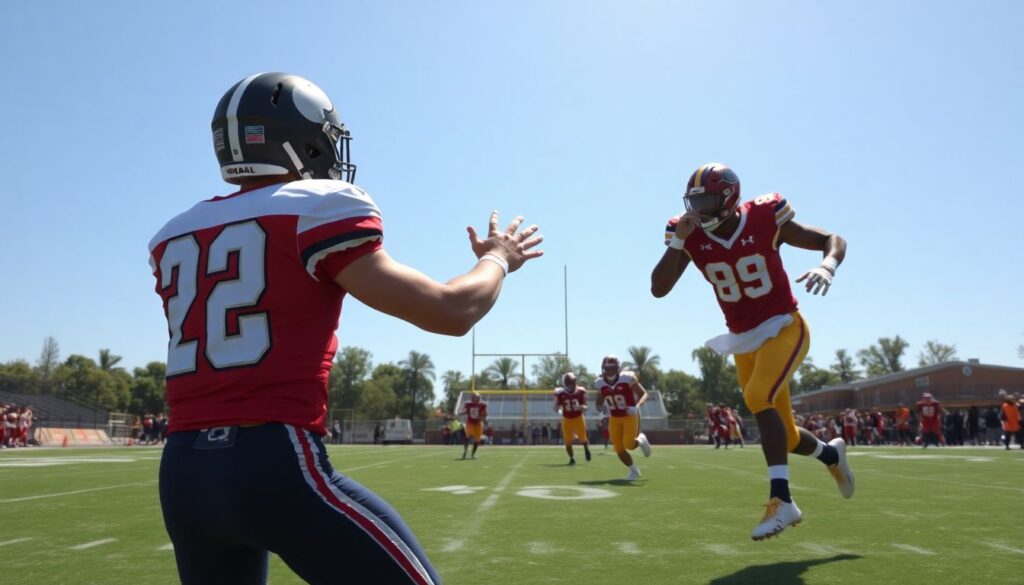
Route quality is incomplete without timing. On All-22, every route lives inside a quarterback’s drop, reset, and progression. To evaluate an online course to improve wide receiver route running or your own drills, you must connect movement patterns to these timing windows.
- Quick game (one-step/three-step): Slants, quick outs, sticks, and hitches must be at full speed almost immediately. The receiver’s break should sync with the quarterback’s last step of the drop. If the receiver is still fighting at the line while the ball is released, the issue is timing, not just “getting open.”
- Intermediate concepts (five-step or play-action): Digs, comebacks, and deep outs require a controlled stem and break depth matched to a slightly longer window. All-22 reveals if the receiver is too early (waiting on the ball, letting coverage recover) or too late (quarterback hitches multiple times or moves off the read).
- Deep routes (seven-step/dropback shots): Posts, corners, and go routes must reach assigned vertical depth when the quarterback hits the launch point. The film shows whether the receiver stacks the defender early enough and maintains that stack through the throw.
- Progression order: A receiver who is the third read cannot take the same tempo as a first-read slant. On All-22, track how the quarterback’s eyes and feet align with the receiver’s route tempo to determine if a “late” throw is really on the receiver.
- Scramble and off-schedule: When timing breaks down, elite receivers immediately transition to scramble rules. Evaluate whether they work back downhill, across field, or deep according to team rules, rather than drifting aimlessly.
- Match break point to the quarterback’s final step or hitch on the drop.
- Observe if the receiver is waiting in a window or arriving as the ball is released.
- Note whether route tempo changes appropriately with first, second, or third read status.
- Check how quickly the receiver reacts and re-routes when the quarterback leaves the pocket.
Beating Coverage: Leveraging Defender Alignment and Pre-Snap Indicators
Coverage recognition is where elite route runners separate mentally. A football coaching service wide receiver development program should teach receivers how to use pre-snap alignment clues and leverage to choose the best release, stem angle, and finish.
On All-22, you can clearly see the entire secondary structure and how the receiver’s decisions either attack or ignore that structure.
Advantages of leverage-driven route running
- Allows receivers to choose releases that attack the defender’s weak shoulder (e.g., inside leverage defender gets attacked outside, then crossed face).
- Helps receivers stem toward space in the coverage shell rather than running blindly to a spot.
- Improves timing with the quarterback because both are reading similar pre-snap indicators.
- Limits unnecessary contact by avoiding collision lanes and linebacker help.
Constraints and trade-offs to keep in mind
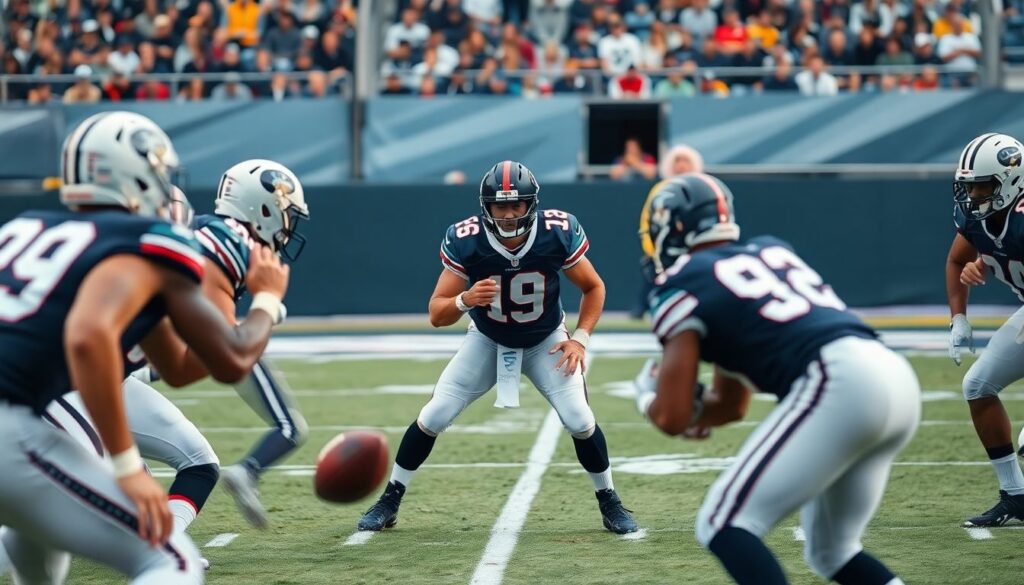
- Playbook rules: Optionality is limited by concept rules; receivers cannot freelance and break spacing.
- Quarterback expectations: Over-adjusting versus coverage can confuse the quarterback if not clearly defined in the system.
- Defensive disguises: Safeties and nickel defenders may rotate post-snap, so receivers must confirm with post-snap keys, not only pre-snap pictures.
- Down-and-distance: Taking a leverage-based release that lengthens the route can be risky on tight-timing downs like quick-game third-and-short.
- Identify defender leverage (inside, head-up, outside) before each snap on film.
- Check whether the chosen release actually attacks the weak leverage shoulder.
- Confirm that route adjustments still respect spacing with other routes in the concept.
- Note if receivers consistently verify post-snap rotation before making major adjustments.
On-Route Adjustments: Option Routes, Sight-Adjusts and Contested Catch Strategy
On-22 reveals how well receivers handle live adjustments. Option routes, sight-adjusts, and contested-catch situations expose understanding, trust, and technique. Many myths about “improvisation” are actually poor execution or unclear rules.
- Myth: Option routes are just freestyle creativity
Reality: Good systems define specific rules: break in vs out vs sit based on leverage, depth, and help defenders. On film, you should see repeatable choices in similar coverage looks, not random behavior. - Myth: Any separation is good enough
Reality: Slight separation underneath may work, but downfield you need more space or superior ball skills. Use All-22 to evaluate if receivers are gaining enough room at the top to allow a safe throw, not just a “tough contested” attempt every time. - Myth: Contested catches are all about toughness
Reality: Catch-point wins start earlier. Watch how receivers position their body, use late hands, and subtly nudge into advantageous stack positions well before the ball arrives. - Myth: Sight-adjusts are only the quarterback’s job
Reality: Receivers must see pressure, rotations, and vacant space too. On All-22, check if they shorten or flatten routes versus blitz looks or rotate their route to serve as the “hot” answer. - Myth: Deep balls are just 50/50
Reality: Elite receivers turn them into higher-percentage plays by stacking defenders, tracking early, and using their inside shoulder and hip to shield. The film reveals whether they consistently find and hold that stacked position.
- Track whether similar coverages trigger similar option-route choices from the receiver.
- Observe body positioning and late hands at the catch point on contested throws.
- Note how often deep targets are true 50/50 vs created positional advantages.
- Check if receivers adjust depth or angle versus blitz/look changes as designed.
Translating Film to Metrics: Efficiency, Win Rate and Situational Production
To turn All-22 insights into action, you need simple, repeatable metrics. These do not require advanced tracking data; basic charting can reshape elite wide receiver drills for route running and your practice priorities.
Here is a lightweight way to structure your film notes into numbers:
- Define “win” for the route: For example, a win might be clear separation at the break or catch point, correct depth and landmark, and on-time arrival to the window, regardless of target.
- Chart route outcome by type and coverage: For each route (slant, dig, comeback, post, etc.), log coverage (man/zone/press/off), whether the receiver won, lost, or was neutral, and whether the ball was thrown.
- Track situational buckets: Separate third down, red zone, and early downs. This reveals whether a receiver is a drive-sustainer, field-stretcher, or red-zone specialist.
- Link to practice planning: If a receiver frequently loses on intermediate outs vs off-man, design the next week’s wide receiver route running training to hammer those specific breaks and leverage reads.
Simple pseudo-structure for notes might look like:
Route: 12-yard dig | Coverage: Man-press | Result: Win (2 yards separation at break) | Target: Yes | Situation: 3rd & medium
Over time, these notes support both individual development plans and decisions about who should run which routes in critical situations.
- Log wins/losses per route type and coverage rather than only catches and drops.
- Highlight patterns where separation or timing consistently fail (by route/coverage).
- Use film metrics to choose 2-3 focus skills for the next practice block.
- Revisit the same metrics after a training block to confirm real on-field improvement.
Film-Room Self-Check Before You Leave the All-22
- Can you explain, in route-language, why a receiver was or was not targeted on a given play?
- Have you noted specific stem, depth, and timing corrections for at least one route family?
- Did you chart wins and losses by coverage type, not just big plays and drops?
- Have you turned at least two film insights into concrete drill or practice adjustments?
- Can you connect what you saw on film to one clear development goal per receiver?
Coaching Clarifications
How is All-22 different from broadcast film for evaluating receivers?
All-22 shows every receiver, defender, and the full route from snap to whistle. Broadcast angles often lose routes downfield and hide spacing, leverage, and timing relationships, making it hard to judge route quality beyond the targeted receiver.
What should I look for first when starting an All-22 session?
Begin by identifying coverage structure and leverage, then evaluate stems and route depths against the concept design. After that, match receiver breaks to quarterback drop timing and progressions before worrying about spectacular catches or drops.
How can I turn film notes into better route running drills?
Identify recurring problems-such as rounded comebacks, late breaks vs off-man, or poor releases vs press-and design drills that isolate that footwork, leverage read, or timing. Each note from film should correspond to a focused drill or coaching cue.
How many games of All-22 do I need to evaluate a receiver’s route skills?
Use enough games to see a full sample of route concepts, coverages, and situations. Focus less on a specific number of games and more on whether you have multiple examples of each key route family against both man and zone.
Can younger or intermediate players benefit from this level of detail?
Yes, as long as you translate insights into simple language and a few clear rules. Rather than overwhelming them, pick one or two film-backed focus points-such as consistent break depth or attacking leverage-and build those into practice.
How does All-22 study fit with online route running courses or coaching services?
Use All-22 to diagnose needs, then select an online course to improve wide receiver route running or a football coaching service wide receiver development program that specifically targets those weaknesses. Film ensures the training is personalized, not generic.
Should I chart only targets or every route on film?
Chart every route, not just targets. Targeted plays represent only a slice of receiver performance; non-targeted routes still reveal timing, discipline, effort, and whether the receiver is consistently winning or losing within the concept.