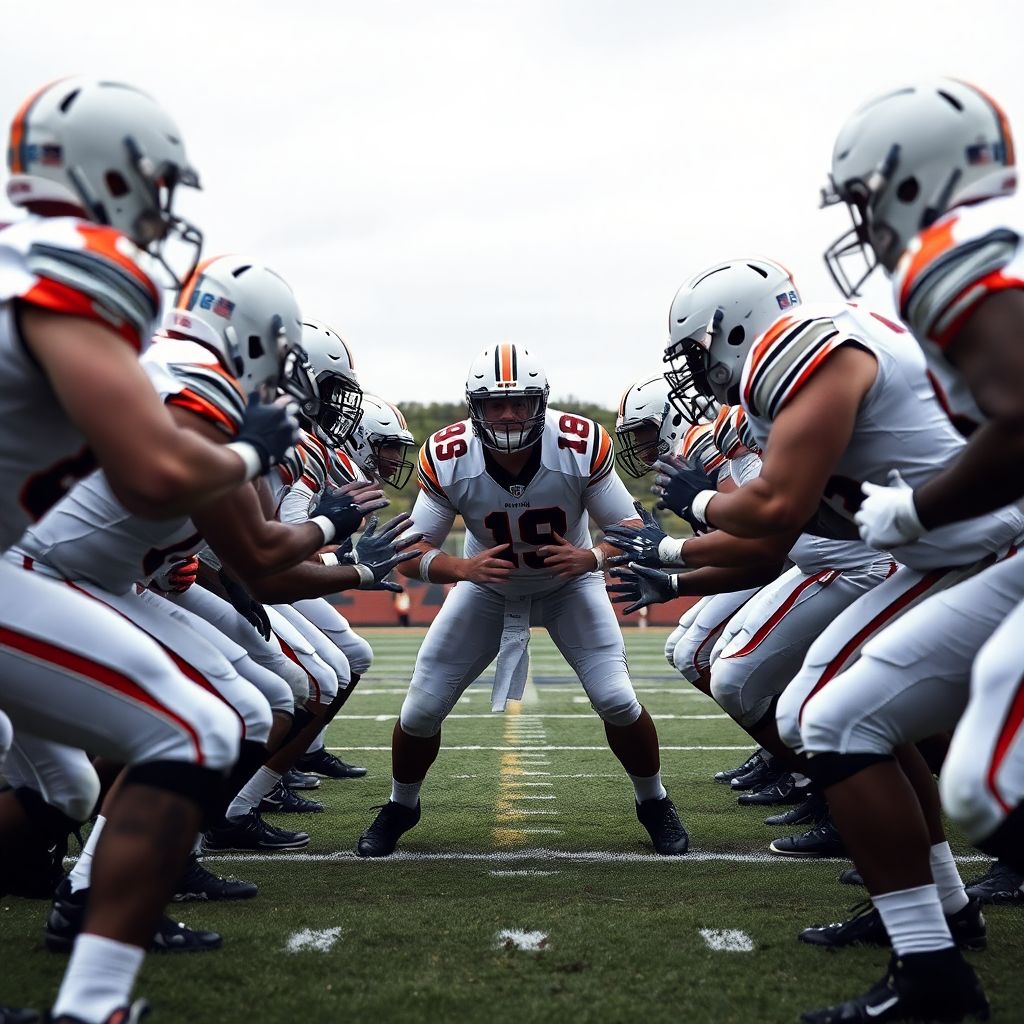
Underrated offensive linemen are the quiet enforcers who consistently win blocks, avoid penalties, and keep the offense on schedule without highlight plays or name recognition. They dominate through clean technique, anticipation, and communication, turning good play calls into efficient drives and helping quarterbacks and backs look like stars on the stat sheet.
Standout Traits That Define Quiet Dominance
- Rarely lose clean: few obvious whiffs, sacks, or tackles for loss directly on them.
- Consistent pad level and leverage that move defenders even without pancake blocks.
- Disciplined hands and feet, minimizing holding and false starts in loud environments.
- Smart targeting on combo blocks and second-level climbs that spring efficient runs.
- Rapid recognition of stunts and pressures, keeping the quarterback in rhythm.
- Scheme versatility: effective in both gap and zone concepts, left or right, guard or tackle.
- Quiet leadership: crisp calls, calm body language, and reliable execution in key downs.
Anchor of the Line: Techniques That Stabilize the Run Game
Being the anchor of the line in the run game is less about violence and more about reliable control. Quietly dominant linemen win by staying square, owning their leverage window, and giving backs a clear read. The goal is not constant knockdowns; it is repeated displacement and body positioning.
On an inside zone, picture the left guard covered by a 3-technique. A steady, underrated player fires off with his inside foot, delivers a low, rising strike with his inside hand to the sternum, and keeps his hips square to the line of scrimmage. Even if he does not drive the defender five yards back, he prevents penetration and subtly turns the defender’s shoulders. That tiny turn widens the crease just enough for the back to press, cut, and gain positive yards.
These anchors rely on three practical habits. First, they maintain a consistent pre-snap stance: balanced weight, relaxed hands, and a pad level that can come out low without dipping their head. Second, their first two steps are disciplined: no false step, no heel-clicking, and no overstriding that causes waist-bend. Third, they prioritize fit over finish: they secure the defender’s play-side number, then only chase a “finish” if it does not threaten the run lane.
On double teams, a quietly dominant right guard and right tackle will work as one unit. The guard delivers a firm, vertical double strike, keeping his eyes on the linebacker; the tackle takes the near hip and hinges the defender. Once the down lineman is controlled, the guard peels to the second level on a tight track, sealing the backer rather than flying past him. This type of detail is what separates truly reliable anchors from flashy, inconsistent maulers, and it is what coaches look for when they review tape for top offensive line rankings nfl lists rather than fan hype.
Pass-Protection Craftsmen: Footwork, Hand Placement, and Angles
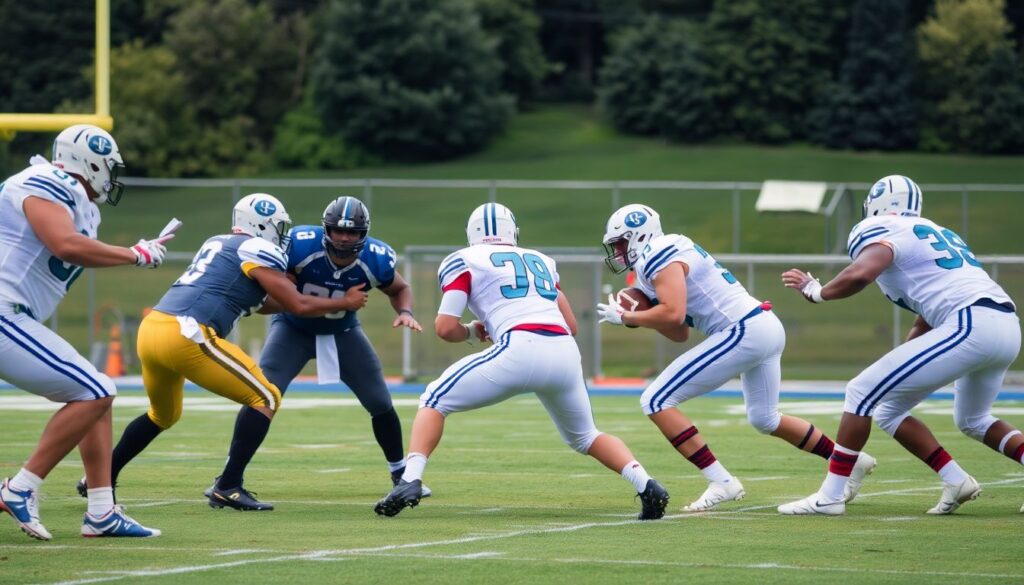
In pass protection, quiet dominance shows up in boredom: the ball snaps, the quarterback hits his drop, and nothing dramatic happens on the edge or inside. Craftsmen in protection use repeatable, low-risk techniques that neutralize rushers instead of chasing huge knockback shots.
- Controlled vertical set depth. A reliable tackle sets with measured depth relative to the quarterback’s drop, never drifting too wide or too shallow. Against a wide-9 rusher, he may use a 45-degree set, gaining width and depth together. The rusher is forced to run the arc, arriving late. It looks uneventful, but it wins the down.
- Independent hand usage. Quiet technicians avoid throwing both hands at once and getting swatted. They lead with an inside hand as a post, then “catch” with the outside hand. If the rusher swipes one, the other hand remains available to re-fit, steering the rusher past the landmark instead of grabbing cloth and risking a hold.
- Maintaining half-man leverage. Rather than head-up collisions, they protect a half-man relationship: their sternum aligned to the rusher’s inside number. This angle keeps the inside lane closed and lets them ride speed wide. A textbook rep is a speed rusher getting shut down as the tackle keeps his inside knee between rusher and quarterback.
- Active, not panicked, feet. The best nfl offensive linemen 2024 on film rarely stop their feet mid-rush. Even when initially beaten, they “run the hoop,” flipping their hips and sprinting to stay attached. A guard who gets edged on a twist will immediately plant, pivot, and sprint laterally, catching the looper and forcing a throwaway instead of a sack.
- Anchor reset versus power. Against a bull rush, a quiet dominator drops his post foot, sinks his hips, and replaces ground under control. Imagine a center being walked back half a yard, then re-dropping his anchor, stopping the rush dead. The quarterback steps up and hits a dig; the center’s small win is invisible on the broadcast angle.
- Eyes and communication. They scan for late pressure, passing off games smoothly. On a third-and-long twist, the guard punches the first penetrator, snaps his eyes outside, and calmly catches the looper. The defender never comes free, and the play looks easy because the guard’s technique and communication handled the complexity.
Film-Room Metrics: Quantifying ‘Underrated’ Offensive Line Play
Evaluating underrated linemen starts with watching full drives, not just highlight clips. But pairing film with a few focused metrics can reveal who is quietly dominating. You do not need a full analytics department; you just need to track the right details and tie them to what you see on tape.
First, log direct pressures allowed. Every passing snap you watch, mark whether your target lineman is the one who loses: cleanly beaten, forced the quarterback off his spot, or allowed a hit. Over a game, a quietly dominant player might have only a couple of true losses despite facing quality rushers. On film, that looks like a quarterback calmly hitting his back foot again and again without interior chaos.
Second, track lost run blocks that cause disruption. On inside runs, note when your lineman is driven back into the lane or shed early, forcing the back to bounce or cut before the designed read. Many underrated players are not blowing defenders up, but they also almost never get knocked into the hole. Their “non-losses” keep the offense on schedule.
Third, tag combo-block efficiency. On zone plays, mark every time your lineman and his partner secure the down lineman and successfully climb to the linebacker. On one outside zone rep, for example, the left tackle and guard work a textbook double: tackle lifts and widens, guard seals and climbs, and the back cuts off the guard’s hip for a clean 8-yard gain. That rep is a win for both linemen on your sheet.
Finally, monitor penalties: holds, false starts, and illegal hands. A lineman with very few flags over many snaps is often a technician worth studying. When you compare these notes across a handful of games and match them against public top offensive line rankings nfl lists, you will quickly spot players whose quiet efficiency is better than their name recognition suggests.
NFL Case Studies: Unsung Linemen Who Shifted Outcomes
Unsung linemen influence games even if they never appear on a fantasy scoreboard. When you break down real drives, certain patterns appear: a steady right guard erasing interior push on third downs, or a left tackle quietly neutralizing a star edge rusher so often that the defense has to change its pressure plan.
Consider a late-game, four-minute offense scenario. The offense needs to burn clock with predictable runs. The right side guard and tackle are not Pro Bowlers, but for four straight plays they execute nearly flawless double teams on the defensive end and tackle. Each time, they gain just enough movement, stay connected, and allow the back to fall forward for modest gains. The defense eventually burns its timeouts, and the game ends without dramatics. Those linemen essentially ended the game, but postgame talk centers on the quarterback kneel-downs.
When fans debate the best nfl offensive linemen 2024 or search for nfl offensive lineman jerseys for sale, many of these names never come up, yet coaches and scouts circle them in film sessions because of drives like this.
Advantages of these unsung heroes include:
- They stabilize protection, allowing coordinators to call deeper routes and longer-developing play-action without extra help.
- They reduce offensive variance by limiting negative plays: sacks, holding penalties, and run stuffs.
- They make teammates better by nailing communication, line calls, and adjustments versus movement fronts.
- They keep the offense scheme-multiple, enabling both gap and zone runs without substitutions.
Limitations and hidden risks include:
- They can be overshadowed by elite teammates, making it easy to mis-assign credit when the line plays well.
- They may lack the raw traits that hold up in radically different schemes, so their dominance can be system-dependent.
- Their impact is harder to sell in contract negotiations because it lacks obvious counting stats.
- Fans and media may underestimate their importance, so one injury or departure can surprise everyone except the coaching staff.
Scheme Fit and Versatility: Why Coaches Prioritize Subtle Skill Sets
Coaches obsess over scheme fit because an offensive line is a five-man unit, not five isolated technicians. A quietly dominant lineman is one whose skills make the entire group’s job easier, especially when the playbook asks for multiple run families and protection schemes from the same personnel.
In a wide-zone heavy offense, for example, underrated guards and tackles must have the agility to reach shaded defenders and climb to linebackers on the move. A left guard with great lateral quickness but average power might never appear in highlight reels, yet he is perfect for this system. He consistently cuts off backside pursuit, letting the back press the front side before cutting back into lanes that look scripted on film.
Common mistakes and myths around scheme fit include:
- Myth: “Power maulers cannot zone block.” Many strong, heavy-handed linemen can thrive in zone if trained to take flatter angles and keep their hips square. The real issue is foot discipline, not raw size.
- Myth: “Versatile” means playing every position. True versatility often means executing multiple concepts (inside zone, duo, counter, quick game protections, play-action) from the same spot. A guard who can pull on power one snap and then pass off a twist the next brings immense value.
- Mistake: Ignoring mental processing. Some physically gifted linemen struggle with pressure rules, checks, and defensive stems. A mentally sharp, “boring” veteran can be far more valuable in a complex protection system.
- Mistake: Overrating size in space schemes. In offenses built around perimeter screens and toss cracks, a lighter, mobile tackle who reliably hits second-level targets might be more valuable than a bigger, slower name-brand free agent.
- Myth: Star linemen and backups need totally different coaching. In reality, everyone benefits from the same core technical standards. The difference is usually how fast they can adjust to new calls and variations, which is heavily influenced by how intentional their offensive line training program for football has been throughout their career.
This is also why serious fans who invest in nfl game jerseys offensive linemen authentic often follow specific teams’ scheme identity: the linemen they appreciate most are the ones whose subtle skill sets make that scheme come alive on Sundays.
Impact Indicators: Penalties, Sacks Allowed, and Play-by-Play Influence
Quantifying quiet dominance comes down to impact indicators you can track snap by snap. Penalties, sacks allowed, and even small play-by-play notes about displacement and control help reveal which offensive linemen are real difference-makers, regardless of name recognition or jersey sales.
Consider a simple drive chart from the perspective of the right tackle:
- Play 1: Outside zone right. Tackle reaches 5-tech, stays attached, defender makes no play. Gain of 4.
- Play 2: Play-action shot. Clean 45-degree set, soft hands, rides edge rusher past the landmark. 20-yard completion.
- Play 3: Quick game. Sets flat, closes inside gap, cuts off inside move. Incomplete pass, but pressure-free.
- Play 4: Counter left away from him. Hinge block closes the backside B-gap, cuts off pursuit. Gain of 6.
On the stat sheet, that tackle has no recorded numbers. On your grading sheet, he has four clear wins and zero penalties or pressures. Extend this across an entire game, and you can see why coaches might value him as highly as more famous names featured in national top offensive line rankings nfl discussions.
Penalties are another clear indicator. If a lineman routinely avoids holds and false starts while facing elite rushers, that is a strong sign of technique and poise. On film, that looks like clean fits with inside hands, balanced feet, and no late grabs when beaten. Instead of tugging, he resets his feet, runs the rusher past the quarterback, and lives to fight the next down.
Over time, a pattern of low sack attribution, few flags, and consistent, if unspectacular, movement on run plays paints the picture of a quietly dominant lineman. This is the player whose jersey you might not see often when browsing nfl offensive lineman jerseys for sale, but whose reliability is the backbone of a high-functioning offense.
Action Checklist for Spotting Quietly Dominant Linemen
- Watch full drives and log every direct pressure, sack, and obvious run-block loss attributed to your target lineman.
- Track penalties over multiple games, especially holds and false starts in high-leverage downs and noisy environments.
- On zone runs, note how often he stays square, controls his gap, and successfully climbs to the second level.
- In pass protection, focus on set angles, independent hand usage, and his ability to reset anchor versus power rushes.
- Compare your notes to public lists of best nfl offensive linemen 2024 and see which efficient players receive little media attention.
- Revisit specific key plays (third downs, red zone, two-minute) and ask: did this lineman’s technique and decisions make the call safer or riskier?
Practical Clarifications on Evaluating Unsung Offensive Linemen
How can I evaluate a lineman if I only have TV broadcast footage?
Focus on end zone replays and slow-motion cuts when they are available. Track a single lineman for an entire series, ignoring the ball. Even from broadcast angle, you can log obvious pressures, penalties, and whether defenders regularly cross his face or penetrate his gap.
What is the simplest grading system I can use at home?
Use a three-level system: clear win, neutral, or clear loss on each snap. Wins mean control and no disruption, neutrals are stalemates that do not hurt the play, and losses are pressures, penalties, or penetration caused by that lineman.
How does position (tackle vs. guard vs. center) change what “quiet dominance” looks like?
Tackles are stressed more by speed and space, so look for clean sets and few edge pressures. Guards deal with power and interior movement, so focus on anchoring and handling stunts. Centers must manage both while directing calls, so mental processing and communication are a bigger part of their value.
Are offensive line stats online enough to judge who is underrated?
Basic stats and grading can point you toward potential underrated players, but you still need to watch tape. Numbers do not always capture who handled the toughest matchups, how fast the ball was out, or how much help a lineman received from tight ends and backs.
How does scheme affect whether a lineman looks dominant?
In quick-game, RPO-heavy systems, linemen can look better because the ball leaves fast and rushers never fully engage. In deeper dropback or heavy play-action offenses, protection is stressed more. Always consider the play style when judging a lineman’s performance.
What should I look for when designing or choosing an offensive line training program for football?
Prioritize programs that drill stance and start, footwork patterns for your main run schemes, independent hand use in pass protection, and communication on stunts and blitz pickups. Good programs also include film sessions that tie drills directly to real game situations.
Does buying an offensive lineman’s jersey help me learn more about line play?
The jersey itself does not, but following that player closely does. If you pick up an nfl game jerseys offensive linemen authentic and then study that player each week on film, you will quickly improve your eye for what quiet dominance actually looks like.