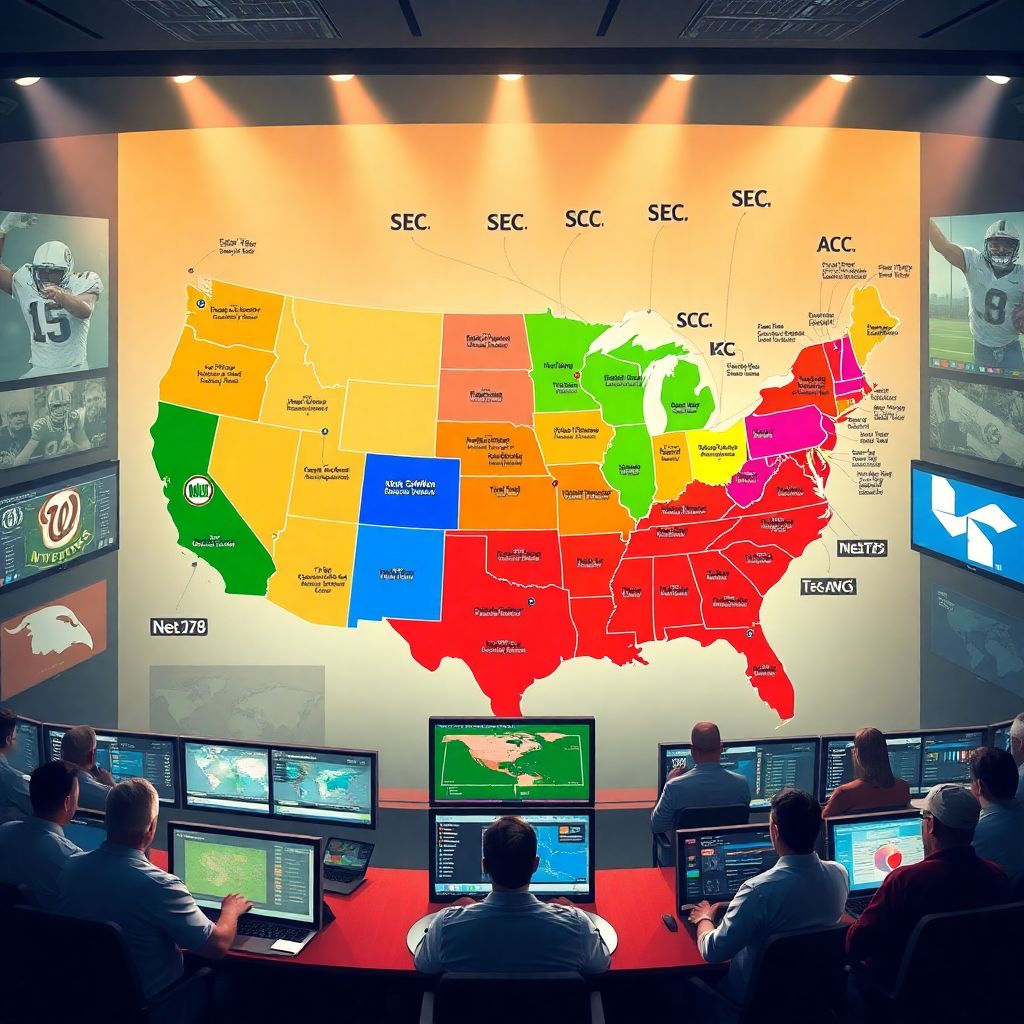
Why Conference Realignment Now Feels Like a Recruiting Arms Race
Over the last fifteen years, conference realignment has shifted from a quirky off‑season storyline into a structural force that shapes how high school athletes choose schools. With the Big Ten stretching from coast to coast, the SEC turning into a national super‑league, and the Pac‑12 essentially disintegrating by 2024, the map that used to anchor regional rivalries has been redrawn. In 2026, every serious staff treats realignment as a recruiting variable on the same level as facilities, NIL ecosystems and on‑field performance.
Historical Context: From Regional Leagues to National Grids
To see the current impact, you have to rewind to the early 2010s, when Nebraska bolted to the Big Ten and Texas A&M joined the SEC. Those moves hinted that TV inventory and market reach could outweigh geography. The next waves confirmed it: Oklahoma and Texas to the SEC, USC and UCLA to the Big Ten, then Washington and Oregon following. As ACC stability came into question and the Big 12 rebuilt with transfers from the old Pac‑12, the old regional recruiting pipelines fractured. That opened doors in some areas and closed them in others.
Key Mechanisms: How Realignment Rewires Recruiting Decisions
Conference labels now act like metadata on a program’s brand. A kid in Phoenix thinking about an East Coast school will ask: will my family see me on linear TV or only on late‑window streaming? Will I play in my home state every season or once in four years? Those questions directly affect how college football recruiting services evaluate “fit” and exposure. When SEC and Big Ten games dominate national windows, programs outside those leagues must sell niche advantages: immediate playing time, hyper‑specialized schemes, or stronger NIL collectives in a particular market.
Necessary Tools for Navigating the New Recruiting Landscape
Analytics, Media Data and Communication Platforms
In this environment, staffs need more than charisma and a binder of depth charts. The basic toolkit includes robust film‑grading systems, geo‑analytics to track where roster production originates, and subscription access to major college football recruiting services for verified measurables and background intel. Add in social‑media listening tools, CRM software for recruit contact logs, and TV/streaming metrics to quantify exposure by conference. Programs that integrate these data streams into a unified recruiting dashboard react faster when realignment shifts travel patterns or media deals.
Step‑by‑Step: Building a Realignment‑Aware Recruiting Strategy
Operational Workflow for Coaching Staffs
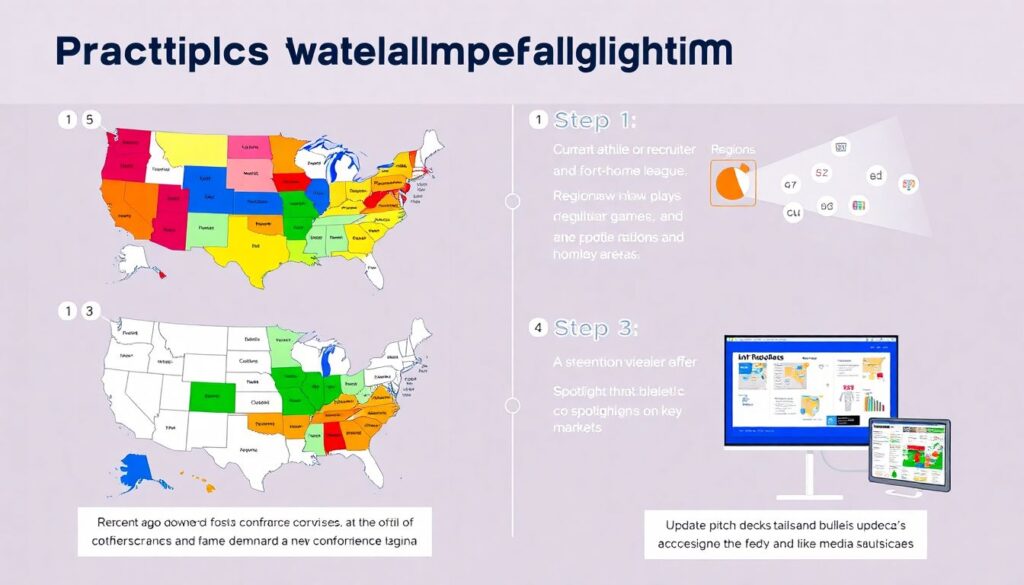
A practical process might look like this:
1. Map current roster and target boards by home region, then overlay new conference footprints and travel demands.
2. Re‑segment priority areas based on where your league now plays regular games and where media visibility is highest.
3. Update pitch decks with fresh TV windows, rivalries and NIL case studies.
4. Coordinate with admissions and compliance on transfer rules, especially as NCAA football recruiting news and updates evolve.
5. Continuously back‑test offers against outcomes to refine which regions still yield high‑retention, high‑impact players.
Impact on Rankings, Camps and Evaluation
Realignment also seeps into how outsiders grade classes. Analysts adjusting college football recruiting rankings increasingly account for geographic reach: a Big Ten program with a stable West Coast pipeline is now weighted differently than one stuck in a shrinking regional bubble. Meanwhile, the best college football recruiting camps are less about proximity and more about clustering talent from multiple time zones under one neutral banner. That concentration favors schools in media‑heavy leagues, because they can promise cross‑country exposure that aligns with where most campers actually want to play.
Class of 2025 and Beyond: Reading the Numbers Correctly
Looking specifically at college football recruiting class rankings 2025, you’ll notice a distinct pattern: SEC and Big Ten members dominate the upper tiers, but the distribution inside those leagues has shifted. Former mid‑pack brands with aggressive NIL strategies and clear national travel schedules are poaching blue‑chip prospects from traditional powers stuck in transitional phases. Evaluating those rankings now requires context: is a top‑15 class built on local monopolies, or on sustainable multi‑region pipelines that match the new conference grid and its broadcast contracts?
Troubleshooting: Common Realignment‑Era Recruiting Problems
Diagnosing and Fixing Strategy Failures
When a staff feels recruiting momentum stall after a realignment wave, the root cause is often misalignment between pitch and reality. If your league just added multiple cross‑country road trips, promising “easy home‑and‑home travel for families” will backfire. Instead, troubleshoot systematically: audit messages used by position coaches, compare them with actual schedules and media slots, then re‑calibrate. Use third‑party feedback from college football recruiting services and high‑school coaches to see whether prospects perceive your conference move as an upgrade, a lateral step, or a red flag requiring extra explanation.
Strategic Takeaways for 2026 and the Next Wave
Conference realignment is no longer a temporary shock; it’s an ongoing optimization process driven by media rights and institutional politics. For programs, that means recruiting strategy must be modular enough to survive the next shuffle. For recruits and families, it’s crucial to look past logos and ask: how stable is this league’s future, and how does its footprint intersect with my long‑term plans? The schools that win in this era will be the ones treating realignment not as chaos, but as a structured constraint they can model, measure and use to their advantage.