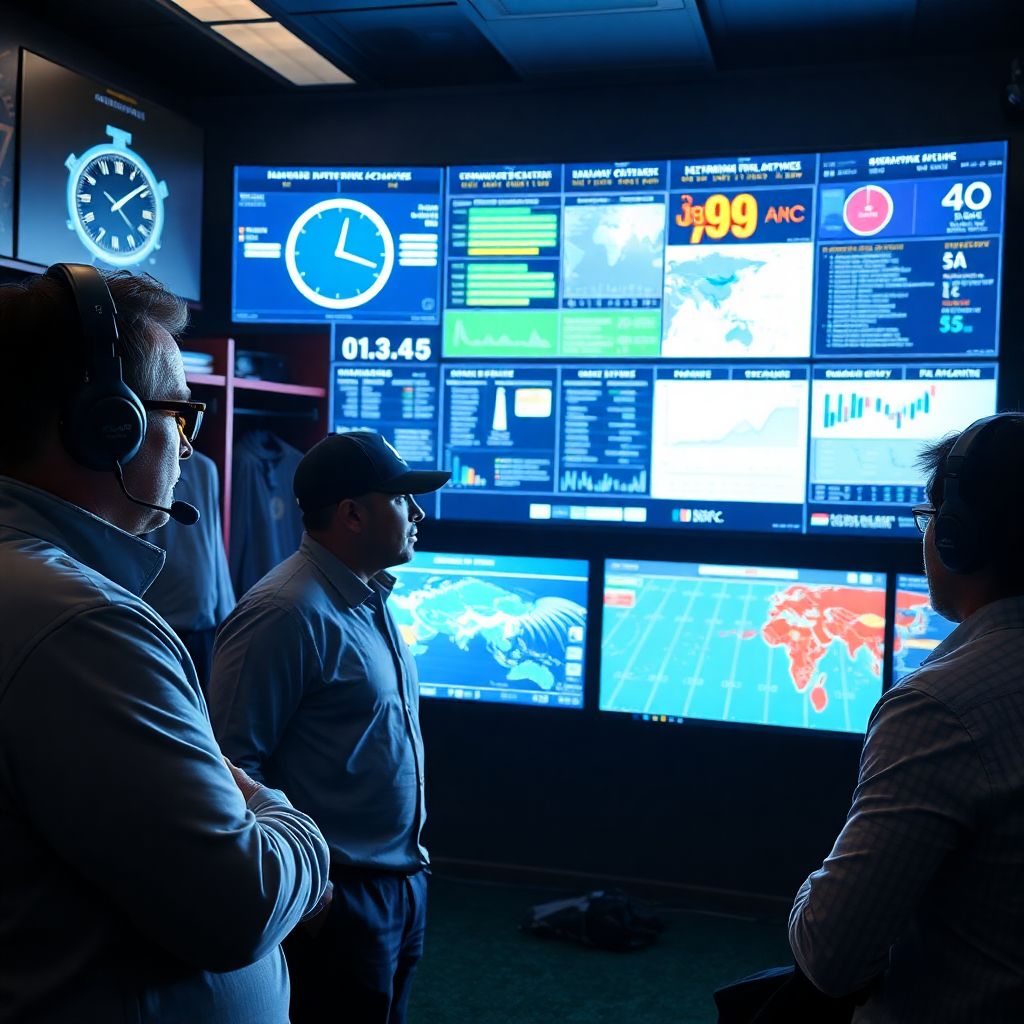
Advanced analytics in the NFL turn raw tracking, video, and play-by-play data into specific decisions: which concepts to call, which players to feature, how aggressive to be on fourth down, and how to manage workloads. Teams blend models with coaching judgment to refine game plans, adjust in-game strategy, and reduce preventable risk.
How Analytics Reshape Strategic Priorities
- Game plans shift from generic tendencies to opponent-specific weaknesses discovered in data.
- Fourth-down, 2-point, and clock decisions follow pre-built guidelines instead of gut feel alone.
- Player roles are optimized around what each athlete actually does efficiently on tape and in numbers.
- Practice and workloads are planned using injury-risk models, not just tradition.
- Scouting focuses on repeatable traits and probabilities instead of highlight plays.
- Front offices standardize decisions with shared dashboards and reports from nfl analytics software.
From Raw Tracking Data to Actionable Insights
In modern NFL analytics, the raw material is detailed tracking and event data: player coordinates every fraction of a second, who blocked whom, route types, coverages, and outcomes. Analytics groups pipe this into sports analytics platforms for nfl teams and custom databases, then clean, tag, and connect it to video.
From there, analysts build simple, decision-focused outputs: which run schemes work best into light boxes, which coverage shells a quarterback struggles against, where explosive plays usually hit a specific defense. Instead of dumping spreadsheets on coaches, they translate patterns into two or three clear rules per situation.
Example: against a defense that spins late into single-high and struggles to defend posts, an analyst may recommend: 1) call more play-action post/dig concepts on second-and-medium, and 2) formation and motion that force a specific safety into coverage instead of run support.
Modeling Player Value: Metrics, Metrics’ Biases, and Validation
Player value models estimate how much each athlete helps or hurts team outcomes, after adjusting for context. To keep these numbers usable, teams combine several metrics, understand their biases, and validate them carefully.
- Define the decision first. Start from the question: pay/extend, promote, change role, or cut. Then build metrics that inform that decision instead of chasing abstract scores.
- Use play-level impact metrics. For skill players and QBs, this means expected points added, success rate, and route/target efficiency by coverage and concept, generated with nfl performance data analysis tools.
- Context-adjust the numbers. Correct for opponent strength, teammates, play-calling, and situation (garbage time vs. tight games). Raw yards and sacks are heavily biased by context.
- Position-specific grading. For OL, DBs, and front-seven players, blend charting-based grades, tracking-derived separation or pressure rates, and on/off impact when they are in or out.
- Injury and availability probability. Model how often a player is likely to be healthy enough to play starter snaps, not just how good he is at his peak.
- Validate against future seasons. Check whether last year's grades and advanced football statistics and analytics solutions actually predicted future snaps, performance, and contract outcomes.
Practical mini-scenario: a team comparing two free-agent edge rushers might see similar sack totals, but the model reveals that Player A wins quickly one-on-one and produces pressures without blitz help, while Player B benefits from stunts and coverage sacks. The club shifts its offer to the more scheme-independent player.
Real-Time Decision Support: Algorithms in the Heat of the Game
On game day, pre-computed models and simple algorithms guide how aggressive a team should be and where to attack. The goal is not to call plays by computer, but to give the head coach and coordinator a prepared, high-confidence bias for key spots.
- Fourth-down and 2-point charts. Decision tables, often generated by football data analytics services, map score, time, and field position to a recommended choice: go, kick, or punt. These are printed on cards and mirrored on tablets.
- Run-pass and concept tendencies. For each defensive front and coverage, the offensive booth has a shortlist of their best EPA concepts. When the defense shows a look, the menu narrows to what data says is most efficient.
- Coverage and blitz detection. Live tagging of opponent calls helps identify when a DC shifts tendencies. If a team starts blitzing more on second down, the algorithm flags it and suggests screens, quick game, or max-protect shots.
- Clock and timeout management. Simple scripts determine when to stop the clock, when to let time run, and whether to target the sideline or middle based on time left and timeouts.
- In-game player usage. Real-time workload dashboards show snap counts and high-speed sprints. If a receiver crosses a workload threshold, the system flags for a short rotation or more slot snaps instead of deep go routes.
Mini-scenario: facing a fourth-and-2 at midfield in the third quarter, the sideline tablet shows a strong go recommendation. The offensive coordinator is given three pre-tagged short-yardage calls that have outperformed league average versus the defensive front currently on the field.
Revamping Scouting and Draft Evaluation with Probabilistic Tools
In scouting, analytics shift the focus from "who looks best on tape" to "who is most likely to become a starting-level player in our system." That means measuring traits precisely, weighting them by positional value, and expressing conclusions as probabilities, not certainties.
Teams integrate combine results, college tracking data, production, and biomechanical assessments inside sports analytics platforms for nfl teams, then compare each prospect to thousands of historical players. The output is a probability curve: chances of becoming a starter, role player, or bust.
Upsides of probabilistic scouting tools
- Standardizes language across scouts, coaches, and the front office for each position archetype.
- Helps avoid overreacting to small-sample college production or one great workout.
- Highlights undervalued prospects whose traits historically translate well despite low hype.
- Surfaces red flags early when a prospect's risk profile is far from successful comps.
- Enables scenario planning: what the roster looks like if a given pick hits median vs. high outcome.
Constraints and failure modes of draft analytics
- College data quality varies; some schools lack detailed tracking or consistent charting.
- Scheme mismatch: a player's "hit probability" can drop sharply if the NFL team uses him differently from his comps.
- Overfitting to recent trends can miss future rule or style changes that favor different archetypes.
- Psychological and off-field risk is hard to quantify but can derail the most promising profile.
- Too much trust in models can flatten out legitimate outliers that film and interviews identify.
Example: a team considering two cornerbacks sees that Prospect X has better ball production, but the model shows Prospect Y has measurably superior speed, size, and change-of-direction similar to successful long-term starters. The club drafts Y, accepting a slightly lower short-term projection for a better long-term profile.
Predicting Injuries and Optimizing Workload Through Biomechanics
Workload and injury analytics combine GPS data, strength metrics, medical history, and sometimes biomechanical assessments. Properly used, they help reduce avoidable soft-tissue injuries and manage in-season fatigue.
- Myth: models can precisely predict individual injuries. Reality: they estimate risk levels and thresholds, not specific events.
- Myth: more rest is always better. Too much rest can reduce fitness and raise injury risk when intensity spikes again.
- Mistake: ignoring position and play style. A slot receiver and a nose tackle with equal practice volume do not face the same risk profile.
- Mistake: failing to close the loop. If staff do not track how well workload changes impact actual injuries, the system stagnates.
- Myth: you must buy the most expensive solution. Many teams get value with simpler internal dashboards instead of full-service advanced football statistics and analytics solutions.
Concrete example: a team notices that when a running back exceeds a certain weekly sprint distance and high-intensity accelerations, his hamstring strain risk historically jumps. Coaches respond by limiting special teams snaps and trimming late-week high-speed reps once he hits that threshold.
Embedding Analytics into Coaching Routines and Organizational Process
Analytics only change game plans when they are wired into daily routines. That means predictable touchpoints, shared tools, and a clear division of roles between analysts and coaches.
Mini-case of a weekly workflow powered by nfl analytics software and in-house tools:
- Monday: opponent scan. Analysts deliver a 1-2 page summary: top offensive/defensive tendencies, explosive play locations, and key mismatch ideas.
- Tuesday: plan construction. Coordinators sit with analysts to turn insights into a short call-sheet: top concepts by down-distance and field zone.
- Wednesday-Thursday: practice feedback. After each practice, analysts tag success rates of key concepts versus scout-team looks and flag any surprises.
- Friday: situation rehearsal. Staff review fourth-down and clock scenarios, walking through recommended decisions from precomputed charts.
- Sunday: live support. A small analytics presence in the booth surfaces deviations from expected tendencies and monitors workload alerts.
Lightweight "pseudocode" for an in-house decision rule that might run behind the scenes in nfl performance data analysis tools:
if (down == 4 and yards_to_go <= 3 and yard_line between 45 and 35 and win_probability_go - win_probability_punt > threshold) {
    recommend = "GO FOR IT";
    show_top_3_short_yardage_calls();
} else {
    recommend = "PUNT or KICK";
}
Organizations typically partner with football data analytics services for infrastructure and maintenance, then build their own simple business rules on top so coaches see clear, consistent recommendations week after week.
Common Practical Questions About NFL Analytics Implementation
How much nfl analytics software does a team actually need to change game plans?
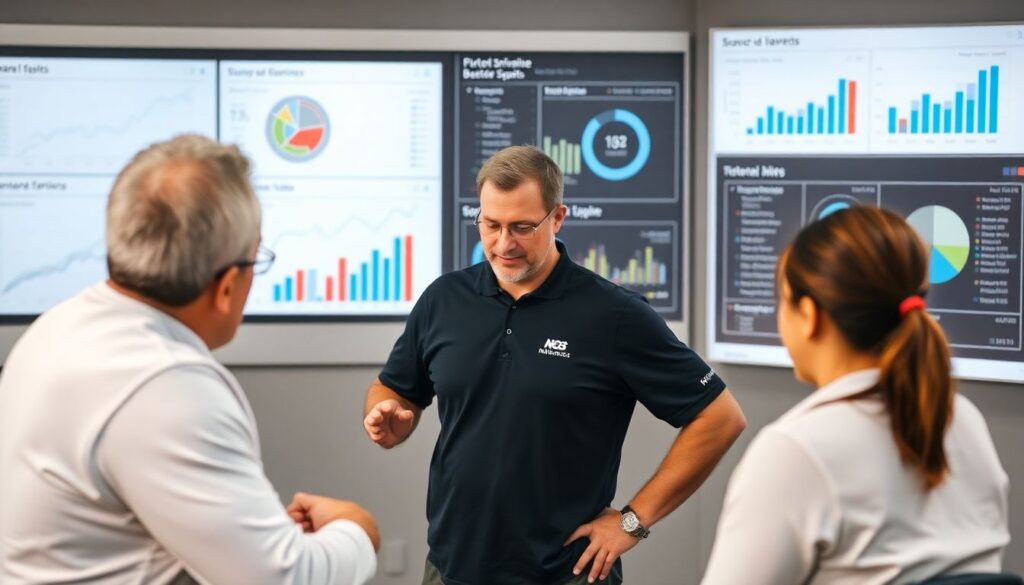
Most teams need a reliable data pipeline, basic visualization, and a few custom models. A lean setup plus clear weekly routines usually beats an overbuilt system that coaches do not trust or use.
Can smaller staffs get value without full sports analytics platforms for nfl teams?

Yes. Start with targeted projects: fourth-down charts, opponent tendency reports, and simple workload tracking. You can add platforms and integrations later once the staff sees concrete benefits.
How do coaches avoid "paralysis by analysis" on game day?
Limit live inputs to a few pre-agreed dashboards and rules of thumb. Do the heavy modeling during the week, then surface only clear yes/no or ranked options during the game.
What is the best first project when partnering with football data analytics services?
A common entry point is standardizing opponent scouting reports: consistent formation, coverage, and pressure breakdowns that feed directly into call-sheet design.
How should teams balance film study with advanced football statistics and analytics solutions?
Use numbers to frame the questions, then use film to understand the "why" and verify fit for your scheme. Neither should override the other; they should converge on the same story.
Do nfl performance data analysis tools replace position coaches?
No. They augment coaching by highlighting tendencies, mismatches, and workload risks. Position coaches still teach technique, manage relationships, and make context-specific adjustments.
How long does it take for analytics changes to show up in win-loss records?
Process changes usually appear first in decision quality: fewer obvious mistakes on fourth downs, more efficient play calls, and better player usage. Wins often follow after a season or two of consistent application and refinement.