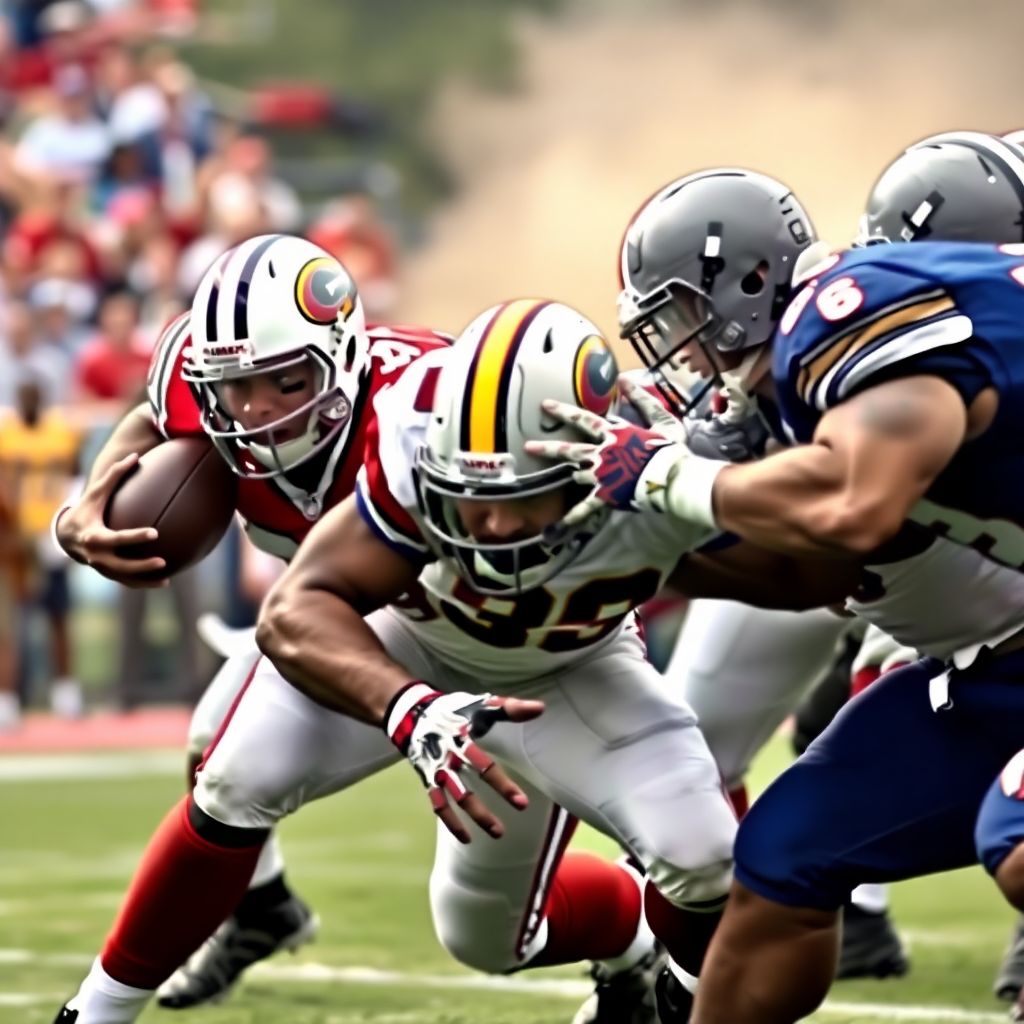
Edge rushers are defenders aligned on the edge of the formation whose main job is to disrupt the quarterback through pressure, hits, and sacks. Their role has evolved from pure speed off the corner to complete disruptors who stop the run, drop into coverage, and dictate protections in modern defensive schemes.
Mythbusting: What Edge Rushers Are – and What They’re Not
- If you think edge rushers are just fast sprinters around the corner, then you miss that the best ones win with hands, leverage, and timing as much as speed.
- If you assume only huge defensive ends can play the edge, then you overlook stand-up linebackers and hybrid bodies that offenses struggle to identify and block.
- If you treat sacks as the only measure of success, then you ignore consistent pressures that force bad throws, broken timing, and turnovers.
- If you coach edge rushers to freestyle every snap, then you lose the value of rush lanes, contain rules, and coordinated games with interior linemen.
- If you believe a great edge rusher can hide a bad secondary, then you underestimate how coverage and rush must work together to finish plays.
- If you think one pass-rush move is enough, then you guarantee that competent NFL tackles will quickly set, study, and shut it down.
From Speed Specialists to Complete Disruptors: A Historical Overview
Originally, the edge rusher was simply the fastest player lined up outside the offensive tackle, asked to win with a wide angle and effort. Over time, coordinators realized that predictable speed rushers were easy to scheme for with chips, slides, and quick-game passing.
Modern edge defenders are built as complete disruptors: they rush from two- and three-point stances, loop inside on stunts, spill or set the edge in the run game, and occasionally drop into coverage. If you are comparing the best edge rushers NFL 2024 tape, then you will see this full toolkit on almost every down.
The position now sits between classic defensive end and outside linebacker. If you are writing edge rusher rankings and scouting reports, then you must weigh pass-rush, run defense, and space movement, not just sack totals. This broader role is what allows them to redefine how defenses attack spread and play-action offenses.
Pass-Rush Techniques: Moves, Counters and When to Use Them
- Get-off and first three steps – If you lose off the snap, then every move becomes harder. Train stance, eyes on the ball, and explosive first three steps before worrying about fancy hand usage.
- Speed rush and rip – If the tackle oversets and gives you the edge, then threaten high-side with speed and finish with a rip to keep your frame clean and flatten to the quarterback.
- Bull rush and long-arm – If the blocker is light or jumps back to protect the edge, then convert speed to power with a low pad level, inside hands, or a long-arm into the chest.
- Inside counter (spin, club-rip, swipe) – If the tackle overshifts outside or turns his shoulders, then counter across his face with a tight inside move that stays in your rush lane.
- Hand-fighting and swipes – If offensive linemen keep getting good punches on your chest, then prioritize active hands, swipes, and chops before trying to bend around the corner.
- Rush plan and sequencing – If you want to know how to improve pass rush skills football players really use on game day, then script a first-quarter move, a second-quarter counter, and a third-quarter change-up based on how the tackle sets.
- Finish and strip-sack – If you arrive at the quarterback but rarely create turnovers, then practice finishing with club-through, tomahawk, and secure tackles instead of just diving for a hit.
Evolving Athletic Profile: Size, Explosiveness and Position Versatility
If you coach heavier, power-based defensive ends, then you typically align them in hand-in-the-dirt techniques (5-, 6-, or 9-tech) and ask them to control tight ends and tackles in the run, then collapse the pocket with power.
If you have lighter, more explosive stand-up rushers, then you can move them as wide 9s, in two-point stances, or even mugged up in B-gaps to stress protections with speed, simulated pressures, and creepers.
If your roster includes hybrid safeties or off-ball linebackers who can blitz, then you can pair them with true edge players to create odd looks where the offense cannot easily identify the primary rusher.
If you are building an edge rusher training program, then you should design position-specific tracks: one track for big ends learning to bend and trim weight, and another for lighter rushers building functional strength and block destruction.
Tactical Fit: How Edge Rushers Shape Modern Defensive Schemes
If coordinators fully understand what their edge rushers can and cannot do, then they can design fronts, stunts, and coverages that let those players attack without exposing the defense.
Advantages Coordinators Can Leverage
- If you have one dominant edge, then slide fronts, walk him around, and isolate him on the weakest protector using overloads and motion adjustments.
- If you dress the same player as both defensive end and outside linebacker, then you can disguise pressures and drop him into coverage to steal quick throws.
- If both edges can set a firm edge in the run game, then you can play lighter boxes and commit more defenders to coverage without giving up easy outside runs.
- If you coordinate interior and edge stunts, then you can attack protections from both sides, forcing the back and center into stressful decisions.
Constraints and Tradeoffs Defenses Must Respect
- If your edge rushers are undersized, then avoid asking them to two-gap big tight ends all game or you will wear them down and expose your perimeter.
- If you call constant wide-9 fronts with no contain help, then quarterbacks will step up and scramble through wide rush lanes.
- If you blitz too often to create artificial pressure, then smart offenses will punish you with quick game, screens, and max-protect shot plays.
- If your edge players rarely drop in simulated pressures, then offenses will quickly read that any movement from them still means a four-man rush.
Quantifying Pressure: Metrics, Film Study and Predictive Analytics
If you only look at sacks, then you undervalue players who consistently generate pressures, hits, and hurry throws that never show as big counting stats. Pressure rate, win rate, and time-to-pressure give a clearer picture of real impact.
If you rely only on analytics without film, then you miss context: unblocked pressures, blown protections, or coverage sacks. Film shows whether an edge truly beats blocks or just benefits from scheme and mistakes.
If you scout by highlights only, then you will miss the down-to-down consistency that separates rotational rushers from the best edge rushers NFL 2024 teams build around.
- If a player flashes one elite move but vanishes against top tackles, then treat him as a situational rusher until he shows counters and better rush-lane discipline.
- If an edge has modest sack totals but strong pressure numbers on early downs, then consider expanding his role and using more four-man rush calls to maximize coverage behind him.
- If data shows a big drop in effectiveness late in games, then adjust rotation, conditioning focus, and your edge rusher training program to build fourth-quarter stamina.
Player Development: Drills, Coaching Progressions and Career Pathways
If you want a practical plan rather than random reps, then anchor development around a clear weekly progression that links drills, film, and live reps.
Sample week for intermediate edge rushers
- If it is Monday (recovery and mental day), then:
- Study 15-20 cutups of your last game, focusing on get-off, pad level, and finish.
- Tag 3 clips of good rushes and 3 of rushes you want to fix for your position coach.
- If it is Tuesday (technique emphasis), then:
- Run pass rusher drills for defensive ends that train get-off, hand swipes, and rip finish for short, intense sets.
- Pair with a teammate acting as a tackle to rehearse one primary move and one counter.
- If it is Wednesday (team rush plan), then:
- Study opponent protections together and build a rush plan: if the tackle vertical sets, then lean on bull and long-arm; if he jump sets, then use swipes and inside counters.
- Walk through stunts and games with interior linemen so everyone understands gaps and landmarks.
- If it is Thursday (full-speed application), then:
- Run short team periods calling specific moves on specific snaps to practice executing the weekly rush plan at game speed.
- Finish with two-minute drill to simulate hurry-up rush, emphasizing conditioning and communication.
- If it is Friday (polish and confidence), then:
- Do 10-15 high-quality get-offs, visualizing cadence and snap, then 10 finish reps emphasizing strip-sack technique.
- Review a brief personal cutup plus edge rusher rankings and scouting reports for your level to understand where your current game fits and what must improve next.
If you follow a consistent weekly structure like this, then over time you move from being a straight-line rusher to a complete edge defender who understands scheme, matchups, and how to turn individual moves into drive-changing plays.
Practical Questions Coaches and Players Regularly Face
How is an edge rusher different from a traditional defensive end?
An edge rusher is defined more by alignment and role than by position label. If the player primarily attacks off the tackle’s outside shoulder from the edge, then he is an edge rusher whether he is listed as a defensive end or outside linebacker.
What should I prioritize first when learning to rush the passer?
If you are new or intermediate, then prioritize stance, get-off, and pad level before complex moves. Once you consistently win the first second of the snap, then add one primary move and one counter.
How many pass-rush moves does a good edge rusher need?
If you have one reliable move and one counter you can execute under pressure, then you are ready to play winning snaps. Over time, add a power move and an inside counter rather than collecting many unpolished moves.
How can I structure an effective edge rusher training program?
If you train without structure, then progress will be slow and inconsistent. Build weekly blocks that cover get-off, hands, power, film study, and conditioning, and revisit the same core drills so you can measure technical improvement.
Are pass rusher drills for defensive ends useful for stand-up outside linebackers?
If the drill trains get-off, hands, and finish, then it usually applies to both stances. Stand-up rushers may just need more work on space movement and dropping so they can threaten rush or coverage from the same look.
How do I evaluate whether my pressures are actually helping the defense?
If pressures lead to off-platform throws, rushed decisions, or forced checkdowns, then they are valuable even without sacks. Track how often your rush directly affects quarterback timing and read it alongside charted pressures.
What film should I watch to learn from elite edge rushers?

If you want to learn, then pick two or three of the best edge rushers NFL 2024 analysts highlight and study full games, not just highlights, focusing on how they sequence moves, attack different tackles, and play the run on early downs.