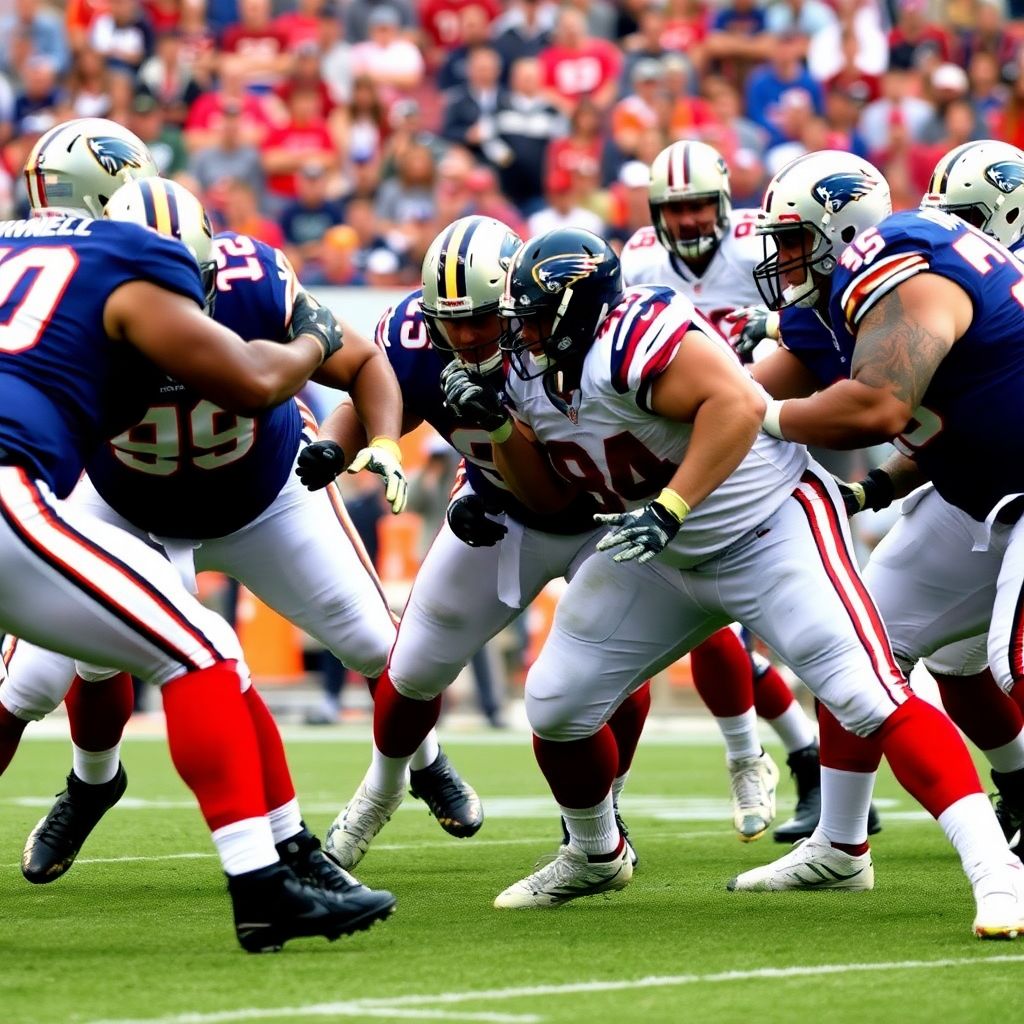
Offensive linemen are the hidden engines of an NFL offense, quietly winning or losing games through technique, communication, and consistency. To evaluate these unsung heroes, focus less on highlights and more on leverage, footwork, timing, and how they handle stunts, blitzes, and pressure over full drives and full games.
Debunking Common Myths About Offensive Line Play
- Myth: Size is everything. Reality: Pad level, balance, and hand placement usually decide the rep before mass does.
- Myth: Fewer sacks allowed automatically means an elite line. Reality: Scheme, QB timing, and opponent quality distort raw numbers.
- Myth: You can judge linemen from broadcast copies. Reality: End zone and tight angles reveal footwork, aiming points, and communication.
- Myth: Only tackles matter in pass protection. Reality: Interior pressure often ruins plays faster than edge pressure.
- Myth: Big nfl offensive linemen contracts and salaries always mean top performance. Reality: Market timing, scheme fit, and age inflate some deals.
- Myth: Rankings tell the whole story. Reality: Even the best nfl offensive linemen rankings miss line calls, adjustments, and on-the-fly problem solving.
Why Technique Trumps Size: Core Traits of Elite Offensive Linemen
Elite offensive linemen win by arriving on balance, with inside hands and low pads, to the right spot at the right time. Size helps, but the definition of high-level line play is repeatable technique across hundreds of snaps against different fronts and blitz packages.
Practically, this means evaluating linemen by traits rather than fame. When studying top offensive line players 2024 lists or film, ask how consistently a lineman hits his landmarks, maintains leverage, and recovers when initially beaten. Quiet dominance is the ability to stay technically sound even when the defense guesses right.
Core traits to look for include:
- Balance and base: Feet slightly wider than shoulders, knees bent, weight through the insteps, no leaning at contact.
- Pad level: Hips and pads under the defender's; the lineman "uncoils" upward through contact instead of ducking or reaching.
- Hand timing and placement: Inside strike to chest/pecs with thumbs up, elbows tight, resetting hands instead of grabbing when losing.
- Footwork sequencing: No crossing feet in pass sets, short controlled steps on zone runs, power steps on gap schemes.
- Eyes and processing: Ability to see second-level threats, twist games, and late safeties, then adjust on the fly.
Mini case: A guard with average size faces an elite three-tech. He loses initial ground but keeps his base, refits his inside hand, and runs his feet to stay between defender and QB. The play is clean. On the stat sheet, no one notices, but the technique saved a drive.
Film Study: Identifying Subtle Dominance in Run and Pass Sets
Subtle dominance rarely shows in box scores, even when you dig into nfl offensive linemen stats and analysis. On film, you are looking for patterns of quiet wins that keep the offense on schedule. Use all-22 or tight copies whenever possible and track the same lineman across multiple games.
-
First step on run plays: Watch the lineman's first two steps. Dominant players explode flat on outside zone, vertical on duo, and down-and-in on gap schemes.
Mini case: On repeated wide zone calls, a tackle consistently gains outside leverage with a flat first step and hips square. The defense keeps setting a wider edge but still cannot box the run in. -
Depth and width of pass sets: Chart how often the lineman is at the correct landmark relative to the QB spot. Over-setting or under-setting are red flags.
Mini case: Against a speed rusher, a left tackle gains controlled depth without opening his hips too early, forcing the rusher to loop past the QB spot all day. -
Anchor vs. power: Look for the ability to absorb bull rush without hopping back wildly. Hips sink, feet widen slightly, and hands refit inside.
Mini case: A center vs. a nose tackle: initial jolt moves him one step. Then he drops his hips, stops the charge, and re-establishes the line of scrimmage. The QB steps up confidently. -
Handling games and blitzes: Focus on how quickly a lineman recognizes and passes off twists. Elite players stay square, punch and pass, then "climb" to the looper.
Mini case: On third down, the defense runs a T-E stunt. The guard punches the penetrator, slides off, and stones the looping end before he can turn the corner. -
Finish and strain: Dominance shows in how long blocks are sustained. Quiet winners consistently stay attached to defenders through the whistle without holding.
Mini case: Inside zone play: the guard and tackle double a three-tech, then smoothly come off to the linebacker. The RB hits a clean crease, and both linemen ride their defenders out of the frame. -
Consistency across quarters: Track whether footwork and pad level stay sharp late in games.
Mini case: A guard gives up early pressure but tightens his set, widens his base, and allows no further hits on the QB over three more quarters.
Positional Nuances: What Makes Tackles, Guards and Centers Stand Out
Each offensive line position has a different skill emphasis. When you read offensive line scouting reports or compile your own notes, evaluate tackles, guards, and centers against role-specific demands, not against each other. Quietly elite linemen dominate their particular lane of responsibility.
-
Offensive tackles: Often on islands against premier edge rushers, they must marry length, foot quickness, and independent hand usage. Their run-game value shows in how well they reach wide alignments and cut off backside pursuit.
Scenario mini case: Right tackle vs. wide-9 rusher: he vertical sets with patience, punches late and inside, and rides the rusher past the arc repeatedly, forcing the defense to start blitzing inside. -
Guards: Guards live in tight spaces and face powerful three-techniques. Their leverage, short-area explosiveness, and ability to pull or wrap determine many run-game concepts. In pass pro, they must re-anchor quickly vs. bull and be decisive vs. A-gap blitzes.
Scenario mini case: On counter, a pulling guard fits square on the play-side linebacker, adjusting his angle mid-pull to pick up a late safety rotation and springing the run. -
Centers: Centers direct protections, make ID calls, and often handle shaded noses. Mental processing is as important as physical tools. The best quietly align everyone correctly, making complex pressures look simple.
Scenario mini case: Pre-snap, the center sees rotation to a pressure look, flips the protection, then posts the nose and peels to the late A-gap blitzer, keeping the QB clean. -
Combo blocks and unit synergy: Many "unsung hero" plays come from how well positions work together. Track timing and communication on doubles, climbs, and pass-off of twists instead of isolating players every snap.
Scenario mini case: Guard and tackle double a three-tech, with perfect hip and shoulder alignment. At the right moment, the guard climbs, the tackle takes over, and the LB never touches the RB in the hole.
Stateless Impact: Measuring Influence Beyond Traditional Stats
Most public metrics still struggle to capture line play. Even deep nfl offensive linemen stats and analysis can underweight communication, ID calls, and how linemen steer defenders rather than pancake them. You need a hybrid approach: some data, lots of film, and clear grading criteria focused on assignment and technique.
Use lists like best nfl offensive linemen rankings or databases of nfl offensive linemen contracts and salaries as starting points, not final answers. They can guide which players to study in-depth but should never replace your own film-based grading of how a lineman functions in his scheme and against top competition.
Advantages of film-centered line evaluation
- Captures assignment correctness and mental processing that stats cannot directly track.
- Reveals technique quality: pad level, base, hands, and recovery vs. pressure.
- Shows how a lineman performs against elite opponents compared to average ones.
- Highlights communication and cohesion on twists, blitzes, and combo blocks.
- Allows you to weight plays by situation (3rd-and-long vs. 1st-and-10).
Limitations and practical guardrails
- Broadcast angles hide key details; all-22 or tight film is strongly preferred.
- Without knowing the exact call, you must avoid overconfidence in grading blame.
- Small sample sizes (one or two games) can misrepresent a player's true level.
- Personal bias from big splash plays can overshadow steady, quiet consistency.
- Time constraints make full-season manual grading difficult without a clear system.
Development Pathways: Coaching, Footwork Drills and Progression Plans
Player development is where myths do the most damage. Many young linemen chase raw strength or viral pancake clips instead of footwork and repeatable technique. A practical progression plan starts with stance and first step, then builds toward reading fronts and handling pressure looks.
Coaches and self-evaluating players should expect steady, incremental growth rather than overnight jumps. When cross-checking your progress against offensive line scouting reports, focus on whether the same weaknesses keep showing up (e.g., oversetting, high pads) or whether specific flaws disappear over time, showing real technical improvement.
-
Myth: Strength training alone will fix your game. Without matching footwork, pad level, and hand timing, extra strength just makes you better at losing slowly.
Mini case: A guard adds muscle in the offseason but never corrects his narrow base. He still gets walked back by bull rushers despite being stronger. -
Myth: More depth in pass sets is always safer. Over-setting creates soft inside lanes. Depth must match the QB drop and rush threat.
Mini case: A tackle coached to "get more depth" starts drifting too far, opening instant inside counters and forcing the QB off his spot. -
Myth: Pulling is only about speed. Great pullers take the correct angle, keep their shoulders square, and adjust to color flashing in the hole.
Mini case: A quick guard flies around on power but overruns the linebacker. After drilling angle and tempo, he arrives under control and locks blocks consistently. -
Myth: Smart players do not need reps against games and blitzes. Recognition and communication improve with live looks and scripted "problem" periods in practice.
Mini case: A center who runs hundreds of twist/blitz reps in practice calmly sorts a new pressure look in a key game, keeping protection intact. -
Myth: Game tape alone is enough for improvement. Without targeted individual drills, insights from film never become habits.
Mini case: After identifying a habit of crossing feet in sets, a tackle works specific kick-slide and mirror drills every day and eliminates the flaw over a month.
Case Studies: Unsung Linemen Who Shifted Game Plans Quietly
Real examples show how quiet line dominance changes games. These mini case studies are simplified, but they mirror what you will see if you study top offensive line players 2024 and beyond: linemen who never show in highlight reels but dictate how defenses must call games.
-
Case 1: The guard who erased inside pressure
A relatively unknown left guard faces a defense that lives on interior blitzes. Early in the game, he cleanly passes off two T-E stunts and stones an A-gap blitzer on third down. The coordinator stops calling those pressures. The box score shows nothing special, but the QB operates from a clean interior pocket all day. -
Case 2: The center who beat the blitz with his brain
A mid-tier center, rarely mentioned in best nfl offensive linemen rankings, spends the week studying opponent pressure rules. In-game, he recognizes disguises and flips protections three times, neutralizing free runners. The TV crew praises the QB, but the film shows the center's calls removed the defense's favorite answers. -
Case 3: The right tackle who deleted a star edge
A right tackle on a value deal compared to larger nfl offensive linemen contracts and salaries faces an All-Pro edge. Using disciplined vertical sets and late, accurate hands, he allows no sacks or hits and only one hurry. The defense gradually shifts its best rusher to the other side, warping their game plan.
In all these cases, the practical lesson is the same: do your own film work. Combine structured tape study with available nfl offensive linemen stats and analysis, cross-check with offensive line scouting reports, and then trust what you see snap after snap. That is how you identify the true unsung heroes up front.
Practical Clarifications for Evaluating Line Performance
How can I quickly tell if an offensive lineman is playing well without advanced tools?
Track whether the lineman stays square, maintains a solid base, and keeps inside hands on most snaps. If the QB can consistently reach the top of his drop and the run game hits designed landmarks, the lineman is probably performing at least solidly.
Are public best nfl offensive linemen rankings useful for serious evaluation?

They are a decent starting point for finding names and games to study, but not final judgments. Use them to build a watch list, then create your own grades based on assignment, technique, and consistency across different opponents.
What film angles are most important for studying offensive line play?
End zone or tight end zone angles are best because they clearly show footwork, pad level, and hand placement. Sideline views help with big-picture scheme and situational context, but they often hide the key details of trench play.
How many games should I watch before forming an opinion on a lineman?
Aim for multiple games across different opponents and situations. One dominant or poor performance can be misleading; a more reliable view comes from seeing how a player responds to varying fronts, blitz plans, and game scripts.
Can stats alone identify quietly dominant linemen?
No. Stats can flag potential standouts or problems, but they miss communication, assignment correctness, and subtle wins. Always combine stats with film, focusing on how often a lineman quietly does his job rather than just on splash plays.
How should I factor in nfl offensive linemen contracts and salaries when judging performance?
Use contracts to understand expectations, not to prove quality. A player on a premium deal should provide consistently strong play, but market timing and team need can inflate prices. Evaluate performance first, then decide whether the contract makes sense.
What is one simple drill focus that helps most developing linemen?
Daily work on stance, first step, and maintaining base under contact helps nearly everyone. If a lineman can start every rep balanced, with low pads and proper foot placement, many other technical details become easier to execute and correct.