
Pressure is ticking on the scoreboard, not just in your head. A game‑winning drive isn’t magic; it’s a chain of decisions made faster and cleaner than the defense can react. You’re juggling clock, field position, matchups and emotions, while trying to look calm enough that everyone in the huddle still trusts you. The cool part? This chaos is actually highly trainable. When you break the drive down play by play, you start to see repeatable patterns: when to take a shot, when to check down, when to burn clock and when to ignore it. Once you see those patterns, “clutch” stops being a personality trait and becomes a skill set you can build on purpose.
—
Reading the Field: What a Game-Winning Drive Really Is
On paper, a final march down the field is just a sequence of snaps. In reality, it’s a live exam on everything you believe about offense. Some coaches see the drive as a sprint: maximum tempo, spread sets, quick reads, forcing defenders to communicate under stress. Others treat it like a chess endgame: personnel groupings, motion and formation shifts slow enough to diagnose coverage before the ball is even snapped. Both approaches can win, but they solve different problems. Tempo punishes confusion; chess‑style control punishes predictability. The key is being honest about who you are as a play caller and what your quarterback can process without melting under the clock.
—
Different Strategic Mindsets on the Final Drive
When you zoom in on football coaching strategies for game winning drives, three clear mindsets show up. The “aggressor” tries to land a knockout punch early: deep crossers, double moves, vertical seams that can flip the field in one shot. The “surgeon” prefers high‑percentage throws, letting yards after catch do the damage. Then there’s the “hybrid,” opening aggressively but with tight rules for when to throttle down and play for positioning. None of these is universally right; they depend on your quarterback, your protection and how the defense is playing leverage. Great coordinators script options, not outcomes: they know the first two calls, plus what they’ll check to if coverage looks different than expected.
– Aggressor: trusts vertical concepts, lives with incomplete passes, fears the clock more than risk
– Surgeon: values completion rate, trusts spacing and timing, fears turnovers more than time
– Hybrid: starts bold, then shifts to efficiency once field goal range is in reach
—
Inspiring Examples That Redefine Pressure

Think about Tom Brady’s late drives or Patrick Mahomes in the playoffs. Their highlight reels look supernatural, but underneath the spectacle is ruthless simplicity. On one drive, Brady throws eight straight short routes because the defense gifts him off coverage; he never forces a hero ball. On another, Mahomes scrambles just enough to reset throwing windows, not to become a running back. Contrast that with quarterbacks who chase the big moment, holding the ball for the perfect shot and taking a drive‑killing sack. The difference isn’t arm talent; it’s decision discipline. The best approach often looks boring on film: take the leverage the defense gives, stack first downs, and let the big play appear instead of hunting it.
—
From Chalkboard to Sideline: Practical Development Tips
If you want your two‑minute offense to feel calm instead of chaotic, you need a repeatable process. Start by building a slimmed‑down script that functions as your personal offensive play calling guide for two minute drill situations. That script should feature concepts your quarterback loves, routes your receivers can run in their sleep, and runs that hit quickly with clear blocking rules. Then you rehearse, but not just in ideal conditions. The real growth comes from making the clock, crowd noise and “bad calls” part of practice. You’re not just teaching plays; you’re teaching how to think fast when the picture isn’t clean and the last play didn’t go your way.
– Run two‑minute periods with strict time, down and distance goals
– Force pre‑snap communication: shifts, motions, protection calls at tempo
– Debrief immediately afterward: “What did you see?” before “Here’s what you did wrong”
—
Case Studies: When Preparation Meets Opportunity
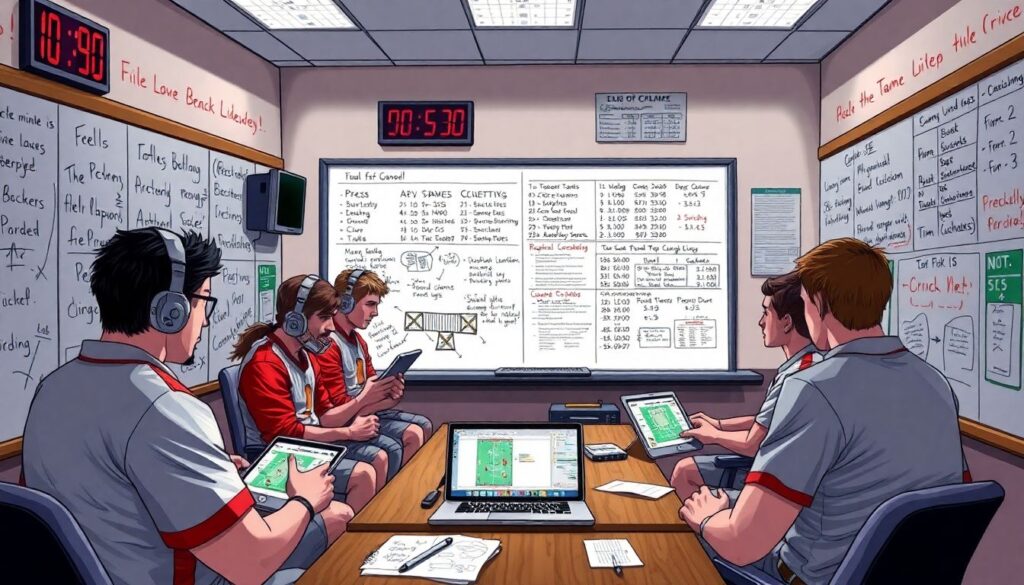
Look at high school programs that keep stealing wins in the final minute against more talented opponents. Many of them treat their end‑of‑game package as a “project”: they document every late‑game scenario, grade the decision making, and tweak weekly. One staff built a shared database of their last‑drive calls and outcomes; within a season, they identified which concepts consistently worked against particular coverages and leaned on those. Another coach enrolled in an american football offensive coordinator training program and used it to overhaul his red zone and two‑minute philosophy, shifting from generic play sheets to situation‑driven menus. The common thread isn’t some secret scheme; it’s the humility to review, refine and ruthlessly cut what doesn’t hold up under pressure.
—
Leveling Up Your Play-by-Play Decision Making
You don’t need an NFL budget to sharpen your late‑game brain. Start by studying real drives: pause broadcast film before each snap and predict the call based on clock, field position and matchup, then compare your idea to what was actually run. Supplement that with targeted learning: an online course on football situational decision making can walk you through structured frameworks instead of random tips. Pair that with a best playbook for game winning drives pdf from a trusted source, and you’ve got raw material to adapt to your system. The real secret is converting theory into habits: clear rules for when to take a shot, when to bleed clock, and when to trust your kicker instead of your ego.
– Study 10 famous drives and write down the decision rules you notice
– Build your own “if‑then” chart for clock, score and field zones
– Rehearse those rules in practice until they’re second nature under stress
—
Choosing Your Approach—and Owning It
In the end, the “right” approach to a game‑winning drive is the one you can execute decisively. Some coaches will always favor aggression; others will lean toward methodical precision. What you can’t afford is ambiguity: changing personalities mid‑drive because nerves are louder than your plan. Your job is to do the homework beforehand, test different mindsets in practice, and decide who you are when the game’s on the line. Then, when the headset crackles and the stadium tightens, you’re not inventing a strategy—you’re simply running the version of yourself you’ve already trained. That’s how a last‑minute drive stops feeling like a coin flip and starts feeling like a test you’ve prepared to pass.