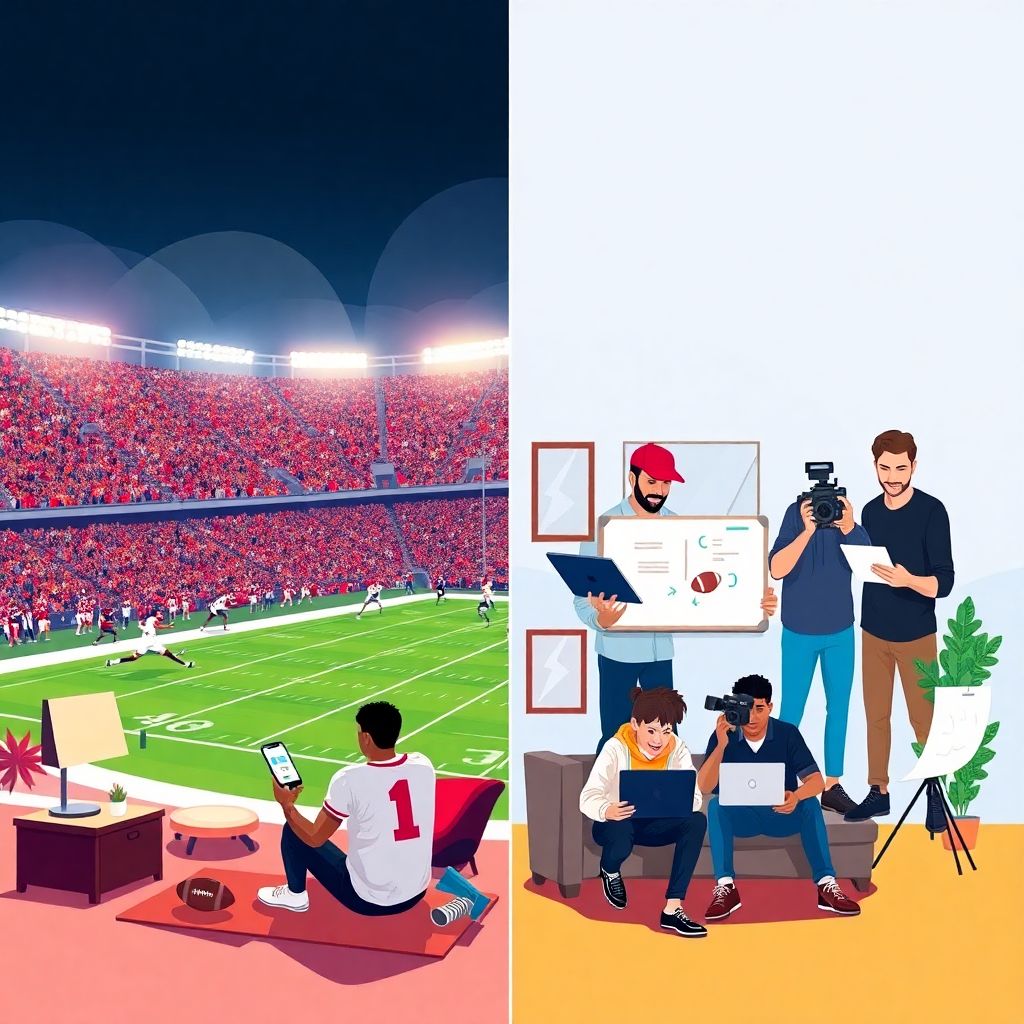
Why NFL and College Players Suddenly Care So Much About Their Instagram
Scroll through any NFL Sunday and you’ll notice something: the game ends, but the players don’t. They go straight from the gridiron to social media, posting clips, reactions, behind‑the‑scenes moments, and brand shout‑outs.
This isn’t just ego. It’s strategy. Modern players are treating their name as a business—and their online presence as the main storefront.
Let’s break down how players actually build personal brands off the field, why some methods work better than others, and what’s coming next.
—
The Big Shift: From “Just Play Ball” to “You Are the Brand”
Why social media became as important as the playbook
A decade ago, most fans only “knew” players from TV broadcasts and the occasional interview. Now:
– Over 70% of Gen Z sports fans say they follow athletes on social media more closely than teams or leagues (various sports marketing surveys show this trend).
– Some star players earn more from endorsements and content than from their base salary, especially in college and lower‑tier pro leagues.
– Brands increasingly allocate budget to individuals instead of league‑level deals, because athletes feel more “human” and drive higher engagement.
So if you want to build personal brand as a football player, posting once a month and hoping for the best isn’t a plan—it’s a missed opportunity.
—
Three Core Paths to Building a Brand: DIY, Hybrid, and Fully Managed
Approach #1: Do‑It‑Yourself Branding (The Hustle Route)
The DIY path is exactly what it sounds like: players run everything themselves—content, captions, deals, DMs, the whole thing. This is common among high‑energy rookies, college athletes, and role players trying to stand out.
How it usually looks:
– Player films on their phone, edits in apps like CapCut.
– Posts game‑day fits, workouts, family moments, and occasional brand mentions.
– Negotiates small local deals through Instagram DMs or email.
Pros:
– Full control over voice, values, and vibe.
– You learn what your audience actually responds to.
– No revenue split with agencies or managers.
Cons:
– Time drain: content, strategy, and negotiations eat into recovery and training.
– No expert guidance on positioning or long‑term strategy.
– Risk of mistakes: oversharing, bad brand fits, or missing legal fine print.
DIY can work well if you’re naturally creative and consistent. But as your platform grows, it becomes unsustainable to treat your brand like a casual side project.
—
Approach #2: Hybrid Collaboration (The Smart Middle Ground)
This is where most serious athletes eventually land: they keep control of who they are and what they stand for, but bring in outside help to sharpen and scale.
A hybrid approach might look like:
– Player defines values and boundaries: what’s okay to post, what’s off‑limits.
– A content manager or small team handles editing, scheduling, and analytics.
– A sports marketing agency for professional athletes steps in to find and vet deals, negotiate contracts, and structure long‑term partnerships.
This model is popular because it balances authenticity and professionalism. You’re still the voice. The team just makes sure it’s heard by the right people.
—
Approach #3: Fully Managed Brand (The “CEO” Model)
At the top level—superstars, franchise quarterbacks, viral college standouts—you see a much more corporate setup: the athlete is the face, but almost everything else is handled by specialists.
We’re talking about:
– Dedicated social media managers and videographers
– PR reps and publicists
– Brand strategists and endorsement managers
– Legal and financial advisors for complex multi‑year deals
This is essentially running a media company around one person. It’s efficient and scalable, but there’s a downside: if you’re not careful, the brand can start to feel too polished and distant.
Some players push back against that, manually replying to DMs or posting unscripted content to keep things real.
—
Where Social Media Fits Into the Strategy
Not all platforms do the same job
Treating every platform identically is a common mistake. Social media marketing for athletes works best when each channel has a specific role:
– Instagram – Visual identity: lifestyle, fashion, game‑day photos, Stories.
– TikTok – Personality: humor, trends, quick behind‑the‑scenes, raw moments.
– X (Twitter) – Voice: opinions on games, league issues, live interactions.
– YouTube – Depth: vlogs, training breakdowns, film study, long‑form storytelling.
– LinkedIn – Business: post‑career positioning, speaking gigs, investor relationships.
When players mix this up—posting only generic game photos everywhere—they look replaceable. When they customize per platform, they look intentional.
—
Stats That Prove This Isn’t Just Hype
What the numbers say about athlete branding
Several trends stand out in recent data from industry reports and brand case studies:
– Athletes with a clear content theme (e.g., “film junkie,” “community guy,” “fashion king”) often see 30–50% higher engagement than those with random posts.
– Brands pay more for niche clarity: a well‑defined image can increase endorsement fees by 20–40% because it reduces risk for sponsors.
– Players who post consistently (even 3–4 times/week) grow faster than those who only post after games, sometimes doubling follower growth over a season.
And this isn’t just for household names. Mid‑tier pros and college players with under 100k followers are landing meaningful deals because their content feels distinct and trustworthy.
—
The NIL Revolution: College Players Turned Micro‑Enterprises
How NIL changed the game for young athletes
Once Name, Image, and Likeness (NIL) rules changed, college athletes went from “no side money” to “mini media companies” almost overnight. It created a new ecosystem: the nil branding agency for college athletes.
These agencies help student‑athletes:
– Understand what they can and can’t do under school and NCAA guidelines.
– Package themselves for local and national sponsors.
– Avoid signing away long‑term rights for short‑term cash.
The biggest challenge at this level? Time and maturity. You’re juggling classes, workouts, games, and now business decisions. That’s why teaching branding basics early—values, voice, audience—is critical. It keeps young players from making 5‑year problems with 5‑minute decisions.
—
Money Talk: The Economics of an Athlete’s Brand
Where the real revenue comes from
On paper, the formula is simple:
More attention → better brand positioning → higher‑value deals.
In practice, it breaks down into several streams:
– Sponsored posts & campaigns – Direct cash for promoting a product.
– Long‑term endorsements – Multi‑year deals with apparel, equipment, or lifestyle brands.
– Revenue shares & equity – Taking a cut of sales or receiving ownership instead of (or in addition to) a fee.
– Personal products – Merch, camps, training programs, digital content, even podcasts.
For many players, especially outside the top salary tiers, this can rival or surpass game checks over time—*if* their brand is consistent and trustworthy.
This is where athlete personal branding services come in: they don’t just “grow followers”; they design a brand that makes you valuable to the right partners, not just visible to random people.
—
Comparing the Approaches: What Actually Works Best?
DIY vs Hybrid vs Fully Managed
Let’s compare the three main strategies through a practical lens.
1. DIY (All you, all the time)
Best for:
– Rookies with smaller followings but high energy.
– Players who love content creation and want to learn the business side.
– Those with limited budgets who can’t yet afford agencies or teams.
Risk: You burn out or plateau because strategy and monetization lag behind your effort.
2. Hybrid (You + small team + agency support)
Best for:
– Established college players and mid‑tier pros.
– Athletes with clear on‑field roles who want to grow off‑field influence.
– Players who want help with deals and content but insist on authentic voice.
This usually gives the best return on time, because you stay focused on performance while your brand still grows consistently.
3. Fully Managed (You’re the CEO, others run ops)
Best for:
– Stars with national recognition.
– Players with complex obligations: commercials, international tours, major campaigns.
– Athletes already viewed as “faces of the league” or franchise leaders.
The trade‑off is control vs scale. You can do more, reach more, and earn more—but you must choose partners carefully or risk feeling scripted and generic.
—
Why Agencies and Specialists Matter More Each Year
From “nice to have” to “career insurance”
As the stakes grow, more players turn to professionals to avoid costly mistakes. A sports marketing agency for professional athletes now usually offers:
– Brand strategy: who you are, who you’re for, and how you show up consistently.
– Deal filtering: saying *no* to offers that might hurt your future more than help your present.
– Crisis navigation: handling PR after controversial posts or media storms.
– Long‑term positioning: life after football—broadcasting, business, coaching, or something entirely different.
The same logic applies on a smaller scale with athlete personal branding services—consultants, content coaches, and media trainers who help players talk, post, and negotiate like long‑term assets, not short‑term hype.
—
Practical Playbook: How a Player Should Actually Start
Step 1: Define, then document
Before logos, hashtags, or photo shoots, get clear on three things:
– What do you stand for? (e.g., toughness, learning, community, faith, humor)
– What do you *not* want to be associated with?
– What kind of audience do you want: kids, serious fans, casual followers, business leaders?
Document this in a simple one‑page “brand guide” for yourself. It’s your filter for every post, interview, and partnership.
—
Step 2: Pick your content lanes
Don’t try to be everything. Choose 2–3 consistent “lanes” that feel natural:
– On‑field IQ: film breakdowns, route concepts, pass‑rush moves.
– Lifestyle: fashion, sneakers, travel, food.
– Community: charity work, school visits, giving back.
– Humor: memes, trending sounds, locker‑room comedy.
– Education: recovery tips, nutrition, mental health, leadership.
Rotate them. Over time, people should be able to explain your brand in one sentence:
“He’s the corner who breaks down film and talks mindset.”
“She’s the QB who mixes funny TikToks with serious leadership content.”
—
Step 3: Decide your support model
Here’s a simple way to think about it:
– Small following, lots of time?
Start DIY, but study best practices and track what works.
– Growing following, limited time?
Move to a hybrid: outsource editing or scheduling; talk to an agency about selective partnerships.
– Big following, big opportunities?
Treat yourself like a business: team, contracts, strategy meetings, regular check‑ins.
In all cases, make sure any contract with an agency or manager has clear terms, exit options, and transparency about how money flows.
—
Future Trends: Where Athlete Branding Is Heading
Looking five years ahead
A few likely shifts based on current data and industry direction:
– More direct‑to‑fan monetization
Subscriptions, exclusive content, private communities, and digital products will play a bigger role, especially for niche or retired players.
– Smarter data use
Brand value will be measured less by raw follower count and more by audience quality: demographics, engagement, conversion.
– Early professionalization
High school and even youth players will receive branding guidance long before they reach college. Expect more specialized firms, similar to today’s nil branding agency for college athletes, but geared toward pre‑college development and education.
– Stronger alignment with values
Fans are getting better at spotting inauthentic partnerships. Players who pick brands that genuinely match their lifestyle and beliefs will win long‑term trust—and long‑term money.
—
How This Changes the Whole Sports Industry
From team‑first to athlete‑centric
As individual brands get stronger:
– Teams adjust media policies to accommodate personal content crews.
– Leagues create guidelines and sometimes content support to avoid conflicts.
– Sponsors negotiate directly with players instead of only via teams or leagues.
This doesn’t mean teams stop mattering. It means athletes become independent media properties *within* those teams. For the industry, it’s both a challenge and a huge growth engine.
—
Bottom Line: Pick Your Path, But Don’t Drift
Building a personal brand off the field is no longer optional—it’s a competitive advantage, financial safety net, and post‑career runway.
The key choice isn’t whether to build a brand. It’s how:
– Fully DIY: maximum control, slowest to scale.
– Hybrid support: balance of authenticity and leverage.
– Fully managed: maximum scale, highest need for good partners.
If you treat your brand like part of your job—not a distraction from it—you’ll be better positioned to capture opportunities now and long after you stop taking snaps on Sundays.