
Offseason is where elite careers are built: top players use a structured offseason training program for athletes that cycles through recovery, strength, skill, and mental work. Use a 4-12 week plan with clear phases, light testing, and simple tracking so you return to camp fresher, stronger, and sharper.
Offseason Playbook: Core Principles at a Glance

- Start with health: assess injuries, movement limits, and fatigue before loading heavy training.
- Plan in phases: early recovery, gradual build, peak, and short taper before team camp.
- Anchor progress with simple metrics: sleep, session RPE, basic strength and speed checkpoints.
- Keep recovery as a daily habit, not a last resort, using sleep, nutrition, and light mobility.
- Train game-specific patterns while reducing total impact and collision load.
- Use mental skills weekly: goal review, visualization, and pre-practice routines.
- Pivot quickly if pain, exhaustion, or life stress spikes instead of forcing the plan.
Designing an Individualized Offseason Training Plan
Offseason stories from top players usually start with one move: they stop copying random internet plans and build something personalized. An individualized plan works around your position, age, injury history, and schedule while still looking like a realistic offseason training program for athletes, not a full-time pro-only routine.
This approach suits intermediate and advanced players who:
- Have at least one full competitive season behind them.
- Understand basic lifting technique (squat, hinge, push, pull) and field drills.
- Can train consistently 3-5 times per week without medical red flags.
It is not the right time to overhaul everything if you:
- Are in acute pain, coming off surgery, or have unresolved medical issues. You need medical clearance and possibly a rehab-first block.
- Are in-season or less than two weeks from a key trial; stick to maintenance and light, specific sharpening.
- Are severely sleep-deprived or burned out; prioritize recovery-only weeks first.
Think in phases that mirror how top athletes prepare for new season training:
- Early Offseason (2-4 weeks): De-load, heal, restore range of motion, light strength, mostly low intensity.
- Mid Offseason (4-6 weeks): Build strength, power, and aerobic base; refine mechanics; moderate intensity and volume.
- Late Offseason (2-4 weeks): Add faster, more specific work; sharpen skills; reduce volume to feel fresh going into camp.
Position and sport matter. The best offseason workout plan for football players will emphasize acceleration, deceleration, and collision-resilient strength, while a basketball guard might focus more on lateral speed, repeat sprints, and vertical power. The template stays similar; the drills, volume, and emphasis shift.
Recovery Protocols: Sleep, Nutrition, and Therapeutic Modalities
When people ask how professional athletes recover in the offseason, the unglamorous answer is: they double down on basics and use advanced tools only to support them. Before thinking about elite sports recovery methods used by top players, lock in the simple, safe habits you can do at home.
You will need access to:
- Consistent sleep environment: dark room, cool temperature, regular sleep and wake times.
- Reliable food options: enough protein across the day, fruits and vegetables, fluids, and some pre/post-training snacks.
- Basic self-care tools: foam roller or ball, light resistance bands, and a mat for mobility work.
- Optional therapeutic support when available: sports physio, massage therapist, athletic trainer, or chiropractor.
Build a simple daily recovery routine:
- Pre-bed wind down: 20-30 minutes without screens, light stretching or breathing, same bedtime every night.
- Post-training sequence: fluids, a meal or snack, 5-10 minutes of easy mobility, short walk or light cycling if stiff.
- Weekly body check: note areas that feel tight, sore, or weak; adjust training load or schedule a treatment session.
If you have access to higher-level tools (cold water, heat, compression, soft tissue work), plug them into a safe schedule rather than stacking everything at once:
- Cold/contrast: after heavy sessions, not right before explosive work unless you know you tolerate it well.
- Massage/manual therapy: after tough weeks or when specific areas keep tightening up.
- Low-intensity active recovery: easy bike, pool movement, or walking on days between higher-load sessions.
Recovery is not a separate day, it is part of the offseason training program for athletes every day. Your aim: wake up feeling gradually better across weeks, with soreness that fades in 24-48 hours, not accumulating until everything hurts.
Strength and Power Progressions Without Game Load
This section lays out a safe, progressive, and simple structure that echoes how top athletes prepare for new season training when they do not have the weekly game impact beating them up.
- Rebuild movement quality before chasing weight
Spend the first 1-2 weeks checking your basic patterns: squat, hinge, lunge, push, pull, and brace. Use light loads and more repetitions to groove form and restore ranges.- Example exercises: goblet squat, hip hinge with dowel, split squat, push-up, row, dead bug or plank.
- Target: finish each session feeling better, not destroyed.
- Layer in controlled strength work
Over the next 3-6 weeks, increase load gradually while keeping technique strict. Train full body 2-4 times per week depending on schedule and level.- Use compound lifts you can perform safely: trap bar deadlift, front squat, bench or floor press, row, pull-up (assisted if needed).
- Leave a small buffer: stop sets with a couple of reps still “in the tank” to avoid form breakdown.
- Add low-impact power and speed
Once strength feels stable and joints feel good, begin low-volume power work 1-3 times per week, preferably early in the session after warm-up.- Options: medicine ball throws, low box jumps, broad jumps, short sprints, band-resisted jumps with soft landings.
- Keep reps low and quality high; stop a set as soon as speed or sharpness drops.
- Integrate sprint and change-of-direction safely
Move from straight-line, submaximal runs to more game-like movement once you feel robust. Do this on good surfaces and with enough rest between efforts.- Start: technique drills (A-skips, wall drills), submax sprints, simple cuts at moderate speed.
- Then: faster accelerations, decelerations, and position-specific routes or patterns.
- Monitor shins, knees, and groin; back off if sharp pain appears.
- Peak and taper into team training
In the final 1-2 weeks, slightly reduce total volume while keeping intensity and speed. The goal is to arrive in camp energetic, not exhausted from a “hero” offseason.
Fast-Track Strength and Power Mode (4-6 Week Template)
- Weeks 1-2: Three full-body sessions per week focused on movement quality and moderate loads, plus 1-2 light speed sessions.
- Weeks 3-4: Two full-body strength days, one power/speed-focused day, and 1-2 low-impact conditioning sessions.
- Weeks 5-6 (optional peak): Maintain intensity, reduce total sets, keep sprint and power work sharp but short.
- Throughout: Prioritize warm-up and cooldown, and stop or modify any drill that causes pain instead of fatigue.
Skill Refinement: High-Impact Drills and Skill Maintenance
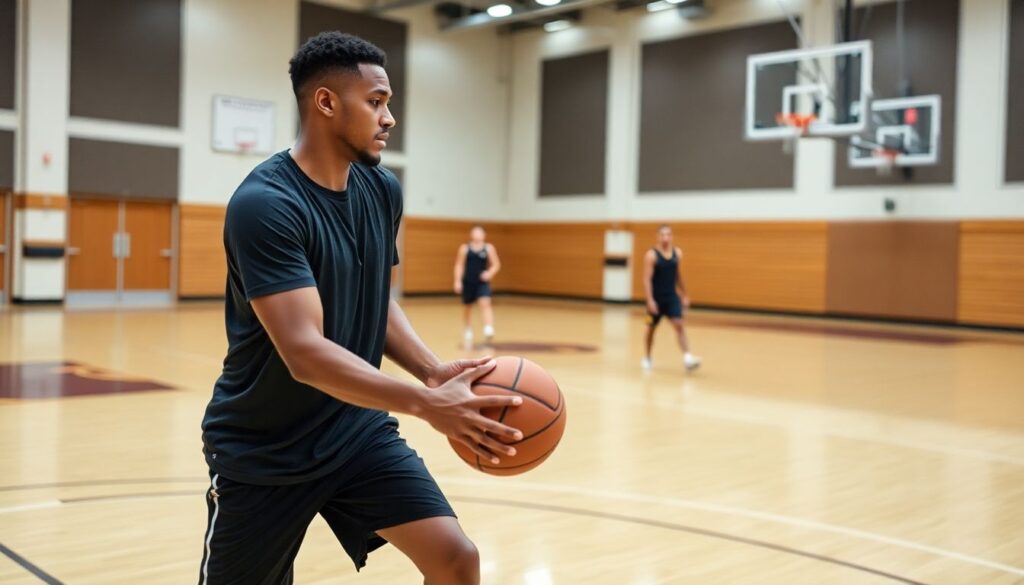
Top players use the offseason to clean up details: they cut the game load but keep enough position-specific work to feel sharp. Use this checklist to see if your skill training is on track.
- You can name 1-3 key skills you are targeting (for example: first step quickness, ball security, or weak-hand finishing).
- Each week includes at least two short, focused skill sessions rather than one marathon day.
- Technical reps stay crisp: you finish skill blocks feeling smoother, not sloppier.
- You film parts of sessions at least once a week and review mechanics briefly.
- Most drills resemble your real game patterns, not just generic ladder or cone moves.
- You practice at different speeds: slow for technique, then faster, then near-game pace with decision-making.
- You include at least one small-sided or constrained game format when partners are available.
- Your conditioning includes some skill elements (for example: dribbling, passing, catching, or route running under light fatigue).
- There is a clear reduction in collisions and heavy contacts compared to in-season play.
- Skill sessions respect recovery: high-intensity days are balanced with lighter, more technical days.
Mental Preparation: Goal Setting, Visualization, and Routine
Offseason stories from veterans almost always mention the mental side. They know talent plus poor focus stalls a career. These are common mistakes to avoid.
- Setting only vague goals like “get better” instead of specific, measurable targets for strength, skills, or habits.
- Writing goals once and never revisiting them; skipping weekly check-ins to adjust and refocus.
- Using visualization randomly instead of linking it to upcoming sessions, games, or key situations.
- Imagining only highlight plays and not rehearsing how you will respond to mistakes or pressure.
- Ignoring routines: changing warm-ups, pre-practice timing, or sleep schedule every week.
- Overloading the mind with new podcasts, books, and content without actually applying one or two key ideas.
- Doing all planning alone while feedback from coaches, trainers, or trusted teammates is available and unused.
- Letting social media dictate what “good” training looks like and constantly switching plans to match trends.
- Viewing mental training as separate from physical work instead of integrating breathing, focus cues, and self-talk into daily drills.
Monitoring, Metrics, and When to Pivot the Program
Top players treat their offseason like a flexible blueprint, not a prison. They track just enough to see what is working and are willing to change course. Use alternatives based on your resources and personality.
- Low-tech self-monitoring: Use a simple training log noting exercises, sets, perceived effort, sleep quality, and mood. This suits athletes without access to technology who still want structure.
- Coach-guided oversight: Share weekly videos and notes with a remote or in-person coach. Pivot when they see technical breakdowns, repeated fatigue, or plateaus. Great for athletes who struggle to self-assess honestly.
- Data-enhanced approach: If you have access to timing gates, jump mats, wearables, or GPS, focus on a few metrics (for example: sprint time, jump height, weekly high-speed running). Adjust training if numbers slide for more than a week without obvious reason.
- Health-first pivot rule: Regardless of method, change or pause parts of your plan if you notice sharp joint pain, recurring tightness in the same area, or persistent exhaustion that sleep does not fix.
Practical Player Questions and Straight Answers
How long should an effective offseason plan last for an intermediate player?
A realistic window is 4-12 weeks, depending on your sport calendar and current condition. Shorter blocks are “fast-track” tune-ups; longer ones allow you to cycle through recovery, strength, power, and skills without rushing.
What is the safest way to start after a tough season with aches and minor injuries?
Begin with a de-load phase focused on mobility, light strength, and medical or physio check-ins. Keep intensity modest, monitor how joints feel for a couple of weeks, and only then progress load and impact.
How many days per week should I lift versus do field or court work?
A common split for intermediates is 2-3 lifting days and 2-3 field or court days, with at least one lighter recovery-focused day. Combine short skill work with some strength days if your schedule is tight.
Do I need advanced recovery tools like cold tubs or compression gear to progress?
No. Sleep, consistent nutrition, hydration, and low-intensity movement do most of the work. Use advanced tools as optional add-ons, not replacements for basic habits.
How do I know if I am doing too much in the offseason?
Warning signs include performance dropping for more than a week, joints getting progressively sorer, motivation disappearing, and sleep quality worsening. If these appear, cut volume, add recovery days, and reassess your plan.
Can I follow the same offseason plan as a professional I follow online?
Use pro routines only as inspiration. Pros have different recovery resources, schedules, and training histories. Adapt ideas to your level, or work with a coach to build a version that fits your reality.
How should conditioning change when there are no games?
Shift from constant high stress to more controlled intervals and base work. Include some sport-specific movement but less collision and chaos so you can build fitness without accumulating the same level of wear and tear.