
A dual-threat quarterback is a passer who can legitimately beat defenses with both his arm and his legs, on designed plays and scrambles. Modern offenses use dual-threat QBs to stress rules, force lighter boxes, and punish man coverage. Their evolution tracks rule changes, college spread concepts, and advances in training, biomechanics, and scheme.
Core Traits Defining a Dual‑Threat Quarterback
- Starter-level passing accuracy and timing from the pocket, not just on the move.
- Explosive short-area quickness plus functional long speed to threaten edges and seams.
- Processing speed vs. coverage, with clear scramble and run rules.
- Ball security and contact balance when running in traffic and in space.
- Durability habits: slide, step out, and avoid unnecessary collisions.
- Communication skills to operate checks, protections, and tempo packages.
Evolutionary Timeline: From Pocket Passers to Mobile Playmakers
The term dual-threat quarterback originally described rare athletes who could both throw and run, often in college option systems. Over time, rules favoring offense, shotgun usage, and spread formations made mobility an everyday tool instead of a gadget trait. The dual-threat label shifted from novelty to prototype in many modern systems.
Conceptually, a dual-threat QB differs from a pure pocket passer and from a run-first QB. A pocket passer wins primarily with processing and ball placement; a run-first QB wins with designed carries more than full-field reads. A true dual-threat QB can execute a normal passing menu while adding conflict plays like zone read, RPO keepers, and QB draws.
At the high school and college levels, the success of spread-to-run and RPO offenses built around the best dual threat quarterbacks in college football pushed the profile into the mainstream. As those players entered the pros, offensive coordinators imported more college run concepts and shotgun spacing to let them play fast and safely.
Practically, this evolution should change how you design any dual threat quarterback training program. Mobility is not a substitute for passing development; it is an efficiency and stress multiplier. You build a credible passer first, then layer movement and designed run value, instead of using athleticism to cover for undeveloped reads.
- Define dual-threat as “starter-level passer plus real run threat,” not just a fast QB.
- Study how shotgun spread and RPOs normalized QB runs within mainstream offenses.
- Center your long-term plan on passing development, not just movement highlights.
Biomechanics and Mechanics: Throwing, Footwork, and Designed Runs
Dual-threat mechanics blend classic QB fundamentals with efficient open-field movement. The goal is to maintain throwing integrity while accessing different launch points and run paths. Key mechanical components include:
-
Base and posture under movement
Maintain a hip-width, slightly staggered base even when sliding in the pocket or sprinting out. The chest stays quiet while the hips rotate to generate force. This allows sudden stop-and-throw transitions without wild misses. -
Independent upper and lower body
The shoulders stay level and separate from the feet so you can reset without fully stopping your run. This is critical on scramble-drill throws and RPOs where the QB rides the mesh, then fires quickly. -
Footwork families, not isolated steps
Dual-threat QBs live in gun, so their footwork is built around quick-game, dropback, play-action, and sprint-out families. Each must tie to specific concepts so timing stays intact even when the launch point moves laterally or deeper. -
Acceleration and deceleration patterns
On designed QB runs, the first three steps set the track and read window. Efficient deceleration is just as important: being able to throttle down quickly lets you slide, cut inside a defender, or reset to throw safely. -
Ball carriage and exchange
Secure, consistent ball carriage during zone reads, speed options, and scrambles reduces fumbles and helps hide the mesh. The ball should transition smoothly between passing position and tucked run position without swinging or dropping. -
Contact-ready body position
When you cannot avoid contact, the hips and shoulders should be braced, with two hands on the ball and low pad level. This keeps you upright and limits direct shots to vulnerable areas like ribs and shoulders.
- Train base, posture, and independent upper/lower body in every movement drill.
- Map footwork families directly to your core concepts and route timing.
- Include acceleration, deceleration, and contact prep in your dual threat quarterback workout plan.
Skill Development: Drills, Coaching Methods, and Position Cross‑training
Developing a dual-threat QB requires coordinated work across passing, movement, protection, and decision-making. You are not training a running back with a good arm; you are training a full-field decision maker who can convert chaos into explosives.
Common practical settings where these skills are developed include:
-
Quarterback-receiver timing sessions
Work standard route trees from multiple launch points: static pocket, half-roll, sprint-out, and scramble rules. Emphasize on-schedule timing first, then add off-script layers where receivers convert to scramble rules and the QB finds windows on the move. -
Protection and pressure meetings with OL and RBs
Dual-threat QBs see more pressure packages and spies. Film-based meetings with the offensive line and backs help the QB understand protection rules, hot throws, and escape lanes. This turns scrambles into planned answers, not panic reactions. -
Run-game integration with backs and tight ends
Install zone read, power read, and GT counter with the QB active as a primary ball carrier. Reads must be tied to clear visual keys and boundary rules (when to keep, when to give, when to throw on attached RPOs). -
Defensive perspective cross-training
Periodic work with defensive coaches-especially linebackers and safeties-teaches QBs how their eyes and shoulders move defenders. Film of how second-level defenders react to QB run threats informs better fakes, pump actions, and run path selections. -
Individualized coaching relationships
A specialized quarterback coach for dual threat QBs can blend sprint mechanics, change-of-direction training, and passing development into a cohesive plan. That coach should coordinate with strength, speed, and position coaches to avoid overload.
For athletes asking how to become a dual threat quarterback, the answer is systematic: develop timing and coverage understanding first, then layer designed runs and scramble rules through structured, multi-position work.
- Schedule weekly multi-position periods: QB-WR, QB-OL/RB, and QB-defense perspective.
- Use a dedicated quarterback coach for dual threat QBs to coordinate skill, speed, and strength plans.
- Prioritize decision-making and timing before heavy QB run volumes.
Offensive Schemes and Play‑Calling that Amplify Dual‑Threat Value
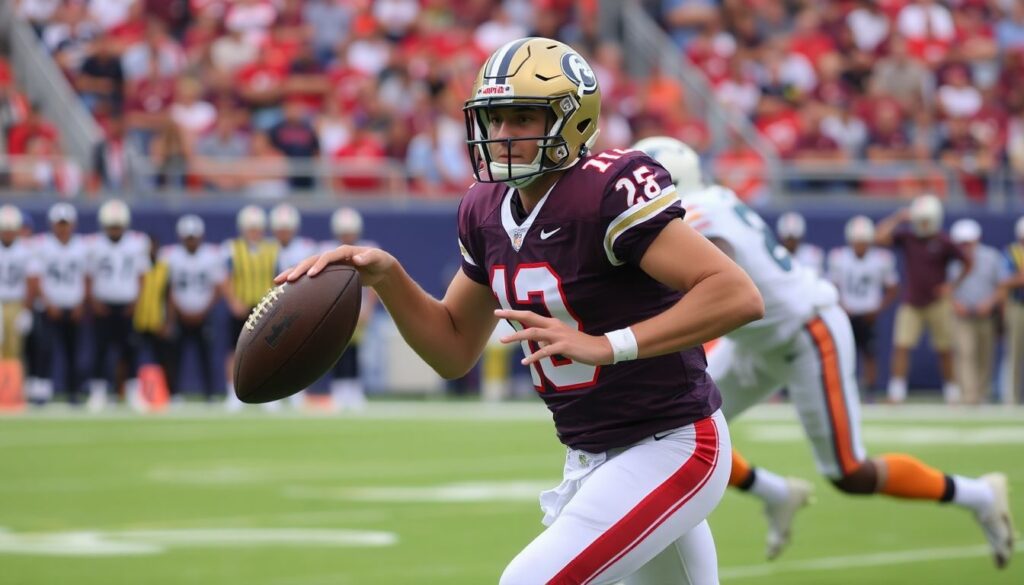
Offensive structure determines how much value a dual-threat QB can realistically add. Some schemes only sprinkle in QB runs; others are fully built around the QB as the primary conflict creator. Smart play-calling maximizes stress on specific defenders while protecting the QB from unnecessary hits.
Below is a simple comparison of three QB archetypes within common offensive approaches:
| Archetype | Primary Strength | Best Usage | Risk Profile |
|---|---|---|---|
| Pocket passer | Timing, progression reads | Spread or pro-style with minimal QB run | Lower run-hit risk, higher sack risk |
| Dual-threat QB | Balanced pass and run threat | Spread-to-run, RPO-heavy, movement passes | Moderate run-hit risk, lower sack risk |
| Run-first QB | Designed QB carries | Option-heavy, QB-power schemes | High cumulative hit exposure |
Scheme elements that boost dual-threat impact
- Shotgun and pistol formations to improve read angles and run tracks.
- Zone read, power read, and GT counter with the QB as either keeper or decoy.
- RPOs where the QB reads a second-level defender, with a keep option if that defender over-commits.
- Boots, nakeds, and sprint-outs that reset launch points away from pressure and create run-pass options on the edge.
- Empty and 3×1 formations that force the defense to declare numbers in the box and reveal QB run opportunities.
Structural constraints and risks to manage
- Hit volume on the QB from designed runs, scrambles, and extended plays.
- Increased complexity for the offensive line in handling changing launch points and run tags.
- Potential stagnation if the passing menu is too shallow and defenses load the box or play tight man.
- Backup QB drop-off if the system is over-tailored to one unique athlete.
- Pair each QB run concept with a protection- and slide-emphasis teaching point.
- Maintain a robust quick-game and dropback menu so you are not dependent on QB runs.
- Ensure your backup can execute a pared-down version of the dual-threat package.
Evaluation Framework: Metrics, Film Markers, and Prototyping
Evaluating dual-threat QBs goes beyond rushing yards. You need a structured framework that weighs passing traits, decision-making, and sustainable run value. Overemphasizing highlights or raw athleticism leads to misprojections and poor scheme fits.
Common evaluation errors and myths
-
Myth: Rushing stats define dual-threat value
Relying on rushing totals ignores context like scheme, supporting cast, and defensive quality. Film should show whether the QB is making the right give/keep decisions, protecting himself, and finishing runs under control. -
Error: Confusing scramble ability with dual-threat status
A QB who occasionally escapes pressure is not automatically a dual-threat. To qualify, he must execute a full passing menu and handle designed QB runs with clear reads and ball security. -
Myth: Athleticism will cover for weak processing
At higher levels, defenses close space and spy running QBs. If the QB cannot punish coverage with his arm, athleticism becomes far less valuable and increases exposure to hits with fewer rewards. -
Error: Ignoring situational performance
Clutch scenarios-third-and-medium, red zone, two-minute-reveal whether the QB can win as a passer when defenses anticipate QB runs. Evaluation should track decision quality in these situations, not just total yardage. -
Myth: Any spread QB can run a dual-threat system
Some spread QBs are catch-and-throw distributors with limited run skill or contact courage. Installing heavy QB run packages for them may lower efficiency and increase injury risk without adding real conflict stress.
For staffs designing a dual threat quarterback training program, building clear evaluation rubrics-practice and game-helps track whether the QB is progressing as a passer, not just as a runner.
- Grade decision-making separately from results on both passes and QB runs.
- Differentiate between scramble yards and designed run efficiency.
- Emphasize situational tape: red zone, third down, and two-minute drives.
Health, Durability, and Career Management for Mobile QBs
Dual-threat QBs face higher exposure to hits, but intelligent training and usage can extend careers. The key is controlling when, where, and how the QB takes contact, while building a body that tolerates lateral movement and occasional collisions.
A practical dual threat quarterback workout plan prioritizes core strength, hip and ankle mobility, deceleration ability, and low-body power. Conditioning should mimic play tempo: short, intense bursts with incomplete recovery, matching real offensive series. Movement days must integrate slide practice, sideline exits, and hook-slide techniques under fatigue.
Below is a simplified weekly micro-cycle that a quarterback coach for dual threat QBs might coordinate with strength staff:
- Day 1 – Acceleration and power: Short sprints, resisted starts, lower-body lifts; finish with QB-specific change-of-direction without contact.
- Day 2 – Throwing volume and tissue care: Higher throw count, mobility circuits, soft-tissue work; minimal running load.
- Day 3 – Deceleration and contact prep: Braking drills, controlled pad hits, slide technique; upper-body strength.
- Day 4 – Speed, reaction, and film: Reactive agility with decision cues, light throws, detailed run-usage and hit-tracking review.
Coaches should track total hits per game and per season, adjusting designed QB runs as needed. Career management often means trading a few designed carries for more efficient passing solutions, especially once a QB has established arm credibility.
- Build weekly plans that separate acceleration, deceleration, and throwing volume.
- Teach and rehearse three “outs” on every play: throw away, slide, or sideline exit.
- Monitor cumulative hit counts and adjust scheme to preserve long-term health.
End-of-Section Self‑Check for Dual‑Threat QB Development
- Have you defined dual-threat in your system as a passing-first role with added run stress, not the reverse?
- Does your scheme include specific concepts that leverage QB movement while protecting against excessive hits?
- Is your evaluation process grading decisions, situational play, and durability-not just rushing and highlight plays?
- Does your dual threat quarterback workout plan align with your on-field usage and hit profile?
- Do athletes asking how to become a dual threat quarterback receive an integrated plan covering passing, movement, and health?
Practical Questions on Use, Evaluation, and Transition
What truly separates a dual-threat QB from a scrambling pocket passer?
A dual-threat QB is built into the run game with designed carries and reads, while a scrambling passer runs mostly as a last resort. Dual-threats also maintain a full passing menu, making defenses defend both on every snap.
How should a high school player start if they want to become a dual-threat QB?
First, master basic passing mechanics, coverage recognition, and timing. Then add structured movement drills and simple read-based QB runs. Ask coaches to design a clear progression instead of just calling improvised QB draws.
What should be included in a dual threat quarterback training program in the offseason?
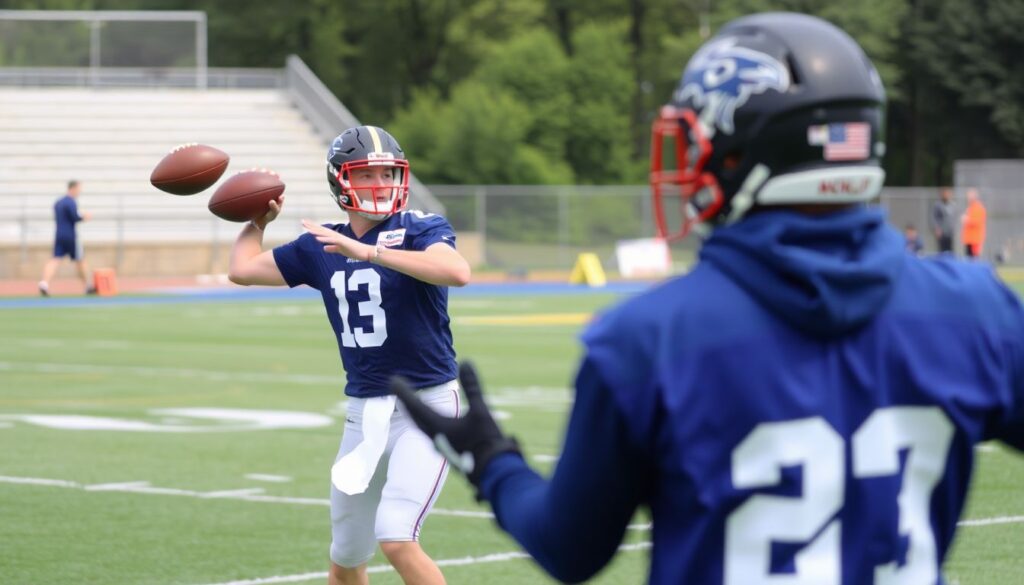
Combine throwing sessions, footwork and pocket movement, sprint mechanics, and change-of-direction work. Include weekly film study focused on reads and protection plus controlled contact prep like slide drills and low-impact tackling form.
How do college coaches evaluate the best dual threat quarterbacks in college football?
They look beyond stats, focusing on situational performance, decision quality on reads, ball security, and durability. Film of how a QB handles third downs, red zone, and top defenses carries more weight than big-play totals alone.
How often should a dual-threat QB run by design versus scramble?
Usage depends on the offense and level, but designed runs should be intentional and tracked for hit count. Scrambles should mostly occur when coverage wins or protection breaks down, not as the primary plan.
Can any spread QB be shifted into a dual-threat system?
Not automatically. The QB needs genuine running skill, contact comfort, and the ability to process option reads. Forcing heavy QB runs on a non-runner usually reduces efficiency and increases injury risk.
How can a private coach support a dual-threat QB during the season?
A private quarterback coach for dual threat QBs can refine mechanics, adjust workload around games, and help break down film. Coordination with team staff is essential to avoid overuse and conflicting technique cues.