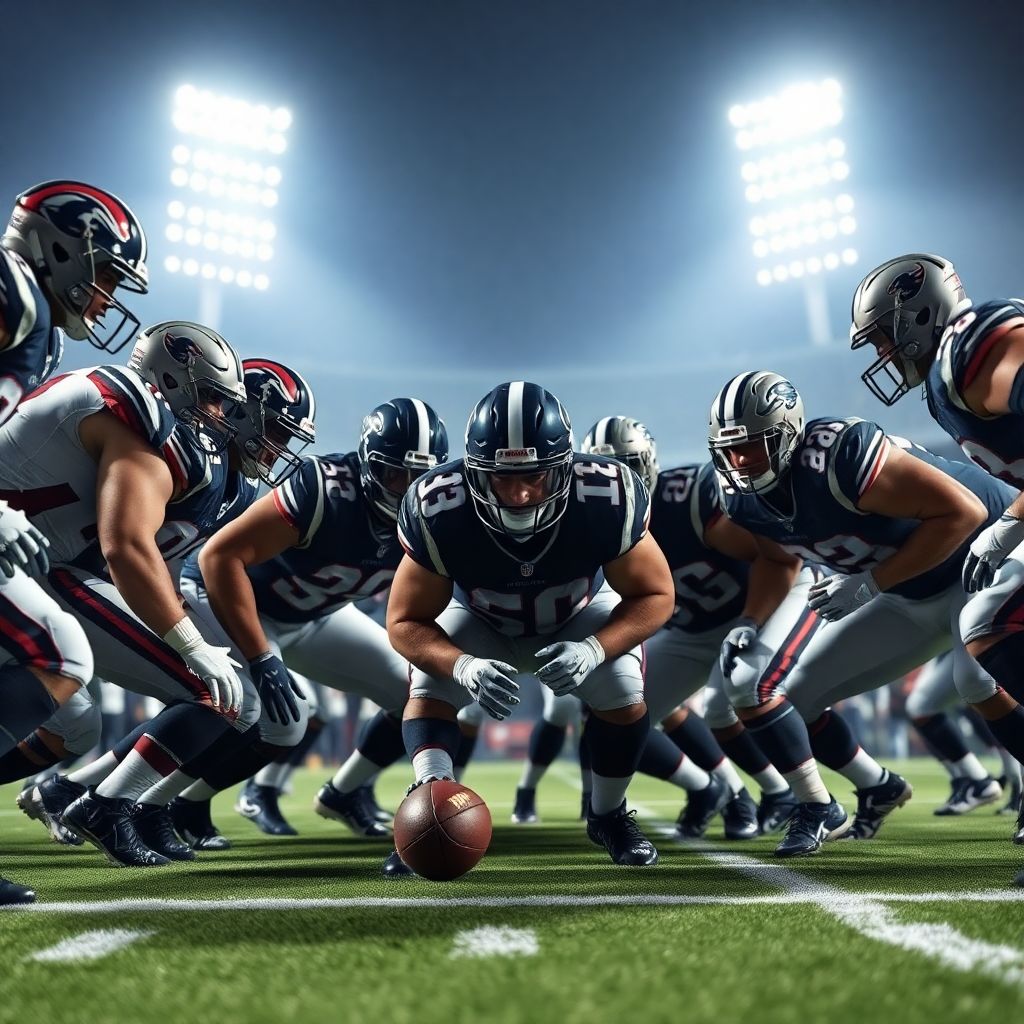
Offensive linemen who quietly dominate the NFL win blocks consistently, limit pressures, and create run lanes without drawing flags or highlights. They shape passing pockets, define the ground game’s ceiling, and often separate average offenses from elite ones. To find them, you combine film study with line-specific metrics and contextual scheme analysis.
Why Offensive Linemen Quietly Decide Games
- Consistent pass protection changes route depth, read timing, and how often coordinators call deep shots.
- Run-game efficiency is usually traced back to double-teams, combos, and angles created by linemen, not ball-carriers.
- Hidden elite linemen rarely show on the stat sheet, so you need structured metrics, film, and scheme context to spot them.
Quantifying Dominance: Metrics That Reveal Hidden Linemen
Quantifying an offensive lineman’s impact starts with pressure-related metrics: pressures allowed, sacks allowed, and time to pressure. These show whether the blocker sustains the pocket long enough for the play’s intended timing. Pair that with penalties and blown-block data to understand how often the lineman actually loses, not just when a sack happens.
Grading services and team analytics use composite pass-block and run-block grades to approximate overall performance. Look for linemen who maintain strong pass-block efficiency while also contributing to high run-block win rate on zone, gap, and screen plays. Context is crucial: a player facing more one-on-one assignments against top rushers might have slightly worse numbers but higher true value.
To identify the best NFL offensive linemen 2024 lists might miss, compare individual metrics against team tendencies and opponent quality. That is also how serious fans move past surface-level top NFL offensive line rankings and start building their own tier systems. Over a full season, the most valuable linemen combine low pressure rates, low penalties, and high success on critical downs.
- Track pressures, sacks, and penalties per game rather than only season totals.
- Compare pass-block and run-block metrics while adjusting for opponent strength.
- Note whether the lineman frequently holds up in obvious passing situations and critical downs.
Technique Breakdown: Traits of Elite Unsung Guards and Tackles
Quietly dominant linemen share repeatable technical traits that show up on film regardless of opponent. They win with consistent stance, balanced footwork, and efficient hand usage instead of just raw strength. These core mechanics help them stay square, recover from mistakes, and avoid holding calls.
- Stance and get-off: A balanced, compact stance with even weight distribution enables explosive but controlled first steps in pass sets and run blocks.
- Footwork and angles: Elite linemen maintain inside-out leverage, set an efficient angle to landmarks, and avoid crossing feet when redirecting versus counters.
- Hand placement: Strong inside hand position on the defender’s chest or armpits allows control without grabbing outside the frame.
- Independent hand usage: The best guards and tackles use separate strikes, reloading one hand to counter moves while the other maintains contact.
- Pad level and core strength: Staying low with a stable base converts power from the ground up and prevents getting lifted or walked back.
- Eyes and awareness: Good linemen scan for games, blitzes, and late movement, passing and picking up stunts without chasing.
Technical evaluation also matters for scouting, coaching, and building an NFL offensive line training program that turns raw athletes into stable starters. When you watch practice or drills, look for repeatable movements rather than isolated “pancake” reps. Technique that survives fatigue and different fronts is usually what sustains long-term dominance.
- Check stance, pad level, and first step on multiple reps, not just one highlight.
- Watch the hands: timing, strike placement, and ability to reset without grabbing.
- Note whether the lineman sees and adjusts to stunts and blitzes smoothly.
Film-Study Profiles: Case Studies of Quietly Elite Linemen
Film reveals how under-the-radar linemen control games snap after snap. On a third-and-long, a quiet Pro Bowl-level left tackle might vertical set, widen the rusher past the quarterback’s landmark, and subtly ride him around the pocket. The play looks routine on the broadcast, but the deep dig route only develops because of that clean edge.
Inside, an unsung right guard might dominate by winning double-teams and climbing to linebackers in split-zone or duo. On a key red-zone run, he fits hip-to-hip with the center, torques the defensive tackle just enough, then accelerates to seal the backside linebacker. The box score credits the running back, but the space exists because the guard executes two blocks in sequence.
Another case is a center on a team that appears high in top NFL offensive line rankings. On third-and-medium, he identifies a mugged A-gap linebacker, adjusts the protection, and then snaps, sets, and passes off a twist while redirecting to pick up the blitzer. The broadcast circle may highlight the receiver’s route, but the real win happens in the interior pocket.
- Pick 3-5 key third downs from a game and watch only one lineman each time.
- Rewatch successful explosives to see how long the quarterback had and who created that time.
- On red-zone snaps, track which linemen actually displace defenders on scoring plays.
Scheme Fit and Role: How Systems Make Linemen Look Better
Scheme determines which linemen flash on film and in metrics. A wide-zone heavy team asks tackles and guards to reach and cut off defenders laterally, highlighting quickness and angles. A gap- or power-focused system emphasizes down-block strength, pull timing, and the ability to generate vertical movement on double-teams.
Pass-game structure matters too: quick-game and heavy play-action reduce raw pressure numbers for linemen. True dropback-heavy systems with empty protections and long-developing concepts expose protection flaws but also showcase who can survive on islands. You need to factor in help from tight ends and backs before comparing players across systems.
Advantages Created by Scheme Fit
- Zone schemes can hide slower interior players by using angles and help on combos.
- Play-action and boot concepts move the launch point, reducing direct edge pressure.
- Slide protections and chip help allow marginal tackles to post respectable metrics.
Limitations and Distortions From Scheme
- Quick-game heavy offenses may inflate linemen’s pass-block efficiency on paper.
- Constant tight end chips can mask a tackle who struggles in true one-on-ones.
- Power schemes can spotlight dominant maulers while hiding issues in space or against speed.
- Identify primary run concepts (zone vs gap) before judging a lineman’s run-block skills.
- Note how often a tackle gets true solo pass sets versus regular chips or slides.
- Adjust your evaluation when an offense leans heavily on play-action or screens.
Pathways to Recognition: Scouting, Development, and Breakouts
Quietly dominant linemen often start as mid-round picks or developmental backups who gradually refine technique. Scouting misses can happen when evaluators overrate measurables and underrate processing, balance, and hand usage. Once in the league, a year or two in a tailored development plan can turn a solid depth piece into an anchor starter.
Breakouts usually follow a combination of improved technique, scheme continuity, and stable health rather than a single magical season. Many future candidates for best NFL offensive linemen 2024 lists are current role players refining footwork and film habits. Fans notice them only when analysts and offensive line coaches start pointing to consistent tape.
Recognition also appears in secondary markets: jerseys, cards, and memorabilia. When a guard or tackle’s reputation grows, you start seeing more NFL offensive lineman jerseys for sale and more discussion among collectors. Even nfl offensive linemen rookie cards value can climb as people connect trench dominance with team success.
- Look for year-over-year improvement in technique and penalties more than instant stardom.
- Pay attention when coaches and players mention specific linemen unprompted in interviews.
- Watch hobby and fan interest (jerseys, cards, film breakdowns) as a lagging but useful signal.
Market Value: Contracts, Analytics, and Identifying Bargains
Teams search for linemen who outperform their contracts by combining film, metrics, and health history. A tackle or guard on a mid-tier deal who posts near-elite pass-block and run-block numbers becomes a core asset. You can apply a stripped-down version of this process as a fan, analyst, or fantasy/DFS player tracking line value.
A simple evaluation algorithm for a lineman’s season might follow a repeatable checklist. You gather pressures allowed, penalties, and run-game success when running behind or beside that player. Then you layer in film notes on technique, awareness, and performance against top rushers to confirm the numbers.
// Pseudo-algorithm to evaluate an offensive lineman's season
score = 0
if pressures_allowed is low relative to snaps: score += 1
if penalties are infrequent and non-critical: score += 1
if run concepts to his side show strong success: score += 1
if film confirms sound technique vs top rushers: score += 1
// 3-4 points = quiet high-level season
This kind of process also helps you spot future risers before the market catches up. When a lineman quietly posts strong tape and metrics on a modest contract, that is a likely extension candidate. The same structured thinking improves how you interpret contract news, free agency moves, and value discussions around the trenches.
- Combine basic metrics, film notes, and contract cost when judging a lineman’s value.
- Flag linemen who grade well and stay healthy but are not yet paid at the top of the market.
- Recheck your conclusions after important scheme or coaching changes.
Common Concerns When Evaluating Offensive Line Play
How do I start evaluating linemen if I am used to watching the ball?
Pick one lineman and watch only him for an entire drive, ignoring the ball. Focus on his first two steps, hand placement, and whether he seems in control or in recovery mode. Repeat with different players and positions to build comfort.
Which basic stats matter most for casual analysis?
Pressures allowed, sacks allowed, and penalties are the best simple starting points. Combine them with high-level team metrics like yards per carry and sack rate to get a rough picture. Always remember to add film context before making firm judgments.
How reliable are public top NFL offensive line rankings?
Public rankings are useful as a directional guide, especially when multiple sources agree. They still blend film, advanced metrics, and subjective weighting, so treat them as starting points. Deeper evaluation comes from watching specific reps and concepts yourself.
Can I judge linemen just by highlight clips?
Highlights are almost always misleading because they show a small subset of plays. Linemen win by being good on many ordinary snaps, not just a few dominant ones. Use full-game or cut-up film whenever possible.
Does jersey or card popularity reflect on-field quality?
Jersey and card demand usually trail on-field performance and are skewed toward skill positions. However, when you notice more nfl offensive lineman jerseys for sale or rising nfl offensive linemen rookie cards value, it can signal growing recognition. Treat this as a soft, secondary indicator.
How do training programs impact in-season performance?
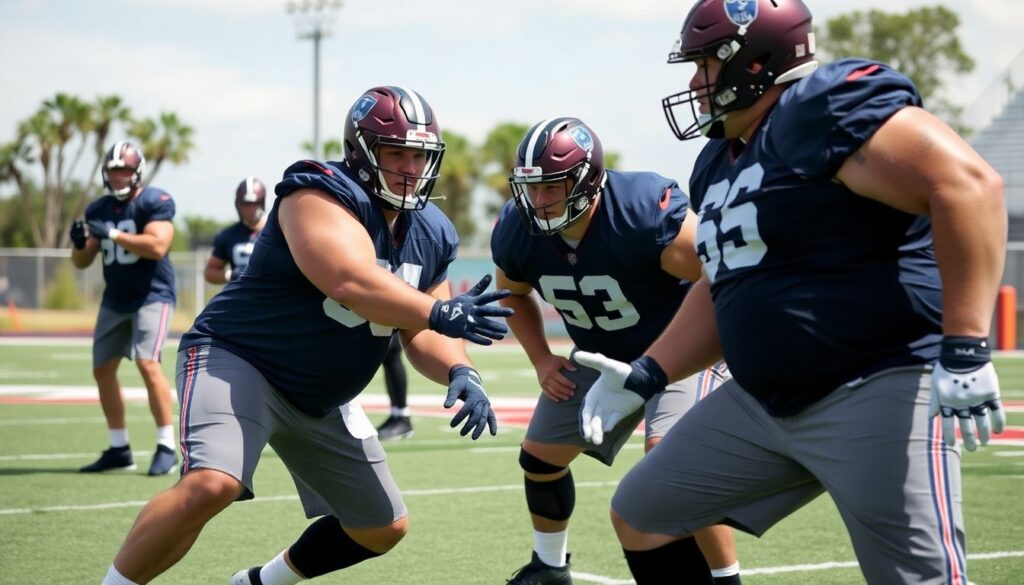
A well-designed nfl offensive line training program focuses on core strength, hip mobility, and repeatable technique under fatigue. Players with tailored plans tend to maintain form deeper into games and seasons. Look for comments from coaches and players about year-round work and individualized plans.
What is a quick checklist to verify my offensive line evaluation?
Confirm that your opinion matches at least one trusted analytics or film source. Rewatch a small sample of critical downs to test your conclusions. Finally, check whether performance holds across multiple opponents and game scripts.
Self-Check: Quick Algorithm to Test Your Evaluation
- Have you reviewed both metrics (pressures, penalties, run success) and film for the lineman?
- Did you account for scheme, help from tight ends/backs, and quality of opposing rushers?
- Have you compared your view against at least one external ranking or expert breakdown?
- Did you rewatch a few key third downs and red-zone plays focusing only on that lineman?