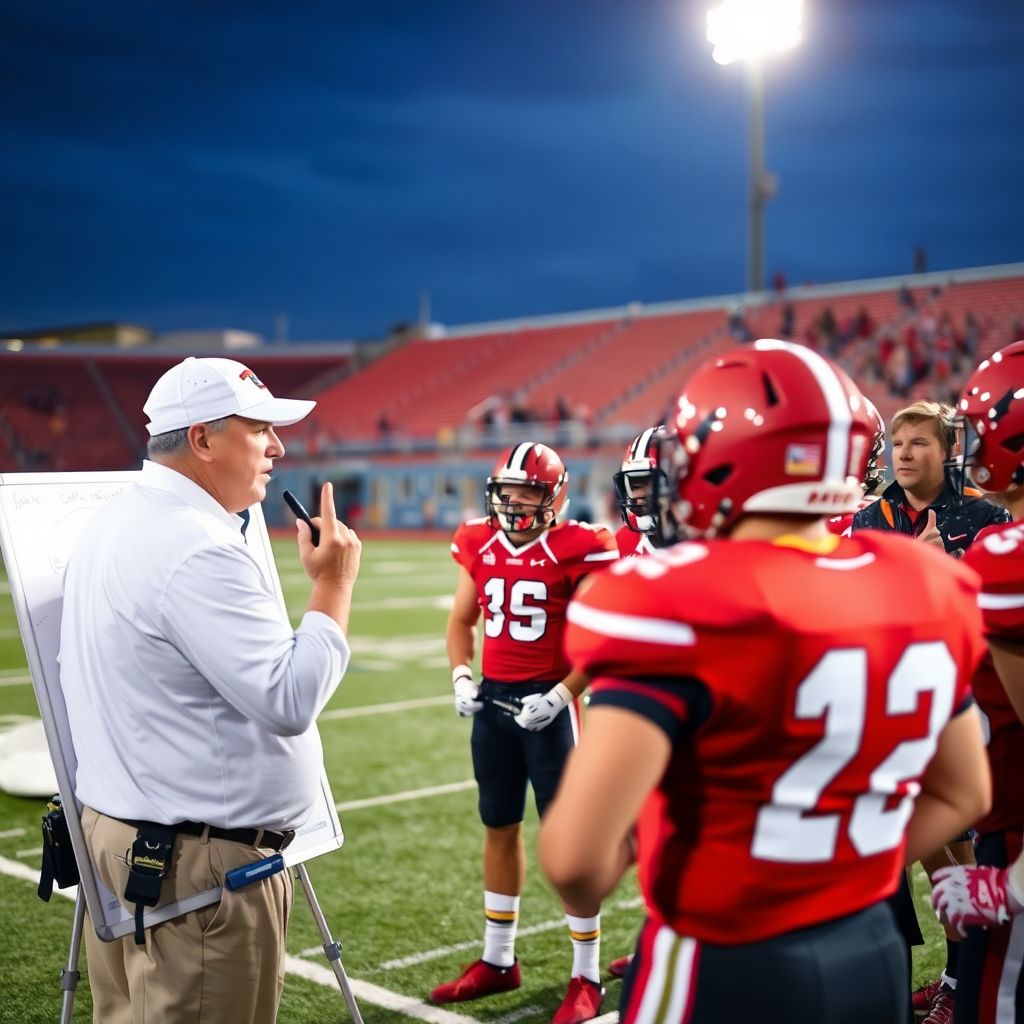
The perfect two-minute drill is a rehearsed, clock-aware, pass‑first package that trades perfection for speed. You win it by pre‑planning play clusters, managing timeouts, protecting the sideline, and giving your QB simple, repeatable decisions. This guide turns two minute drill play calling strategies into a clear, safe, step‑by‑step framework.
Critical Elements of a Two‑Minute Plan
- Define clear goals for the situation: field goal vs touchdown, number of plays you realistically have, and where the ball must reach.
- Script a small, trusted menu instead of the whole playbook and rehearse it as a separate phase of your offense.
- Assign one person to track clock, timeouts, and referee signals so the playcaller can focus on decisions.
- Teach your QB a fixed progression and throw‑away rules to avoid sacks, scrambles, and in‑bounds tackles that burn time.
- Use consistent personnel and formations so communication is fast and players line up correctly without huddling.
- Practice sideline and hash awareness so receivers and backs know when to get out of bounds and when to fight for yards.
Clock and Timeouts: Managing the Countdown
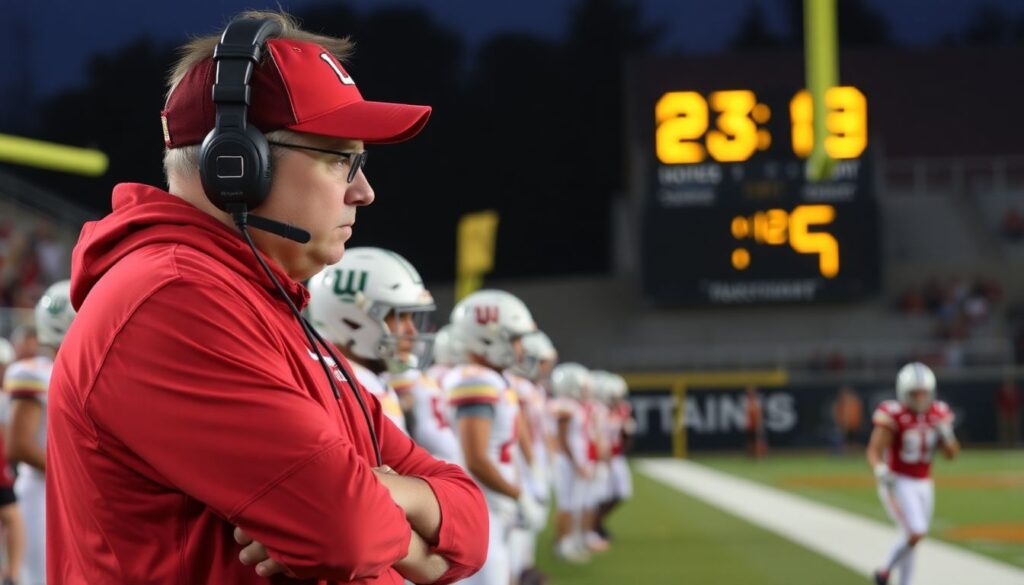
Late‑game clock management is useful for any coach who calls plays in competitive tackle football, from high school to advanced youth and above. It is less relevant for very young age groups that use running clocks or where passing and timing rules are heavily modified.
Do not over‑complicate your system if your players cannot yet execute basic no‑huddle mechanics. If you routinely struggle to get lined up, snap count is inconsistent, or your QB cannot handle quick decisions, simplify the package before installing a full two‑minute drill.
Situational framing for the clock
-
Field goal range scenario (Tie game, ball on opponent 40, one timeout, 0:50 left).
- Primary goal: gain enough yards to make your kicker comfortable without risking a turnover.
- Secondary goal: save your timeout to center the ball or stop the clock after an in‑bounds completion.
-
Touchdown‑only scenario (Down 4-6 points, ball on your 25, two timeouts, 1:20 left).
- Primary goal: move the ball in chunks to midfield quickly, then attack the end zone with 2-4 snaps left.
- Secondary goal: avoid plays in the middle that end short of the sticks unless you can spike immediately.
-
No‑timeout desperation scenario (Down 1-3 points, ball on your 35, zero timeouts, 0:35 left).
- Primary goal: reach the sideline or the end zone; middle completions must get the first down and get down fast.
- Secondary goal: accept incompletions instead of checkdowns that end in bounds.
Clock and timeout decision tree
- If the clock is running and you have no timeout: favor sideline routes or throws beyond the sticks; avoid runs unless they score.
- If the clock is running and you have one timeout: you may use the middle once to gain a big chunk, then immediately call timeout.
- If the clock is running and you have two or three timeouts: think in mini‑segments; use the whole field early, then preserve one timeout for a last clean shot at the end zone or kick.
- If the play ends in bounds and the clock is under roughly half a minute with no timeouts: line up fast, call a simple play or spike, and avoid personnel changes.
- If the play ends out of bounds or is incomplete: confirm the clock status with the official, call the formation while players are returning, and be ready to snap before the defense substitutes.
Practical preparation checklist for clock control
- Assign a dedicated “clock coach” on the headset responsible for reminding the coordinator of time, down, and timeouts.
- Rehearse calling timeouts: who signals, who speaks to the referee, who communicates the next play to the QB.
- Walk through end‑of‑half situations in practice so players feel the tempo and urgency, not just hear about it in meetings.
- Study game film or even a late game nfl playcalling course to see real‑world examples of good and bad clock usage.
Play Selection Hierarchy: Prioritizing Passes, Runs and Spikes
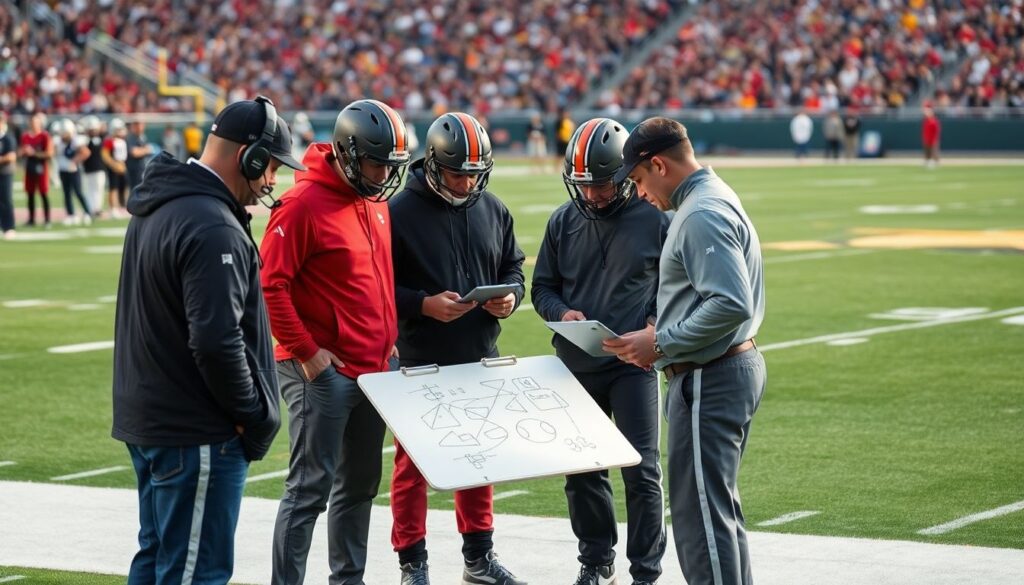
Your two‑minute package should be a narrow slice of your offensive playbook, not a random sampling. Every play must be compatible with no‑huddle tempo, simple communication, and clear sideline or hash rules.
Core tools you need ready
- 2-3 quick passing concepts you trust against multiple coverages (e.g., slant/flat, stick, snag, all‑curls).
- 1-2 intermediate or vertical shot plays that can flip the field when the defense plays soft.
- 1 safe draw or trap run that hits fast for light boxes and can be checked to when the middle is wide open.
- 1 “get out of bounds” concept (flood the sideline with high‑low options) from a familiar formation.
- 1 spike mechanic and 1 “clock play” (fast hitch or quick out) that the whole offense associates with urgency.
Decision priorities: pass, run, or spike
-
First thought: safe pass concepts
- Call passes that include at least one sideline route and one route past the sticks.
- Tag your RB in protection first; checkdown only if he can get out of bounds or clearly reach the sticks.
-
Second thought: surprise run calls
- Run only if the box is light, timeouts are available, and you have a proven quick‑hitting run.
- State clearly to the RB in practice: “No dancing, one cut, get vertical, then get down with the ball secured.”
-
Third thought: spike usage
- Spike after a long in‑bounds gain when your offense is disorganized and you risk a penalty or wasted play.
- Do not spike if you can call a simple, rehearsed play and the ball is already spotted quickly.
Helpful resources and constraints
- Condense your concepts into a one‑page sheet rather than a full offensive playbook for 2 minute drill download that overwhelms players.
- Leverage video from your own games instead of complex pro film until your group masters fundamental spacing and timing.
- When choosing new concepts, favor those already in your base offense so players adjust only tempo and urgency, not assignments.
Personnel and Formation Choices for Quick Strikes
This section provides a safe, practical setup process for choosing who plays and where they line up in your late‑game offense. Focus on clarity and speed over creativity, especially with intermediate‑level players.
Pre‑install personnel mini‑checklist
- Select a default two‑minute personnel group (for example, 11 personnel) and keep it on the field unless the clock is stopped.
- Identify your “must be out there” players: QB, primary WRs, best pass‑protection back, and most reliable slot target.
- Confirm that every player in this group has at least one safe route or assignment in every key concept.
- Walk through substitutions: who calls for a sub, who watches the umpire, and when changes are allowed.
Step‑by‑step setup for formations and roles
-
Choose your base personnel package
Pick one grouping that you can live in for most of the drive, such as 11 personnel (1 back, 1 tight end, 3 receivers). The goal is to eliminate confusion and speed up alignment.
- Write this group on your call sheet as your default two‑minute unit.
- Use separate, clearly labeled terms for special packages (e.g., jumbo) and avoid them unless the clock is stopped.
-
Define boundary and field positions
Assign each receiver a permanent spot: boundary wide, field wide, and slot(s). This keeps them from asking “where do I line up?” when the clock is running.
- Teach boundary players to understand tight splits, fades, and back‑shoulder throws near the sideline.
- Teach field players to run more space‑using routes like digs, posts, and deep outs.
-
Lock in a two‑minute formation family
Use 1-2 core formations (for example, Trips Right and Doubles) and tag motions or route tags rather than changing the whole structure.
- Ensure the QB can signal these formations quickly with one or two hand signals.
- Rehearse lining up from different previous plays so players can adjust without a huddle.
-
Assign protection responsibilities
Decide whether your back stays in protection first or releases on routes and communicate that clearly. In the two‑minute drill, protecting the QB often matters more than adding one more receiver.
- Teach linemen which pressures you expect in late‑game situations and how you will adjust (slide, half‑slide, man).
- Give the QB 1-2 simple protection checks, not a whole menu of changes.
-
Build a mirrored concept structure
When possible, call plays where left and right sides mirror or are very similar, reducing mental load. This is safe for intermediate players because they can focus on execution, not memorization.
- For your slot receivers, keep route adjustments minimal under pressure.
- Encourage the QB to work one side only when the defense rotates late.
-
Designate a sideline specialist
Choose one receiver whose role is primarily attacking the sideline on outs, comebacks, or speed outs. This makes it clear who is responsible for stopping the clock.
- Practice footwork on tight boundary catches and getting out of bounds cleanly.
- Make sure the QB knows that in doubt, the ball can go to this player on the outside.
Route Concepts and QB Progressions Under Pressure
Use this checklist to test whether your route concepts and quarterback reads are realistic for late‑game pressure and short preparation windows.
- Each core concept has a clear “front side first” read, then a backside or checkdown; no full‑field scans that take forever.
- Your QB can verbalize the progression for each play in simple language (for example, “Go, out, checkdown”).
- At least one receiver in every concept works toward the sideline to stop the clock if needed.
- At least one receiver in every concept runs beyond the sticks on 3rd or 4th downs.
- There is a built‑in throwaway option (deep fade, sideline route) where an incompletion is acceptable if coverage is tight.
- Middle‑of‑field routes are reserved for situations with enough time or a timeout to handle in‑bounds tackles.
- Timing in practice matches game needs: the QB hits the back foot and throws on rhythm, without extra hitches.
- The QB has a firm rule versus pressure: replace the blitz with the ball, drift and throw hot, or dirt the ball near an eligible receiver.
- Receivers understand “clock rules”: get out of bounds when outside leverage wins, get upfield and down when in the middle and short on time.
Communication Protocols: Signals, Scripting and No‑Huddle Flow
Miscommunication destroys two‑minute drives faster than bad play design. Avoid these common issues when building your system.
- Overloading the QB with long play names that are hard to signal, remember, or repeat under pressure.
- Changing signal systems late in the season instead of refining and simplifying what players already know.
- Relying on crowd noise-dependent verbal calls instead of using clear hand signals, boards, or wristbands.
- Sending in formation, motion, and route tags separately instead of bundling them into a compact signal package.
- Failing to rehearse how the call moves from the sideline to skill players and linemen when time is running.
- Substituting during running‑clock situations and getting flagged for illegal substitution or not getting set in time.
- Ignoring refs: not checking the ready‑for‑play signal, arguing spots, or wasting time complaining instead of calling the next play.
- Running a script without built‑in “kill” or “check” words that let the QB adjust when the defense shows an obvious weakness.
- Skipping classroom time, such as a simple in‑house football coaching clinic on late game clock management, that aligns staff and players on terminology.
Drill Reps and Practice Checklists to Build Composure
There are several ways to train late‑game poise without overloading your players or staff. Choose the model that fits your level, time, and resources.
Alternative training approaches
-
In‑house situational periods
Dedicate a short segment in each practice to a specific end‑of‑game scenario: score, time, field position, and timeouts. This is the most realistic and flexible option for most teams.
-
Scripted two‑minute competitions
Run offense versus defense competitions where each side gets a drive to win or protect a lead. Track execution, not just who scores, and adjust your play menu based on what actually works.
-
Classroom and video‑based learning
Use game film or a structured late game nfl playcalling course as a teaching tool. Discuss what you would call, then compare with what the actual staff did and why it worked or failed.
-
External resources and clinics
When available, attend a football coaching clinic on late game clock management or study materials marketed as the best two minute drill training program. Filter ideas through your team’s ability and only keep what you can practice consistently.
Practice checklist for safe, clear execution
- Rehearse at least one two‑minute drive per week with full sideline communication and officials if possible.
- Rotate situations: tied game, down by 3, down by 6, needing a field goal, needing a touchdown.
- Film the period and review with the team, focusing on clock awareness, alignment, and communication rather than just the outcome.
- Update your call sheet based on which concepts players execute cleanly when tired and under time pressure.
Answers to Common Late‑Game Scenarios
When should I choose to spike instead of calling a play?
Spike when a previous play ends in bounds after a long gain, the clock is low, and your offense is disorganized or uncertain. If you can clearly get lined up and run a simple, rehearsed call before the clock becomes critical, keep the ball live.
Is it safe to call runs in the two‑minute drill?
Yes, but only with clear rules: light box, available timeout, and a quick‑hitting design. Coach your back to hit the crease decisively, secure the ball, and understand when getting down is better than fighting for extra yards.
How many plays should be in my two‑minute package?
Use a small, repeatable menu instead of a huge list. A handful of quick concepts, one or two shot plays, a safe run, and a sideline pattern family are usually enough for intermediate‑level teams.
Should my quarterback have freedom to audible in the two‑minute drill?
Give the QB limited, clearly defined checks rather than full freedom. For example, allow a “kill” to switch to a companion play or a check to a draw versus a favorable look, but avoid complex audible systems under tight clocks.
What if my players struggle with no‑huddle mechanics?
Slow the tempo in practice and emphasize alignment and signal recognition before adding more plays. Consider huddling early in the drive when time allows and shifting to faster tempo only near midfield or in the final 30-40 seconds.
How do I handle penalties during a two‑minute drive?
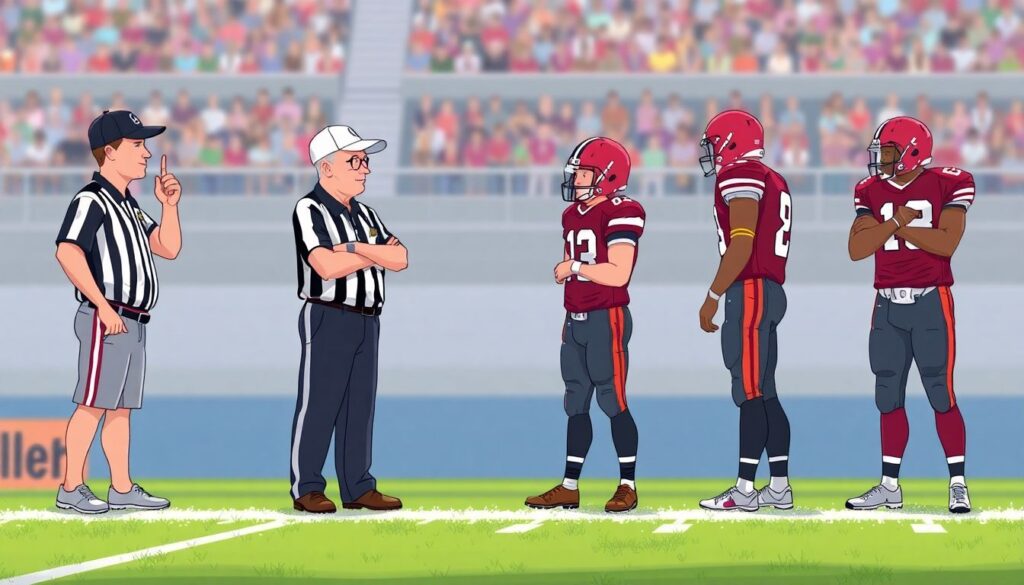
Designate one coach to speak to officials while the playcaller and QB reset the plan. Immediately re‑state down, distance, and clock to the offense and use a simple, trusted call on the next snap to regain rhythm.
Can I install a two‑minute package mid‑season?
Yes, if you build it around plays your team already knows and limit the number of new signals. Introduce it in meetings, walk‑throughs, and controlled practice periods before relying on it in a game.