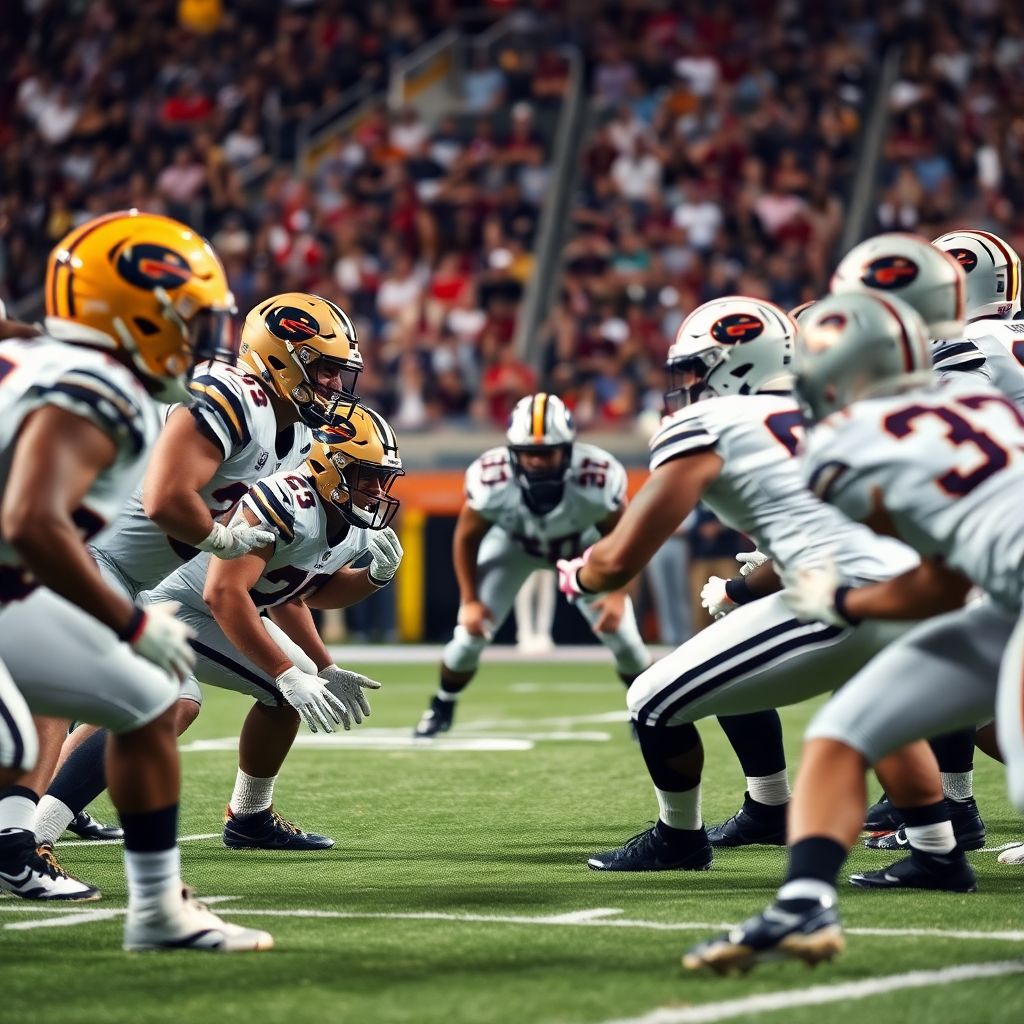
Modern defensive schemes against pass heavy offenses blend versatile coverages, lighter subpackages, and disguise to limit explosive plays while still fitting the run. Defenses use pattern-match principles, simulated pressures, and hybrid players to survive against spread, Air Raid, and other pass-first systems, turning offenses into patient, low-yield operations instead of big-play machines.
Core Defensive Concepts to Counter Pass-Heavy Offenses
- Shift from heavy, run-first fronts to space-focused, coverage-driven structures.
- Use match and pattern-match coverage to handle modern route combinations.
- Lean on nickel/dime subpackages and versatile linebackers/safeties.
- Marry disguised pressures with sound coverage rules and rush-lane integrity.
- Drill communication and pattern-recognition as much as tackling and block destruction.
- Design a defensive playbook for stopping modern passing offenses built around opponent tendencies, not just your base scheme.
Historical Shift: From Run-Focused Fronts to Spread-Savvy Defenses
The evolution of defensive schemes against pass-heavy offenses starts with understanding what defenses were built to stop. For decades, fronts and coverages were designed around downhill run games and under-center play action. Box counts, gap integrity, and early-down run fits drove most decisions.
As spread and Air Raid concepts expanded, forcing defenses to cover all 53⅓ yards horizontally and vertically, traditional base personnel became a liability. Linebackers who were excellent A-gap thumpers struggled carrying slots on vertical routes or matching option routes in space. Defensive coordinators needed an approach that still fit the run, yet could handle full-field passing attacks.
Today, when you study how NFL defenses are adapting to pass first offenses, you see fewer snaps of true base defense and more nickel as the “new base.” The front is lighter, the coverage more flexible, and the emphasis shifts from winning one gap each to collectively handling space, leverage, and route distributions.
For high school and college coaches, this same shift must show up in your planning. A football coaching guide to defending high powered passing attacks now begins with space management, coverage rules, and subpackages, not just front alignment versus Power and Iso.
Modern Coverage Concepts: Match, Pattern-Match, and Zone Hybrids
Modern coverage is less about pure man or pure spot-drop zone and more about match rules that change with the route distribution. This is the backbone of the best strategies to defend air raid and spread offenses.
-
Spot-drop zone to match-zone evolution
Instead of dropping to grass and reacting late, defenders drop with awareness of route stems in their area, ready to “match” receivers as they enter their zone. -
Pattern-match rules by side
Many coverages now play like man-to-man on one side and like zone-match on the other, based on formation strength and down-distance. Rules are tied to the number of vertical routes (e.g., “2 verticals, 3 under”). -
Bracket and cone techniques on key threats
Defenses often double a featured receiver or the slot in high-leverage situations, bracketing inside-out or top-bottom, while playing match coverage elsewhere. -
MOD/MEG/Mable-style rules
Concepts like “Man Outside Deep” or “Man Everywhere He Goes” let you adjust on the fly to stacks, bunches, and motion without blowing coverages. -
Zone hybrids for RPO and quick game
Underneath defenders play with vision on the quarterback to squeeze slants, glance routes, and bubble screens while still honoring run fits, a key feature of modern defensive schemes against pass heavy offenses. -
Leverage and divider rules
Defenders relate to receivers using field landmarks (hash, numbers, sideline) so that leverage is consistent, regardless of the offense’s formation tweaks.
Pass Rush Evolution: Edge Speed, RPO Counters, and Disguise
Coverage alone does not stop elite passing systems; the rush must work hand-in-hand. The defensive playbook for stopping modern passing offenses now emphasizes pressure that is fast, unpredictable, and disciplined against RPO.
-
Wide alignments and edge speed
Defenses use wider rush alignments (e.g., “9” techniques) to generate one-on-one situations against tackles and shorten the edge for speed rushers while interior linemen compress the pocket. -
Simulated pressures and creepers
Coordinators present a blitz look pre-snap but only rush four, dropping an expected rusher and replacing him with a second- or third-level defender. The offense must sort six or more potential rushers for only four actual attackers. -
RPO-specific rush plans
Ends and outside backers are often coached to attack the mesh differently versus RPO: for example, “slow play” the handoff, keep shoulders square, and then transition into a controlled rush that keeps the quarterback in the pocket. -
Interior push and pocket distortion
Against quarterbacks who thrive on quick game, interior pressure that forces them off the spot or closes their vision lanes is often more disruptive than pure edge wins. -
Rush-lane integrity against mobile QBs
Lanes are assigned and coached like run fits: each rusher has a landmark and responsibility to avoid giving up easy scrambles on third-and-long. -
Married pressures and coverage shells
Every pressure call should pair with a coverage that defenders can execute at game speed; exotic pressure with blown coverage behind it is worse than a basic four-man rush with tight coverage.
In practice, this means you script rush periods where the call is less important than the technique: rushers must win with hands and leverage while staying in their lane, and coverage players must hold disguises until the last safe moment before the snap.
Personnel & Subpackages: Nickel, Dime, and Versatile Linebackers
The shift in how NFL defenses are adapting to pass first offenses is most visible in personnel. Nickel, dime, and other subpackages let defenses add speed and coverage ability, but each comes with trade-offs. Understanding these helps you build the right package mix for your own level and roster.
Advantages of Nickel, Dime, and Hybrid Personnel
- More speed and change-of-direction ability on the field to match slots, backs, and tight ends.
- Improved coverage flexibility: more players comfortable with man, pattern-match, and blitz responsibilities.
- Better answers versus empty formations, bunches, and motion-heavy spread sets.
- Ability to disguise pressures and rotate coverages post-snap without obvious mismatches.
- Enhanced pursuit and tackling in space against screens, perimeter RPO, and quick game.
Limitations and Trade-Offs of Lighter Subpackages
- Greater vulnerability to downhill run schemes, especially against heavier offensive personnel.
- Smaller defenders forced into frequent box fits, raising wear-and-tear and missed-tackle risk.
- Complexity: more calls, tags, and checks increase mental load and potential for communication errors.
- Personnel dependency: your best “nickel” or “dime” may graduate or get injured, forcing scheme adjustment.
- Possible red-zone issues when space shrinks and physical matchups matter more than coverage variety.
Communication, Coaching, and Play-Calling Adjustments
Scheme changes only succeed if you coach communication and play-calling to match. Many problems in defending pass-heavy attacks come from mental errors, not inferior chalk on the board.
-
Overloading the call sheet
Myth: more calls equals better defense. In reality, too many coverages and pressures lead to alignment busts and slow reactions against tempo and motion. -
Ignoring down-distance and field zone
Mistake: calling the same coverage menu on 3rd-and-12 as on 2nd-and-4. Your defensive playbook for stopping modern passing offenses must be situation-driven. -
Undercoaching route recognition
Myth: “We just play our rules.” Without explicit teaching of common route combinations (mesh, four verts, snag, levels), defenders struggle to anticipate and squeeze space. -
Weak sideline and pre-snap communication
Mistake: complex check systems that only the coordinator fully understands. Players need clear buzzwords, signals, and boundaries for when to adjust or stay in the original call. -
Not matching practice tempo to game tempo
Myth: you can prepare for high-tempo spread teams with slow, install-paced practices. Defenses must experience multiple high-speed team periods weekly to normalize the stress.
Translating Theory to Practice: Drills, Practice Plans, and Game-Day Templates
Turning concepts into execution is where a football coaching guide to defending high powered passing attacks lives or dies. You need repeatable practice structures that build communication, coverage integrity, and rush coordination.
Core Weekly Structure Against Pass-Heavy Offenses
-
Coverage-Rush Indy and Group Periods
Split front-seven and back-end to drill specific skills (pass-rush moves, match drops, pattern reads), then recombine in 7-on-7 and 2-on-2/3-on-3 pods (e.g., corner-safety-nickel versus trips). -
Scripted Route-Concept Emphasis
Build periods where the offense runs your opponent’s top eight to ten concepts on repeat. Defenders call out route combinations pre- and post-snap and must finish with proper leverage and eyes. -
Tempo and Communication Blocks
Use no-huddle periods where the offense snaps the ball quickly. Limit the defensive menu to your core calls and emphasize signals, checks, and lining up fast over perfect scheme variety. -
Pressure + Coverage Team Segments
Pair each pressure call with its coverage and run both versus the pass concepts you expect. Correct both rush-lane integrity and coverage busts before moving on. -
Game-Day Call Sheet Template
Organize by situation: base downs, 3rd-and-long, red zone, two-minute, backed up, and “gotta-have-it” calls. Under each, list 2-4 coverages and 2-3 pressures you trust, not every call in the playbook.
Over time, this approach turns your ideas about modern defensive schemes against pass heavy offenses into a coherent, practiced system your players can execute under pressure. You are not just collecting plays; you are building a limited, well-repped menu tailored to stopping the specific passing attacks you face.
Practical Clarifications and Tactical Nuances
How many coverages does a defense really need versus a pass-heavy team?
You need a small, versatile menu: usually one or two base match coverages, a reliable man option, and a couple of specialized brackets or pressure coverages for key situations. The priority is mastery and communication, not volume.
Is pure man-to-man viable against spread and Air Raid offenses?
Pure man can work in short spurts or specific matchups, but living in it is risky against elite spacing and pick concepts. Most successful defenses blend man, match, and zone to avoid predictable leverage and constant rub problems.
How should smaller high school defenses handle heavier run games while staying spread-ready?
Use personnel who can both cover and fit the run, like bigger safeties in the box, and commit to sound run fits from your nickel looks. You may reduce to one deep safety more often on early downs while keeping match rules outside.
What is the first step to building a defensive playbook for stopping modern passing offenses?
Start by charting what your opponents actually run: formations, motions, route concepts, and RPO tags. Build your base coverages and pressures to answer the top concepts you see, then trim anything you cannot practice thoroughly.
How do you balance disguising coverages with keeping alignments simple for players?

Use late rotation from similar pre-snap pictures instead of wildly different alignments. Teach a few consistent disguise families your players can execute and pair each with multiple post-snap coverages to get more variety from fewer techniques.
What is the best way to practice against tempo without exhausting the defense?
Run short, high-intensity tempo segments with built-in rest between series. Emphasize quick alignment, clear communication, and playing the next snap with poise rather than running full drives at maximum speed every practice.
Can a run-first defense still succeed against today’s passing offenses?
Yes, if it evolves. You can keep a physical identity while adding subpackages, match coverage rules, and better route-recognition coaching. The goal is to stay multiple enough to handle space without losing your tackling and run-fit standards.