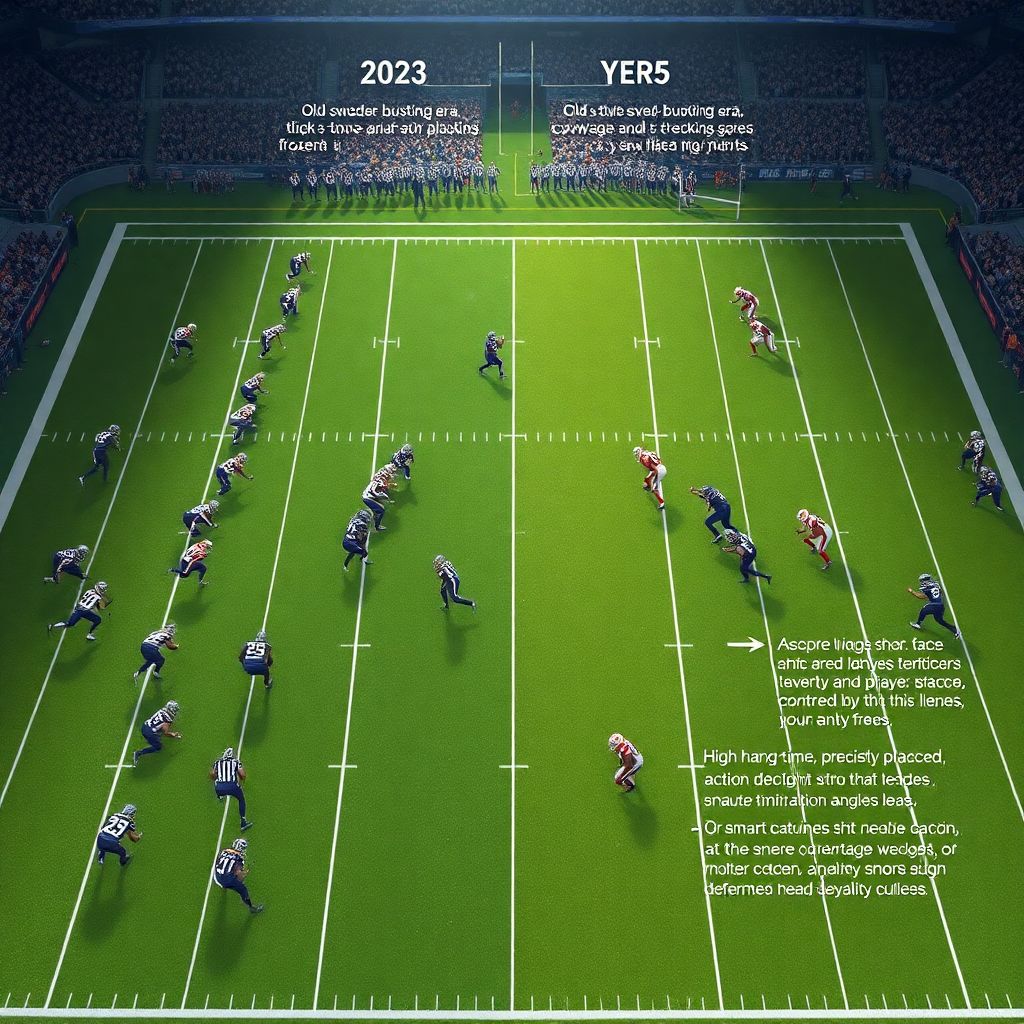
Special teams in today’s NFL barely resemble what you saw even 10–15 years ago. Safety-focused rule changes have forced coaches to rip up old manuals, rethink risk‑reward, and use analytics in ways that used to be reserved for offense and defense. If you’re trying to really understand modern kicking, punting, and return strategy, you have to start by treating the rulebook as a living opponent that keeps changing its tendencies. Below is a practical, expert‑level look at how those rules have reshaped the field — and how smart coaches are adapting, teaching, and winning because of it.
—
The safety-driven evolution of special teams
From wedge-busting to space management
The biggest philosophical shift? Special teams is no longer about raw collisions; it’s about controlling space. The NFL has systematically removed the most violent elements: the three‑ and four‑man wedge was banned in 2009, blind‑side blocks on returns were heavily restricted, and the definition of defenseless players was tightened. That killed a lot of the old “run full speed and blow it up” culture. Veteran special teams coordinators will tell you that their first job now is not to find kamikaze gunners, but to teach 11 players how to keep leverage and avoid penalties that gift 15 yards. Modern coverage drills focus on tracking hips, near‑foot aiming points, and lane integrity instead of purely who can create the biggest hit on film.
> Technical note — core safety rules that changed the geometry
> – Wedge blocks with three or more players: banned (2009)
> – Peel-back and blind‑side blocks: redefined and harshly penalized (2018 tweak)
> – “Defenseless” status for returners and kickers: expanded over multiple seasons
Kickoff rule shifts from 2011 to 2024
Kickoffs have been the lab where the league experiments. In 2011, moving the kickoff from the 30 to the 35‑yard line slashed return rates — touchbacks jumped, and concussion counts on kickoffs dropped. Then came the 2018 wave: the running start for coverage units was removed, players were compressed closer to the kickoff line, double teams became harder, and more blocks had to start in front of the returner. All of that made kickoffs look more like controlled scrimmage plays than chaos. With the 2024 hybrid kickoff rule (inspired by the XFL) teams line up downfield, frozen until the ball is caught or hits the ground, with the aim of reducing high‑speed collisions even further. Strategically, that means less free runway, more emphasis on initial alignment, and a premium on kickers who can vary trajectory, not just distance.
> Technical note — key kickoff rule pivots
> – 2011: Kickoffs from the 35, touchbacks to the 20
> – 2018: No running start; most blockers inside the setup zone; revised alignment
> – 2024: Hybrid kickoff — coverage and blockers aligned downfield, restricted movement
—
How coaches rebuilt kickoff and return philosophy
Hang time, placement, and the “force a decision” approach
Once touchbacks spiked, special teams coordinators realized the old “just boot it” mindset was wasting hidden yardage. The premium shifted to hang time and ball placement. Instead of every kick going through the end zone, you saw “mortar” kicks landing around the 2–5 yard line near the numbers, giving coverage units time to arrive and “build the wall” between returner and sideline. Coaches like John Harbaugh and Dave Toub have spoken openly about tracking average starting field position as a primary metric, not just return yards allowed. The new 25‑yard touchback spot on some kicks adds another wrinkle: you’re constantly calculating whether a slightly shorter, higher kick can bait the return team into a poor decision and pin them inside the 20. That’s where a serious nfl special teams strategy guide now starts — optimizing expected field position, not highlight returns.
Return game: from home-run plays to hidden yardage
On the return side, the math flipped too. With fewer true “live runway” kickoffs and stricter blocking rules, you simply don’t see as many Devin Hester‑style explosive plays. Smart coordinators have adjusted by emphasizing ball security, clean decision‑making, and consistent 8–10 yard gains over chasing the 60‑yarder. Many teams now tag returns pre‑snap by “green/yellow/red” based on hang time, coverage spacing, and returner’s alignment; the returner is coached that a yellow look means “secure the ball, protect field position, don’t improvise.” That mindset change explains why some electric college returners struggle as rookies — they’re used to bouncing everything, but NFL coaches will bench a guy faster for a bad decision at the 5‑yard line than for a missed cut in the open field. The rule tweaks made being a reliable decision‑maker as valuable as being the fastest guy on the field.
> Technical note — what coordinators track on kicks/returns now
> – Hang time to tenth of a second (e.g., 4.3 vs 4.7)
> – Landing zone (hash/numbers/sideline, inside/outside 5‑yard line)
> – Net starting field position vs league average
—
The ripple effect of PAT and field goal changes
Longer extra points and roster math
Moving the extra point back to a 33‑yard attempt in 2015 turned what used to be an automatic afterthought into a real decision node. The league‑wide conversion rate dropped from around 99% at the old spot to roughly 94–95% from the new distance in the first seasons, which may not sound huge, but it radically altered game management. Suddenly being “down eight” isn’t as clean a target, and missed PATs force coordinators to carry more two‑point plays on the call sheet. That change also affected roster building: teams became less willing to live with erratic kickers, and the value of reliable long‑snapper and protection units quietly climbed. Coaches I’ve consulted with stress that your field goal unit is now a full‑blown phase of the game, not a specialist sideshow — they script pressure protection looks and operation‑time drills just like blitz packages.
Fake kicks, protections, and pressure looks
Because special teams became more situationally valuable, defenses also invested more in blocking schemes and disguises. You now see teams studying opponents’ protection rules to create overloads on known weak links, or timing jumps based on the holder’s rhythm. In response, coordinators added motion and shifts to kick formations to reveal pressure and check into safer looks or fakes. A classic example is using a “swing” motion by a wing player: if a defender follows aggressively, it can signal an overload coming off the edge, queuing protection calls or a fake. Expert coordinators recommend scripting one or two credible fakes each month, not necessarily to run them, but to force opponents to spend practice time and to slow their rush. Rule stability around formation and shift usage on kicks means the creativity edge tends to belong to the best prepared staff.
> Technical note — critical field goal/PAT metrics
> – Operation time (snap‑to‑kick): target ~1.25–1.30 seconds
> – Edge rusher alignment: inside/outside shade on wing as block “tell”
> – PAT success changed leverage on 1‑point vs 2‑point decisions late in games
—
Analytics and film: the new special teams toolbox
Data-driven decision making
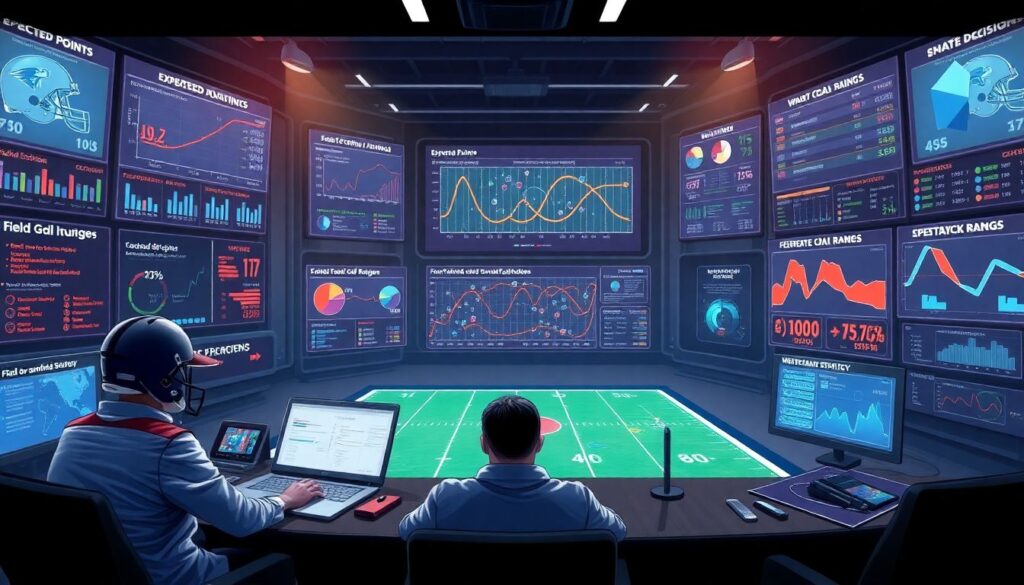
As rule changes squeezed out easy edges, analytics stepped in. Front offices now build models estimating expected points from different starting field positions, 4th‑down decisions that intersect with field goal range, and even when to deliberately take a touchback. Dedicated nfl analytics tools for special teams performance track not just yards, but win probability added (WPA) and expected points added (EPA) for each kick, punt, or return decision. For example, a “fair catch at the 12 versus risky return” scenario can be quantified by fumble risk, penalty odds, and historical return distribution. The expert recommendation here is clear: coordinators should partner with analysts weekly, not just at season’s end. The best staffs treat the numbers as a scouting report on their own tendencies — if you’re too predictable with directional punts or pooch kicks, data will shout it long before opponents do.
Turning film into tactical edges
If analytics tells you *what* is happening, film still tells you *why*. With special teams coverages more structured by rule, small alignment quirks matter a ton. This is where a professional nfl game film breakdown service can quietly tilt the field. Detailed cut‑ups reveal things like a personal protector who drifts right under pressure or a gunner who tips inside releases with his stance. Elite coordinators grade every special teams snap not just by result, but by technique and assignment: lane integrity, hand placement, eye discipline, and tracking angles all get scored. Their advice is to build a shared film language — same terms and landmarks from rookies to veterans — so corrections translate quickly onto the field. The goal isn’t a perfect grade sheet; it’s eliminating repeated errors, especially those that turn neutral rules into negative outcomes, like illegal blocks that erase good returns.
> Technical note — common film “tells” coaches hunt
> – Gunner splits that predict inside vs outside release
> – Personal protector depth changing on fakes
> – Return unit’s stance and lean hinting at direction
—
Practical expert recommendations for modern special teams coaches
Building a flexible special teams playbook
With the league constantly tinkering with safety rules, the smartest coordinators build systems, not just plays. That means designing schemes with modular rules: same core concepts, different alignments for whatever the kickoff or punt structure looks like next season. Experienced coaches recommend creating a small “change‑rules” install section in your playbook that can be dusted off whenever the competition committee announces another tweak. For learning, they also point younger coaches toward the best online course for nfl coaching and special teams they can find, not because drills are magic, but because understanding trend histories helps you predict the next adjustment. The more your players understand *why* the rules exist — mostly to remove violent, space‑closing hits — the more readily they buy into leverage, angles, and controlled aggression instead of seeking big hits that just draw flags and fines.
Practice design and player development
Rule changes have also altered how you should structure practice. With fewer live‑speed reps allowed, experts push a “layered intensity” model: start with slow, detail‑driven walk‑throughs emphasizing landmarks and assignments, then progress to full‑speed but thud‑only drills with tight space constraints, and finally mix in a very limited number of live reps where tackling and finishing angles are evaluated. Coordinators increasingly use VR, drone footage, and remote cut‑ups during meetings so younger players see spacing from the bird’s‑eye view the rules now essentially enforce. Another under‑the‑radar recommendation: collaborate closely with your betting and analytics staff to understand how nfl rule changes affect betting odds, because that’s often where hidden perception edges show up first. Put simply, the coaches who keep educating themselves and adjusting to safety‑driven mechanics are the ones who turn a “reduced impact” phase of the game into a consistent, quantifiable edge on Sundays.
> Technical note — building a modern ST development plan
> – Emphasize assignment clarity before contact
> – Use constrained‑space drills that mimic new kickoff and punt geometries
> – Review weekly opponent and self‑scout tendencies from multiple camera angles
—
In a league where the rulebook is constantly reshaping the field, special teams has become a chess match of geometry, probability, and discipline. Treat the evolving regulations as design constraints, not annoyances, and you’ll find more ways to steal first downs in field position, suppress explosives, and create scoring chances out of thin air. Whether you lean on in‑house analysts, outside consultants, or a professional nfl game film breakdown service, the core mindset is the same: understand how each rule change shifts incentives, then teach your players to operate a step ahead of where everyone else is still reacting.