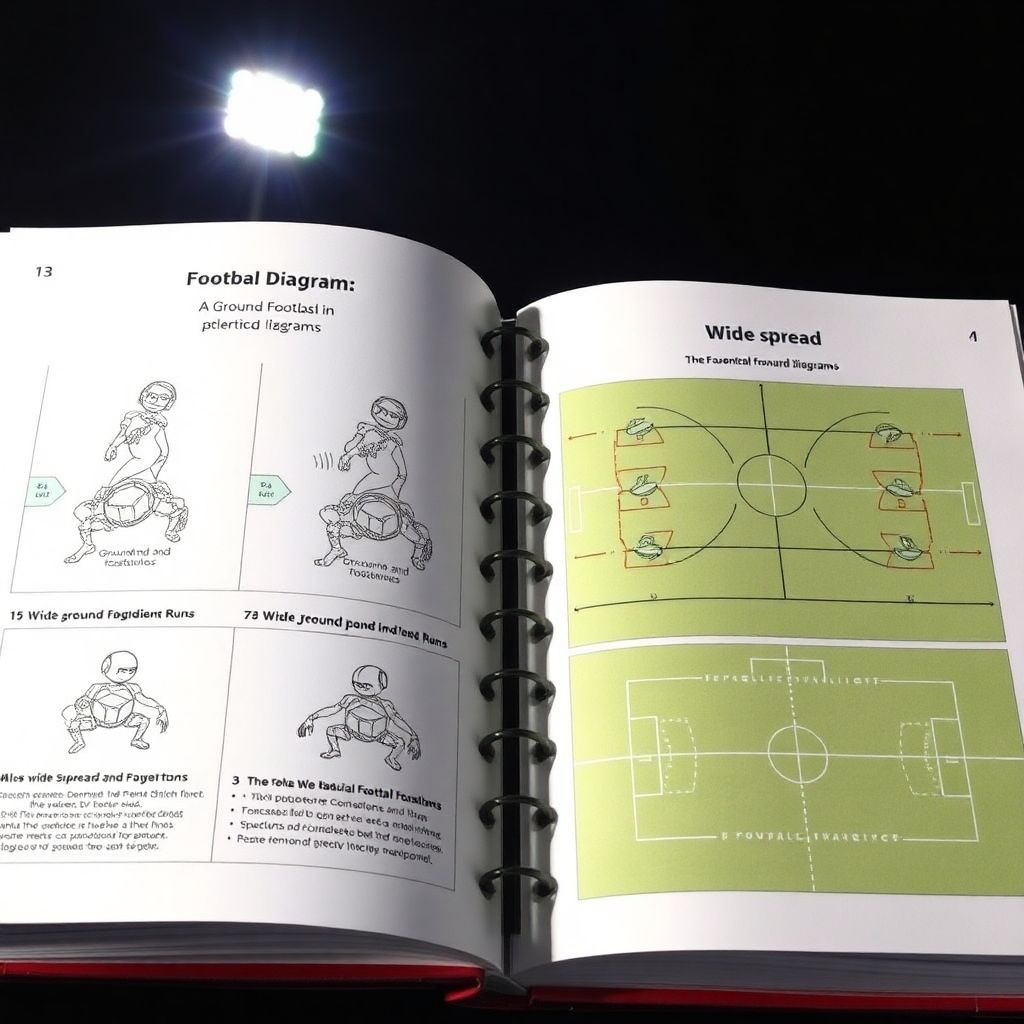
Offensive schemes evolved from ground-and-pound power football to space-oriented spread offenses by trading stability and lower risk for speed, flexibility, and explosive plays. Ground-and-pound is simpler to install and safer but easier to predict. Modern spread and hybrid systems are harder to teach, demand more skilled personnel, and expose you to timing, protection, and turnover risks.
Essential milestones in offensive evolution
- Transition from under-center, run-heavy ground-and-pound to more balanced, multiple offenses.
- Adoption of power and counter schemes as the core of physical run games.
- Introduction of zone blocking and play-action married to West Coast passing concepts.
- Rise of spread formations emphasizing spacing, tempo, and quick-game decision-making.
- Growth of hybrid systems blending power, zone, RPOs, and pro-style structures.
- Use of analytics, cutups, and clinics to optimize playcalling and risk management.
Roots and rationale of ground-and-pound football
Ground-and-pound describes run-first, physical offensive schemes built around tight formations, multiple backs or tight ends, and a commitment to controlling the line of scrimmage. The quarterback primarily manages the game, while the offensive line and backs carry the volume of work between the tackles.
The rationale is straightforward: reduce variance, protect the football, shorten the game, and wear down the defense. For many high school and lower-college programs, this style is attractive because its football offensive schemes playbook can be taught with relatively limited practice time and without elite passing personnel.
Implementation risk is moderate but predictable. Install is linear: teach base runs, core blocking rules, then a small set of complementary play-action passes. The main downside is strategic: you can struggle to come back from deficits and may be outscored by spread teams with superior athletes in space.
Section checklist:
- Can you consistently recruit physical linemen and backs?
- Is your program comfortable winning low-scoring, field-position games?
- Do you accept limited explosive passing in exchange for ball control?
Core mechanics: power running, blocking schemes, and tempo
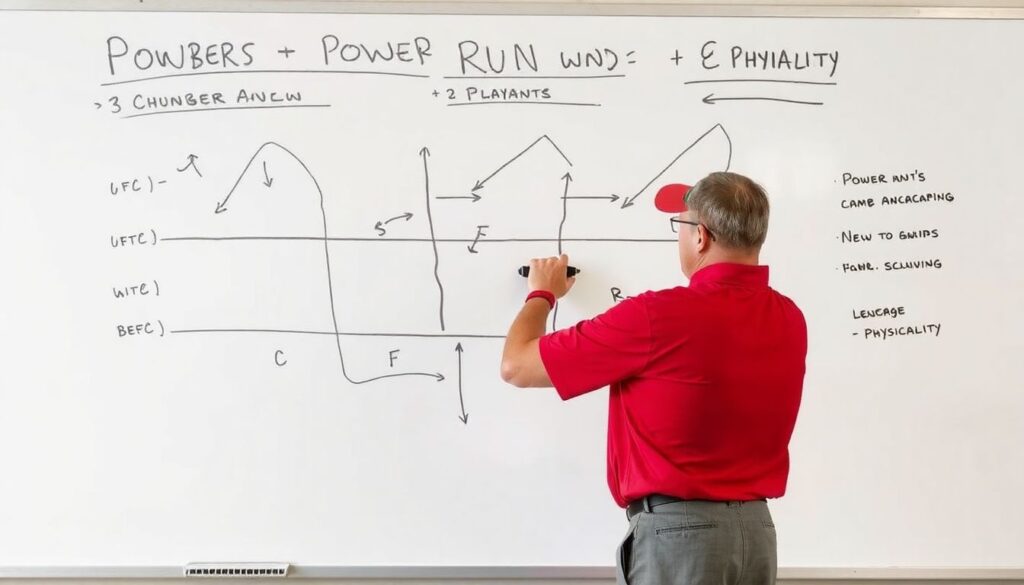
Ground-and-pound mechanics revolve around a small number of highly-repped concepts that stress defenses with angles and physicality rather than width and tempo. Understanding these pieces helps you judge implementation effort and game-day risk.
- Power and Counter – Gap schemes with down blocks and a pulling guard or tackle. Easy to tag and dress up with motions, but require line cohesion and a tough, decisive back.
- Iso and Lead – Fullback or H-back leads through the hole on a linebacker. Simple teaching progression and low assignment risk, especially for young quarterbacks.
- Trap and Wham – Let a defender penetrate and hit him with a trap block. Higher timing risk, but effective when your linemen are outmanned physically.
- Pass protection tied to runs – Slide, half-slide, and man protections that mirror your run looks. Limits the size of the football offensive schemes playbook but improves execution and reduces protection busts.
- Deliberate tempo – Huddle, milk the clock, and reduce total possessions. Lowers volatility and helps keep your defense fresh; the risk is running out of time when trailing.
- Safe play-action – Deep shots off power or iso action with max protection. Bigger chunk plays with relatively simple reads for a game-manager QB.
Section checklist:
- Have you limited your core run concepts to 3-4 with clear blocking rules?
- Are protections and play-action directly tied to your base runs?
- Is your tempo philosophy aligned with your defense and roster depth?
Hybridization: zone runs, play-action, and the West Coast influence
Hybrid offenses keep ground-and-pound toughness but add zone schemes and West Coast passing concepts to attack more of the field. Inside and outside zone reduce the need for overpowering linemen and reward units that can communicate and work in combination.
West Coast-style passing adds timing routes, quick-game concepts, and defined quarterback reads to complement the run game. This reduces down-and-distance risk on early downs but increases install complexity and demands more from your quarterback’s decision-making and mechanics.
Hybrid systems especially shine when supported by structured learning: studying a spread offense playbook download to borrow spacing ideas, then grounding them in your existing power/iso menu. The risk profile shifts from purely physical mismatch to mental execution: busts in route depth, motion, and protection can lead to negative plays.
Typical application scenarios:
- Balanced programs that can recruit both linemen and perimeter skill players but not elite talent at every spot.
- Weather-affected teams that need a functional pass game but must survive in wind, rain, or cold.
- Development-focused staffs using the best football coaching books offensive schemes to methodically layer concepts across multiple seasons.
- Programs transitioning from pure ground-and-pound toward more spread principles without overhauling the entire offense in one offseason.
- Personnel-challenged years where you lean more on zone and quick-game one season, then return to heavier sets when talent cycles back inside.
Section checklist:
- Have you clearly defined which plays are “old” ground-and-pound and which are “new” hybrid additions?
- Do your quarterbacks and receivers have enough meeting time for timing routes?
- Can your line handle both gap and zone rules without confusion?
Anatomy of the spread: formations, spacing, and quick game principles
Spread offenses use wide formations, shotgun alignment, and tempo to stress defenses horizontally and vertically. The goal is to put your best athletes in space, simplify reads with RPOs and packaged plays, and run more total snaps. This elevates your explosive-play potential but raises volatility and teaching load.
From an implementation standpoint, spread systems often require the most off-season investment: film study, practice scripting, and formal learning resources such as an online course football offensive coordinator or an in-depth american football offensive strategy clinic. The reward is flexibility to adjust weekly and attack specific defensive weaknesses.
| Offense Type | Core Scheme Identity | Preferred Personnel Profile | Situational Strengths | Implementation Difficulty | Primary Risks |
|---|---|---|---|---|---|
| Ground-and-pound | Gap runs, tight formations, under-center or pistol, heavy play-action | Big, physical OL; downhill RB; game-manager QB; blocking TEs/FBs | Short yardage, red zone, bad weather, protecting a lead | Low to moderate; install focuses on fewer concepts | Limited explosiveness, harder to erase big deficits, predictable tendencies |
| Hybrid (power + zone + West Coast) | Mix of gap and zone runs, under-center & gun, structured quick and intermediate pass game | Balanced roster; QB comfortable under center and shotgun; versatile TEs/slots | Early-down efficiency, adaptability to opponent, multi-year system building | Moderate to high; requires teaching multiple families of concepts | Mental errors in assignments, protection busts, “jack-of-all-trades” identity drift |
| Spread | Shotgun, wide splits, RPOs, quick game, tempo, vertical shots | Accurate QB decision-maker; multiple WRs; mobile OL; space-play RBs | Two-minute drill, exploiting mismatches, high-play-volume games | High; heavy teaching load and practice organization demands | Turnovers, negative plays, three-and-outs that stress your defense |
Advantages of spread-based approaches
- Maximizes touches for your best athletes and isolates weaker defenders in space.
- Provides built-in answers with RPOs and packaged plays against modern defensive structures.
- Supports high-tempo strategies to tire opponents and increase total offensive opportunities.
- Offers broad menu options in any modern football offensive schemes playbook, from Air Raid to spread option.
Limitations and risk factors of spread installations
- Requires accurate, quick-processing quarterbacks and receivers who can separate in space.
- Demands detailed practice scripts, film work, and staff organization; half-installing spread concepts often leads to confusion.
- Tempo and incompletions can expose your own defense by increasing snaps and shortening rest.
- Protection complexity rises as you add more dropback, RPO, and movement passes.
Section checklist:
- Do you have a quarterback and receiver room suited to spread tempo and spacing?
- Can your staff support the teaching load with meetings, cutups, and clear language?
- Is your defensive staff on board with the pace and total-play implications?
Personnel, recruiting and schematic fit across eras
The biggest implementation mistake is copying a scheme without matching it to your personnel and recruiting reality. Ground-and-pound fails if you cannot field physical linemen; spread fails if you lack a competent passer or enough receivers; hybrids fail if your roster swings wildly year to year.
As access to resources improved-film, clinics, and every style of spread offense playbook download-coaches could install more concepts than their players could realistically execute. The risk is a bloated call sheet, endless tags, and no clear identity when the game is on the line.
Typical errors and myths to avoid:
- “Spread is always easier for smaller schools” – It may hide size issues, but it demands high-skill QBs and WRs plus structured teaching.
- “Power football is outdated” – Gap schemes are thriving inside modern spread looks; physicality still wins on short yardage and in playoffs.
- Chasing trends every offseason – Switching wholesale from power to spread and back prevents players from mastering anything.
- Ignoring special teams and defense fit – A hyper-tempo offense can hurt a thin-defense program more than it helps the scoreboard.
- Overestimating install capacity – You can study every american football offensive strategy clinic and still only successfully install a fraction of what you see.
Section checklist:
- Have you honestly assessed your 2-3 year personnel pipeline by position group?
- Does your offensive identity support your defensive and special teams philosophy?
- Is your playbook trimmed to what you can rep properly each week?
Modern synthesis: analytics, playcalling, and defensive counters
Most successful modern systems blend ground-and-pound, hybrid, and spread elements into a coherent weekly plan. Analytics, film breakdowns, and self-scout guide which tools you lean on rather than committing to a rigid identity regardless of matchup or weather.
Think of it as a layered decision tree instead of a loose collection of plays. Below is a simplified pseudo-call sheet illustrating how a staff might blend concepts while managing risk:
IF down & distance = 3rd-and-1 to 3rd-and-2:
    CALL best short-yardage ground-and-pound concept (Power, QB Sneak, Duo)

ELSE IF defense loads box (7+ in box, single-high):
    CALL spread formation RPO / quick game (Stick, Slant/Bubble, Hitch)

ELSE IF defense light box but 2-high shell:
    CALL hybrid inside zone with play-action glance or dig behind LBs

ELSE IF 2-minute drill or chasing score:
    SHIFT to spread personnel, no-huddle, 3-5 core quick-game and vertical shots

ALWAYS:
    SELF-SCOUT tendencies; add constraint plays (boots, reverses, screens)
    to punish overplays to your main calls
Staffs often use modern tools-analytics dashboards, cutup libraries, and structured learning such as an online course football offensive coordinator-to decide which parts of their system to emphasize each week. The core risk is complexity creep: every “good idea” added without pruning raises the odds of blown assignments and inconsistent playcalling.
Section checklist:
- Are you regularly self-scouting calls by down, distance, and formation?
- Do you trim and highlight a small core menu each game week?
- Can every coach articulate when to use ground-and-pound, hybrid, and spread tools?
Self-diagnostic checklist for choosing and evolving your offense
- Have you matched your primary scheme (ground-and-pound, hybrid, spread) to your actual quarterback, line, and skill talent?
- Can you clearly explain your identity in one sentence to players and staff?
- Is your call sheet built around a small core, with constraints and tags instead of dozens of unrelated plays?
- Are you using clinics, books, and film to refine what you do, not constantly replace it?
- Do you have a plan to manage risk when protecting a lead, chasing a score, and in short-yardage situations?
Technical clarifications and concise answers
What is the main difference between ground-and-pound and spread offenses?
Ground-and-pound focuses on tight formations, power runs, and clock control, accepting fewer explosive plays for lower turnover risk. Spread offenses prioritize space, tempo, and RPOs, seeking chunk gains but demanding higher execution from quarterbacks, receivers, and protection schemes.
Is a hybrid offense harder to install than pure ground-and-pound?
Yes. Hybrid systems ask linemen to learn both gap and zone rules and require quarterbacks to handle more timing and read concepts. The trade-off is greater flexibility to attack different defensive looks without fully abandoning your physical run identity.
Can a small school successfully run a spread offense?
It can, but only if it has at least a competent passer, a few receivers who can separate, and enough practice structure to teach timing and protections. Many smaller programs succeed with a limited spread package layered on top of a simple, physical run game.
How big should a football offensive schemes playbook be?
Size matters less than coherence and repetition. Most programs are better off with a modest playbook centered on a few core runs and passes, plus constraints, that can be repped heavily, rather than a thick binder of plays that are never mastered.
Where should I start when studying modern offensive schemes?
Begin with your personnel, then study focused resources: targeted clinic videos, an american football offensive strategy clinic, and the best football coaching books offensive schemes that match your level. Add concepts slowly and only if you can practice them properly.
Are online resources enough to install a new offense?
Online materials help, including an organized spread offense playbook download or a structured online course football offensive coordinator. However, success still depends on your ability to simplify language, script practice effectively, and teach fundamentals on the field.
How often should an offense change its core identity?
Ideally, not very often. Adjustments year to year should be incremental and driven by personnel, not trends. Major overhauls are higher risk and should be reserved for clear mismatches between your current system and your long-term talent pipeline.