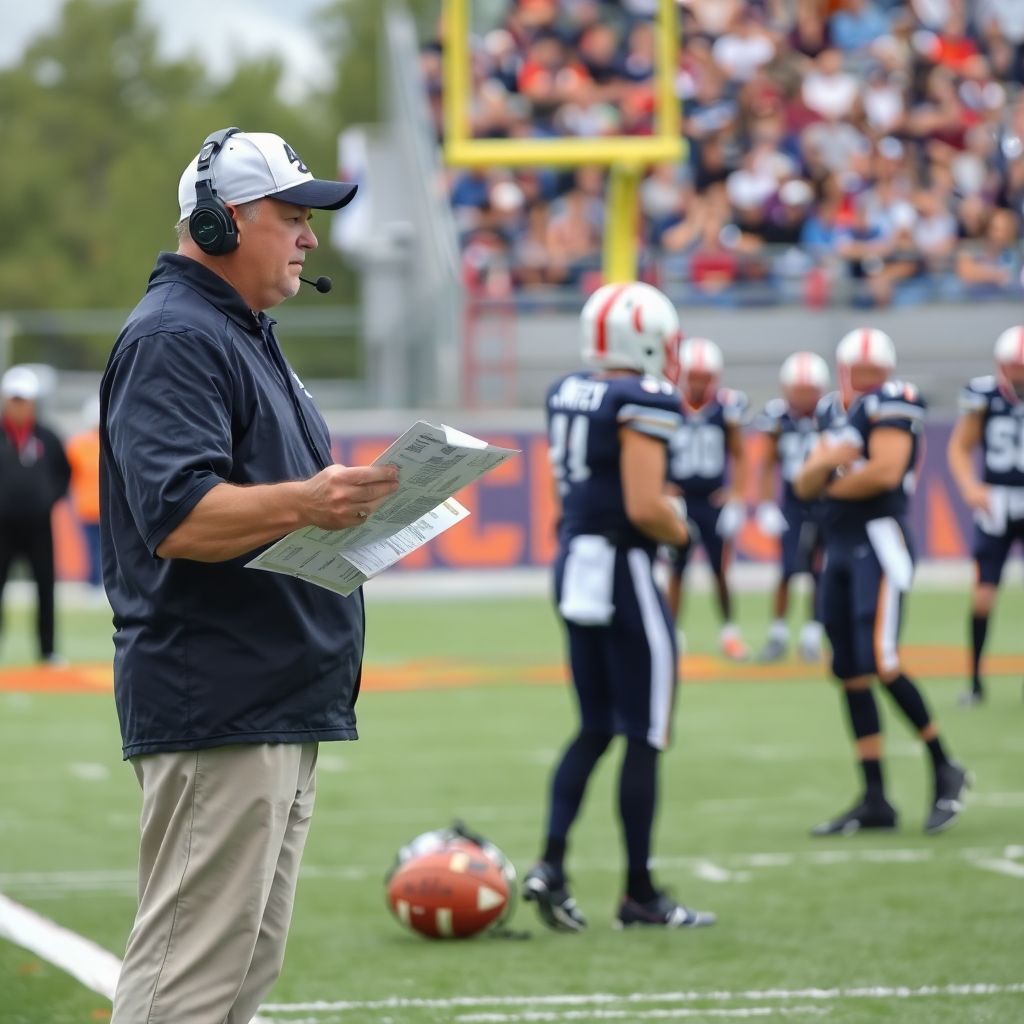
Scripting the first 15 plays is a controlled way to test your scouting, settle your QB, and quickly read the defense. You pre-plan a balanced mix of runs, passes, and screens tied to down, distance, and field position, then adjust after those 15 based on what the defense actually shows.
Core Objectives for the First 15 Plays
- Confirm or disprove your scouting report on fronts, coverages, and pressure patterns.
- Set offensive identity early: tempo, base personnel, and core concepts.
- Get your best players the ball in low-risk, confidence-building situations.
- Stress specific defenders and weak spots you targeted in the game plan.
- Collect clean tendencies data for later offensive play calling strategies.
- Control early-game emotions for your QB and play caller with a clear script.
Framing the Game Plan: situational priorities and opponent intel
This approach fits coaches who already have a basic football coaching playbook and can commit practice time to walk-throughs. It works best when staff can self-scout and break down opponent film, even at a simple level.
Do not over-script if:
- Your team struggles to line up correctly or master base plays in practice.
- You lack any opponent film and are facing a completely unknown scheme.
- Your QB is very inexperienced and confuses easily when the look changes.
Before you worry about how to design a football game plan, decide what the first 15 are supposed to solve:
- What fronts and coverages do you expect on early downs and in the red zone?
- Which defender or alignment do you most want to attack?
- How aggressively do you want to start: ball control, balanced, or explosive?
Base your script around:
- Field zones: backed up, midfield, high red, low red.
- Key downs: first-and-10, second-and-medium, and third-and-manageable.
- Opening “tells”: motions, shifts, or formations that force the defense to declare coverage.
Personnel Choices: who starts, role clarity, and matchups
To build a safe and effective opening script, you need a few practical tools and decisions in place.
- Depth chart clarity: every starter and first backup by position, plus role notes (possession WR, vertical threat, blocking TE, scat back).
- Formation inventory: 5-8 core formations you actually executed well in practice (e.g., 11 personnel trips right, I-formation, doubles, bunch).
- Concept tags: clear language for your base runs and passes (inside zone, power, quick out, slant-flat, flood, boot, screen).
- Call sheet or software: whether on paper or using the best software for football playbook design, organize plays by down, distance, and field zone.
Also prepare:
- A simple personnel group plan (e.g., first 5 plays in 11, next 5 mixing 12 and 20).
- A featured-player plan: 2-3 touches early for each key skill player.
- Matchup notes: which WR vs which CB, or which guard vs which DT you like.
Sequencing Plays: rhythm, variance, and establishing identity
- Anchor with 3-4 base concepts
Pick the runs and passes your team executes best, not the most exotic looks you saw on film. Build at least half of your first 15 from these bases.- Example: inside zone, power, quick game (slant/outs), and a boot or sprint-out.
- Define your opening four-play “identity block”
Script the first 4 plays to establish who you are: power, perimeter, RPO, or tempo. Keep them simple, from familiar formations, and designed to settle the QB.- Example block: inside zone right, speed out from trips, inside zone left, flood concept off play action.
- Alternate stress: horizontal, vertical, and interior
Avoid calling three straight plays that attack the same area. Rotate between sideline, seams, and box to stretch the defense.- Horizontal: bubble screen, swing pass, quick out.
- Vertical: post, seam, go, deep over.
- Interior: inside zone, ISO, quick slant.
- Pair “answer” plays to each primary call
For each core call, script a logical answer if the defense overplays it. Place the answer within the next 3-4 snaps.- Inside zone answer: same formation, quick play action slant behind crashing LBs.
- Bubble screen answer: fake bubble, wheel by #2.
- Build 2-3 mini-series by formation
Use the same formation for 2-3 plays in a row, changing the concept to force defensive rules to stress.- Example from doubles: inside zone, then RPO slant off zone, then boot away from zone action.
- Pre-plan at least one shot and one screen
Place your shot play when you expect a predictable coverage (often after a successful run look). Pair it with a safe call next snap (draw, screen, or high-percentage quick game).- Shot example: max protect play action go/post from 12 personnel.
- Tag your “information plays” in the script
Insert plays whose main purpose is to force the defense to declare coverage or adjust. Mark them on your call sheet so you remember to collect the information.- Use motion across the formation, bunch, or empty to reveal man vs zone.
- Create a third-down and red-zone anchor inside the 15
Reserve specific play numbers for likely third-and-medium and first red-zone trip (for example, Plays 6-7 and 11-12). Make those your highest-confidence calls.
Fast-Track Script Builder (3-5 Minute Version)
- Choose 3 base runs and 3 base passes you execute best; scrap everything else for the opener.
- Write down 2 plays that feature each key skill player within the first 10 snaps.
- Assign each play to a field zone (backed up, midfield, red zone) and down category (early downs vs third).
- Reorder to avoid two identical concepts or directions in a row; insert one screen and one shot.
- Walk through the 15 on the field with the offense at jog-through tempo to check substitutions and alignments.
Scripting Schemes: play concepts, personnel groupings, and templates
Use this checklist to test whether your first 15 are well-structured and game-ready.
- Your script includes at least two personnel groupings, but not so many that subs become chaotic.
- Each formation appears at least twice, with different concepts, to prevent easy tendencies.
- Your best ball carrier and top WR are involved within the first 5-6 plays.
- You have at least one screen, one movement throw (boot/sprint), and one max-protect shot.
- Every play is labeled by down-distance and preferred hash / field position.
- You have clear tags for tempo (code word for “on the ball” vs “huddle and milk clock”).
- There is a built-in answer for the defense loading the box or playing press on your best WR.
- The script fits on one side of a call sheet and is readable under pressure.
- Your staff knows the numbering (Play 1-15) and can track where you are in the sequence.
In-game Flow: tempo control, clock management, and early adjustments
Typical mistakes in the opening 15 and how to avoid them:
- Blindly following the script when the opponent’s structure is totally different from film.
- Switching tempo constantly for no reason, preventing the QB and line from getting into rhythm.
- Ignoring the clock and burning timeouts early because personnel and communication are sloppy.
- Calling too many low-percentage deep shots in a row, putting the offense behind the chains.
- Forgetting to “bank” information from your information plays and not adjusting coverage reads.
- Abandoning the run or your base concept after one negative play instead of trusting the plan.
- Overreacting to crowd noise and changing cadence or formation at the last second.
- Forgetting that your opening script is a tool, not a rule; failing to jump to your unscripted best call when needed.
Communication Protocols: signals, cadence, and sideline feedback loops
There are several workable ways to handle communication around a scripted start; choose what matches your level and resources.
- Traditional huddle with wristbands: Best for youth and small high school programs; the script is mapped to wristband numbers, and the QB reads it in the huddle.
- Sideline signaling system: Use boards, hand signals, or simple code words; works well if you run tempo and have practiced signals extensively.
- Mixed model with OC in the box and GA on the sideline: The OC tracks how the defense responds to the first 15, while a sideline coach handles personnel and huddle management.
- Tech-assisted call sheets: If allowed by rules, use tablets or printed screenshots from football coaching courses online or your favorite design tool to visualize concepts for the QB between drives.
Whichever model you choose, build a quick feedback loop: between series, ask your QB and center what they are seeing, then adjust upcoming calls, reinforcing sound offensive play calling strategies instead of guessing.
Resources like football coaching courses online can provide additional examples of how veteran coaches script their first 15, while a well-organized football coaching playbook and modern tools for diagramming are invaluable when teaching the script during the week.
Practical Pitfalls Coaches Face Early and How to Fix Them
How many plays should I script if my team is new to this process?
Start with 8-10 instead of 15, focusing on your absolute best concepts. As communication and execution improve, extend to a full 15-play script. Fewer, better-repped calls are safer than an overloaded menu.
Should I ever skip ahead or abandon the script?
Yes. The script is a guide, not a law. If you see a clear mismatch or the defense is completely different from your scouting report, jump to your best unscripted call or to a later script play that fits the new look.
How do I adapt the script for bad weather conditions?

Before the game, build a “wet” version of the first 15 that trims down shotgun snaps, long-developing routes, and ball-handling-heavy fakes. Favor simple under-center runs, quick game, and screens you have drilled in similar conditions.
What if my QB struggles to remember the plays in sequence?
Use a smaller script, wristbands, and more repeated formations. Keep shifts and motions minimal. Practice the first 15 as a dedicated period in walk-through, so the QB rehearses the flow, not just individual calls.
How can I fit the script into my overall call sheet?
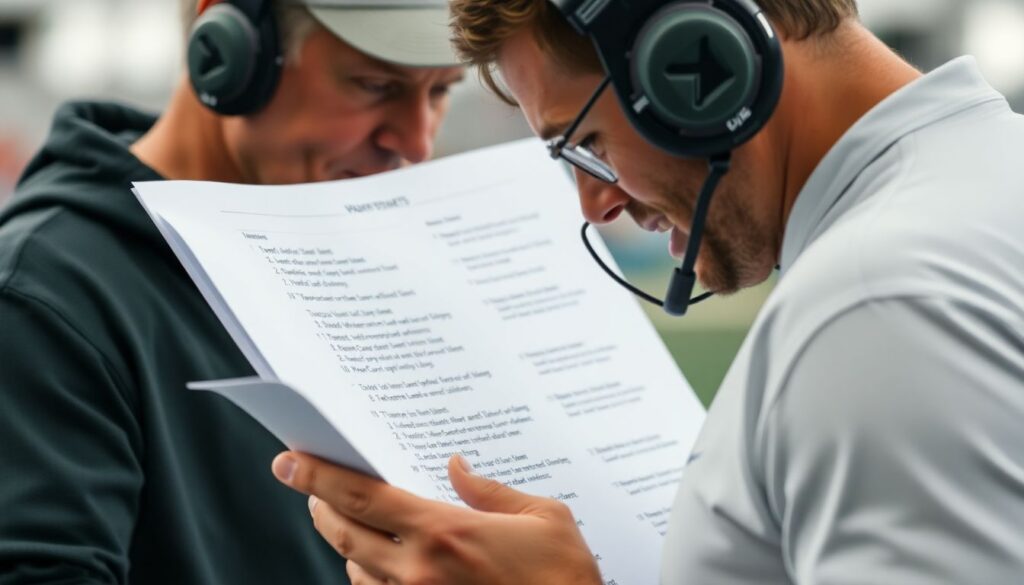
Place the first 15 in a dedicated column, then mirror those plays in your normal down-and-distance sections. That way you can see both the script and your situational menu, switching smoothly when needed.
Can I still be up-tempo while following a script?
Yes. Scripted tempo can be very effective. Use one-word calls or signal packages that bundle formation and play. Emphasize sideline organization so personnel changes are limited and players know the next two calls in advance.
How does software help with scripting the first 15 plays?
The best software for football playbook design lets you tag concepts by formation, personnel, and situation, then drag them into a 15-play sequence. This speeds up weekly planning and gives you clean visuals to teach players.