
Name, Image and Likeness (NIL) flipped college football on its head in just a few seasons. Money, branding and exposure now sit right next to depth charts and playbooks in every recruiting conversation. The twist: this isn’t theory anymore — we’ve got a few years of data to see what’s really happening.
Below, I’ll walk through how NIL deals are transforming the college football recruiting landscape, what the numbers from the last three seasons are telling us, and how players, parents and coaches can adjust their college football recruiting strategy in NIL era realities.
—
What Changed: From “Don’t Pay Players” To “Build Your Brand”
The key shift is simple: athletes can now legally profit from their name, image and likeness while keeping eligibility. But the way this reshaped recruiting is more layered.
From the latest publicly available reports (through the 2023–24 academic year):
– The NCAA has reported hundreds of millions of dollars in total NIL compensation since 2021.
– Third‑party trackers like Opendorse and INFLCR estimated:
– Roughly $900M–$1B in total NIL activity by mid‑2023 across all college sports.
– Football accounts for ~50–60% of reported NIL dollars.
– Average reported NIL deal for FBS football players has steadily climbed, but the gap between stars and role players is huge — the top 1–2% capture the majority of value.
So what started as “a few social media posts for cash” turned into a full-scale economic system that now sits at the center of NIL deals college football recruiting conversations.
—
Three-Year Snapshot: How NIL Money Has Grown
Because NIL is new and partly private, numbers are estimates, but trends are clear. Using 2021–22 as a baseline, here’s how the market has moved up to the most recent data (through the 2023–24 cycle):
– 2022–23
– NIL market across all college sports was widely estimated in the $500–700M range.
– Football remained the primary driver; Power Five (now Power Four) schools dominated valuations.
– High‑end quarterback recruits and transfer stars began seeing six‑ and low seven‑figure annual packages.
– 2023–24
– Aggregated industry estimates suggested NIL activity approaching or crossing $900M–$1B in value.
– Collectives became more structured, with some schools publicly listing broad goals (e.g., “$10M+ per year” football war chests).
– Transfer portal and NIL were fully intertwined: a large portion of premium NIL money began flowing to proven college players rather than only incoming freshmen.
– 2024–25 recruiting cycle (early indicators)
– Reports from recruiting services and collectives indicated continued growth but slower acceleration.
– More programs started capping or strategically redistributing NIL offers to avoid locker‑room chaos.
– Compliance offices and legal teams became central players in every major recruiting battle.
The exact dollar values will keep shifting, but the direction is obvious: NIL is no longer a side benefit. It’s a primary axis of power.
—
How NIL Is Quietly Reshaping the Recruiting Map
NIL didn’t just add money; it changed *who* has leverage and *how* programs recruit.
Here’s what’s different on the ground:
– Geography matters less. Branding matters more.
A West Coast kid can sign at a Southern school if that program’s collective and media machine offer a stronger NIL platform.
– Big‑brand programs now sell a “business plan,” not just a depth chart.
Official visits include meetings with NIL staff, media teams, and sometimes local business leaders.
– Smaller programs found angles.
A Group of Five team can’t match SEC cash at the top, but they can promise:
– Local sponsorships with less competition
– Guaranteed content creation and personal‑brand support
– Faster path to being “the guy” in their city
This is why any serious college football recruiting strategy in NIL era must blend performance, exposure and financial planning together.
—
How NIL Affects College Football Scholarships In Reality
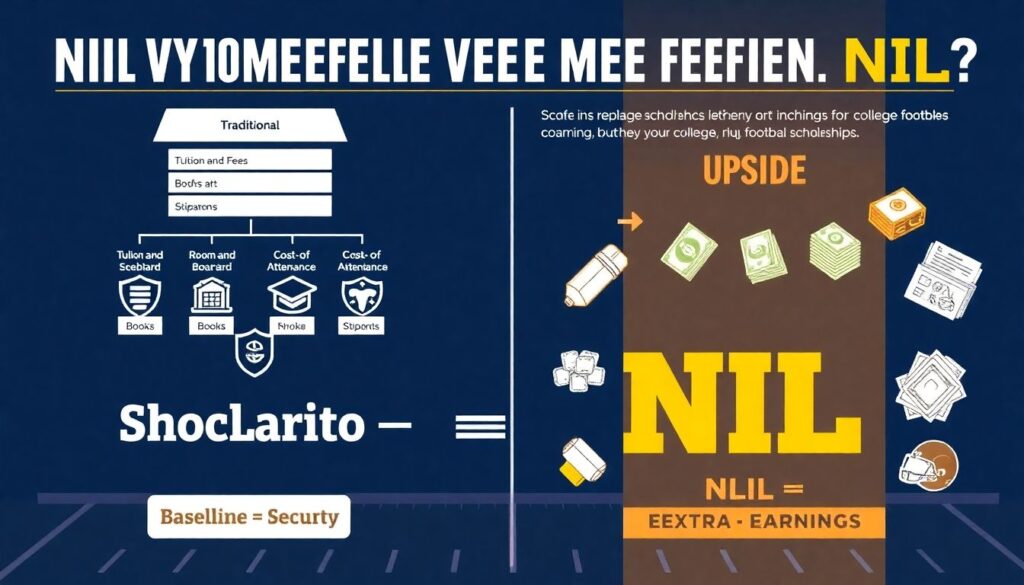
NIL didn’t replace scholarships, but it changed what they mean.
Traditionally, a scholarship covered:
– Tuition and fees
– Room and board
– Books and some cost‑of‑attendance stipends
Now, how NIL affects college football scholarships looks more like this:
– Scholarship = baseline security.
NIL = upside, leverage and flexibility.
– Some schools are less focused on “gray‑shirting” or stacking partial aid because NIL can supplement financial needs for key players.
– Walk‑ons at high‑profile programs can now occasionally secure meaningful NIL aid, effectively turning a non‑scholarship role into a viable financial option.
For families, the big mistake is to focus only on the listed scholarship offer and ignore the NIL ecosystem around it.
—
Best NIL Collectives For College Football Recruits: What Actually Matters
You’ll hear a lot of hype about the “best NIL collectives for college football recruits,” but the label is often marketing. Instead of asking “Who pays the most?” ask “How stable and organized is this ecosystem?”
Look for:
– Legal and compliance structure
Is the collective operating with clear written agreements and legal oversight, or does everything feel verbal and vague?
– Consistency vs. one‑time splashes
Flashy news about a single massive deal tells you less than:
– How many players are actually getting paid
– How consistently checks arrive
– Whether non‑star players see some support
– Alignment with the coaching staff
In strong programs, the collective, the head coach and the AD are clearly on the same page. In messy ones, you’ll hear conflicting messages about “what we can do for you.”
– Support beyond cash
Good collectives help with:
– Tax prep and financial literacy
– Brand deals that fit the player’s image
– Community events and appearances that build long‑term relationships
When evaluating collectives, recruits should think more like entrepreneurs choosing investors, not lottery winners chasing a single big check.
—
NIL Opportunities For High School Football Players: What’s Real And What’s Hype
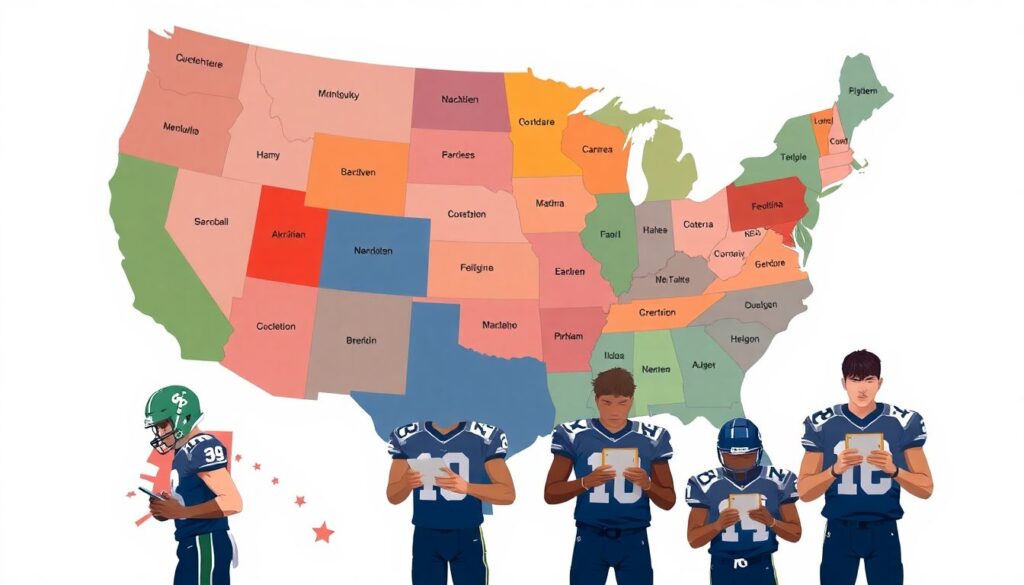
In some states, NIL opportunities for high school football players are already legal; in others, they’re restricted or tightly limited. That patchwork matters.
Practically, this is what’s emerging:
– A small number of elite national recruits (especially QBs and 5‑star skill players) are seeing early NIL deals:
– Social campaigns
– Local endorsements
– Pre‑commitment “brand building” partnerships
– Many more recruits overestimate their immediate NIL value and underestimate:
– How much work consistent content creation requires
– How small early deals can be after taxes
– The risk of damaging their reputation with rushed, low‑quality promos
For most high‑school athletes, NIL right now is less about big checks and more about laying groundwork:
– Growing a clean, engaged social audience
– Building a recognizable personal identity (position, playing style, values)
– Learning how contracts and taxes work, at least at a basic level
—
Recruiting Strategy 2.0: How Players Should Adjust
To navigate NIL and recruiting effectively, players and families need a more structured approach.
Here’s a practical 5‑step framework:
1. Clarify priorities
Rank, in writing:
– Playing time
– Development and coaching
– Academic fit
– NIL earning potential
– Location and lifestyle
2. Audit your current value
Be honest:
– What do your offers and rankings actually say about your market?
– Do you have proof — stats, film, verified measurables — to justify your expectations?
3. Evaluate each program’s NIL ecosystem
Don’t just ask “What can you pay?” Ask:
– How many players currently have NIL deals?
– Who manages NIL support (in‑house staff, third‑party, collective)?
– Can I talk to current players about their experience?
4. Protect your long‑term leverage
Make choices that:
– Maximize your chances of seeing the field
– Put you in front of TV audiences and engaged fan bases
– Keep your reputation clean — character still matters to brands
5. Treat NIL like a business, not a lottery
– Keep records of all income and contracts
– Set aside money for taxes
– Avoid burning bridges over short‑term money differences
This is how you turn NIL from distraction into advantage.
—
How Programs Are Rewriting Their Recruiting Playbooks
Coaches and recruiting staffs have also had to rebuild their systems from the ground up. A modern college football recruiting strategy in NIL era conditions usually includes:
– Dedicated NIL liaison or department
Someone who can talk intelligently with families about:
– Past outcomes at the program
– Processes for connecting players with deals
– Rules, guardrails and realistic expectations
– Closer coordination with collectives
Without outright “pay-for-play” promises, schools still:
– Share program goals and needs with collectives
– Encourage community support for position groups
– Highlight player success stories in fundraising
– Data‑driven roster management
With NIL and the transfer portal intertwined, staffs are:
– Using analytics to project breakout players and allocate resources
– Planning multi‑year depth charts with NIL budgets in mind
– Making hard choices about who to retain and who to let walk
– Media and brand coaching baked into player development
Programs increasingly provide:
– Content studios and social media support
– Media training and interview prep
– Guidance on what *not* to post when money is involved
The programs that adapt fastest here usually recruit and retain better, even if they don’t have the absolute biggest NIL funds.
—
Red Flags: When NIL Promises Should Scare You
Not every NIL pitch is healthy or even legal. Some warning signs for recruits and families:
– Guaranteed dollar figures attached directly to playing time or on‑field stats
– Verbal promises with nothing in writing
– Pressure to sign documents without legal review
– Contracts demanding excessive control over your social channels or personal appearances
– Any suggestion that you “owe” on‑field performance in exchange for money
If a coach or “booster” spends more time talking about cash than about development, culture and fit, that’s a signal to slow down, not speed up.
—
Practical Checklist For Families Navigating NIL
To keep things manageable, here’s a concise checklist to work through during the recruiting process:
– [ ] Research state NIL laws for both high school and college
– [ ] Review your athlete’s social media and clean up old content
– [ ] Identify a trusted adult or advisor who can help review contracts
– [ ] Prepare 3–5 smart NIL questions for every official visit
– [ ] Talk to at least two current players at each program about real NIL experiences
– [ ] Compare not just “headline offers,” but long‑term development and exposure
– [ ] Plan how you’ll handle taxes and budgeting if money starts coming in
If you work through those points, you’ll be ahead of most recruits in understanding what you’re really signing up for.
—
Where NIL And Recruiting Are Heading Next
The last three years showed us that NIL is not a temporary glitch — it’s now embedded in the sport’s DNA. The next wave will likely bring:
– More formal revenue‑sharing or employment‑style models for top conferences
– Tighter regulation around collectives and pay‑for‑play structures
– Better data about what actually moves the needle on future pro earnings
For now, the key is balance.
Chasing the biggest short‑term offer while ignoring fit, development and stability is risky. Treat NIL as one piece of a broader decision — powerful, yes, but still secondary to where you can grow, play and build a career that lasts longer than your eligibility clock.