
Why Pass Rushers Have Become Football’s Rock Stars
If you rewind to the 1970s, pass rushers were basically called “defensive ends who could really run.” Deacon Jones coined the term “sack,” but teams still built around run-stuffing linemen and huge middle linebackers. Fast‑forward to the mid‑2020s: edge rushers are getting quarterback money, and defensive coordinators design entire schemes around their bend, get‑off and pressure rate. With spread offenses, RPOs and 40+ pass attempts a game, one elite edge can erase an offensive game plan in a way a traditional run‑stuffer rarely can, forcing coordinators to slide protection and live with five‑man routes less often.
From Friday Nights to Five‑Star: The High School Blueprint
The making of an elite pass rusher usually starts in high school, and not just at powerhouse programs like IMG or Mater Dei. The common thread is movement quality: first‑step explosion, hip mobility, ankle flexion and the ability to corner without losing speed. At 15–17 years old, the best prospects already show natural “bend” and a feel for timing the snap. A good high school coach will free that player from two‑gap run duties and let him rush, often from a wide‑9 or stand‑up position, maximizing one‑on‑one reps and allowing the athlete to sharpen counter moves on Friday nights rather than just eating blocks.
Recruiting Reality: Measurables vs. Tape
College recruiters lean heavily on body type for pass rushers: arm length over 33 inches, wingspan approaching 80 inches, and a frame that can carry 250–270 pounds by age 20. But the deciding factor is functional explosiveness—how quickly that length and mass translate into pressure. A 4.6–4.7 laser‑timed forty is attractive, yet the first 10 yards tell more of the story. When coaches study high school tape, they’re looking for consistent pocket disruption: hits, hurries and forced throwaways. Double‑digit sacks help, but ten snaps where a kid ruins protection even without a box‑score stat can matter more than a three‑sack game against an overmatched right tackle.
Technical Focus: Early Skill Development
In high school, a smart pass rusher training program doesn’t start with fancy spin moves; it starts with the stance and first two steps. Coaches drill sprinter‑style starts, shin angles and hand carriage so the athlete can cover five yards in under 1.1–1.2 seconds off the snap. Basic hand usage—simple club, rip and two‑hand swipe—is layered on top of that. The goal is to give the player one dominant move and one reliable counter by his junior year. That way, when the tackle oversets to protect the edge, the rusher can seamlessly transition to an inside counter and still maintain rush lane integrity rather than getting washed past the pocket.
College Football: The Years That Make or Break You
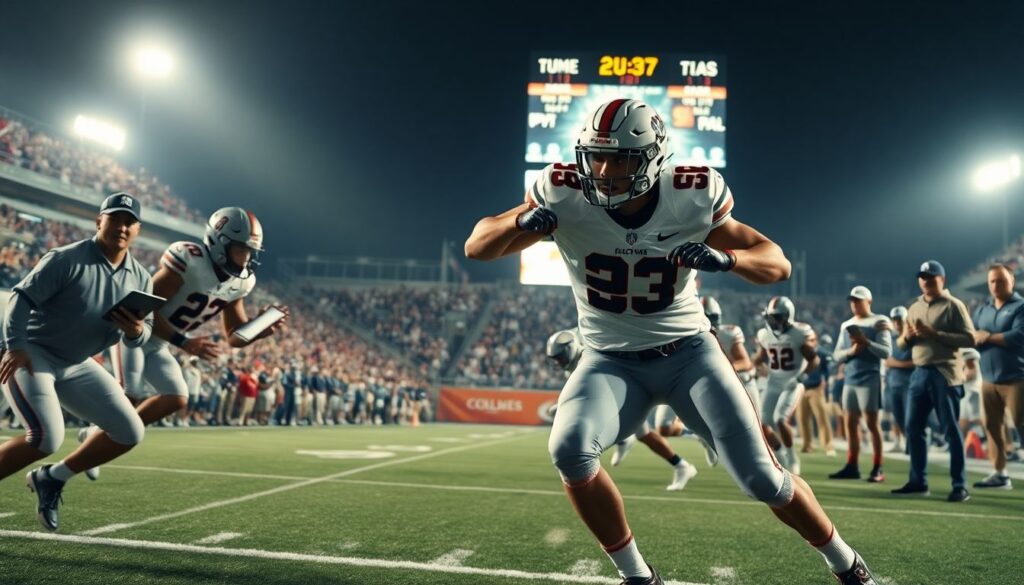
Once on campus, everything accelerates. Meetings, film work, strength training and 60–70 defensive snaps on Saturdays leave little room for freelancing. This is where the gap between “good athlete” and “elite pass rusher” really opens. Position coaches refine rush angles against different protections—full slide, half slide, six‑man with a chip, play‑action boots. Players learn to identify tells from splits and stances, like a guard sitting deeper in his stance on long‑yardage. The best edge defenders quickly connect that information to their rush plan, changing from a speed rush to a power long‑arm if they sense the tackle is light on his inside foot.
Inside the College Weight Room
A serious football strength and conditioning program for defensive linemen is highly data‑driven now. Instead of chasing a 600‑pound squat, performance staffs monitor bar speed with velocity trackers and emphasize power output. Many top programs target a 1.4–1.6 times bodyweight power clean and a 1.8–2.0 times bodyweight trap‑bar deadlift combined with sub‑1.55 10‑yard splits. That combination strongly correlates with first‑step explosion. On‑field, GPS units track peak speed and deceleration, which helps coaches avoid overdoing contact work. The aim is to stack micro‑wins—slightly faster get‑off, more consistent pad level, improved grip strength—across 2–3 years rather than betting on huge linear strength jumps alone.
Technical Focus: Expanding the Rush Arsenal
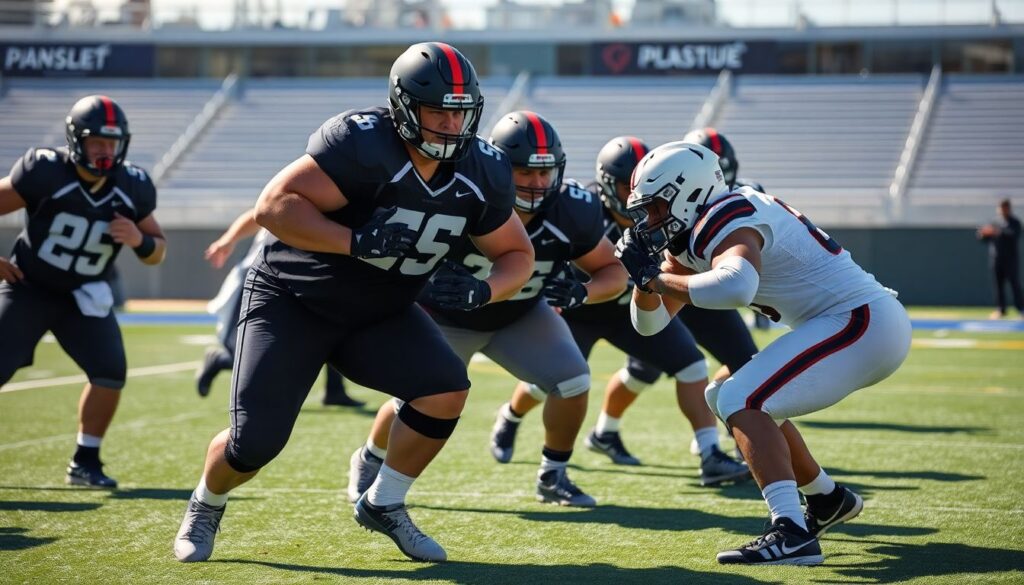
By year two or three, a future pro needs a full menu of moves: speed, speed‑to‑power, cross‑chop, long‑arm, inside spin and a bull rush that actually walks tackles back. Technique periods might include 50–80 controlled rush reps per practice. Coaches stress “rush lanes” and “level to the quarterback,” so four separate rushers arrive at roughly the same depth, closing the escape hatch. Analytics departments in some Power Five programs now track pass rush win‑rate—how often a defender earns a clear pressure within 2.5 seconds. Elite college edges often push into the 18–22% range, which is usually a preview of their ability to disrupt even faster NFL passing games.
Off‑Season Grind: Camps, Film and Reps
For high school and underclass college players, the off‑season is where separation happens. The best football camps for defensive ends aren’t just recruiting showcases; they’re multi‑day labs. At national events, athletes might see 100+ one‑on‑one pass rush reps in a weekend, facing tackles from every region and body type. That volume of quality movement under the eyes of high‑level coaches compresses learning. A kid who only saw basic five‑step pass sets in his local league suddenly deals with vertical sets, 45‑degree sets and jump sets, forcing him to adapt his rush plan and manipulate the tackle’s outside hip and hands in real time instead of relying purely on raw speed.
Film Study: Learning to See the Game Differently
Modern edge rushers grow up with more tape than ever. In a typical week, an elite college player might log 6–10 hours of film: base protections on Monday, third‑down tendencies on Tuesday, play‑action and screens mid‑week. They catalog opponent sets—does the left tackle kick deeper on third‑and‑long, or does he overset against wide alignments? The top prospects create “if‑then” rules: if the guard’s eyes flash out quickly, they anticipate slide protection and time an inside stunt. This pattern recognition is what allows a rusher to play “fast but under control,” anticipating the quarterback’s drop and the protection’s weaknesses rather than blindly sprinting upfield and opening a rush lane.
Bridge to the League: Preparing for the NFL Combine
When a player declares for the draft, the next 8–10 weeks often revolve around nfl combine preparation for pass rushers. Training moves from team facilities to specialized performance centers where every drill is reverse‑engineered. The 40‑yard dash is broken into segments, with laser‑timed 10‑yard splits repeatedly tested; anything under 1.6 seconds at 250+ pounds is considered premium. The 3‑cone and short shuttle showcase bend and reactive agility, so players hammer low‑hip transitions and clean footwork. On top of the pure testing, pro‑day sessions include scripted pass rush drills, where scouts evaluate pad level, hand quickness and whether a player can flip from speed to power while maintaining balance.
Technical Focus: Translating Drills to NFL Tape
Combine drills are just snapshots. Teams ultimately care whether those traits show up on film against pro‑style concepts. Scouts study how a player handles six‑ and seven‑man protections, chips from tight ends and backs and full slide looks. For example, a rusher might post elite 3‑cone times yet struggle to corner when he’s being “short‑set” and punched early. The best prospects show adaptability: they widen their alignment, threaten the upfield shoulder, then convert to a long‑arm bull rush or inside counter, keeping pressure on the tackle’s outside half. Coaches also emphasize rush discipline—never crossing the quarterback’s level unless you’re certain you can flatten back without opening escape lanes.
Case Studies: What Elite Really Looks Like
Look at players like Von Miller, T.J. Watt or Micah Parsons and you’ll see very different body types but similar developmental themes. Miller wasn’t the biggest at Texas A&M, yet his get‑off and ability to win the edge forced NFL teams to adjust protection from day one. Watt entered Wisconsin as an offensive player, then leveraged elite motor and hand usage to become a prototype stand‑up edge. Parsons played off‑ball linebacker at Penn State, but his linear speed and power translated instantly into double‑digit sacks as a pro. Different paths, same core: explosive lower body, relentless refinement of technique and a detailed rush plan every snap.
Historical Context: How the Position Has Evolved
In the 1980s, guys like Lawrence Taylor changed the job description, making edge pressure a weekly game‑planning nightmare. The 2000s saw hybrid “LEO” and “Elephant” roles, letting lighter athletes rush from wide alignments on passing downs. By the mid‑2010s, analytics confirmed what coaches already felt: pressure mattered as much as sacks. Teams paid a premium for players who could maintain 12–15% or better pressure rates across an entire season. As of 2026, kids are growing up studying All‑22 clips on their phones, copying ghost moves, cross‑chops and Euro steps, then testing them in seven‑on‑seven‑style pass rush circuits that barely existed a decade earlier.
How to Become an Elite Pass Rusher Today
For a teenager asking how to become an elite pass rusher in the modern game, the answer is layered. Start with movement: chase speed and hip flexibility before worrying about exotic counter moves. Add smart strength—posterior‑chain power, neck and grip work, core stability. Then live on film, studying how top pros solve problems against different protections. Finally, seek environments that stretch you: challenging camps, quality coaching and weekly competition against big, talented offensive linemen. The players who make it from high school stardom to NFL impact aren’t just the best athletes; they’re the ones who treat pass rushing like a craft, not a hobby.
Designing Your Own Development Plan
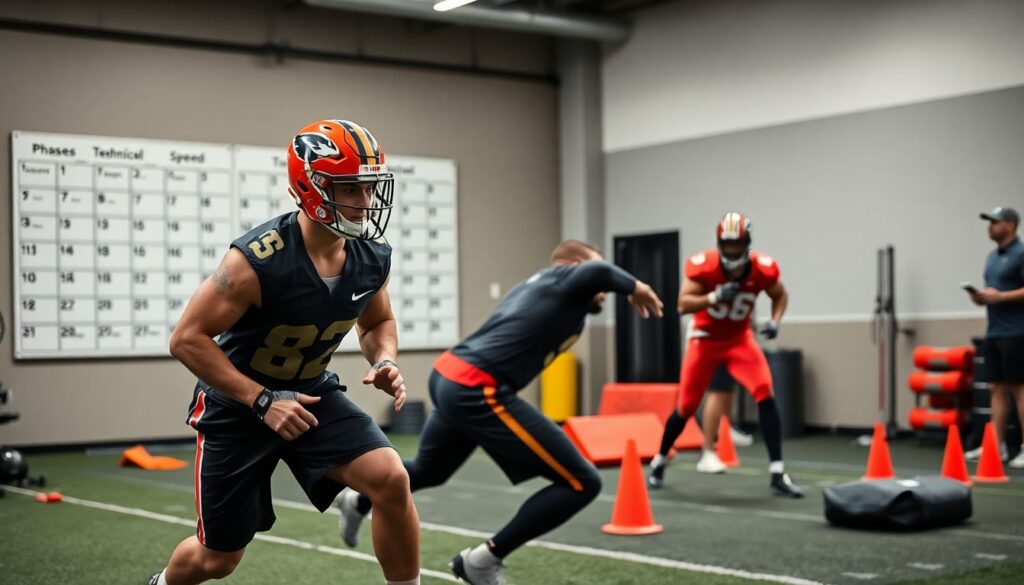
At any level, a personalized pass rusher training program should attack three fronts: physical, technical and mental. Physically, build a calendar that cycles through max‑strength, power and speed phases while staying healthy enough to keep practicing actual rush reps. Technically, script weekly work on one primary move and one counter, tracking success against better and better blockers. Mentally, set film goals: identify three protection tendencies and three quarterback habits before every game. Combine that with targeted exposure—picking the right showcases and the best football camps for defensive ends that emphasize coaching over hype—and you give yourself a legitimate shot to climb from Friday nights to Sundays.