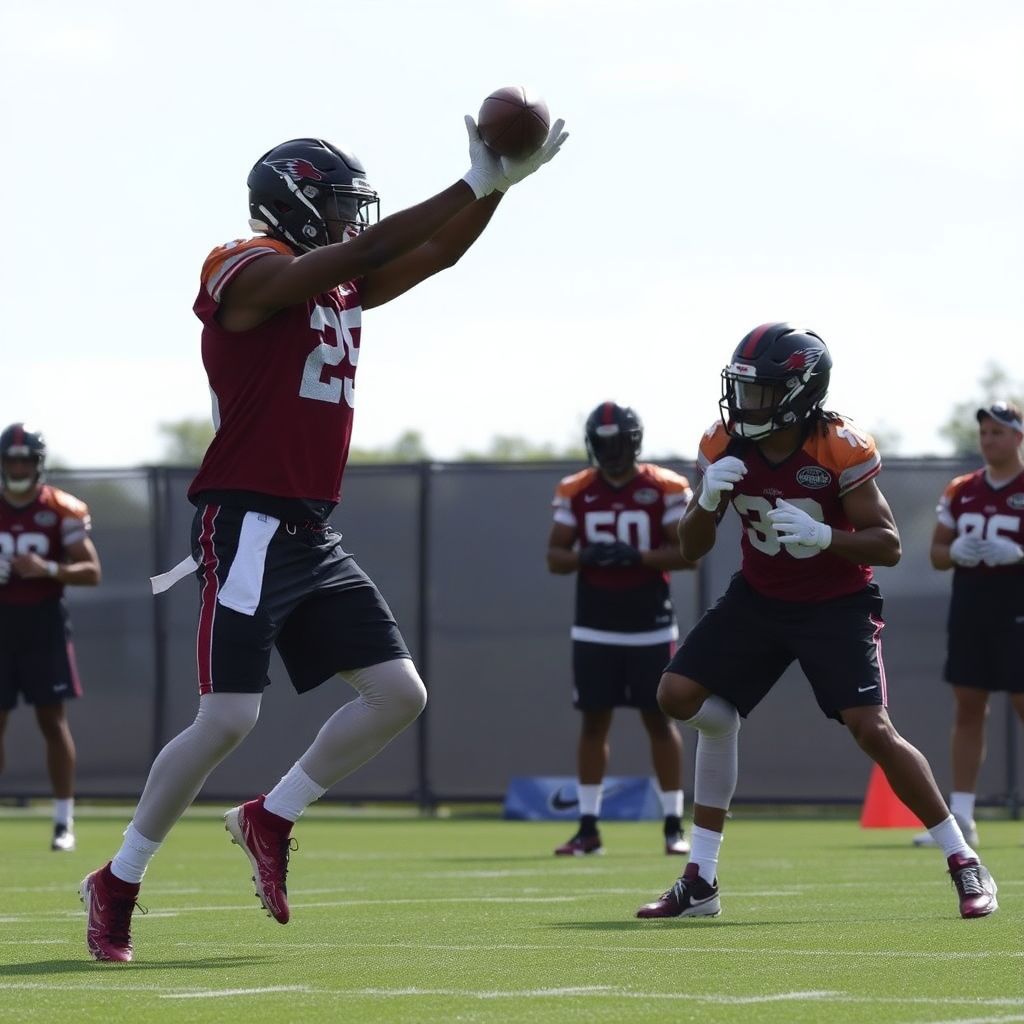
An elite shutdown cornerback combines disciplined technique, explosive movement, advanced route recognition, and consistent film work inside a structured cornerback training program. To learn how to become an elite cornerback safely, build from athletic baselines, master press and off coverage, design progressive drills, and apply football speed and agility training for defensive backs.
Core Attributes That Define a Shutdown Corner
- Explosive but controlled lower-body power that shows in backpedal, plant, and drive without losing balance.
- Loose hips and efficient transitions, allowing smooth turns from press to vertical or in‑breaking routes.
- Consistently tight coverage technique in both man and zone, with few mental busts across full games.
- Advanced pre-snap recognition of formations and splits, anticipating route concepts rather than reacting late.
- Reliable open-field tackling and physical finish, limiting yards after catch and perimeter runs.
- Daily film habits and note‑taking routines that speed up route anticipation and improve game‑to‑game adjustments.
- Emotional control: short memory after giving up plays while maintaining aggressive, confident body language.
Athletic Profile: Measurables and Movement Benchmarks
This style of shutdown corner is best suited for athletes with decent height or length, good baseline speed, and the willingness to train movement year‑round. If you strongly dislike contact, struggle with basic coordination, or refuse to study film, this path will be frustrating and rarely successful.
Before committing fully, check three areas:
- Joint Health and Medical Clearance – Ensure knees, ankles, hips, and lower back are cleared by a medical professional. Pain with basic squats, lunges, or light jumps is a red flag that must be addressed before intense work.
- Movement Fundamentals – You should be able to:
- Backpedal under control for short distances without crossing your feet.
- Plant and drive at 45° and 90° angles without slipping or stumbling.
- Shuffle laterally without your upper body leaning excessively.
- Effort and Focus Capacity – Elite corners repeat similar movements hundreds of times per week. If you cannot maintain focus for short, intense drills and film sessions, first build this mental endurance.
Once you meet these baselines, a structured cornerback training program can safely add volume, intensity, and position‑specific demands.
Technical Foundations: Press, Off-Coverage and Open-Field Tackling
To support safe, effective development you need a small toolkit of equipment, space, and people. None of these are mandatory, but each adds quality to your technical work.
- Space and Surface
- Short grass, turf, or a flat field with enough room for 10-20 yard routes.
- Avoid uneven ground that increases ankle and knee risk during backpedal and plant drills.
- Basic Training Tools
- Cones for landmarks, break points, and press alignment.
- Agility ladder or line markings for controlled footwork (optional but helpful).
- Resistance bands for activation and light strength work before speed drills.
- Thrower and Receivers
- At least one teammate or coach who can throw consistent routes.
- One or two receivers to simulate realistic releases and stems.
- If alone, use pre‑set cone routes and focus on body position and transitions.
- Safety Equipment
- Cleats appropriate for grass or turf; avoid worn‑down studs that slip on breaks.
- Mouthguard and, in full‑speed live drills, helmet and pads per team rules.
- Water and a simple warm‑up plan to avoid soft‑tissue pulls.
- Technical Coaching or Video Feedback
- A coach who understands corner technique is ideal but not required.
- If you lack a coach, record drills from the side and end‑zone angles using a phone.
With these in place you can safely focus on the best drills for cornerbacks that build press jams, off‑coverage footwork, and secure tackling technique without unnecessary impact.
Film Methodology: Pattern Recognition and Route Anticipation
Film is where you turn reps into real shutdown production. Use the following safe, repeatable process each week to transform raw footage into practical coverage wins.
- Organize Film by Situation
Start by sorting games or cut‑ups into down‑and‑distance, field zone, and formation. This helps you see patterns instead of random plays.- Group first‑and‑long, second‑and‑medium, and third‑and‑short separately.
- Note red zone, backed‑up, and midfield situations.
- Study Receiver Alignments and Splits
For each primary receiver you face, pause before the snap and record where they line up.- Wide or tight to the numbers.
- On the ball or off the ball.
- Stacked or bunched with other receivers.
Over time you will see which routes connect to which splits.
- Tag Routes and Concepts
Watch the same formations repeatedly and write down the common routes you see.- Single routes: slant, hitch, comeback, fade, post, corner, out, dig, crossers.
- Concepts: slant‑flat, smash, curl‑flat, four verts, flood, mesh.
The goal is to build a simple list of what each team truly loves to call.
- Connect Pre-Snap Clues to Likely Routes
Now link down‑and‑distance, formation, and split with the routes and concepts you tagged.- Example: trips to the field on third‑and‑short may pair with quick outs and pick routes.
- Example: tight split on early downs may signal crossing routes or deep posts.
You are building if‑then rules, not guessing.
- Translate Study Into On-Field Cues
Finish by writing 3-5 simple cues you will actually say to yourself on the field.- “Tight split, expect over or post, stay on top.”
- “Bunch set, think pick, maintain outside leverage and communicate switch.”
- “Backed up, offense likely conservative, sit on quick game first.”
Practice these in walk‑throughs so they become automatic.
Fast-Track Film Routine for Busy Weeks
- Watch only third‑down and red‑zone cut‑ups for your next opponent.
- List their three most common formations and what they call from each.
- Identify the top receiver and his favorite routes versus press and off coverage.
- Create three short on‑field cues and rehearse them during team walk‑throughs.
Drill Curriculum: Progressive Exercises for Rapid Skill Gains
Use this checklist to confirm that your drill work is building toward true shutdown play rather than random effort. Adjust volume gradually to stay safe and avoid overuse injuries.
- Your weekly plan includes separate blocks for warm‑up, football speed and agility training for defensive backs, position drills, and cooldown.
- You train both press and off‑coverage footwork at least twice per week, even in‑season.
- Press drills emphasize patient feet and inside‑out leverage, not just aggressive hand strikes.
- Off‑man drills start from a balanced stance, with smooth backpedal and controlled plant‑and‑drive.
- Zone drills include reading the quarterback, passing routes between zones, and rallying to tackle.
- Tackling drills progress from angle fits and form tackles on bags to controlled, thud‑tempo work with teammates.
- At least one session per week pairs your drill work with live or semi‑live one‑on‑ones or seven‑on‑seven.
- Every drill has a clear coaching cue (for example, “quiet feet,” “low pad level,” “eyes to near hip”).
- You log each session briefly: drills performed, reps, and one thing to fix next time.
- You schedule lighter days after higher‑impact work, especially if you attend intense cornerback camps for high school players.
Cognitive Training: Decision-Making, Footwork Cues and Situational IQ
Even talented athletes stall when mental habits drag them down. Watch for these common mistakes and correct them early.
- Chasing receivers with your eyes instead of using landmarks and peripheral vision, which leads to wasted steps.
- Guessing routes before you have enough pre‑snap or early‑snap information, creating double moves for the offense.
- Opening your hips too early in off coverage, giving up free access to comeback and curl routes.
- Pressing with wild lunges instead of patient, balanced steps, making you vulnerable to quick releases.
- Over‑focusing on interceptions and jumping underneath routes, leaving no help over the top.
- Losing leverage awareness and drifting toward the middle when you are responsible for outside or inside shade.
- Allowing one bad rep to change your technique, becoming either overly aggressive or too conservative.
- Skipping mental reps during walk‑throughs, treating them as “easy time” instead of chances to rehearse cues.
- Ignoring communication with safeties and linebackers, which leads to blown coverages even if your own technique is solid.
- Training without clear goals, making it hard to measure if your cornerback training program is actually working.
Game-Ready Protocols: Scouting, Pre-Snap Adjustments and In-Game Tweaks
Sometimes circumstances limit your ideal plan. Here are alternative paths that still move you toward shutdown status and show you how to become an elite cornerback within your reality.
- Solo Development Path – If you lack consistent teammates for practice, prioritize:
- Footwork patterns with cones and lines to mimic route breaks.
- Mirror drills using a reflection or shadow to practice staying in phase.
- Film‑based visualization, walking through coverages in a field or gym.
- Technique-Heavy, Low-Impact Plan – If you are recovering from minor strain (cleared by a professional), reduce sprinting and contact.
- Emphasize stance, start, and short‑range transition drills.
- Spend extra time on film, coverage rules, and mental cues.
- Gradually reintroduce speed and contact per medical guidance.
- Camp-Focused Development – If local coaching is limited, use high‑quality cornerback camps for high school players for live reps and teaching.
- Arrive with specific questions and technical goals.
- Record or write down coaching points immediately after sessions.
- Use camp feedback to redesign your next month of training.
- Speed-First Approach – If you already have strong technique but lack burst, shift one or two weekly sessions fully toward acceleration and lateral quickness.
- Use short sprints, resisted starts, and lateral bounds.
- Blend these with shorter, sharper coverage drills to translate speed into playmaking.
Practical Clarifications and Troubleshooting for Coaches and Players
How many days per week should a cornerback train outside of team practice?
Most intermediate players handle two to three focused position sessions in addition to team work. Keep at least one true rest day, and adjust volume if soreness lingers or your practice quality drops. Quality, not sheer volume, will determine whether you progress safely.
What are the best drills for cornerbacks to start with if I am new to the position?
Begin with stance and start, controlled backpedal, 45° and 90° break drills, and mirror‑and‑match footwork without a ball. These build balance and body control so you can add press, jump‑ball, and tackling drills later without developing bad habits.
How can I balance football speed and agility training for defensive backs with strength work?
Separate your heaviest strength training days from your highest‑speed field days when possible. Keep field work short and intense, and end each session with low‑intensity mobility. If you feel slow or heavy on the field, reduce lower‑body lifting volume temporarily.
Do I need a full cornerback training program, or can I just play more seven‑on‑seven?
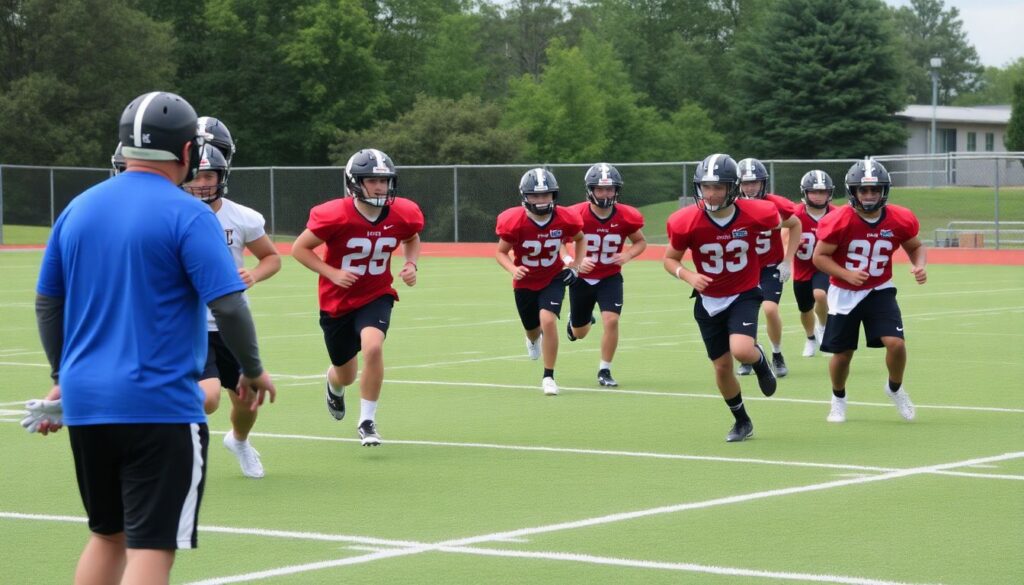
Seven‑on‑seven helps with coverage recognition and ball skills, but it does not replace focused footwork, press technique, and tackling training. Use seven‑on‑seven for application, and maintain at least two weekly sessions that target specific technical weaknesses.
Are cornerback camps for high school players worth the time and cost?
Camps can be valuable if they offer small group coaching, competitive one‑on‑ones, and clear feedback. They are most effective when you come in with specific goals and then build your next month of practice around the corrections you received.
How quickly can I realistically become an elite cornerback?
Progress depends on your starting point, health, coaching, and consistency. Instead of chasing a timeline, focus on stacking weeks where you hit your planned sessions, improve one technical detail, and learn one new thing from film. Over seasons, this process produces elite play.
What should I do if my coach uses a different technique than what I learn here?
Follow your coach's system first, then layer in safe details such as better eye discipline, pad level, and leverage understanding. Ask clarifying questions so you understand why your team teaches certain techniques, and adjust your personal drills to support that philosophy.