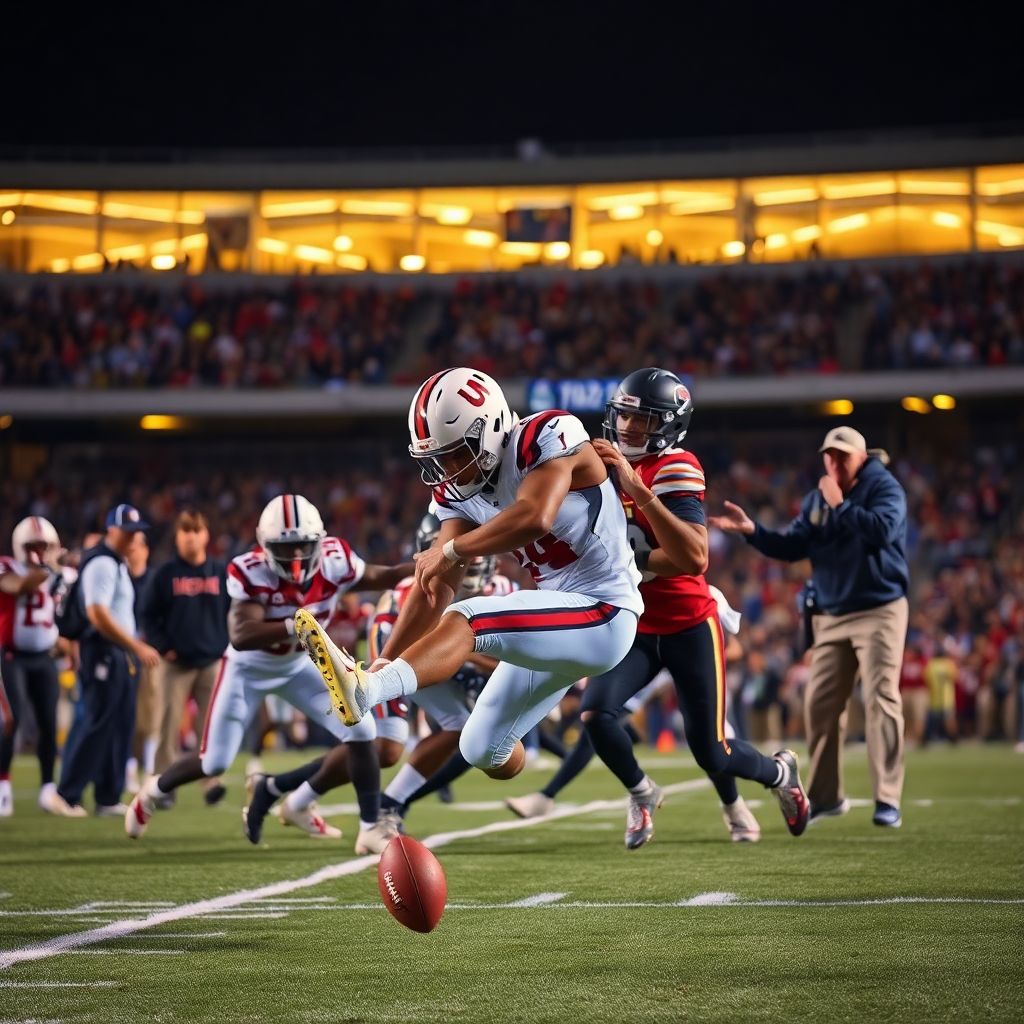
Special teams matter because they directly control field position, hidden yardage, momentum swings, and easy scoring chances. A single kick, return, or coverage bust can flip an entire game more quickly than most offensive or defensive drives. Treating special teams as a core phase, not filler, immediately raises win probability.
How Special Teams Swing Game Outcomes
- Every kick, punt, and return changes field position and offensive difficulty on the next snap.
- Hidden yardage on special teams quietly adds up to extra drives or short fields.
- Explosive returns and blocked kicks generate sudden points and emotional momentum.
- Disciplined coverage prevents cheap scores and keeps your defense in favorable situations.
- Smart fourth-down and punt decisions preserve leads or create comeback chances.
- Well-drilled role players turn “depth” into real on-field advantages every week.
Debunking the Biggest Myths About Special Teams
Special teams are not “just kicking and punting.” They are a planned, coached phase with its own schemes, personnel groupings, and game plans. Treating them as an afterthought is the fastest way to leak points and field position without realizing where you are losing.
Myth 1: “We’ll just use our backups and let them run.” Reality: your coverage and return units need clear rules, aiming points, and leverage techniques. Backups can thrive here, but only if you coach their roles with the same intent you bring to offense and defense.
Myth 2: “We don’t have time in practice.” The answer is not more theory; it is tighter planning. A focused football special teams training program can live inside short, repeatable blocks: daily specialist work, 10-12 minutes of a core phase, and 5 minutes for situational installs.
Myth 3: “Special teams are too complex for youth or intermediate players.” You can run simple, safe schemes that still win. Start with day-one rules (inside-out leverage, stay on your feet, no blind blocks), then layer in details as your unit learns. Simple and disciplined beats fancy and confused.
Myth 4: “We’ll copy an NFL team’s scheme.” Without the athletes, coaching time, and detailed special teams playbook download they have, copying rarely works. Build your own lean set of calls that fit your roster and practice time, then refine through film rather than chasing what you see on TV.
High-Leverage Moments: When Special Teams Decide Close Games
- End-of-half and end-of-game kicks. Field goals, squib kicks, and onside attempts directly create or deny last-chance scoring drives. Actionable takeaway: script your end-of-half special teams calls and rehearse them weekly so players execute under pressure, not guess.
- Backed-up punts near your own goal line. A poor punt or coverage bust here hands the opponent a short field. Actionable takeaway: emphasize protection and get-off time, and drill “coverage first, distance second” when punting from inside your own 20.
- Momentum after scores. Right after your offense scores, a big return allowed can erase your advantage. Actionable takeaway: call your safest, best-understood coverage concept after you score, prioritizing lane discipline over exotic kicks.
- Field-flipping punts on fourth-and-medium. Pinning an opponent inside its 10 is almost as valuable as scoring. Actionable takeaway: teach directional rugby-style punts or coffin corner techniques and pair them with coverage rules that protect the sideline.
- Sudden-change responses. After a turnover, your next kick or punt can either stabilize or compound the mistake. Actionable takeaway: have a “calm call” ready-your simplest, most reliable scheme-to reset players and avoid another breakdown.
- Weather-affected kicks. Wind, rain, or bad turf change distance and ball flight. Actionable takeaway: pre-game, chart how kicks and punts behave with and against the wind, and adjust your fourth-down decisions accordingly.
Field Position, Hidden Yardage and the Metrics to Track
Field position is where each drive starts and ends. Hidden yardage is everything you gain or lose on special teams that never shows up as offensive or defensive plays, but still swings the game. You do not need complex analytics-just a few consistent metrics.
- Average start position for you vs. opponent. Simply mark each drive’s starting yard line and compare at the end of the game. Actionable takeaway: if opponents consistently start closer to your end zone, invest practice time in coverage and directional kicking.
- Net punt yardage. Track punt distance minus return yards (and touchbacks). Actionable takeaway: if your gross distance looks fine but net is low, you have a coverage and placement issue, not a leg-strength problem.
- Kickoff “net line.” Instead of obsessing over pure distance, record where opponents actually start after each kickoff. Actionable takeaway: adjust depth and hang time to force more fair catches or returns into your coverage strength.
- Penalty yards on special teams. Blocks in the back, holds, and offsides erode gains. Actionable takeaway: if this number spikes, simplify your return schemes and narrow teaching to 1-2 key techniques until players execute without fouling.
- Explosive plays allowed or created. Define an explosive as a long return or blocked kick. Actionable takeaway: track how many games include one of these swings; then design at least one weekly period that practices preventing or creating such plays.
| Phase | Main Job | Field Position Impact | Typical Hidden Yardage Source |
|---|---|---|---|
| Offense | Advance the ball and score | Ends drives closer or farther from opponent’s goal | Sacks, negative plays, missed explosives |
| Defense | Limit yards and prevent scores | Forces punts or turnovers, setting offensive starts | Yards after contact, missed tackles |
| Special Teams | Exchange the ball and control space | Sets every non-turnover drive’s starting spot | Returns, touchbacks, out-of-bounds kicks, penalties |
Explosive Plays: Designing Kickoff, Return and Punt Schemes
Explosive special teams plays are large chunks of yardage or instant points: long returns, blocked kicks, fake punts, and recovered onside kicks. They require intentional design but must fit your practice time and players’ skill sets.
Practical advantages of explosive-focused schemes
- Short fields for your offense. A well-designed return can cut the field in half and simplify the next drive’s play-calling.
- Psychological shock to opponents. A surprise fake punt or sudden onside kick can deflate the sideline and crowd.
- Built-in scoring chances. Well-blocked returns and punt blocks create non-offensive touchdowns that swing tight games.
- Role clarity for developmental players. When everyone knows the designed crease or rush lane, backups contribute real value.
Limits and risks you must manage
- Higher error cost. Aggressive returns and blocks can give up big plays if players overrun lanes or lose contain.
- Practice time pressure. Every new scheme competes with core fundamentals; too many calls dilute execution.
- Penalty exposure. Longer-developing blocks and fakes often lead to holds or illegal blocks if not well taught.
- Personnel mismatch. Schemes that require elite speed or kicking talent may not fit your current roster.
To turn ideas into action, pick one weekly emphasis: for example, one simple kickoff return scheme, one base punt rush, and one safe fake that your personnel can handle. Resources like special teams coaching clinics and an online special teams coaching course can help you refine details without bloating your playbook.
Personnel Profiles: Roles, Traits and In-Game Substitutions
Special teams success depends on putting the right types of players into clearly defined roles, then managing substitutions as fatigue and game situations change. Avoiding common personnel myths will keep your units fast, fresh, and dependable.
- Myth: Only backups play special teams. Reality: your best players should appear on at least one key unit (punt, kickoff, or field goal block). Actionable takeaway: identify 3-5 starters who can handle critical spots without overloading their snaps.
- Myth: Specialists don’t need coaching. Kickers, punters, and snappers need structure too. Actionable takeaway: build a short weekly plan for them-warm-ups, operation time, pressure reps-rather than letting them drift through practice.
- Myth: Speed automatically equals good coverage. Fast players who can’t maintain lane integrity or tackle under control are liabilities. Actionable takeaway: prioritize balance, tackling, and block shedding when assigning coverage roles, not just 40-yard times.
- Myth: Any lineman can protect on the punt team. Punt protection demands quick recognition and leverage, not just size. Actionable takeaway: select linemen or tight ends who can redirect and communicate twists, then drill their footwork repeatedly.
- Myth: Substitutions will sort themselves out. Confusion leads to 10 or 12 players on the field. Actionable takeaway: make a depth chart by unit, not by position group, and rehearse “punt team on!” situations so everyone knows where to go.
For hands-on help, use a focused football special teams training program that includes role descriptions on every unit. Combine this with targeted, position-specific work using the best special teams drills for coaches so each athlete gets reps that actually match what they will do on game day.
Tactical Decision-Making: When to Gamble, Pin or Play Safe
Game-changing special teams calls are mostly simple choices made quickly: kick deep or squib, punt or go for it, return or fair catch. You can pre-build a decision framework so you react fast without guessing.
Use this plain-language checklist during games:
- Score and time. If you lead late, default to safe calls that burn clock and force long fields (high, directional kicks, conservative returns).
- Field position. If you are near midfield on fourth-and-short, it might be better to go for it than punt into the end zone. Backed up, prioritize protection and distance.
- Opponent’s strengths. If they have a dangerous returner, consider higher hang time or kicking away, even if you sacrifice some distance.
- Weather and surface. Into strong wind or on poor turf, shorten your expected field goal range and lean toward going on fourth down or punting to pin.
- Unit confidence. If your punt team is struggling but your offense is moving the ball, you can tilt borderline calls toward aggression on offense.
Mini-case to turn this into action: late in the fourth quarter, you lead by a small margin, ball on opponent’s 42, fourth-and-3. Your kicker’s comfortable range does not reach this distance. Instead of a low-percentage long field goal, call a directional punt aiming to land the ball inside the 10, pairing it with your most reliable coverage concept. This forces the opponent to drive the whole field under pressure rather than handing them a short field after a miss.
To lock these ideas into your staff’s routine, build a simple sideline reference sheet and revisit it during the week using cut-ups from film. Over time, your tactical decisions become consistent, and special teams stop being random events and start becoming planned advantages.
When you are ready to systematize everything, combine notes from special teams coaching clinics with a concise special teams playbook download and, if helpful, an online special teams coaching course. Together, these tools support a lean, repeatable process that turns overlooked plays into game-changers.
Concise Solutions to Common Practical Doubts
How much daily practice time should I give special teams?

Carve out a short, non-negotiable window every day rather than a long block once a week. Even a brief period for one core unit plus specialist work builds more reliable habits than cramming everything into a single “special teams day.”
What is the simplest way to start improving field position?
Track where each drive starts and ends for you and your opponent. Then focus first on kick placement and coverage lane discipline. Better ball location and fewer missed tackles often improve field position more quickly than adding complex schemes.
How many different special teams schemes do I really need?
You need a solid base call for each unit and one simple change-up. More than that usually overwhelms players and practice time. Master one or two options per unit before adding anything new.
What should I prioritize with a new or inexperienced kicker?
Prioritize consistent contact, a repeatable approach, and reliable short-range kicks before chasing distance. Use filmed reps and clear targets on the field so the kicker can see and feel progress from day to day.
How do I reduce penalties on returns?
Simplify blocking rules, teach hands inside and eyes up, and demand players avoid desperation blocks behind the play. Review penalties on film with the whole unit so everyone understands what officials are watching and how to adjust.
How can smaller or slower teams still win on special teams?
Win with organization: precise alignments, smart kick placement, and disciplined tackling angles. Choose schemes that funnel the ball to your best tacklers and avoid long-developing returns that require elite speed to execute safely.
When should I call a fake punt or onside kick?
Use them when game context, field position, and opponent tendencies align, not just to “spark” the team. Confirm during the week that players know the look you are attacking and rehearse the call at game speed before you use it.