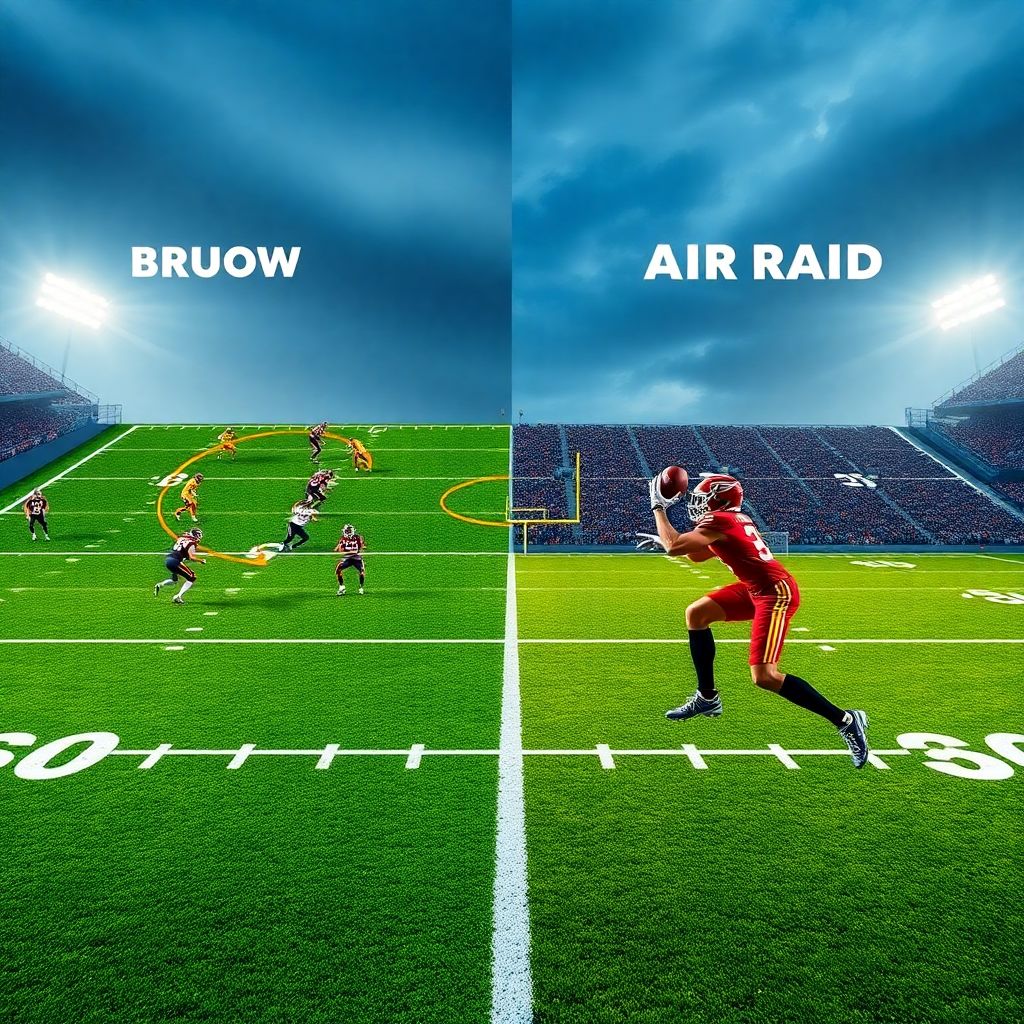
Offensive schemes evolved from ground-and-pound power football to wide-open Air Raid by shifting how teams use numbers, matchups, and space. Power offenses win with physicality, condensed formations, and predictable run threats; Air Raid systems spread the field, throw first, and force defenses to cover all 53⅓ yards horizontally and vertically.
Core Concepts for Understanding Offensive Evolution
- Offenses evolved from run-dominant, under-center structures to pass-first, shotgun-heavy systems.
- Power football uses tight formations and double-teams to control the line of scrimmage.
- Modern offensive schemes in football blend power run concepts with spread formations and tempo.
- Air Raid emphasizes spacing, simple reads, and high repetition over a huge playbook.
- Personnel, down-and-distance, and opponent tendencies dictate whether you lean run-first or pass-first.
- Studying film, clinics, and curated resources is more useful than copying a full system blindly.
Roots of Power Football: ground-and-pound origins and context
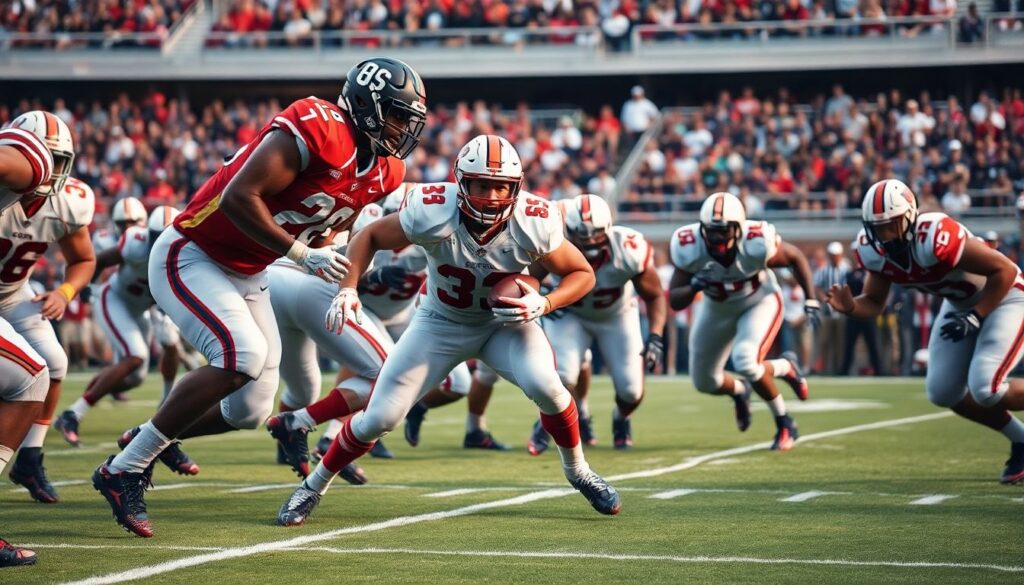
Power football is a run-first, physically dominant approach built on tight formations, double-team blocks, and a downhill running game. The goal is to control the line of scrimmage, win time of possession, and wear down the defense with consistent body blows rather than explosive plays.
Historically, offenses lined up under center with multiple backs and tight ends. Plays like Iso, Power, and Counter defined identity: pullers at the point of attack, a lead blocker in the hole, and a featured back running behind heavy personnel. Passing was often limited to play-action shots and simple dropback concepts.
As defenses got faster and more complex, coaches adapted the same ground-and-pound mindset to new formations. You still see power football in heavy I-formation and wing-T looks, but also in shotgun and pistol sets where the run game is married to modern RPOs and spread alignments.
Fundamental Principles of Run-First Gameplans
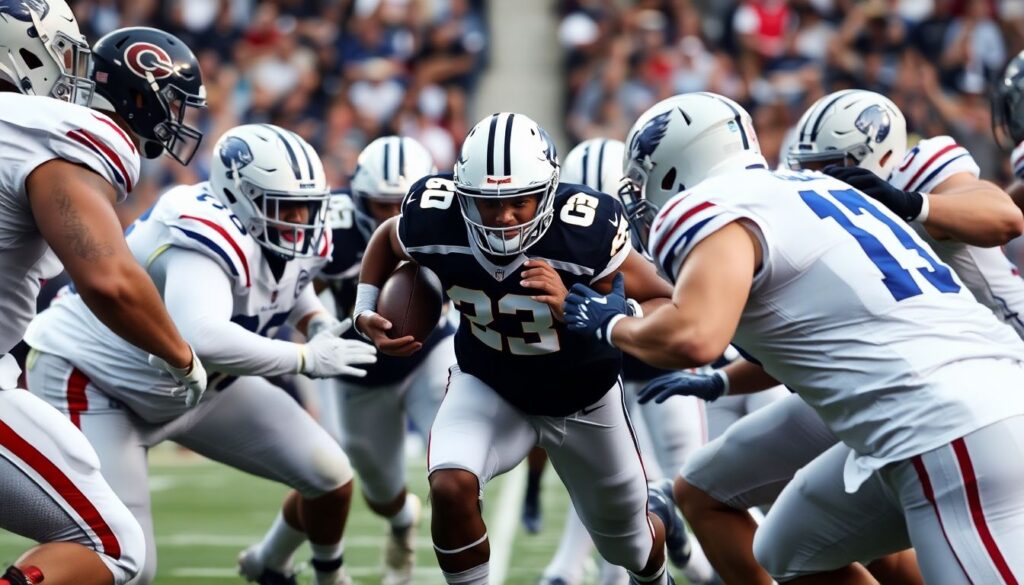
- Win the A and B gaps. Build your run game from the inside out. Double-team interior linemen, secure the first level, then climb to linebackers. If you own the interior, you control the game.
- Feature your best runner. Identify your most reliable ball carrier and structure 8-12 core runs around that player. Call those runs from multiple formations so the defense cannot key on one look.
- Build complementary play-action. For every staple run (Power, Counter, Outside Zone), build at least one play-action pass with the same backfield action and protection rules. Keep reads simple: first high-low, then checkdown.
- Use formations for leverage, not decoration. Shift and motion to force the defense to adjust, then run your base plays into the soft spots. Do not add formations unless they support an existing core concept.
- Stay on schedule with calls. On first down, call high-percentage runs that reliably set up second-and-medium. On second down, use your knowledge of the sticks: run again if it can set up third-and-short; call play-action if the defense is selling out.
- Commit to physical practice. Your run-first identity only shows up on game day if you rep inside run, double-teams, and block destruction in practice every week.
Bridging Innovations: how blocking schemes and passing concepts converged
Over time, coaches discovered they could keep their trusted blocking schemes while borrowing spread alignments and quick passing concepts. This bridge created many modern offensive schemes in football that do not fit neatly into “run” or “pass” labels.
- Zone run plus quick game. Teams married Inside/Outside Zone with quick slants, hitches, and bubbles. Same O-line rules, but the quarterback can throw on leverage or hand off based on the box count.
- Gap schemes in spread sets. Traditional Power and Counter now appear from 10 and 11 personnel, with receivers replacing fullbacks as lead or insert blockers into the box.
- RPOs built on core runs. Instead of calling separate “run” or “pass” plays, coaches tag a pass concept to a base run. The QB reads a single defender (conflict player) and either gives the ball or pulls and throws.
- Play-action from shotgun and pistol. Under-center play-action evolved into gun play-action, bootlegs, and pop passes. The blocking looks like run; routes attack vacated zones as linebackers step up.
- Tempo as a weapon. Borrowing from hurry-up spread teams, even power offenses now use tempo. They run the same few core plays quickly to keep the defense in vanilla looks and wear them down.
If you study a detailed air raid offense playbook pdf and compare its protections and tags to your own gap and zone rules, you will notice plenty of shared language-only the formations and route volumes differ.
Anatomy of the Air Raid: philosophy, spacing, and tempo
Air Raid is a pass-first system that uses wide splits, shotgun formations, and simple, repeatable concepts to stretch defenses horizontally and vertically. Instead of a huge menu of plays, it emphasizes a small core of concepts executed at high volume and tempo.
Practical advantages of adopting Air Raid elements
- Forces the defense to declare coverage pre-snap by spreading the field and using motion.
- Creates easy throws with spacing rules (e.g., mesh, shallow, stick, four-verts) and clear progression reads.
- Allows smaller, quicker linemen and skill players to thrive in space rather than winning pure power battles.
- Marries well with no-huddle or sugar-huddle tempo to limit defensive substitutions and adjustments.
- Scales smoothly from high school to college; many online course football offensive coordinator programs teach Air Raid foundations for this reason.
Inherent constraints and trade-offs of heavy Air Raid usage
- Can struggle in short yardage and goal line if you lack downhill run answers or heavier personnel groups.
- Requires a quarterback who processes quickly and throws accurately; depth at QB becomes more critical.
- High pass volume may expose your offensive line if they cannot consistently protect against four-man pressure.
- Clock management can become tricky; quick scoring drives or incompletions may tire your defense.
- If you imitate the system without understanding its teaching progression, players can drown in tags and adjustments.
Personnel, formations, and play-calling shifts across eras
As offenses evolved, mistakes often came from copying surface-level ideas (formations, buzzwords) without matching them to personnel or teaching capacity. Understanding those pitfalls keeps your scheme coherent as you blend power and Air Raid elements.
- Forcing a pass-first identity without a capable QB. Installing full-field progression concepts when your QB is still learning basic coverage recognition is a recipe for sacks and turnovers.
- Ignoring offensive line skill sets. Asking big, mauling linemen to hold up in long dropback protections 40 times a game is as flawed as asking undersized zone blockers to run iso power every down.
- Overloading the playbook with “cool” concepts. Pulling ideas from football coaching clinics offensive schemes sessions or YouTube without trimming your current menu leads to confusion and poor execution.
- Misusing personnel groupings. Staying in 10 personnel on the goal line or 22 personnel on third-and-12 wastes your formation leverage and simplifies the defense’s job.
- Skipping a teaching progression. Installing complex route adjustments or RPOs before players master base runs and quick game leads to blown assignments and drive-killing penalties.
- Copying terminology from books without context. Even the best books on football offensive strategies only help if you translate their language to your staff, players, and practice structure.
When to deploy which approach: situational advantages and metrics
Choosing between a ground-and-pound call or an Air Raid-style call is mostly about situation, matchup, and what your team does best. You do not need to be “a power team” or “an Air Raid team”; you need a clear decision tree that fits your roster.
Use this simple mental script as a coach on game day:
// Pre-drive identity check
If OL > DL physically and RB is hot:
    Lean on base gap/zone runs + play-action
Else if QB processing & WR matchups are favorable:
    Lean on quick game, Air Raid staples, and tempo

// Down-and-distance snapshot
1st & 10: call best tendency-breaker off your base (run or play-action)
2nd & medium: attack with constraint (RPO, shot, or perimeter screen)
3rd & short (<= 3): favor power runs, QB sneak, or simple pick routes
3rd & long (>= 7): choose a max-pro Air Raid concept or screen
To build that script intelligently, use basic internal metrics: success rate of core runs, completion rate on key pass concepts, protection busts per game, and third-down conversion splits under center vs shotgun.
Before adding any new concept from a clinic, an air raid offense playbook pdf, or an online video, ask whether it improves one of those numbers and whether it can be installed within your current practice time.
Quick self-checklist on definitions and deployment
- Can you define in one sentence how your base run game wins (power, zone, or a hybrid) and which personnel group supports it?
- Do you have 3-5 clearly defined passing concepts (Air Raid or otherwise) that every player can describe and draw?
- For each core run, do you have at least one play-action or RPO that punishes defensive overcommitment?
- Can you articulate when you shift from ground-and-pound to spread/tempo within a game based on down, distance, and matchups?
- Do your practice plans reflect your chosen identity more than they reflect the latest idea from football coaching clinics offensive schemes talks?
Clarifications on Tactical Details and Misconceptions
Is power football obsolete in modern offensive schemes?
No. Power football remains effective when you have a physical line and a dependable back. Many modern offensive schemes in football simply dress traditional power and counter with spread formations, motions, and RPO tags rather than abandoning them.
Do I need to fully install an Air Raid system to benefit from it?
No. You can selectively adopt Air Raid concepts like mesh, stick, and four-verts, plus tempo and practice structure, without copying the entire system. Start with one or two concepts and integrate them into what you already do well.
How should I study playbooks without overwhelming my players?
Use resources like an air raid offense playbook pdf, film cutups, and clinic notes to understand core ideas, then strip them down. Translate only a few concepts into your terminology and delete something old when you add something new.
What is more important, scheme or personnel?
Personnel. Scheme should fit your quarterback, offensive line, and skill players. Use books, clinics, and any online course football offensive coordinator training as idea sources, but always filter them through what your current roster can execute.
Are football coaching clinics offensive schemes sessions worth the time?
Yes, if you attend with a clear agenda. Focus on one or two problems you want to solve, take notes on simple drills and teaching progressions, and bring back only a few adjustments instead of an entire new playbook.
What are the best learning resources for offensive strategy?

Start with the best books on football offensive strategies that match your level, then add film study of teams similar to yours. Supplement with targeted football coaching clinics offensive schemes talks and curated online content instead of random play collections.
How many core plays should a high school offense carry?
Fewer than most teams think. Build around a small menu of base runs, play-action, and quick game concepts that you can rep every week. Depth in execution beats width in scheme at the intermediate level.