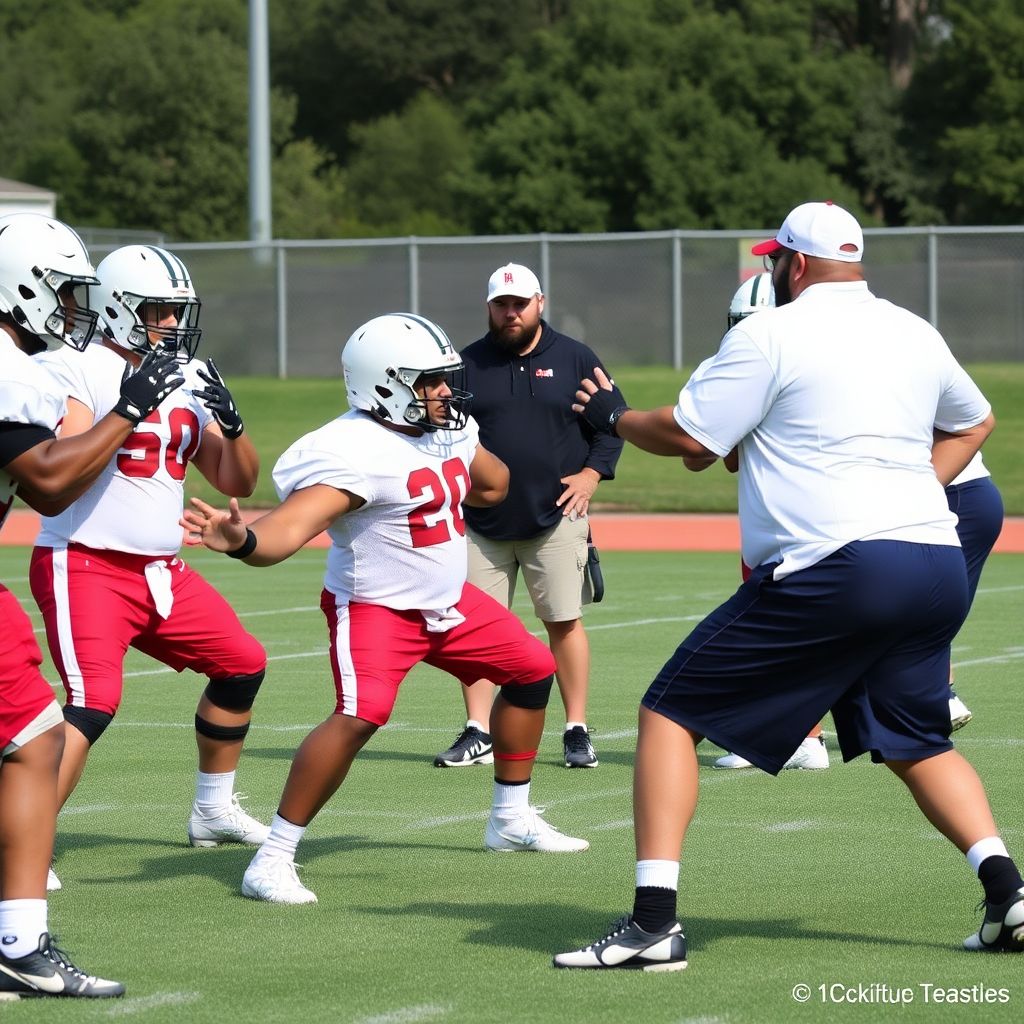
Offensive line play is the engine of modern offenses: it creates clean pockets, consistent run lanes, and clear reads for quarterbacks. The underrated art is not magic; it is a repeatable set of stance, steps, eyes, hands, and communication habits that players and coaches can drill and measure every practice.
Core Concepts of Offensive Line Excellence
- Every lineman must win with alignment, stance, and first two steps before strength ever matters.
- Eyes and communication are as critical as hands and feet in modern pressure schemes.
- Pass protection is controlled space, not a static wall; depth and width are coached.
- Run blocking combines leverage, aiming points, and finish, not just aggression.
- Simple, repeated rules beat huge playbooks for real-time adjustments.
- Film habits and targeted drills turn vague effort into measurable improvement.
Common Myths That Undermine Offensive Line Value
The most damaging myth is that offensive line play is just about being big and tough. In modern football offenses, success comes from repeatable offensive line techniques in modern football offenses: precise footwork, consistent landmarks, and clear communication rules that scale to any scheme.
Another myth: the offensive line only matters in the run game. In reality, the line defines how deep and wide your drop-back game can be, how often you can use empty sets, and how confidently you can call shot plays. Weak line play silently shrinks the playbook and forces conservative calls.
A third myth is that technique and scheme are too complex for younger or intermediate players. Done right, even advanced concepts like zone blocking schemes for modern offensive lines can be boiled down to simple rules such as “covered/uncovered,” “combo to linebacker,” and “inside first.” Complexity comes from cluttered coaching, not from the techniques themselves.
The last major myth is that linemen cannot be evaluated objectively. While stats are imperfect, coaches can track pressure allowed, successful double-teams, second-level fits, and finish grade on each play. Once players see clear, repeatable targets, the “art” of line play becomes a practical craft.
Defining Responsibilities: What Each Position Actually Does
- Left Tackle (LT) – blind side protector
Primary job is to protect the quarterback's blind side versus the best edge rusher. In most modern spread offense looks, LT sets deeper on five- and seven-step concepts, keeps the inside half clean, and forces the rusher around the hoop rather than straight through the pocket. - Left Guard (LG) – interior anchor and combo partner
LG works closely with the center on double-teams and pass-protection slide calls. In zone and gap runs, LG often delivers the initial vertical movement, then climbs to the play-side linebacker on combo rules. - Center (C) – quarterback of the line
The center sets the ID point, declares the mic, and adjusts protections versus odd/even fronts. In the run game, the center often reaches shaded defenders, snaps and steps on wide zone, and communicates any late movement or simulated pressure. - Right Guard (RG) – power driver and interior communicator
RG usually handles more straight-ahead power and counter schemes, pulling or wrapping on GT and counter concepts. In protections, RG must be decisive versus interior twists and green-dog blitzes triggered by backs releasing. - Right Tackle (RT) – edge stabilizer and run-game edge
RT manages defensive ends and overhang players to the strong side. He must set firm enough in pass pro to handle power rushers and be athletic enough on wide zone, pin-and-pull, and screen work to reach perimeter landmarks. - Tight End and Back involvement
While not linemen, tight ends and backs are part of the protection picture: fanning to edge rushers, scanning for inside blitz, or inserting as extra pullers. The offensive line must know when help is there and when they are isolated.
Pass-Protection Fundamentals and Modern Adjustments
Pass protection starts with three non-negotiables: balanced stance, quiet upper body on the snap, and a first step that gains ground without turning the shoulders. Linemen should think "inside half, then width, then depth" so they do not open a direct lane to the quarterback.
Coaches can define clear scenarios so players know how to react:
- Base four-man rush
Use your standard half-man leverage. Tackles set with depth and width, guards and center protect level on the line of scrimmage, keeping inside gaps firm while passing off simple twists with clear "you go, I stay" rules. - Pressure from the field side
When the nickel creeps or safety rotates down, your slide protection usually goes toward pressure. The linemen to that side kick or 45-degree set together; back and tight end insert opposite or check-release based on the protection tag. - Simulated and creeper pressures
In modern defenses, a defensive end may drop while a backer or safety adds. Linemen must protect space, not faces: block the nearest rusher to your gap rules, ignore dropping defensive linemen, and trust the ID system instead of chasing color. - Empty and quick-game protections
With no backs, protection time is shorter and rules must be simpler. Tackles set aggressively to stop quick edge wins, interior linemen firm up inside gaps, and the quarterback understands that hot throws replace extra protectors. - Slide versus man protections
Use more slide concepts in how to improve offensive line play in spread offense looks, because they handle movement better. Man protections are useful for play-action shots and max protection, where backs and tight ends can firm up edges and inside backers.
In all scenarios, hands must strike inside, thumbs up, with elbows tight. Punch to stop the rush, then reset and re-fit. Feet never stop: short, choppy mirror steps keep linemen from lunging or leaning.
Run-Blocking Techniques That Move the Line of Scrimmage
Effective run blocking is about angles, leverage, and timing more than pure aggression. Different schemes demand different footwork and aiming points, but the core is the same: low pads, hips through contact, and driving through a clear landmark on the defender.
Advantages of Core Run-Blocking Techniques
- Inside zone – Creates vertical movement and cutback lanes with double-teams and second-level climbs; great for zone blocking schemes for modern offensive lines that want one core run with flexible tags.
- Wide zone – Stretches and cuts the defense; linemen can use lateral steps and reach techniques to outflank defenders and force them to run.
- Gap and power – Uses down blocks and pullers to create clear entry points for backs; great when you have powerful guards and a mobile center.
- Counter schemes – Change the picture for linebackers with backfield action while the line creates double-teams and wrap paths inside.
- Draw and screen complements – Let linemen use pass sets before releasing, slowing down aggressive rushers and punishing upfield penetration.
Limitations and Common Pitfalls
- Overreliance on one scheme – Running only inside zone or only power makes the offense predictable and easier to fit for linebackers.
- Poor footwork on combos – If two linemen do not share the same first two steps, doubles split and defenders knife through gaps.
- High pads on contact – Standing up to "see the play" kills leverage; defenders get under pads and reset the line of scrimmage.
- No clear aiming points – Telling players to "block him" without a target (play-side number, near hip, etc.) leads to soft, indirect contact.
- Inconsistent finish – Linemen who stop on first contact rarely create explosive runs; finish through the whistle turns 3-yard gains into 7.
Communication, Pre-snap Reads and In-Play Adjustments
Communication is the link between scheme and execution. The center sets the initial plan, but every lineman (LT, LG, C, RG, RT) must confirm calls, echo them, and adjust when the defense moves. Quiet, consistent code words matter more than long speeches.
Several errors and myths consistently ruin this process:
- Myth: only the center needs to talk
Reality: tackles must declare edge threats, guards must confirm combinations, and backs or tight ends must verify their assignments. Silence allows free runners. - Error: late or changing calls
Changing IDs as the quarterback starts cadence creates hesitation and false starts. Build a simple rule: once you reach a set word in the cadence, calls are locked unless the quarterback checks the entire play. - Myth: linemen do not read coverage
Offensive linemen do not need full coverage reads, but they should learn basic shell cues that hint at pressure: rotation down by safeties, nickel alignment, and backer depth. This keeps them from being surprised by creepers or simulated pressures. - Error: no plan versus movement
If you never drill how to pass off twists and stunts, players freeze. Simple rules like "penetrator gets washed, looper gets picked up by inside man" give them confidence. - Myth: communication ends at the snap
Good lines talk during the play: "off," "switch," "stay," "climb." These single-word calls help combos know when to leave doubles and accelerate to linebackers.
Measuring Performance: Metrics, Film Habits and Practice Drills
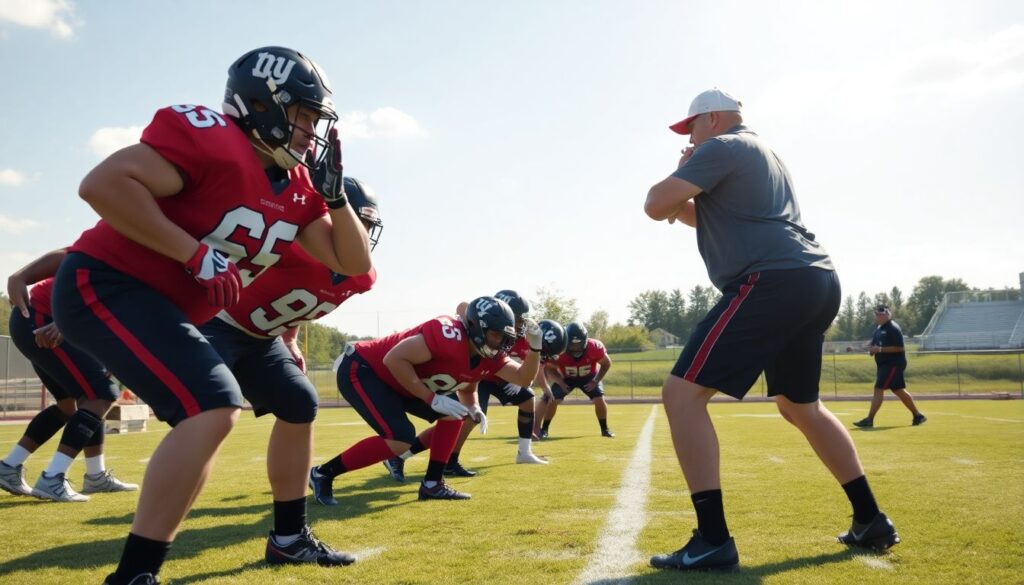
To move beyond vague "block better" coaching, lines need clear metrics and repeatable practice structures. Focus on objective events: clean pockets, no free runners, successful double-teams, and finish through the whistle. Then match your drills directly to those events.
Coaches looking for best offensive line training drills for coaches can anchor their plan with three daily blocks:
- Feet and posture (5-10 minutes)
Rapid-fire stance and first-step work: two-point and three-point stances, one-step and two-step sets, inside and outside zone first steps. Demand low pads and no false steps. - Combos and pass-off (10-15 minutes)
Work 2-on-2 and 3-on-3 combinations versus static then moving fronts. Emphasize clear verbal calls, hip-to-hip alignment on doubles, and eyes on linebackers. Tie this directly to your core run game and pressures you see on film. - Situational team (15-20 minutes)
Build periods for third-and-long, red zone, and screen draws. Grade each rep: pressure allowed, run fit created, finish. This turns film review into an objective scoreboard for each lineman.
For coaches implementing offensive line techniques in modern football offenses, pairing these drills with targeted film cut-ups is powerful. Short, focused offensive line coaching clinic videos and courses can supplement, but the real gains come when you translate those ideas into simple rules and on-field repetitions in your own system.
As a compact example, here is a one-day micro-plan for how to improve offensive line play in spread offense structures:
- Teach one inside zone rule set: "covered" defenders get single or double blocks; "uncovered" linemen help and climb.
- Run a 10-rep twist-pickup period vs. your most common third-down pressure.
- Finish with 12 plays of team, then grade each lineman on alignment, assignment, technique, and finish.
Practical Clarifications and Short Solutions
How can a high school team quickly upgrade its offensive line play?
Simplify the playbook to one core run and one core protection, then drill the first two steps and communication every day. Add clear grading criteria so players know exactly what counts as a win on each play.
What is the best way to teach zone blocking to intermediate players?
Start with half-line drills on inside zone using a "covered/uncovered" rule. Emphasize same first steps, hip-to-hip doubles, and clear verbal calls when climbing to linebackers before adding full 11-on-11 work.
How many individual drills should an offensive line use in one practice?
Use a small menu of 3-5 drills that directly match your main runs and protections. Too many drills dilute focus; repetition in the right few drills builds automatic habits.
How can smaller linemen compete against bigger defenses?
Win with leverage, angles, and speed off the snap. Focus on perfect stance, violent but controlled hands, and schemes that move defenders laterally, like wide zone and screens, instead of asking for straight power every snap.
Do offensive linemen need to study film like quarterbacks do?
Yes, but with a different focus: fronts, stunts, pressure patterns, and individual pass-rush moves. Short, position-specific film sessions help linemen anticipate what they will see instead of reacting late on game day.
How useful are offensive line coaching clinic videos and courses?
They are valuable if you watch with a purpose: look for one or two drills or rules that fit your system, then install them in practice. Avoid copying entire playbooks; adapt specific teaching points to your players and level.
What is one simple metric to track for pass protection?
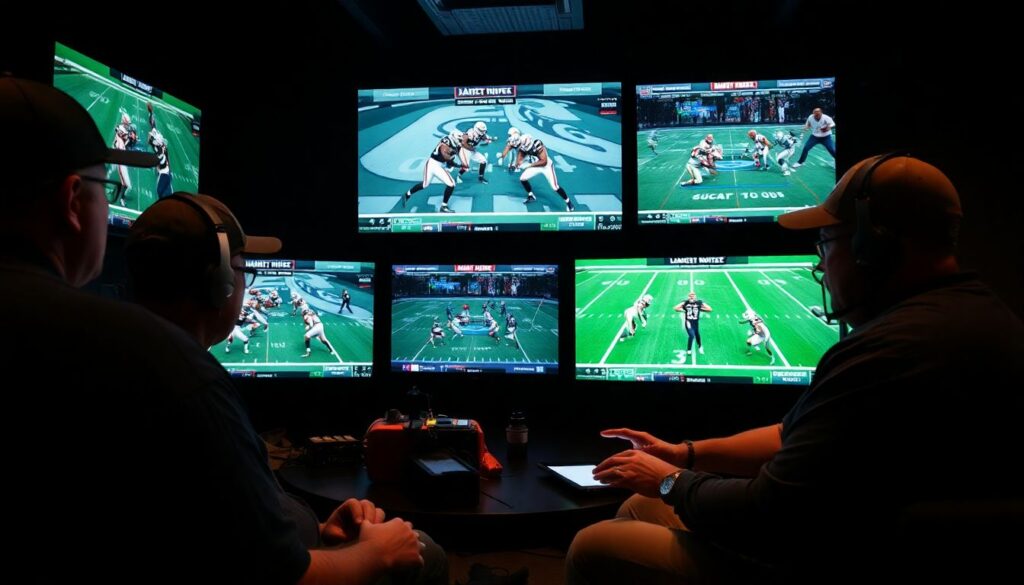
Count how many true drop-back passes you run with zero free runners to the quarterback. Aim to increase this number weekly, and use film to find where communication or technique broke down when you miss.