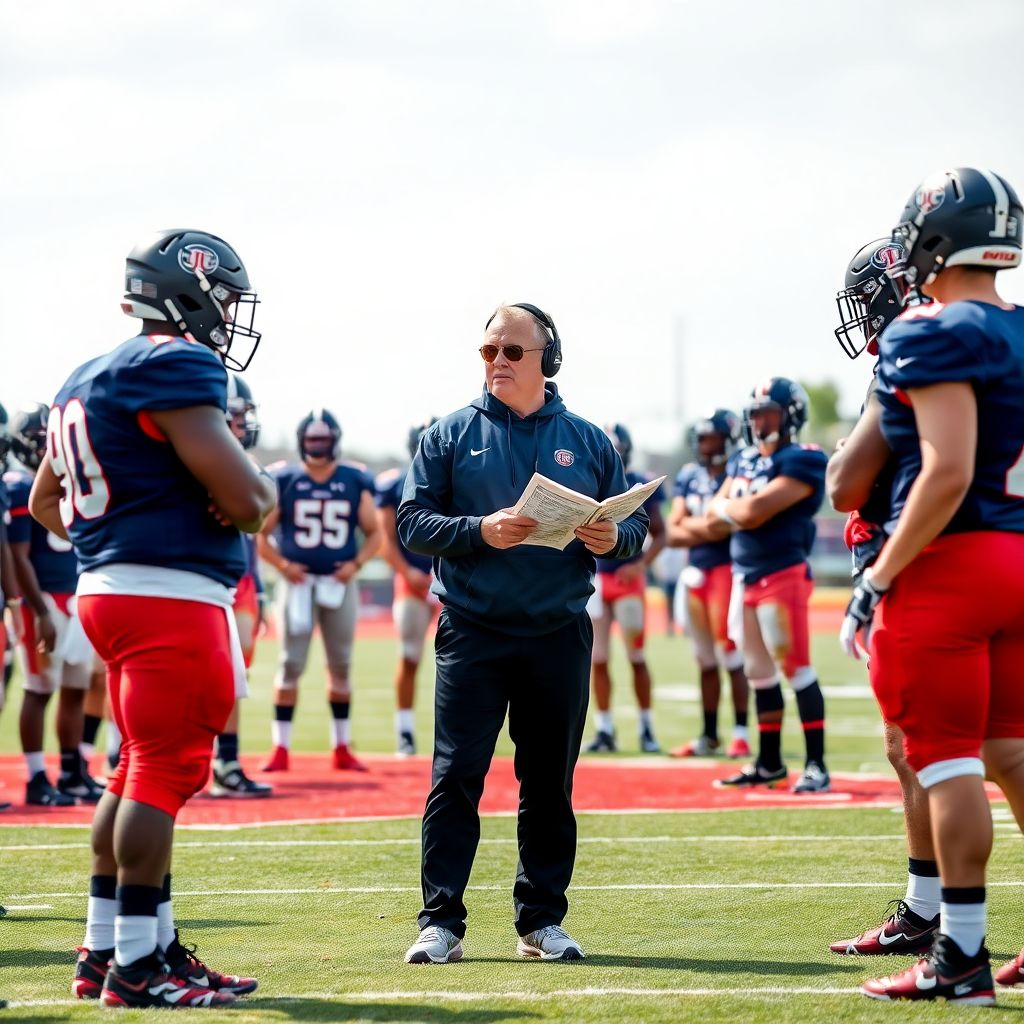
Coaching changes reshape college football recruiting and performance by resetting priorities, relationships, and schemes within the first 90 days. Rosters churn, commits reconsider options, and systems shift, which can either unlock better talent fits or cause short-term slippage. A clear 30/60/90‑day plan keeps recruiting classes intact and on‑field results trending upward.
Immediate Recruiting Impacts: What Shifts in the First 90 Days
- Current commits re-evaluate their status, especially if position coaches or coordinators leave.
- New staff revises the board, changing which prospects are prioritized or slow-played.
- Relationships with high school coaches and college football recruiting services must be rebuilt quickly.
- Scheme and culture messaging to recruits is rewritten almost overnight.
- Portal activity spikes as current players reassess their roles and eligibility clocks.
- On-field systems adapt to the roster you keep, not the roster you expected.
How Coaching Changes Reorder Recruiting Priorities
This approach is for athletic directors, recruiting coordinators, and new coaches navigating staff transitions at the FBS, FCS, or competitive Division II/III level. It helps when you want to stabilize classes, minimize transfer losses, and keep performance from dipping while systems change.
Do not copy this playbook blindly if your program is under major investigation, facing significant sanctions, or in the middle of institutional leadership turmoil. In those cases, compliance, legal, and presidential directives may override typical recruiting and performance priorities.
- Clarify program identity under the new coach: tempo, physicality, academic profile, and character standards.
- Rebuild the recruiting board by filtering current targets through the new scheme and culture lens.
- Separate short-term needs (depth at key positions) from long-term roster architecture.
- Align evaluation standards across staff so offers, ratings, and “takes” mean the same thing to everyone.
- Revisit how you use college football recruiting services and film exchanges to match the new profile.
Assessing New Coach Fit for Current Recruiting Classes
To evaluate how well a new coach fits existing recruits and roster pieces, you need structured information and shared tools rather than gut feel alone.
- Centralized recruiting database access: Full, immediate access to your recruiting system (CRM, spreadsheets, or custom software), including tags, notes, and contact history.
- Current and historical film: Cut‑ups of commits, top targets, and key returners, organized by position and situation (early downs, third down, red zone, special teams).
- Scheme documentation: Offensive and defensive playbooks, terminology lists, and install schedules from the new staff to compare with current roster and commits.
- Depth charts and eligibility maps: Two- to four-year outlooks by position, showing starters, backups, redshirts, and incoming signees.
- Academic and character profiles: GPA ranges, test scores, conduct notes, and support needs to ensure the new coach’s standards line up with current commits.
- Feedback from position coaches: Clear, written evaluations stating whether each commit is a strong fit, marginal fit, or misfit for the new systems.
- External evaluation comparison: Where possible, cross-check internal grades with neutral views such as the best football recruiting agencies for high school athletes or trusted scouting networks without blindly copying their rankings.
- Clinic and development plans: Agendas from relevant college football coaching clinics or internal development plans to show recruits how they will be trained and progressed.
Communicating Transition to Recruits, Families, and Staff
Use this step-by-step sequence to manage communication safely and clearly during a coaching change.
-
Stabilize the message internally
Before contacting recruits, align athletic director, head coach, recruiting coordinator, and key assistants on talking points, timelines, and non‑negotiables.
- Write a one-page transition message that everyone can adapt.
- Clarify what you can and cannot promise under NCAA rules.
-
Contact current players first
Meet with the team before news spreads through social media or group chats. Players should hear the rationale, expectations, and timeline for hires directly from leadership.
- Hold a full-team meeting, then brief position groups.
- Explain how their scholarships and roles will be evaluated.
-
Reach out to committed recruits within 24 hours
Call or video chat each commit and their family to explain what changed, what stays the same, and when they will meet the new staff.
- Start with class leaders and most at‑risk commitments.
- Document each conversation in your recruiting system.
-
Introduce the new coach with a clear vision
Once the head coach is in place, schedule virtual or in‑person meetings with commits, top targets, and high school coaches.
- Share scheme, culture, and player‑development philosophy.
- Connect vision to specific ways recruits will be used on the field.
-
Update written materials and digital presence
Revise graphics, presentations, and online bios to match the new direction so messaging is consistent across social media and campus visits.
- Refresh position‑specific plans and depth‑chart outlooks.
- Ensure compliance approval before publishing new claims.
-
Clarify evaluation and offer status
Be candid with recruits whose fit has changed under the new staff so they can make informed decisions.
- Confirm which offers are fully committable and which are paused.
- Avoid vague language that leaves families confused.
-
Engage third‑party influencers constructively
High school coaches, trainers, and college football recruiting services often shape perception of your transition.
- Provide them with accurate, consistent information.
- Invite them to watch practice or attend a staff presentation when allowed.
-
Reinforce the message over 30/60/90 days
Schedule touchpoints so recruits see actions match words over time, not just during announcement week.
- 30 days: introductory calls and first visits.
- 60 days: position‑specific fit reviews and updated film discussions.
- 90 days: on‑field clips, development plans, and role clarity.
Fast Track Mode: Comms Plan in Five Moves
- Align leadership on a simple, honest transition message.
- Meet the current team and captains before addressing recruits.
- Personally call every commit within 24 hours of major news.
- Host an early virtual town hall for families and key high school coaches.
- Follow a 30/60/90‑day contact schedule and log every interaction.
Managing Transfers and Scholarship Allocation After a Shakeup
Use this checklist to evaluate whether you are handling transfers and scholarships effectively after a coaching change.
- Every scholarship is mapped by class year and position for the next four seasons.
- Potential transfer departures are categorized as must‑keep, negotiable, or replaceable with clear criteria.
- Incoming transfers are evaluated on fit, role clarity, and impact on locker‑room dynamics, not just raw talent.
- Walk‑on and scholarship pathways are transparent, written, and applied consistently across the roster.
- Academic and compliance staff review all transfer plans before offers are extended.
- Conversations with players considering the portal are documented and focused on information, not pressure.
- Portal usage aligns with your stated identity rather than becoming a short‑term fix for every depth issue.
- Scholarship offers are not overextended beyond what your institution can reliably honor.
- Special teams needs are considered explicitly, not left as an afterthought.
- Staff reviews scholarship allocation quarterly to correct drift from the ideal roster model.
Scheme Changes, Position Development, and On-Field Performance
Major schematic shifts under a new coach often trigger predictable mistakes that directly hurt both recruiting and performance. Avoid these common errors.
- Installing a completely new scheme without checking whether your current roster can execute the core concepts within one offseason.
- Promising recruits a specific role or system fit that contradicts what you put on film in the fall.
- Neglecting position‑specific development plans while focusing only on playbook volume and terminology.
- Changing strength and conditioning demands abruptly without a ramp‑up, increasing soft‑tissue injury risk and undermining trust.
- Ignoring specialist development and protection schemes, which can quickly swing close games and influence perception with recruits.
- Failing to coordinate with academic services when practice times and travel routines change under the new staff.
- Using generic online football training programs for recruits without aligning them to your own technical standards and teaching language.
- Overreacting to early scrimmage results by abandoning the scheme before players have time to adapt.
- Not tracking how scheme changes affect measurable outcomes such as explosive plays allowed, red‑zone efficiency, or third‑down success.
- Allowing assistants to teach different techniques at the same position, confusing players and eroding execution.
Measuring Long-Term Recruiting Health and Cultural Stability

Beyond one season, you need alternatives to pure win‑loss records to judge whether your post‑change recruiting strategy is working. These options complement traditional metrics like NCAA football recruiting rankings 2025 and beyond.
- Development‑focused evaluation: Track how many recruits meaningfully improve over time through practice film, strength numbers, and role progression. This highlights whether your staff and any online football training programs for recruits are actually producing better players.
- Culture and retention lens: Measure multi‑year retention, voluntary transfers, and graduation outcomes by position group. This shows whether the new coach’s standards create a healthy, sustainable environment rather than constant churn.
- Pipeline and relationship strength: Evaluate the depth of relationships with high school programs, mentors, and the best football recruiting agencies for high school athletes in your footprint. Strong pipelines stabilize recruiting even if a single class underperforms.
- Performance‑per‑talent analysis: Instead of only chasing team rankings, compare your results to your roster profile. Outperforming expectations based on talent ratings and resource levels is a sign the new model is working.
Quick Clarifications on Coaching Turnover and Recruiting Outcomes
How quickly should a new coach adjust the recruiting board?
Within the first week, the staff should have a provisional board that reflects the new scheme and culture. Over the next 30 days, that board should be refined as film is reviewed, relationships are built, and campus evaluations take place.
Do coaching changes always hurt a recruiting class?
No. Classes built more on relationships with the institution than with one coach can stay intact, and some prospects see a new system as a better fit. Transparent, fast communication is the main factor that limits decommitments.
How should we use college football recruiting services during a transition?
Use them as one input for reach and information, not as your decision maker. Cross‑check their evaluations against your film, character standards, and academic thresholds, and ensure messaging through those services matches what you tell recruits directly.
Can coaching clinics really help recruiting and performance after a change?
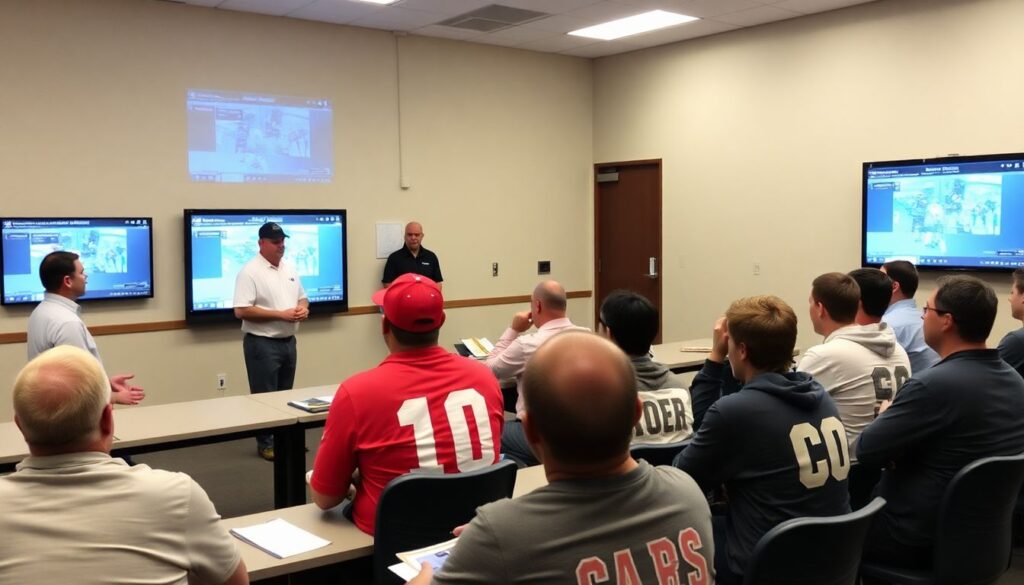
Targeted college football coaching clinics sharpen scheme teaching, position fundamentals, and practice organization. When those improvements show up on film and are explained clearly on visits, they become a powerful recruiting tool and help justify scheme changes to current players.
How should we interpret NCAA football recruiting rankings 2025 after staff turnover?
Rankings offer a rough snapshot of perceived talent but do not account for scheme fit and development environment. Use them as a baseline, then focus on how well your signees match the new staff’s profile and how many reach their projected roles.
What is the safest way to handle players considering the transfer portal?
Give players accurate information about their role and development path, avoid pressure tactics, and involve compliance early. Document conversations, respect their timelines, and focus on whether staying or leaving serves their long‑term goals.
How can high school athletes protect themselves when staffs change at their target schools?
They should stay in direct contact with the new staff, keep options open, and verify every verbal assurance in writing where possible. Leaning on trusted high school coaches and neutral advisers is safer than making quick decisions based on social media buzz.