Why conference realignment suddenly feels like a total reboot
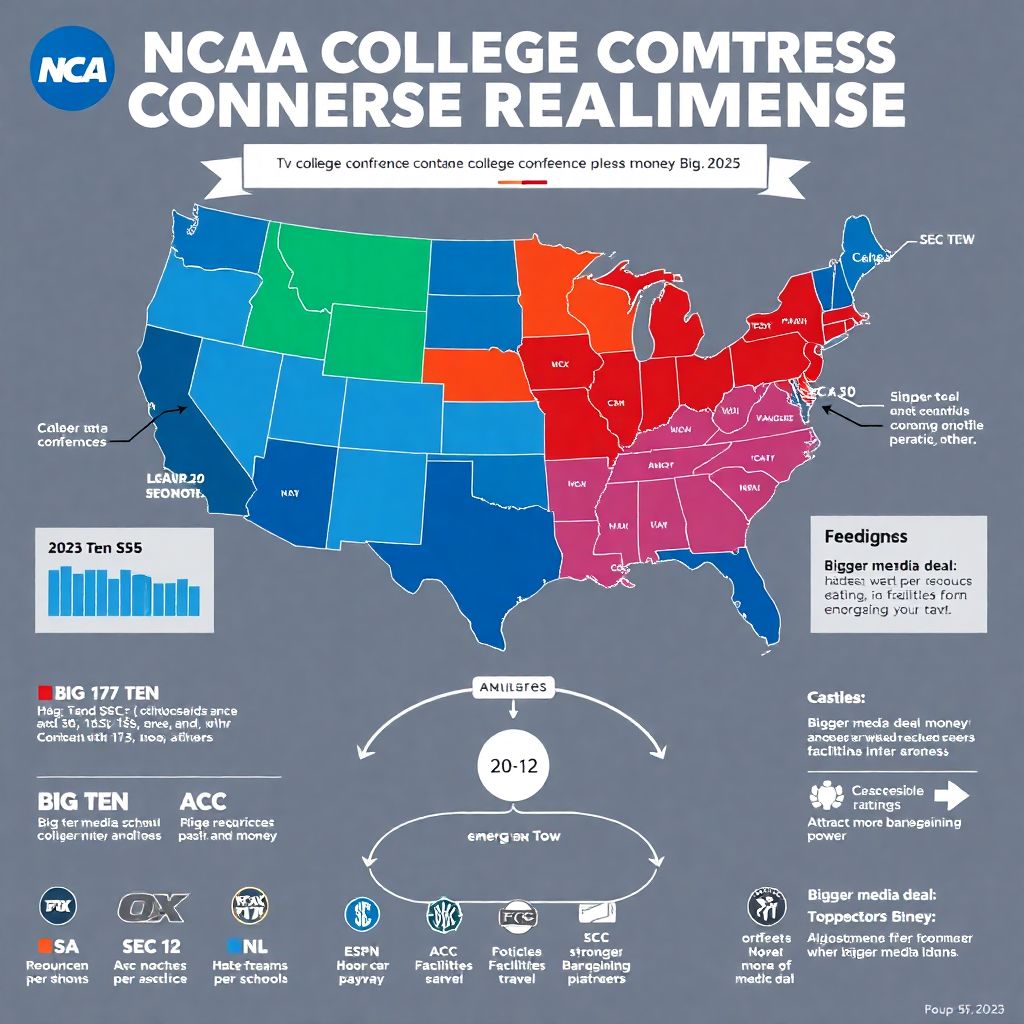
Conference shuffling has always been part of college sports, but the current wave is something else entirely. Since 2023, realignment has gone from background noise to the main storyline in every piece of college football conference realignment news. We’re not just talking about a couple of schools swapping leagues; we’re watching the Power Five shrink, the map get redrawn, and the money flows from TV change who plays whom, when, and why. To make sense of it, it helps to treat this like a technical system: inputs (money, media, governance), processes (realignment, scheduling, playoff design), and outputs (competitive balance, travel, fan experience).
Key terms: getting the vocabulary straight
Before digging into numbers and ripple effects, it’s useful to define a few terms, so we’re not talking past each other. A “conference” in college football is a formal association of schools that share schedules, revenue, and rules for a set of sports, most visibly football. “Conference realignment” is the process of schools switching conferences or conferences adding/dropping members, usually driven by media rights, recruiting access, and institutional fit. When you see phrases like big ten sec conference realignment 2024, people usually mean the recent wave of moves where the Big Ten and SEC pulled in major brands from other leagues, especially the collapsing Pac‑12. The “Power Five” was the old label for the ACC, Big Ten, Big 12, Pac‑12, and SEC; by 2024–25 that structure is effectively gone, replaced by a Big Two (Big Ten and SEC), a solid Big 12, a vulnerable ACC, and everyone else.
The collapse of the traditional Power Five: what the numbers say
From 2023 through the 2025 season, the number of FBS programs changing conferences is unprecedented. Between the 2023 and 2025 seasons, roughly 30 FBS schools either have already moved or are officially committed to future moves, compared with under 10 across the three seasons from 2014 to 2016. The most dramatic data point: the Pac‑12 went from 12 full‑time football members in 2022 to effectively 2 committed members (Washington State and Oregon State) going into the 2024–25 cycle, with 10 schools exiting to the Big Ten, Big 12, and ACC. That means more than 80% of a century‑old conference evaporated in about 18 months, a shift with no modern analog in the sport’s history.
TV money as the operating system: realignment as a function of media rights
Strip away the nostalgia and you’re left with a pretty clear engine: college football tv deals and conference realignment are now tightly coupled. The Big Ten’s media agreement, signed in 2022 and kicking fully in through 2023–2024, is reported at roughly $7 billion over seven years, with annual distributions projected at $80–$100 million per school by the middle of the decade. The SEC’s deal with ESPN, fully activating in 2024 as Texas and Oklahoma arrive, is expected to push per‑school payouts into the $70–$80 million range. Compare that with ACC schools locked into a long‑term deal that, through 2025, has been paying many members closer to the $40 million neighborhood, and you can see why lawsuits and “exit scenario” discussions have exploded inside that league.
Diagramming how media money flows into realignment decisions
To visualize this without a literal chart, picture a text‑based data flow diagram:
[Diagram: Media Rights Flow]
Media Companies (FOX, ESPN, NBC, streamers) → negotiate contracts →
→ Conferences (Big Ten, SEC, Big 12, ACC, G5) → distribute revenue →
→ Schools (athletic departments) → allocate budgets →
→ Football Programs (coaches’ salaries, NIL support, facilities, travel).
Now layer realignment on top:
[Diagram: Realignment Feedback Loop]
Bigger Media Deal → Higher Per‑School Payout →
→ More Resources (better staff, facilities, NIL ecosystem) →
→ Better On‑Field Product & Ratings →
→ Stronger Bargaining Power for Next Deal →
→ Attracts More Desirable Members →
→ Even Bigger Media Deal.
Over the last three years, the Big Ten and SEC have been the only conferences consistently on the right side of that loop, pulling away in both money and brand power.
The Big Ten and SEC arms race: geography is optional now
If you want a clean example, look at big ten sec conference realignment 2024. By the 2024 season, the SEC has grown from 14 to 16 members with Texas and Oklahoma joining. The Big Ten expands from 14 to 18 with USC, UCLA, Oregon, and Washington. In raw numbers, from 2023 to 2025, the Big Ten and SEC add six former Pac‑12 schools plus two Big 12 blue bloods, swallowing up roughly half of the sport’s highest‑value brands. Since 2023, the Big Ten Championship and SEC Championship games have consistently drawn TV audiences north of 10 million viewers, while many other conference title games have hovered in the 3–6 million range. That gulf in ratings feeds directly into the next round of negotiations, reinforcing the idea that geography is a nice‑to‑have rather than a requirement.
Comparing college football realignment to European soccer and the NFL
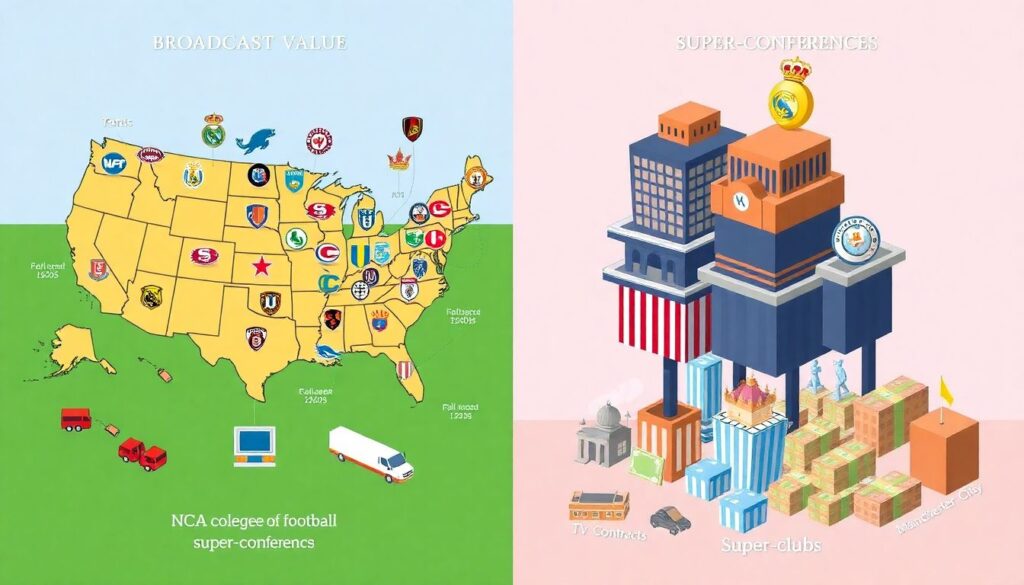
To make this more intuitive, it helps to compare the current NCAA conference shake‑up to other systems fans know. The most obvious analog is European club soccer: a few super‑clubs (think Real Madrid, Manchester City) capture most of the broadcast value, which then lets them sign the best players, which then brings in more viewers. Big Ten and SEC schools are slowly becoming those super‑clubs. At the same time, realignment is making the conference structure look less like the “divisional” NFL model—where the league carefully engineers parity—and more like a semi‑open marketplace, where the strongest brands gravitate together. The difference is that the NFL central office can redistribute revenue and enforce a hard salary cap; the NCAA doesn’t have that kind of central authority, which makes the emerging imbalance harder to correct once it sets in.
Travel, time zones, and the hidden technical costs of coast‑to‑coast leagues
The moment USC and UCLA agreed to join the Big Ten, the distances involved made it clear that logistics would be a major side effect. From 2023 to 2025, several studies and internal university reports show projected increases in average road‑trip distance for some West Coast programs of over 50% once they join Midwestern or Eastern conferences. For non‑revenue sports this is even more extreme. Imagine an Olympic sport athlete at a former Pac‑12 school now in the Big Ten: a typical trip might jump from 600–800 miles to 1,500–2,000 miles one way. That means more charter flights, more missed class time, and more travel‑related costs layered on top of the big media checks that made the moves possible in the first place.
Quantifying the school‑level impact over the last three seasons
On a campus level, the three‑year window from 2023–2025 has already shown measurable shifts. Public financial records indicate that top‑tier programs in the Big Ten and SEC have seen annual athletics revenue climb into the $200–250 million range, up by roughly 10–20% since the 2022 fiscal year as new TV tranches, playoff revenue, and donor enthusiasm kicked in. Coaching salaries followed: from 2023 to 2025, the number of head coaches making at least $9 million per year in base plus reported bonuses has grown from a handful to nearly a dozen, and the largest assistant salary pools now exceed $10 million per staff at some schools. While not every dollar is traceable directly to realignment, the timing lines up tightly with the biggest media and membership changes.
Playoff expansion and competitive balance: who really benefits?
The 12‑team playoff format, launching for the 2024 season, is where the college football playoff impact of conference realignment becomes obvious. On paper, more slots should mean more access for more leagues. In practice, modeling based on AP and CFP rankings from the 2021–2023 seasons shows that a 12‑team bracket would have included 6–8 teams from the Big Ten and SEC combined in most years, leaving the rest of the country to scrap over 4–6 slots. As the Big 12 stabilizes and the ACC tries to hold its roster together, projections for the 2024–2026 stretch suggest a likely pattern: plenty of at‑large bids for Big Ten and SEC, with the remaining conferences mostly hoping to secure auto‑bids as the highest‑ranked champions rather than stacking multiple at‑large teams.
Diagram: how realignment feeds into playoff outcomes
Think of the playoff as a multi‑stage funnel:
[Diagram: Playoff Funnel]
Conference Size & Strength →
→ Strength of Schedule + TV Exposure →
→ CFP Ranking Inputs (metrics, committee perception) →
→ Seedings & At‑Large Selection →
→ Playoff Revenue Distribution.
Now add realignment changes since 2023:
– Big Ten and SEC gain more ranked teams and marquee matchups.
– Those games draw better ratings, receive prime windows, and shape national narratives.
– Committee members see deeper resumes from those leagues when ranking teams.
– More Big Ten/SEC teams qualify, which then claim a larger share of playoff revenue.
That extra playoff income then loops back into facilities, NIL infrastructure, and coaching hires, reinforcing the same conferences that triggered the shift.
Rumors vs. reality: how to read the next wave of moves
Anyone following latest ncaa conference realignment rumors over the last three years has seen dozens of speculative “super league” maps, half of which are outdated within months. But if you filter the noise, a few patterns emerge. First, schools in leagues with below‑market media payouts—especially much of the ACC and parts of the Group of Five—are actively modeling exits, even when their legal contracts run into the mid‑2030s. Second, Big Ten and SEC officials have learned that adding schools only makes sense if they raise the average value of a TV window; that’s why you don’t see them chasing every winning program, only those that consistently move ratings needles or add a major new media market. Third, from 2023 through early 2026, the pace of official announcements has slowed compared with the 2021–2023 burst, but the legal and financial groundwork for the next jump is very much in progress behind the scenes.
Statistical snapshots: 2023–2025 by the numbers
Looking across the last three seasons, a few data points help frame the scale of change. First, conference membership churn: between the 2023 and 2025 seasons, roughly one in four FBS programs has either moved leagues or has a future move locked in, a rate well above any previous three‑year span of the modern era. Second, TV consumption: average regular‑season college football ratings on major networks have held roughly steady or climbed slightly, but the concentration is stark—by 2025, a majority of the 20 most‑watched games each year involve at least one Big Ten or SEC team. Third, revenue distribution: internal and public reports suggest that the gap between top Big Ten/SEC distributions and those of many ACC and Big 12 schools has widened to $20–$30 million annually per school by the mid‑2020s, a margin that compounds quickly over a five‑ to ten‑year window.
Comparing realignment winners and strugglers: a technical lens
To analyze winners and strugglers, it helps to think in terms of system design instead of good luck. Conferences that locked in long‑term, below‑market TV deals before the revenue surge of the early 2020s effectively hard‑coded a disadvantage for themselves. In contrast, the Big Ten structured its media rights to encourage competitive bidding among multiple networks, which is exactly what drove up its valuation. From 2023 to 2025, schools that managed to land in those “auction‑friendly” environments saw their resource profiles explode, while others have had to lean more heavily on donors, ticketing, and creative NIL collectives just to keep pace. On the field, this hasn’t fully translated into a permanent top‑tier yet—teams still rise and fall—but the underlying financial metrics are starting to resemble the gap you’d see between large‑market and small‑market teams in professional leagues.
What fans will actually feel: schedules, rivalries, and viewing habits
For viewers, the upheaval shows up in pretty concrete ways. Traditional regional rivalries—especially in the Pac‑12 footprint—either vanish or move to non‑conference slots that may or may not survive future scheduling crunches. At the same time, cross‑country blockbuster games become more common: by 2025, it’s routine to see West Coast powers playing noon Eastern kickoffs in snowy Midwestern stadiums, a scenario that was rare just a few years earlier. Early ratings hints suggest that fans are willing to follow brands more than conferences; when a big‑name team moves, its core audience usually moves with it. That’s one reason media partners have been comfortable backing aggressive realignment: the risk that fans “turn off” en masse hasn’t shown up in the 2023–2025 numbers.
Three practical takeaways about where this is headed
To wrap the technical picture into something actionable for fans, here’s a concise framework for interpreting the next wave of shifts over the coming seasons:
1. Follow the contracts, not just the rumors.
Check when each league’s TV deal expires and what buyouts or grant‑of‑rights terms look like; most real moves cluster around those contract cliffs, not around message‑board timelines.
2. Track per‑school revenue, not just conference totals.
As distributions diverge, the real gap is in spendable money per program. From 2023 to 2025, the Big Ten and SEC have already opened a sizable lead here, and that’s likely to grow.
3. Watch how playoff results and bids distribute by league.
If, over the first few 12‑team brackets, 60–70% of the field and most titles come from two conferences, pressure for new formats—or for a more NFL‑style “super league”—will intensify.
Across the last three years, conference realignment has stopped being a periodic curiosity and become the core mechanism that shapes who competes at the top of college football. The sport’s map, money flows, and playoff structure are all being rewritten at once, and the data from 2023–2025 suggest that this isn’t a short phase—it’s the new operating logic of the game.