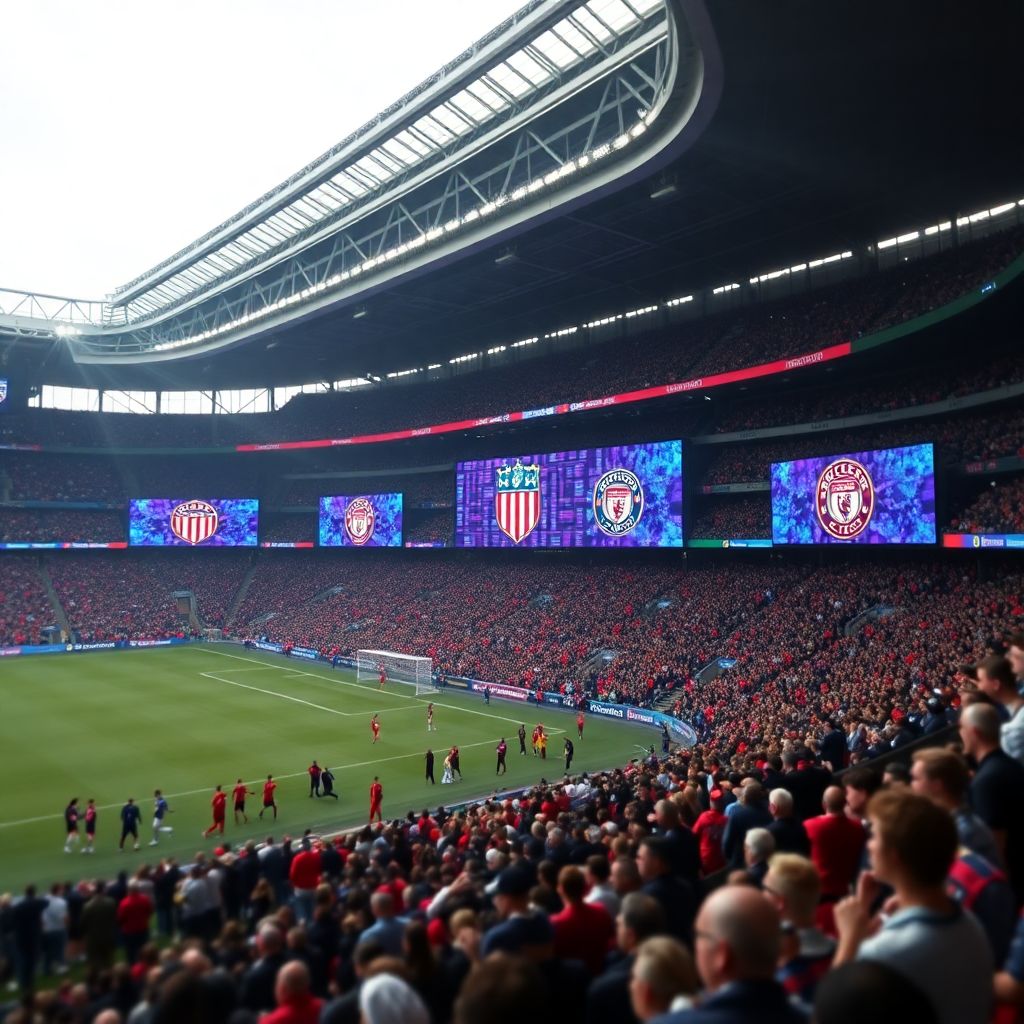
Media deals and streaming reshape football by shifting revenue from local matchday income to global screen-based income, changing who pays (broadcasters, platforms, subscribers), how money is shared, and which clubs gain leverage. This reorders competitive balance, kickoff times, sponsorship value, and long‑term strategy for leagues and teams.
Strategic summary: how media and streaming alter football economics
- Broadcasting and streaming are now the primary drivers of club and league income, ahead of ticketing in most top competitions.
- The structure of football media rights deals matters more than their headline value for competitive balance.
- Traditional TV still anchors pricing, but live football streaming platforms set expectations for flexibility and direct fan relationships.
- Fragmented football broadcasting rights packages can boost total income but raise fan acquisition and churn risk.
- Sports streaming services subscriptions steer kickoff times toward global prime windows, reshaping matchday value and local attendance patterns.
- Media growth inflates sponsorship prices and player wages, but misaligned deals can trap clubs in unsustainable transfer commitments.
- Regulation, competition law, and technology constraints limit how aggressively rights holders can bundle, geoblock, or centralize content.
Quick tactical moves for clubs and leagues
- Segment your audience: separate local matchgoers, casual domestic viewers, and international fans; design media and content offers for each.
- Audit every contract clause that links media income to wage or transfer commitments; cap automatic escalators.
- Use a basic sports media rights market analysis before any renewal; map at least three types of bidders (free-to-air, pay TV, streaming).
- Pilot data-sharing partnerships with broadcasters or OTT platforms to access first-party fan data, not just rights fees.
- Align kickoff slots with 2-3 priority time zones instead of trying to satisfy all markets at once.
- Build standard reporting for sponsors that connects media reach to concrete inventory (shirt, LED, digital assets).
Debunking myths about broadcasting money and competitive balance
Several persistent myths distort how clubs and leagues think about broadcasting money. The first myth is that bigger media deals automatically improve competitive balance. In reality, the distribution formula and cost controls matter more than the topline value of football media rights deals.
The second myth is that streaming will quickly replace TV and level the playing field. Established giants still capture disproportionate attention, and algorithms on live football streaming platforms tend to amplify winners. Streaming can even widen gaps if top clubs sell more exclusive content or carve out separate packages.
The third myth is that domestic rights are all that matters. International audiences increasingly influence football broadcasting rights packages, from kickoff times to language feeds and sponsorship inventory. For globally relevant leagues, overseas growth often offsets stagnation at home, but it can weaken the local in-stadium experience.
The final myth is that media money is stable and guaranteed. Rights cycles, economic downturns, and platform failures can force sudden corrections in club budgets. Treating broadcasting cash flows as permanently rising encourages overinvestment in wages, long contracts, and transfer fees.
Takeaway: stop assuming that more media income equals fairer competition; focus on distribution rules, cost discipline, and diversified revenue planning.
How traditional TV contracts still determine club revenue streams
Despite all the attention on streaming, classic TV agreements still shape the financial baseline for most professional clubs. Their mechanics explain why some leagues remain stable and others swing between boom and bust.
- Centralized selling vs. club-by-club deals: In centralized systems, the league bundles rights and redistributes revenue; in decentralised models, big clubs can negotiate separately, capturing outsized shares. The choice affects bargaining power and long-term parity.
- Domestic vs. international splits: Contracts usually separate domestic and international rights, often with different partners. Shifts in this balance can reward globally popular clubs, even if domestic audiences plateau.
- Guaranteed minimums and performance bonuses: Many deals use fixed guarantees to stabilize budgets and variable components linked to appearances or league position. This can either smooth risk or encourage aggressive spending near the top.
- Production and distribution responsibilities: Some broadcasters handle everything; in other deals, leagues run their own channels and sell feeds wholesale. This changes both cost structures and control over branding and match presentation.
- Contract duration and indexation clauses: Longer terms add security but can lock parties into outdated pricing models. Indexation clauses tied to inflation or subscriber numbers shift some market risk from broadcasters to leagues.
- Territorial exclusivity: Classic TV deals rely on strict geoblocking and exclusivity. As VPN use and cross-border fandom grow, enforcing these borders gets harder and creates conflicts with global OTT offers.
Takeaway: before chasing new digital ventures, understand how existing TV contracts lock in cash flows, risk-sharing and bargaining power for your competition.
Streaming platforms: new business models, exclusivity and fragmentation
Streaming has introduced new ways to package and monetize football content. Instead of a single cable bundle, fans face a mosaic of sports streaming services subscriptions, club apps, and social platforms with overlapping rights.
- Pure OTT league or club channels: Some rights holders launch their own direct-to-consumer services, keeping full control over pricing, user data, and product features. This maximizes learning but requires serious marketing and tech capabilities.
- Hybrid deals with broadcasters and OTT: Leagues may sell a primary TV package plus a carve-out for a digital partner, balancing reach with innovation. This often leads to complex territorial rules and consumer confusion.
- Platform-led aggregation: Big tech companies and multi-sport apps act as gateways, bundling multiple properties. They prioritize retention and engagement, which influences how often and when football content appears.
- Pay-per-view and microtransactions: Single-match purchases, discounted late-join offers, or in-app upgrades give flexibility to occasional viewers. The challenge is avoiding cannibalization of season passes and season tickets.
- Non-live and shoulder content: Highlights, mini-matches, documentaries, and tactical breakdowns keep fans engaged between games. These formats are crucial for brand-building and can be monetized separately or used to reduce churn.
- Data-driven personalization: OTT platforms can recommend matches, angles, and language feeds, shaping which clubs gain exposure. Algorithms effectively become new gatekeepers of attention.
Takeaway: streaming is not just another distribution channel; it changes product design, pricing experiments, and who controls fan data.
Scheduling, global audiences and the reshaping of matchday value
As international audiences grow, broadcasters push for kickoff times that fit more time zones. This increases cumulative viewership but affects traditional matchday habits and stadium atmosphere.
Upsides of schedule optimization for screen audiences
- Staggered kickoffs create more broadcast windows, increasing total inventory to sell within football media rights deals.
- Earlier or later matches can capture prime-time slots in multiple territories, lifting the value of advertising and sponsorship impressions.
- Spread-out schedules reduce match overlaps, giving live football streaming platforms more flexibility to promote specific fixtures.
- Better-aligned times support premium hospitality and watch-party concepts in key international markets.
Constraints and risks of shifting matchday patterns
- Non-traditional kickoff times can hurt local attendance, community routines, and grassroots engagement.
- Travel logistics for away supporters become harder, making the live experience feel secondary to TV.
- Players may face irregular recovery patterns and long-distance travel to accommodate global tours and time-zone friendly games.
- Local broadcasters and sponsors might resist schedules that prioritize overseas viewers over domestic audiences.
Takeaway: treat scheduling as a strategic lever, balancing global screen revenue against local loyalty and on-pitch performance.
Sponsorship, player valuation and transfer-market ripple effects
Broadcasting and streaming money does not stay in a silo; it cascades into commercial deals and the transfer market. Misunderstanding these linkages leads to several costly mistakes.
- Assuming all exposure boosts sponsor value equally: Not every minute on screen has the same impact. Prime-time games on major channels matter more than low-visibility slots on niche services, especially when football broadcasting rights packages are fragmented.
- Projecting media income linearly into wage budgets: Clubs often raise wage ceilings when a new rights deal is signed, ignoring volatility and contract length. This leaves little room when the next cycle flattens or broadcasters reduce commitments.
- Overpricing players based on short-lived media hype: Viral moments from live football streaming platforms can inflate perception of a player's commercial value. Without sustained performance, such valuations rarely hold across multiple seasons.
- Ignoring sponsor preference for integrated storytelling: Sponsors now seek alignment across TV, digital, and physical assets. Failing to integrate jersey, LED, and social content yields lower renewals despite strong audience numbers.
- Neglecting the downside of relegation or de-qualification: Overreliance on media-related bonuses from continental competitions can shatter budgets when performance dips.
Takeaway: connect media exposure to measurable sponsor objectives and realistic player valuations, not short-term peaks in attention.
Regulatory, competitive and technological hurdles for rights distribution
Even with strong demand, leagues and clubs face constraints from regulators, competition authorities, and technical realities. These shape how far rights holders can go in consolidating or slicing up the market identified in any sports media rights market analysis.
Key constraints include:
- Competition law and anti-cartel rules: Authorities often limit exclusive control or overly long contracts to prevent market foreclosure.
- Must-offer and listed event rules: Some markets require key matches to remain available on free-to-air channels.
- Data and privacy regulations: Direct-to-consumer OTT models must respect data protection rules, affecting personalization and targeting.
- Bandwidth and latency limitations: Infrastructure gaps can make large-scale streaming unreliable, forcing parallel satellite or cable distribution.
Mini-case illustration:
Imagine a league planning a new cycle:
- It runs a sports media rights market analysis and identifies three likely bidder types: free-to-air TV, pay TV, and a global OTT player.
- Regulators insist on at least one free-to-air package, limiting full exclusivity for OTT.
- Technical tests show that peak-time streaming in rural areas would be unstable without backup feeds.
- The final model splits rights: a marquee free-to-air package, a premium pay TV bundle, and supplementary digital-only matches.
Takeaway: the optimal media strategy is usually a compromise between commercial ambition, legal boundaries, and technological reliability.
Practical questions executives ask about media rights and streaming
How should a mid-table club plan around future media income?

Use conservative projections based on the current contract, not optimistic renewal scenarios. Tie long-term wage and transfer commitments to guaranteed components, not variable TV or prize bonuses.
When does it make sense to launch a club-owned OTT service?
It makes sense if you have a sizeable global fan base, strong content production capacity, and enough non-live programming to reduce churn. Otherwise, focus on partner-led distribution while building your data and storytelling capabilities.
How can leagues reduce fan frustration with fragmented subscriptions?
Simplify package structures, coordinate kickoff times to minimize overlaps, and explore cross-promotion or bundles among rights holders. Clear communication about where each competition and team can be watched is essential.
What metrics matter most when evaluating broadcast partners?
Look beyond rights fees to distribution reach, marketing support, data access, and production quality. A slightly lower cash offer with better exposure and data-sharing can outperform the top bidder over time.
How do media rights affect youth development and lower divisions?
Centralized deals with solidarity mechanisms can channel a share of top-tier income into academies and lower leagues. Without such structures, media growth at the top rarely trickles down sustainably.
Can clubs rely on streaming platforms as stable long-term partners?
They can be valuable partners, but their business models and priorities change quickly. Reduce dependency by diversifying across broadcasters, sponsors, and your own digital channels.
What is the first step before renegotiating league rights?
Commission an independent market and audience assessment, including benchmarking against other sports and territories. Enter talks with a clear view of your realistic value and strategic non-cash demands.