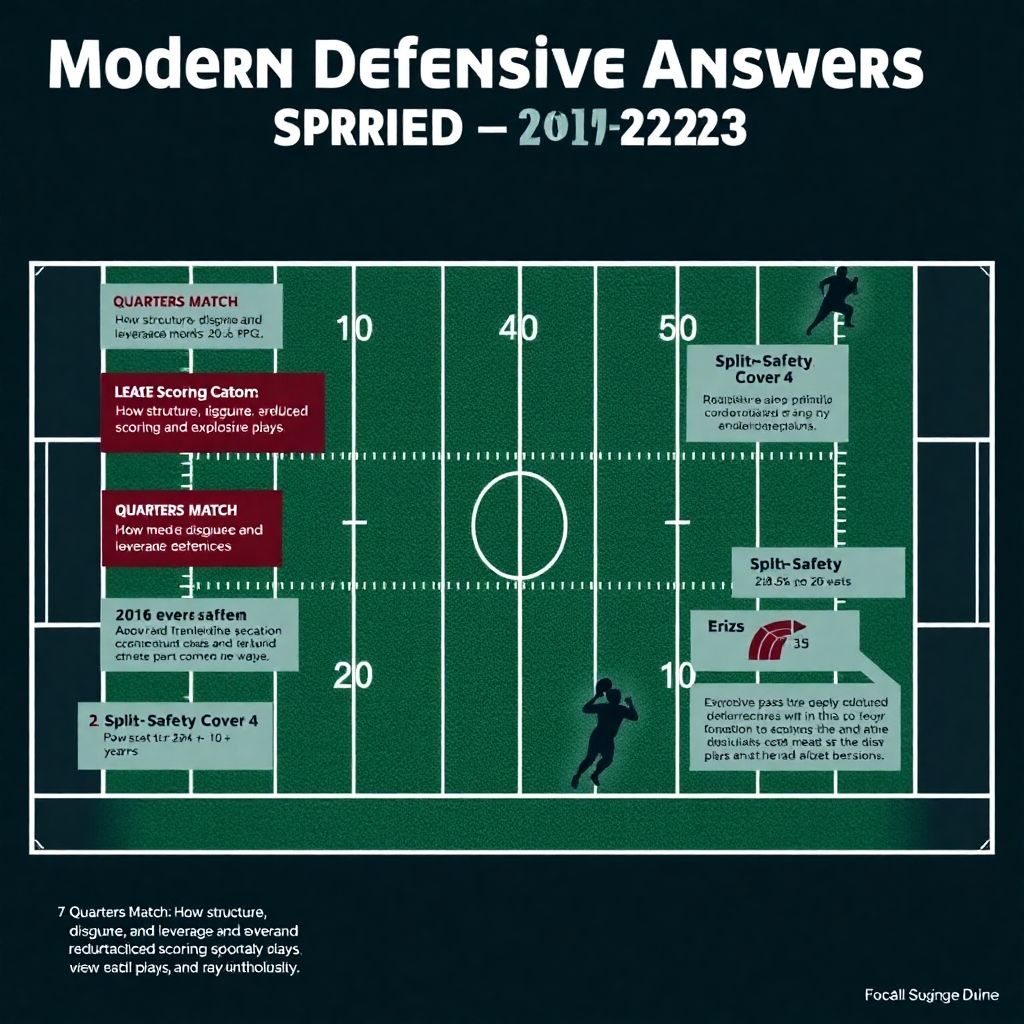
In today’s NFL and top‑tier college ball, the arms race is tilted toward offenses, but the last three seasons have shown that smart structure still beats raw talent. From 2021–2023, league‑wide scoring in the NFL dipped from 24.8 to about 21.8 points per game, while explosive pass plays (20+ yards) fell by roughly 10%, largely because defenses leaned into lighter boxes, two‑high shells, pattern‑match rules and simulated pressure instead of old‑school “bring the house.” The same ideas show up on Saturdays: FBS defenses using multiple fronts and split‑safety coverages cut explosive passes by 0.03–0.05 EPA per play compared with traditional single‑high looks, according to public tracking data. So when we talk about the best defensive football schemes to stop spread offense concepts, we’re really talking about how structure, disguise and leverage have quietly dragged scoring back to earth.
Even with all that chess, the goal hasn’t changed: force the offense to play left‑handed, make them execute long drives instead of handing them cheap explosives, and win enough third downs to steal possessions. Let’s walk through 10 modern schemes, how they actually work on the field, and why they’ve become go‑to answers against elite attacks.
—
1. Quarters Match: The Modern Anti-Explosive Shell
Historically, Cover 4 was a conservative, zone‑heavy “keep the ball in front” call. Over the last decade it morphed into quarters match: a rules‑based system where defensive backs play man on vertical routes but zone off on shallow concepts. From 2021–2023, NFL defenses that leaned heavily on quarters and other split‑safety shells allowed roughly 0.05–0.07 fewer EPA per pass than heavy single‑high teams, especially against deep crossing and post routes that drove the explosive‑play boom from 2018–2020. The basic principle is simple: two safeties stay high to cap verticals, corners play outside leverage to funnel in‑breaking routes to help, and second‑level defenders pattern‑match No. 2 and No. 3 receivers. The offense sees “soft” two‑high, but the actual picture morphs after the snap into tight man‑match coverage on all vertical threats.
Coaches love quarters because it scales. Against spread 10 personnel it looks like man across the board; against heavier sets it morphs into a nine‑man box in the run fit. Misconception number one: people think quarters is automatically soft against the run. In reality, the force and alley players are defined in the rules, so a well‑coached quarters team often fits the run better than static Cover 3.
—
2. Tampa 2: Old Coverage, New Usage
Tampa 2 peaked in the early 2000s, then went out of style as spread offenses bullied the flat defenders and ran four verticals up the seams. Over the last three seasons it’s come back in a narrower, more targeted role. The core idea is unchanged: two deep safeties each own a half of the field, the middle linebacker opens and runs to a deep “pole” to protect the deep middle, and five underneath zones squeeze quick game. Between 2021 and 2023, teams that used Tampa 2 selectively on second‑and‑long and obvious passing downs cut opponent completion percentage by roughly 4–6 points in those situations, forcing more checkdowns and throws underneath the sticks. The plug‑and‑play nature of the coverage makes it appealing for coordinators who want defined rules without a PhD‑level playbook.
A frequent misunderstanding is that Tampa 2 is automatically a “bend but don’t break” shell. Modern usage is the opposite: it’s a situational call, often paired with aggressive four‑man rush games up front. Instead of being the base, it’s one tool in how to beat high powered offenses with defense playbook wrinkles—especially to choke off digs and posts by star slot receivers.
—
3. Cover 3 Buzz and Robber: Owning the Middle
When you hear “Cover 3,” you might picture the classic Legion of Boom era, with a post safety in the middle and corners bailing to deep thirds. Offenses eventually weaponized seams, glance routes and RPOs to torch that picture. The response was variations like Cover 3 buzz and robber. In these schemes, a safety or nickel “buzzes” or “robs” down into the low hole, taking away quick in‑breakers, crossers and RPO slants. From 2021–2023, Cover 3 variants that dropped a safety into the hook/curl reduced completion percentage on in‑breaking routes by roughly 7–8 percentage points compared with static middle‑closed looks. The principle is to bait the quarterback with a familiar pre‑snap shell, then close the trap by spinning a defender into the window the route concept is designed to attack.
The main misconception here is that these are “old” coverages that don’t work against spread. In reality, they’re very much part of the best defensive football schemes to stop spread offense tendencies, provided you marry them with disguise and match principles instead of playing spot‑drop zones like it’s 1995.
—
4. Cover 1 Robber + Simulated Pressures
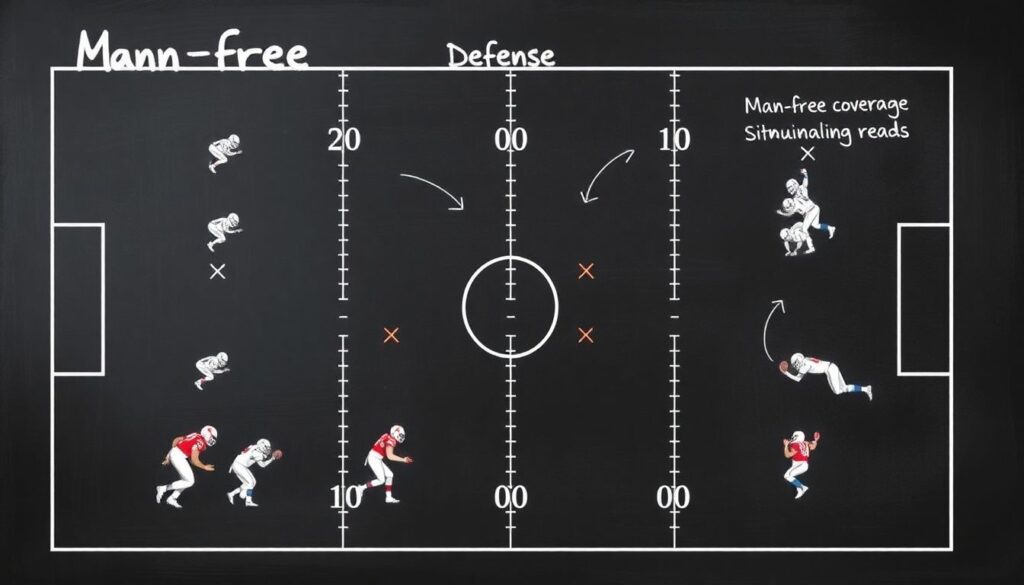
Man‑free coverage never went away, but the way defenses pair it with pressure has changed. Instead of bringing five or six bodies and exposing the secondary, coordinators emphasize simulated pressures: they show a blitz with six or seven at the line, then only rush four while dropping unexpected defenders into coverage. In Cover 1 robber, one safety roams the intermediate middle, reading the quarterback’s eyes and undercutting routes; the other safety caps the deepest threat. Between 2021 and 2023, teams that leaned into simulated pressure in man‑free situations cut their explosive pass rate by around 15–20% on third down while keeping blitz rates modest. The offense sees “zero‑like” stress, but the coverage is actually sound behind it.
The myth is that you need elite island corners to live in Cover 1. Reality: with smart pressure design, you can dictate protections, force the ball out on schedule and give your corners help in the most dangerous areas. It’s less about hero coverage and more about coordinated stress on the quarterback’s processing.
—
5. 4-2-5 Mint/Tite Front: The Anti-Wide-Zone Answer
The 4‑2‑5 with a “mint” or “tite” front—a 4i‑0‑4i structure inside—is one of the biggest schematic stories of the last decade, especially in college. It rose as a direct response to spread offenses built on wide zone and RPOs. The idea is to clog interior gaps with three interior linemen while keeping both edges and both safeties clean. From 2021–2023, FBS teams that major in mint fronts held wide‑zone rush efficiency about 0.10 EPA per play lower than teams playing traditional over/under 4‑man lines, while still living in two‑high coverage. That combination—light box count plus firm interior—is why this front has bled into the NFL. You invite the offense to run, but you control where and how they can do it, forcing runs to spill laterally into fast‑flowing overhang defenders.
Coaches sometimes assume the mint front is “soft” against power and gap schemes. The opposite is usually true: with 4i techniques squeezing down and backers fitting inside‑out, it can be a nightmare for pulling guards to find clean kickout angles.
—
6. 3-3-5 Stack: Flexibility Against Tempo and Spread
The 3‑3‑5 stack is built for chaos. Three down linemen, three stacked linebackers and five DBs make it hard for offenses to find pre‑snap tells. You can spin into nearly any coverage and send pressure from every angle without changing the picture too much. Over the last three FBS seasons through 2023, heavy 3‑3‑5 users held opponents about a full yard per play below national averages on third‑and‑medium, particularly against Air Raid and tempo attacks. The base rule is simple: stack backers over linemen, keep the box light, and build pressure and coverage from the same looks. Because the nickel and boundary safety can both become extra box players, you can jump from six‑man to seven‑man fits in a heartbeat.
A common misconception is that the 3‑3‑5 is just for under‑sized rosters. While it did start as a “have‑not” answer to bigger offenses, top programs now use it because it’s structurally flexible, not just because their nose tackle weighs 270 instead of 320.
—
7. Bear and 46-Inspired Fronts: Choking the Interior
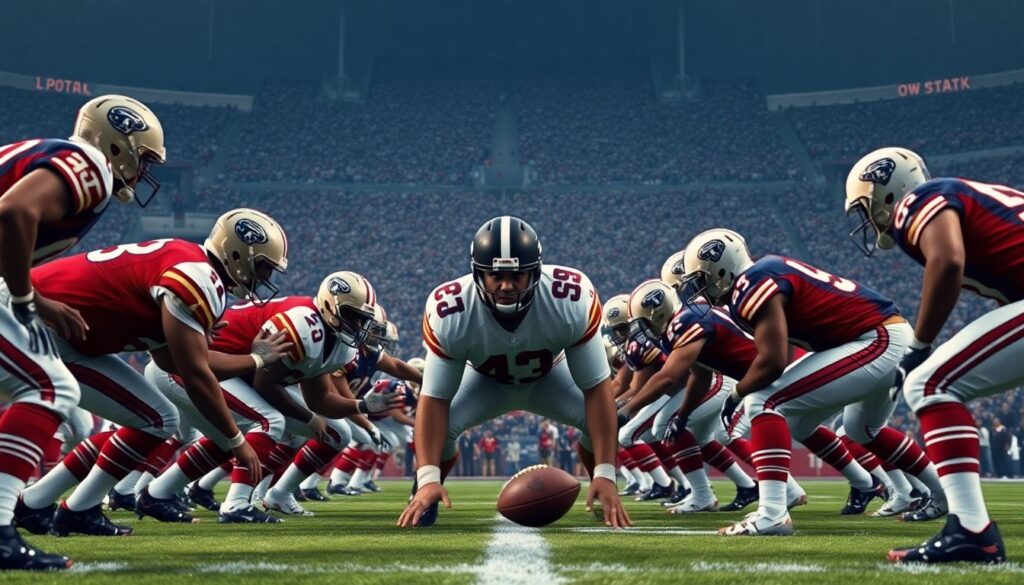
The classic 46 Bear front from the ’80s has found new life in sub‑packages. Today’s bear‑ish looks often walk a linebacker onto the line to cover both guards and the center, essentially locking down all interior gaps. Between 2021 and 2023, NFL teams that used bear fronts in short‑yardage and red‑zone situations held opponents under 3.0 yards per carry and cut rushing TD rates at the goal line by roughly 8–10%. The principle is brutal but elegant: eliminate double teams inside, force the ball sideways, and let fast second‑level defenders run it down. Against elite inside‑zone and duo run games, this is still a primary change‑up. It also pairs well with man‑match coverage outside, daring offenses to win isolated fades and quick outs instead of bullying you between the tackles.
The trap many coaches fall into is over‑using bear as a base call. Live in it too much and offenses will adjust with perimeter screens, jet motion and vertical shots off play‑action. As with Tampa 2, the power is in being selective.
—
8. Fire Zone and Pattern-Matched Zone Blitz
Zone blitz isn’t new, but the details have evolved. The modern “fire zone” world usually means a five‑man pressure with three deep, three under coverage and pattern‑match rules underneath. Rather than spot‑dropping to landmarks, defenders read releases and trade routes, which kept completion percentages on hot throws under 55% from 2021–2023 for aggressive NFL fronts using these concepts. The logic is enticing: you get the benefits of a blitz—potential free rusher, pressure on protection rules—without sacrificing deep integrity. Offenses expecting soft voids in the middle instead find hook players collisioning crossers and seam routes plastered by match defenders. Many DCs now build a whole “how to beat high powered offenses with defense playbook” chapter around these calls, using the same pressure patterns from both single‑high and two‑high shells.
The misconception is that zone blitz is inherently risky. Done well, it can be safer than vanilla four‑man rush with static coverage because the quarterback’s first quick answer is often booby‑trapped.
—
9. Positionless Dime and Amoeba Looks
With the league tilting toward pass, dime packages—six defensive backs—have exploded. The cutting edge is “amoeba” fronts, where defenders walk around at the line of scrimmage without fixed alignments. From 2021–2023, teams that played dime on 30%+ of third‑and‑long snaps held opponents under a 35% conversion rate, even against top‑10 offenses by EPA. The concept hinges on versatility: safeties who can cover the slot and blitz, linebackers who can mug the A‑gaps then drop like nickels, and edges who can peel with backs. The pre‑snap picture looks like chaos, but the post‑snap structure is usually a sound mix of match coverage and simulated pressure. The goal is to break the quarterback’s timing, force protections to guess wrong, and turn obvious passing downs into coin flips in your favor.
The big misunderstanding is that you must have a roster full of unicorns to run this. You do need hybrids, but the real edge is teaching: clear rules about who becomes what after the snap so the chaos is only an illusion for the offense.
—
10. Brackets and Double Teams on Stars
The last scheme isn’t a coverage family so much as a mindset: systematically allocating extra resources to an elite weapon. Bracket coverages—inside‑out or in‑and‑up doubles—exploded in usage against star receivers and athletic tight ends. From 2021–2023, several top defenses cut target share to No. 1 receivers by 5–8 percentage points by pairing brackets with rolling post‑snap disguises; EPA per target against those stars dropped into negative territory, forcing quarterbacks to live with secondary options. The mechanics vary: a corner squats outside while a safety plays inside leverage; a linebacker walls inside on a tight end while a safety caps deep; or a nickel passes a slot inside to a safety while leveraging the outbreaking route. The constant is intentional: if an offense is built around one mismatch, remove it, and make them win left‑handed snap after snap.
Many fans think doubling a star just means “put two guys near him.” The effective brackets are far more choreographed, tying into the whole coverage structure so you don’t spring leaks elsewhere while overplaying one threat.
—
Using These Schemes Together (And Learning Them)
The truth from the last three seasons is that no single call shuts down elite offenses; it’s the blend. The best defenses mix quarters, man‑free, simulated pressure, mint fronts, bear packages and brackets into a cohesive menu that fits their roster. That’s why modern resources matter: instead of hunting random clips, smart coaches look for an online course on modern defensive schemes in football that walks through how fronts and coverages marry together. Others attend a coaching clinic for shutting down elite offenses football staffs run every offseason, where they trade data on how different calls performed on third down, vs. RPO, or in the red zone between 2021 and 2023. If you’re building your own system, it can even be useful to download advanced defensive football playbook pdf examples just to study how elite teams organize language and teaching progressions, then adapt the ideas to your personnel.
One last misconception to clear up: scheme alone doesn’t create stops. The numbers from the last three years all point the same way—when structure, disguise and tackling fundamentals align, explosive offenses become manageable. When they don’t, even the trendiest call sheet gets shredded.