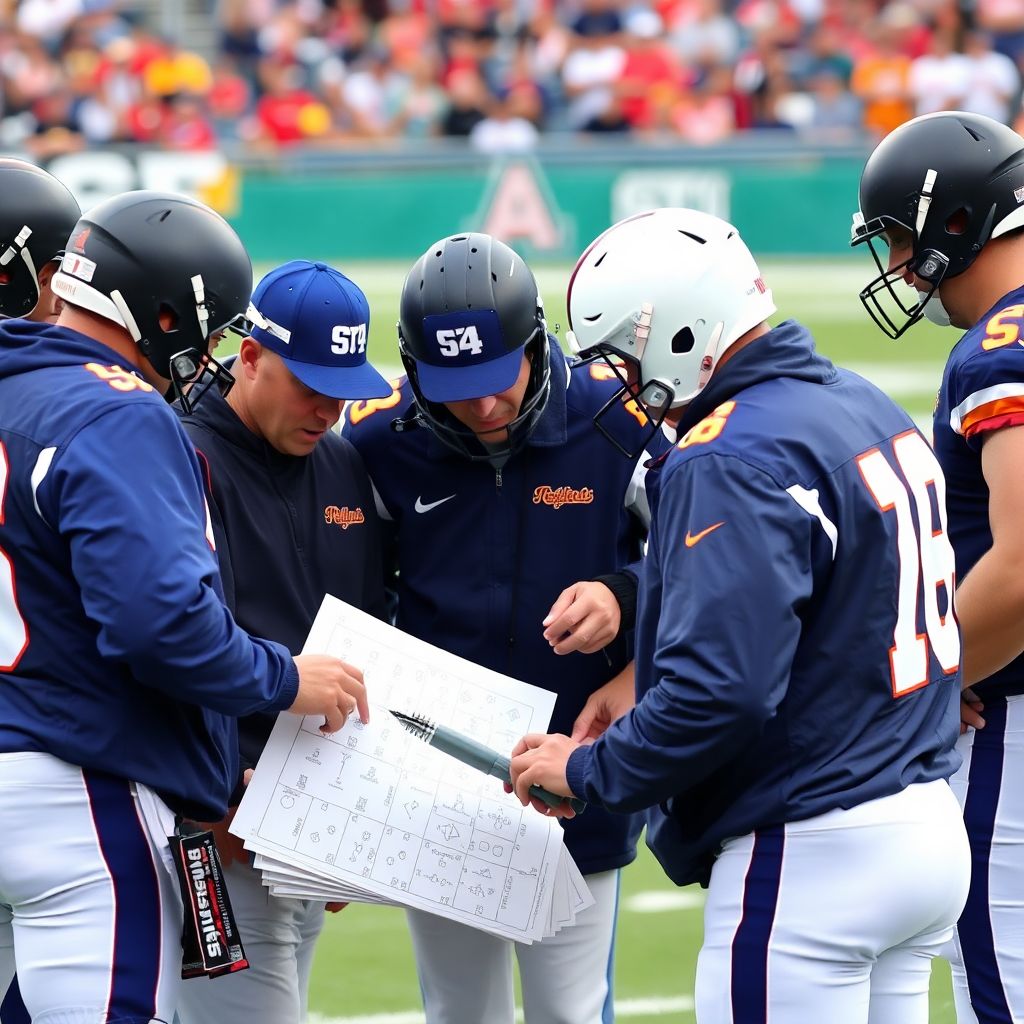
Neutralizing star quarterbacks requires layered disruption: disguise structure pre-snap, attack protection rules not people, marry rush with coverage, and carry a simple, practiced adjustment menu. This guide turns a defensive coordinator playbook vs passing offenses into practical calls, clear rules, and drills that are safe, teachable, and repeatable under pressure.
Core Defensive Playbook Overview
- Build a small family of pressures, coverages, and simulated rushes that look the same pre-snap but play differently after the snap.
- Prioritize rush-lane integrity and contain rules so elite quarterbacks cannot extend downs with easy scramble throws.
- Pair every pressure with a complementary coverage answer, especially versus empty, bunch, and condensed splits.
- Use rotations and brackets as your best NFL defensive strategies against top quarterbacks, not just more blitz volume.
- Install clear situational templates: third down, red zone, two-minute, and backed-up all live in their own call families.
- Practice turnover creation explicitly: punch-outs, trap drops, and vision breaks are coached, not accidental.
- Rep quarterback containment drills for defensive coordinators every week so edge, spy, and second-contain rules are automatic.
Pre-snap Disruption: Schemes to Unsettle Elite Quarterbacks
This section fits coordinators who already run sound base structure and want to add disguise and late movement. It is ideal when your back seven communicates well and your front can align and realign quickly. Avoid heavy pre-snap chaos with very young defenses or units that already bust basic coverages.
Use this as a practical lens for how to stop elite quarterbacks defensive schemes without overcomplicating the call sheet.
| Scheme / Tool | Primary Objective | Best Situations to Call |
|---|---|---|
| Static Shell, Late Rotation (2-high to 1-high) | Change post-snap picture, disrupt QB progression timing. | Early downs vs heavy play-action and RPO teams; long field. |
| Simulated Pressure (4 rushers, 7 in coverage) | Force quick decisions and hot throws without blitz risk. | Third-and-medium; must-pass downs where you fear shot plays. |
| Double Mug (LBs in A-gaps, bail or come) | Stress protection ID and force slide the way you want. | Obvious pass; center sets the protection for a young QB. |
| Drop-8 Cloud / Bracket | Take away first read of star WR and make QB hold the ball. | Third-and-long, red zone vs elite WR1, must-protect leads. |
| Edge Sim + Spy | Keep mobile QBs in the pocket while muddying reads. | Versus scramble-heavy QBs; two-minute drives; third-and-4 to 7. |
Guidelines for practical pre-snap disruption:
- Show one of two base looks (for example, two-high Quarters shell or one-high MOFC), rotate to three total post-snap pictures.
- Assign one “calm communicator” on each level (DL, LB, DB) who confirms strength, motion rules, and any cross calls.
- Use simple, one-word tags to shift in and out of simulated pressures without changing the front entirely.
- Allow only one moving part per call on Sundays: either safety rotation, or pressure, or special bracket – not all three for intermediate-level players.
Pass-rush Architecture: Timing, Angles and Matchup Prioritization
This is about building pass-rush layers that marry with coverage, not just sending more bodies. You will need:
- Baseline four-man rush plan: a clear menu (edge, game, interior) vs pocket passers and mobile QBs.
- Front multiplicity: ability to stem from even to odd, or walk up backers into mug looks without blowing fits.
- Film-backed matchup board: weekly list of favorable rush matchups (for example, your 3-tech vs their LG, speed end vs RT).
- Rush-lane rules: every defender knows if they are contain, cage, second-contain, or inside escape control.
- Pressure tags: 3-5 simple words that turn base looks into creepers or sims.
Implementation checklist for a defensive coordinator playbook vs passing offenses:
- Define four standard rush patterns:
- Base: both edges contain, tackles push pocket.
- Game: one side runs a simple T-E or E-T stunt.
- Cage: edges compress, tackles contain inside escapes.
- Mush: all rushers mirror QB depth, no upfield past heels.
- Tag mobile-QB rules: add “Cage” or “Mush” to any pressure versus quarterbacks who hurt you outside the pocket.
- Designate a spy package: especially in two-minute and third-and-medium; coach spy to mirror hips, not eyes.
- Align rush with coverage: avoid running long-loop games behind heavy man coverage that turns defenders’ backs.
- Teach landmarks: edges aiming for upfield shoulder, interior for near pec; finish through the throwing arm, not just the tackle.
Coverage Blueprints: Layered Concepts for Pocket and Mobile QBs
This is the step-by-step “how to” layer advanced coverage schemes for shutting down star QBs while still staying install-friendly. The goal is to keep the picture simple for your players and complex for the quarterback.
- Classify the quarterback and primary threats.
Decide: pocket surgeon, timing rhythm thrower, off-script creator, or dual-threat. Identify top two route targets (WR1, TE, RB checkdown) by down and distance.
- Use film cut-ups to tag concepts: slant-flat, dagger, smash, four verts, mesh, and favorite screens.
- Build a simple “if star here, expect this” chart by formation and motion.
- Select your base coverage family.
Choose one parent structure per week that most of the plan lives in (for example, Quarters/Palms, Cover 3 match, or split-field with rotation). This keeps communication tight while still allowing advanced coverage schemes for shutting down star QBs.
- Pocket surgeons: more split-field match and bracket tools.
- Scramble-heavy: more vision, zone-match with eyes on QB.
- Build three “answers” off the same shell.
From the same pre-snap look, carry a spot-drop zone, a match coverage, and a bracketed version. Install identical alignments to disguise intent.
- Example shell (2-high): Quarters, Palms to field, Double on WR1.
- Example shell (1-high): Cover 3 buzz, 3 match, 1-double star.
- Assign brackets and double teams by situation.
Decide when the star gets doubled (for example, third-and-6+, red zone between the 12 and 5). Make sure the double has a name and is tagged into base calls, not its own world.
- “Lock” – man outside, trail inside leverage.
- “Cone” – in-out bracket from slot and safety.
- “Cut” – low inside robber under in-breakers.
- Fit coverage to rush and QB escape lanes.
Against mobile QBs, lean on coverages that keep second-level eyes inside while edges control upfield. Use buzz, robber, and spy help instead of constant zero blitz.
- Call “Spy 3 Buzz” or “Spy 2 Robber” as default in long drives.
- Avoid turning your back in man vs elite scramblers on third-and-medium unless the spy is exceptional.
- Install communication rules for motions and bunch.
Use three base tools: in-and-out, lock-and-level, and zone it. Simple words, same rules every week, regardless of opponent.
- “In-out” for two-man stacks and slots.
- “Box” four-on-three vs bunch and stacks.
- “Alert crossers” tag on mesh and shallow-heavy teams.
Fast-track coverage build for game week
- Day 1: Choose one base shell plus two change-ups; define when each is called by down and distance.
- Day 2: Add two brackets on star WR and one spy call vs QB runs/scramble.
- Day 3: Rep motions, bunch, and condensed splits using those same calls only.
- Day 4: Two-minute and third-down script with full-speed communication and substitutions.
In-game Adjustments: Identifying Tendencies and Forcing Turnovers
Use this sideline checklist to validate that your plan is working and to guide safe adjustments mid-game:
- Are explosive plays (shots, deep overs, double moves) coming from specific formations or motions you did not tag in the plan?
- Does the QB’s time-to-throw feel faster than on film (ball out quick) or slower (holding for deeper routes)?
- Are you winning the rush-lane battle: no easy escape lanes, no free scrambles on third-and-long?
- Have you forced at least one “tight-window decision” on a bracketed star, even if not picked yet?
- Is there a route or concept they have spammed three or more times without an answer from you?
- Are your pressures creating hits, hurries, or free runners – or only vacating zones?
- Is tackling under control: no reckless shots to the head/neck, clean finish on quarterbacks within the rules?
- Has your sideline communication kept up with tempo and formation variety, or are late alignments creeping in?
- Can you name one realistic takeaway opportunity in the next quarter (trap drop, jump slant, screen alert) based on their tendencies?
Situational Protocols: Third-down, Red Zone and Late-Clock Templates
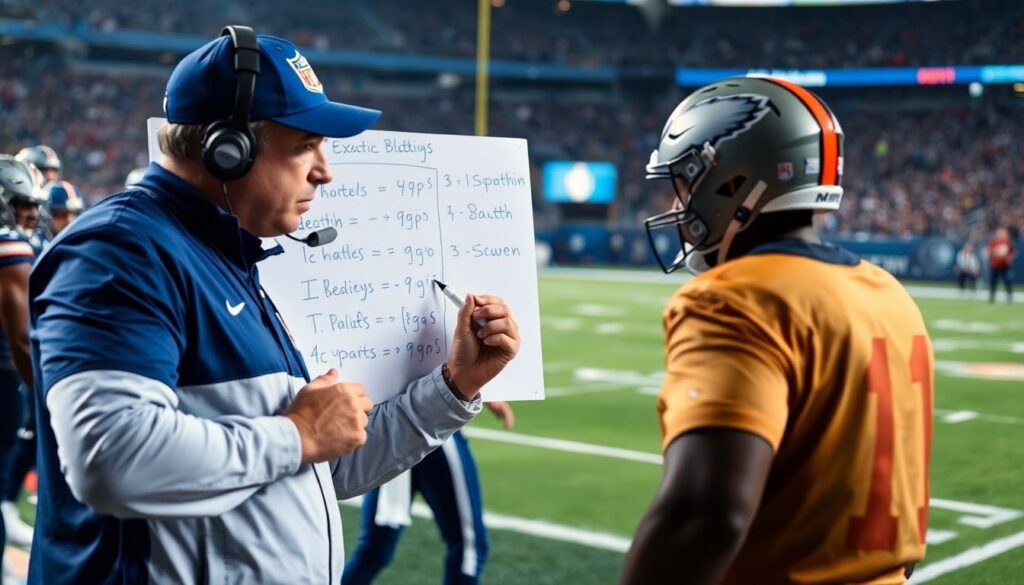
These are frequent mistakes coordinators make when designing what they believe are the best NFL defensive strategies against top quarterbacks in critical situations:
- Calling entirely new, exotic pressure packages on third-down that players have hardly repped during the week.
- Blitzing red zone every time instead of mixing match coverage and brackets that force tight throws into short windows.
- Playing off and soft on third-and-short, gifting easy access throws instead of crowding the sticks with vision coverage.
- Busting leverage on pick and rub routes in the low red zone because bunch and stacks were not drilled specifically.
- Overusing man-free versus elite running quarterbacks in late-clock situations, leading to scramble conversions.
- Getting too conservative in two-minute, sitting in predictable spot-drop zones and letting the QB operate on air.
- Failing to communicate foul-aware coaching (no cheap shots, smart holding instead of giving up six in emergencies).
- Ignoring the back on third-and-medium, allowing easy checkdowns to move the chains when deep routes are covered.
- Using the same third-down plan against all personnel groupings instead of having separate tags vs 11, 12, and empty.
Personnel & Practice: Drills, Roles and Roster Construction for execution
When your roster is not built like a top-end NFL unit, adapt your defensive coordinator playbook vs passing offenses using these alternative approaches:
- Coverage-first, rush-by-design model.
If you lack dominant edge rushers, invest in coverage versatility: more split-field looks, simulated pressure, and drop-eight change-ups. Force QBs to hold the ball for your effort and games to get home rather than pure speed rushers.
- Pressure identity with simple backend.
If your DB group is average but you have fast linebackers and safeties, lean on fire zones, creepers, and five-man pressures with three-deep, three-under rules. Teach landmark zones and clear hot rules to avoid busted coverages.
- Size-and-vision zone team.
If your strength is size and physicality, major in vision-based zones with heavy reroute and tackle emphasis. Make every throw contested and punish in-breakers cleanly within the rules.
- Hybrid spy-and-cage unit vs mobile QBs.
When facing dual-threats and you lack speed across the board, build a “cage” package with a designated spy, plus conservative match coverage. Rep quarterback containment drills for defensive coordinators daily so every player knows their level of the cage.
Practice progressions and safe drill ideas
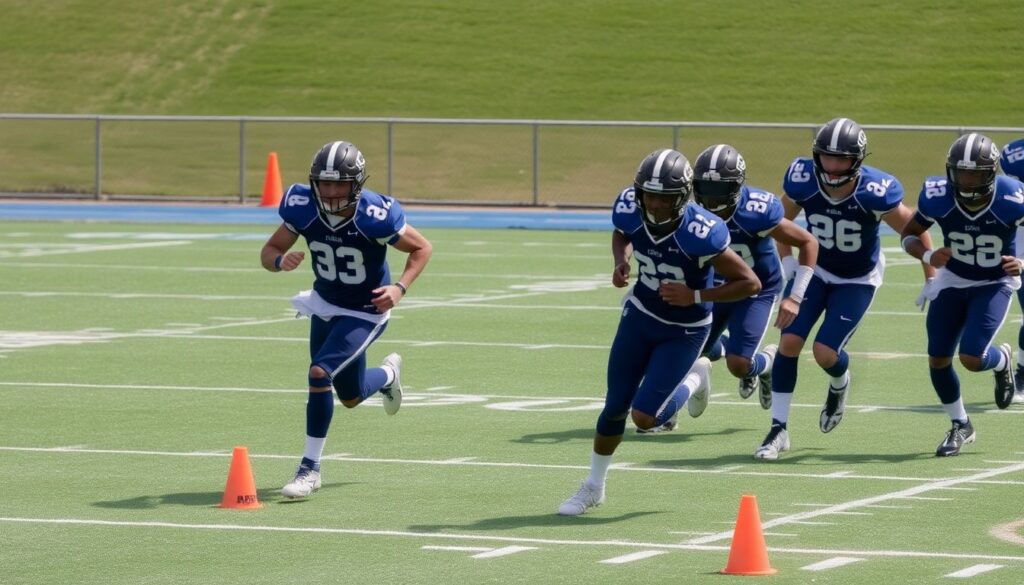
- Rush-lane circuit: four cones marking rush lanes; DL and LBs work contain, cage, and mush rush at jog tempo, finishing with “wrap, not slam” on a pad or dummy to model safe QB contact.
- Coverage shuffle and break: DBs and LBs align in shell, rotate on command, then break on coach’s hand signal. Stress eyes, leverage, and no-contact on receivers in walk-through tempo first.
- Screen and draw recognition period: front reads high-hat/low-hat, OL release, and back sets. Intentionally avoid cutting or diving; emphasize pursuit angles and fit leverage.
- Turnover takeaway circuit: punch-outs on bags, tip-drill for DBs, secure-catch and immediate “get down” coaching to avoid reckless lateral attempts.
Typical Tactical Questions and Concrete Fixes
How do I simplify calls while still disguising coverages?
Use one parent structure (for example, Quarters or Cover 3) and build two to three tags that change only one job each. Keep the shell the same pre-snap and vary who is the flat player, post safety, or bracket help.
What is the safest way to pressure star quarterbacks on third-and-medium?
Lean on simulated pressures and four-man creepers, not all-out blitz. Rush four, drop seven in match coverage, and attack protection rules by bluffing one side and bringing pressure from the other.
How can I limit scramble explosives without losing coverage integrity?
Designate a spy in specific calls and coach “cage” rush rules so edges do not run past the quarterback. Pair this with vision coverages (3 buzz, 2 robber) keeping eyes on the QB instead of constant back-turned man.
What should I major in if my corners are average but smart?
Run more split-field match and pattern-match zones that use help defenders rather than pure island coverage. Teach leverage, route recognition, and safe collision rules at the break point instead of relying on recovery speed.
How do I attack quick-game specialists who get the ball out fast?
Reroute receivers at the line, take away first reads with brackets, and rotate safeties late into slant and glance windows. Combine this with underneath droppers baiting quick throws into trap coverage.
What practice structure helps these plans show up on game day?
Script daily periods for third-down, red zone, and two-minute using the exact call menu you will take to the game. Finish with a fast “call it and play it” period so players execute without relying on the script.
How many different coverages should I carry against a top quarterback?
Carry one base family plus two change-ups and one or two bracket tools. The key is volume of quality reps, not volume of calls; players must know the answers better than the quarterback knows his progressions.