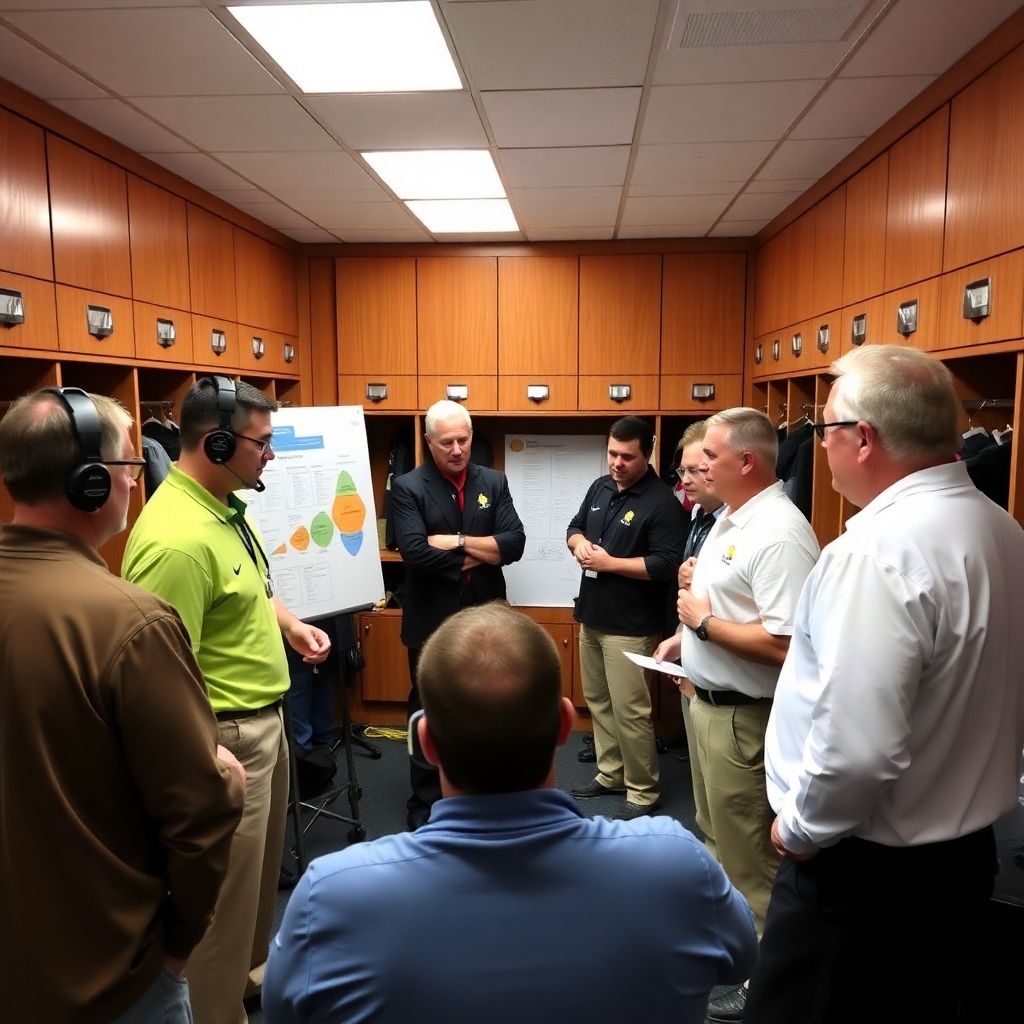
Turning an underdog college football program into a consistent contender requires aligned culture, targeted recruiting, intentional coaching development, disciplined resource allocation, and smart scheduling. This guide breaks the process into safe, practical steps athletic directors, coaches, and administrators can execute, with built-in risk checks so growth is sustainable instead of a one-season spike.
Core Drivers Behind Breakout Programs
- Clear identity that shapes culture, recruiting, scheme, and fan messaging from day one.
- Disciplined talent strategy that fits your level, geography, and academic profile, not someone else’s.
- Coaching models that prioritize player development, staff continuity, and documented systems.
- Budget, facilities, and NIL activity aligned with a multi-year plan instead of short-term splurges.
- Schedules and conference choices that stretch the team competitively without destroying confidence.
- Simple, repeatable analytics and player pathways that make each roster class a little stronger than the last.
Building a Winning Culture from Day One

This playbook suits athletic departments, head coaches, and operations staff at emerging or rebuilding programs, especially in the FCS and Group of Five tiers, or ambitious Division II/III schools. It is less suitable if leadership turnover is constant, institutional backing is minimal, or survival (not growth) is the only realistic short-term goal.
Define culture as what actually happens in your program under pressure: on third-and-long, during finals week, after a tough loss, and in the off-season. The rise from underdog to powerhouse begins when those moments are governed by clear standards instead of emotion or tradition for tradition’s sake.
Start with three non‑negotiables that every stakeholder can repeat in one sentence. For example: relentless effort, academic reliability, and unselfish play. Tie staff evaluations, playing time, and even facility access to these behaviors so they are real, not poster slogans.
Case vignette – Emerging mid‑major: A resource-constrained program publicly adopted an identity around toughness, tempo, and local pride. Every decision-from walk-on tryouts to how they sell college football merchandise for emerging teams-reinforced those three pillars, making it easy for fans, recruits, and donors to understand what the program stood for.
Recruiting Strategies for Programs with Limited Cachet
When you do not have brand power, your recruiting advantage must come from clarity, access, and organization rather than stars and hype. The tools and foundations below are the minimum needed to compete intelligently for your level of player.
Core requirements and infrastructure
- Accurate, shared player database. A simple, centralized system (even a well-structured spreadsheet or low-cost recruiting platform) where the whole staff tracks prospects, contacts, evaluations, and visit status.
- Film and data access. Affordable video services, regional high school game film, and basic athletic testing numbers. Your staff does not need fancy analytics to recognize speed, change of direction, and verified size.
- Geographic focus maps. A map of primary, secondary, and opportunistic recruiting regions that fits your travel budget and alumni footprint. Prioritize clusters where you can repeatedly visit and build relationships.
- Academic and admissions coordination. Clear standards and early pre‑reads from admissions to avoid wasting time on prospects who will not clear your institutional bar.
- Creative communications channels. A consistent presence on social platforms allowed by NCAA rules, plus regular contact with high school and junior college coaches through clinics, visits, and phone calls.
Tactical recruiting approaches that fit underdogs
- Build your roster spine locally. Target offensive and defensive linemen, quarterbacks, and safeties close to home where you can verify character and work ethic, then chase speed nationally where needed.
- Exploit market inefficiencies. Look hard at multi‑sport athletes, late bloomers, and players slightly undersized for major programs but perfect for your scheme.
- Lean into development promises you can keep. Show prospects exactly how you have developed similar players-position plans, weight-room progression, and playing time pathways-rather than big promises about national exposure.
Case vignette – Undervalued QB pipeline: One program intentionally recruited accurate but under‑recruited high school quarterbacks who excelled in basketball as decision-makers. Their reputation for developing these players attracted a specific kind of recruit, even without national name recognition.
Coaching, Development, and Retention Models
Coaching stability and a shared teaching language are often what separate a one‑off breakout season from a sustained rise. Instead of chasing trendy schemes, build a system that any new assistant can plug into without rewriting the whole playbook.
Risk checks before you implement these steps
- Confirm you have written job descriptions and decision rights for each staff role to avoid power struggles.
- Verify your budget can support at least modest professional development for assistants each year.
- Ensure your head coach is willing to document systems, not keep everything in a personal notebook.
- Clarify with administration how success will be measured beyond wins-academics, conduct, and retention included.
- Align on what happens if a key assistant is poached; have a succession outline, even if informal.
-
Codify your football philosophy in writing
Document offensive, defensive, and special teams principles in a short manual: how you want to win games, what you will not compromise, and how that connects to your culture. Share this with all staff so recruiting, scheming, and in‑game decisions pull in the same direction.
-
Build a unified teaching language
Standardize terminology across positions and units. When a term like “leverage” or “finish” means the same thing to linemen, receivers, and defensive backs, your practices and corrections become far more efficient.
- Audit current drills and calls; remove duplicate or confusing terms.
- Create a simple glossary for players and new assistants.
-
Design a year‑round player development calendar
Lay out a twelve‑month plan covering strength and conditioning, skill development, scheme install, and recovery windows. Make each phase realistic for your academic calendar and facilities access.
- Off‑season: strength, speed, and movement mechanics prioritized over scheme volume.
- Preseason: situational football (red zone, third down, two‑minute) and communication.
- In‑season: weekly “get better” periods for young players who are not playing much.
-
Install feedback loops for players and staff
Use short, regular check‑ins rather than annual reviews. Players should know exactly where they stand and what earns more opportunity; assistants should receive specific feedback tied to film, recruiting results, and player growth.
-
Create retention plans for key assistants
Assume that if you succeed, other schools will call your coaches. Proactively outline title growth, responsibility expansions, and non‑financial benefits (family scheduling flexibility, recruiting territories) that make staying attractive even if salary gaps exist.
-
Systematize knowledge so departures do not set you back
Archive playbooks, drill libraries, cut‑ups, and recruiting notes in shared locations. No single coach should control critical information. This reduces risk when hiring replacements and keeps your identity stable as staff change.
Case vignette – Staff continuity win: After losing a successful coordinator, an underdog program promoted from within and barely changed terminology or base concepts. Because the system, not one personality, drove development, the transition was smooth and performance actually improved.
Funding, Facilities, and Smart Resource Allocation
Most emerging programs cannot outspend powerhouses, but they can out‑prioritize them. Use this checklist to see whether your resources truly support a rise from underdog to consistent winner.
- Budget allocations clearly prioritize player health, nutrition, and recovery over cosmetic upgrades.
- Your weight room schedule allows full, uninterrupted sessions for football, even when sharing with other sports.
- Travel plans minimize missed class time and avoid exhausting turnarounds where possible.
- Fundraising campaigns communicate specific football needs and outcomes, not vague “support the program” messages.
- Any NIL‑related support is transparent, compliant, and focused on education rather than unrealistic promises.
- Facility upgrades are tied to measurable benefits (practice efficiency, recruiting impressions, safety) instead of trends.
- Vendors and service contracts are periodically reviewed to confirm you are paying for what actually improves performance.
- A portion of new revenue from attendance, college football merchandise for emerging teams, and media is earmarked for long‑term investments, not just plugging short‑term holes.
- Emergency contingencies exist for unexpected costs, like equipment replacement or travel disruptions.
Case vignette – Smart investment choice: Faced with a choice between a new locker room aesthetic and expanding the nutrition program, one program chose nutrition. Players’ buy‑in and performance improved, and donors later funded the cosmetic work after seeing the on‑field impact.
Scheduling, Conference Alignment, and Strategic Matchups
Scheduling and conference decisions can either accelerate your rise or create years of frustration. The goal is to stretch your team just enough to grow, without demoralizing players and fans or putting the budget at risk.
Common missteps that stall emerging programs
- Overloading “paycheck games.” Taking too many early‑season guarantee games against elite opponents can lead to injuries, blowouts, and a narrative that you cannot compete, even if the money helps short term.
- Jumping conferences prematurely. Moving up without adequate depth, facilities, or travel funding often results in years of losses that hurt recruiting and fan engagement.
- Ignoring rivalry and regional interest. Skipping traditional or potential rivalries in favor of random opponents can depress attendance and local media interest, even if the matchup looks attractive on paper.
- Chasing television exposure at all costs. Agreeing to midweek or late‑night kickoffs mainly to stream college football games live online might damage student attendance, player recovery, and academic routines.
- Neglecting home scheduling balance. Too few home games-or unattractive opponents-make it harder to sell tickets for college football underdog games and grow your base, even as results improve.
- Underestimating travel strain. Long trips, tight connections, and repeated time‑zone shifts can cost you in late‑game execution and player wellness, especially with smaller support staffs.
- Scheduling mismatch for your identity. Pass-heavy teams opening in bad‑weather venues or tempo teams facing a string of physical, depth‑heavy opponents can look worse than they are, hurting confidence and narratives.
Case vignette – Thoughtful schedule rebuild: A rebuilding program reduced the number of elite “money games,” added two winnable regional matchups, and targeted one national-profile opponent. The resulting mix produced competitive games, modest revenue, and a more optimistic locker room.
Performance Analytics, Player Pathways, and Sustainability Metrics
Not every program will become a national powerhouse, but almost any can become a respected, consistent winner in its tier. The key is choosing a growth path that fits your context, monitoring progress with simple metrics, and avoiding comparisons to schools with entirely different resources.
Alternative growth paths and when they fit
-
Regional contender model
Focus on dominating your geographic footprint in recruiting, media coverage, and fan engagement. Ideal for schools whose budgets and facilities match mid‑tier conference peers but whose leadership wants a clear identity and consistent bowl or playoff appearances.
-
Developmental pipeline model
Position the program as a place where under‑recruited or transfer players blossom into top performers. Use verifiable stories and simple stats instead of promising quick fame, especially for prospects who might be tempted by college football betting tips for underdog teams narratives around “upset specials.”
-
Academic and character flagship model
Emphasize education, community impact, and professional outcomes beyond football. Works best where institutional reputation is strong, admissions is collaborative, and you can show that your players graduate and succeed after football.
-
Fan‑centric experience model
Invest in game‑day atmosphere, band, traditions, and community events so home games become must‑attend experiences regardless of record. This can stabilize revenue from attendance, local sponsorships, and college football merchandise for emerging teams while on‑field performance catches up.
For any path, track a small set of sustainability metrics: player retention year over year, competitive balance in conference play, graduation and eligibility rates, injury trends, and fan engagement trends across attendance, viewing, and digital channels. These are more predictive of long‑term success than a single breakout season.
Case vignette – Sustainable rise: A former doormat program accepted that its realistic ceiling was consistent conference contention, not national dominance. By tightening recruiting geography, solidifying coaching systems, and focusing on a memorable fan experience, it achieved regular winning seasons and sold-out crowds without overstretching finances.
Practical Concerns, Objections, and Fixes
How long does it realistically take for an underdog program to become a contender?
Timelines vary widely, but building a stable, competitive identity usually takes multiple recruiting classes under the same leadership. Aim first for visible improvement in discipline, effort, and competitiveness before expecting conference titles or national rankings.
What if our administration will not significantly increase the football budget?
Refocus on low‑cost, high‑impact moves: better organization, clearer culture, smart scheduling, and targeted recruiting geography. Demonstrate measurable gains with current resources to build a stronger case for future investment.
How do we keep successful coaches from being hired away?
You cannot prevent ambition, but you can improve retention by offering clear growth paths, professional development, and family‑friendly work structures. Systematize your playbooks and processes so departures hurt less and internal promotions become realistic.
Is heavy use of analytics necessary for emerging programs?
No. Start with simple, reliable metrics: explosive plays, third‑down performance, red‑zone efficiency, and player retention. As capacity grows, add more advanced tools, but never at the expense of film study and on‑field teaching.
How do we grow a fan base when we are not winning yet?
Invest in game‑day experience, accessibility, and storytelling around players and coaches. Highlight local connections, create family‑friendly events, and make it easy for fans to follow and stream college football games live online through legitimate platforms that carry your contests.
What role do media, odds, and betting narratives play in our strategy?
Use media exposure primarily to showcase your culture, player development, and academic profile. While fans may look up the best sportsbooks for college football odds or hunt for college football betting tips for underdog teams, your focus should remain on responsible messaging and on‑field performance, not gambling storylines.
How can we monetize momentum without distracting from football priorities?
Channel new interest into sustainable revenue: better attendance, alumni giving, and tasteful college football merchandise for emerging teams. Protect player time and health by coordinating with marketing and external affairs so promotions support, rather than disrupt, preparation and recovery.