
A solid gameday routine runs from sleep and breakfast to tactical review, warm-up, and focused arrival at the stadium. You set wake-up, meals, mobility, and mental cues on a schedule that matches kickoff time. The goal is simple: feel calm, fueled, loose, and tactically sharp when the whistle blows.
Core Performance Pillars for Match Morning
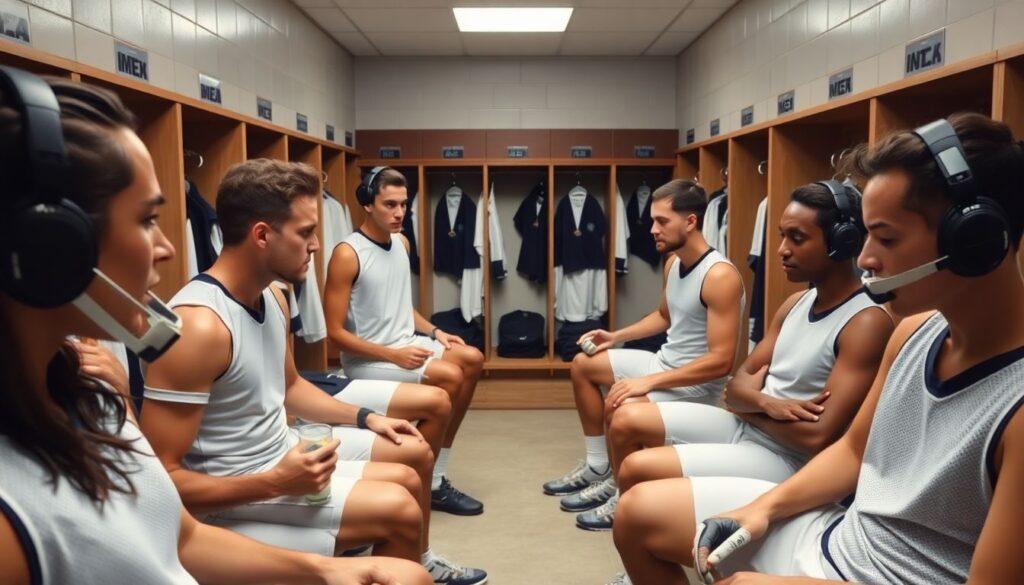
- Plan backward from kickoff: fix wake-up time, meal windows, travel, and warm-up blocks.
- Prioritise stomach-friendly carbs, steady hydration, and only tested supplements.
- Use short, repeatable mental preparation techniques for athletes before a game.
- Activate, not exhaust: 20-40 minutes of progressive movement and ball work.
- Manage load with short naps and light mobility, not hard training.
- Run a simple gameday gear and equipment checklist for football players to remove stress.
Pre-dawn Routine: Sleep, Wake-up Timing, and Mental Reset
This window matters most for early kickoffs or travel days. It suits players who already protect their sleep and want finer control over match-morning energy. Skip extra pre-dawn tactics if you are severely sleep-deprived; in that case, prioritize one more sleep cycle over fancy routines.
Use these gameday preparation tips for football players to frame the night and early morning:
- Anchor bedtime the night before – Aim to get into bed early enough to wake naturally 7-9 hours later. Keep screens low and lights dim to fall asleep faster.
- Set wake-up based on kickoff – A simple rule is to wake 6-8 hours before kickoff for daytime matches, giving room for two meals, mobility, and travel without rushing.
- Gentle wake-up, no adrenaline spike – Use a quiet alarm, open curtains, and start with 5-10 minutes of light stretching or a short walk, not social media or intense news.
- Early mental reset – Spend 3-5 minutes on calm breathing (inhale through nose, slow exhale through mouth) and one clear intention for the match, such as “win duels” or “communicate early and often.”
- When to skip extras – If travel or late-night games cut sleep, drop everything except: wake, light stretch, breakfast, and hydration. Sleep is the main performance tool at that point.
For players building a football pre game routine for peak performance, the priority is consistency: go to bed and wake at roughly the same times across the whole week, not only on match day.
Morning Fuel: Precise Nutrition and Hydration Timeline

To turn match morning into reliable energy, you need a few basics ready the day before. This is where the best nutrition and supplements for game day athletes are simple, tested, and familiar to your stomach.
Prepare or secure:
- Accessible carbs – Oats, toast, rice, pasta, fruit, or sports drinks you know sit well in your gut.
- Moderate protein sources – Eggs, yogurt, lean meat, or plant protein you already use in training weeks.
- Low-fiber, low-fat options – To reduce stomach issues close to kickoff; avoid trying new heavy or spicy foods.
- Fluids and electrolytes – Water bottle, light electrolyte mix or sports drink, especially in heat or humidity.
- Only familiar supplements – Caffeine, creatine, or others you have tested in practice, never first used on a match day.
- Kitchen or access plan – Confirm hotel breakfast times, home ingredients, or team meal schedule so you are not hunting for food last minute.
A simple timeline that many players follow:
- First drink on waking (5-10 minutes after getting up) – A glass of water; add electrolytes if you tend to cramp or sweat heavily.
- Main breakfast (3.5-4 hours before kickoff) – Carbs plus moderate protein, low fat and low fiber. Example: oatmeal with banana and yogurt, or toast with eggs and fruit.
- Top-up snack (90-120 minutes before kickoff) – Easy-to-digest carbs: a banana, small sandwich, rice cakes with honey, or a sports drink.
- Final sips (up to 30 minutes before warm-up) – A few small sips of water or diluted sports drink, not full bottles that sit in your stomach.
If you use caffeine, time it about 45-60 minutes before kickoff in a dose you already know your body tolerates.
Dynamic Warm-up and Activation: 20-40 Minute Protocols
This block covers what many players consider the core of a football pre game routine for peak performance: the 20-40 minutes that turn you from “slightly sleepy” to “ready to sprint and think fast.” Adjust volume for starters versus substitutes and for position demands.
-
General pulse-raise (3-5 minutes) – Aim for light sweating, not fatigue, using jogging or skipping.
- Jog the width/length of the pitch at easy pace.
- Add side shuffles and gentle backpedals, staying in control.
-
Dynamic mobility (5-8 minutes) – Use controlled, continuous movements rather than long static holds.
- Leg swings front-to-back and side-to-side, ankle circles, hip openers.
- Walking lunges with rotation, inchworms, and arm circles for shoulders.
-
Activation and stability (5-8 minutes) – Wake up hips, core, and key joint stabilizers.
- Mini-band walks, glute bridges, and single-leg balance touches.
- Short plank holds and side planks for trunk stability.
- For keepers: extra shoulder stability and landing mechanics in low jumps.
-
Acceleration and deceleration (5-8 minutes) – Shift from smooth movement to game-speed changes.
- 3-5 short accelerations (10-20 m) building from 60% to 85-90% effort.
- Quick deceleration and cut drills, staying low with good body angle.
- Defenders and midfielders: add lateral shuffles into forward sprints.
-
Ball work and position-specific actions (7-10 minutes) – Connect warm-up to your actual role.
- All players: crisp one- and two-touch passing, quick rondos, first-touch cues.
- Forwards and wingers: finishing patterns, near-post runs, and 1v1 moves.
- Central midfielders: receiving under pressure, turning both ways, long passes.
- Defenders: clearances, heading technique, and communication on line shape.
- Goalkeepers: handling, diving, crosses, and distribution under light pressure.
-
Short sharpness burst (2-4 minutes) – Finish with a few high-intent actions, not extra volume.
- 2-3 near-max sprints over 10-15 m with full focus on technique.
- One or two “game-speed” combinations relevant to your team’s game plan.
Fast-track Match Morning Routine (When Time Is Tight)

Use this fast-track version when travel or scheduling compresses your morning but you still want safe, structured steps from sunrise to kickoff.
- Wake, drink, and breathe (10 minutes) – Wake 4-5 hours before kickoff if possible, drink water, and do 3 minutes of calm breathing plus light stretching.
- One solid meal (3-3.5 hours pre-kickoff) – Simple carbs plus some protein, low fat and low fiber. Then sip water regularly.
- Travel early with a checklist – Leave enough time so you arrive at the stadium at least 75-90 minutes before warm-up, using a small gear checklist to avoid forgetting boots or shin guards.
- Condensed warm-up (15-20 minutes) – 3 minutes easy jog, 5 minutes mobility, 5 minutes activation and accelerations, 5 minutes fast ball work and 1-2 sprints.
- Final mental cue (2 minutes) – On the sideline, repeat one clear role cue (for example, “win first ball” or “open for the pass”) and one breathing cycle before stepping on.
Tactical Sharpness: Efficient Review, Visualisation, and Role Cues
To sharpen decision-making without overthinking, keep tactical work short and specific. Build it around your position and your coach’s game plan rather than random clips. Use this checklist to confirm you are mentally ready:
- You can state your top three tasks in and out of possession in one sentence each.
- You have watched or recalled 3-5 clips or scenarios that match today’s opponent or tactics.
- You have rehearsed 2-3 “first actions” in your mind (first duel, first pass, first run).
- You can name 1-2 pressing or defensive triggers you will react to instantly.
- You have a simple restart plan: where you stand and what you look for on set pieces.
- You visualise 2-3 successful plays from your own past matches, not only highlight reels of other players.
- You have one in-game reset routine (for example, deep breath plus quick self-cue) for when mistakes happen.
- You’ve aligned with at least one teammate before the warm-up about communication and signals.
These are practical mental preparation techniques for athletes before a game: short, repeatable, and anchored to real actions instead of long motivational speeches.
Load Management and Micro-recovery: Naps, Contrast, and Soft-tissue Work
This part is about avoiding the trap of “doing more” on match day. Overloading with extra workouts, long static stretching, or new recovery tools can leave you flat. Watch for these frequent mistakes:
- Taking long daytime naps that leave you groggy or make night sleep worse.
- Doing heavy lifting, intense conditioning, or long pickup matches on the same day as a competitive game.
- Spending too long in hot baths or saunas close to kickoff, which can dehydrate and drain energy.
- Using aggressive new massage or tools for the first time on match day instead of testing them in training weeks.
- Holding deep static stretches for long periods right before warm-up, which can make you feel slower or less reactive.
- Ignoring small tight spots until they become bigger issues instead of doing quick, gentle mobility.
- Relying on last-minute painkillers as a “solution” rather than speaking with medical staff early.
- Confusing “feeling active” with “being ready,” adding extra sessions out of anxiety rather than following the plan.
Safe micro-recovery on gameday looks like: short naps (20-30 minutes, ending at least 3 hours pre-kick), light foam rolling, easy mobility, and consistent hydration rather than big, dramatic interventions.
Arrival to Pitch: Travel, Check-in, Kit, and Progressive On-field Prep
How you arrive shapes the last 60-90 minutes before kickoff. Different situations call for slightly different approaches, but the principles-organized gear, calm mind, smooth warm-up-stay the same.
Use these alternative patterns depending on your context:
-
Standard home match routine – Best when you control schedule and environment.
- Arrive 75-90 minutes before team warm-up.
- Run through your personal gameday gear and equipment checklist for football players: boots (primary and backup), shin guards, socks, tape, undershirt, any allowed accessories.
- Spend 5-10 minutes quietly checking the pitch, ball speed, and studs grip.
-
Away match with team bus – Best when travel is longer and timing is fixed.
- Pack the night before, splitting essentials across two small bags in case one is delayed.
- On the bus, keep screen time low; mix light conversation, music, and brief tactical review.
- On arrival, do a quick walk and stretch to reset from sitting before changing.
-
Short-notice or back-to-back fixtures – Best when recovery time is limited.
- Keep pre-game volume low: shorter warm-up, more focus on mobility and ball feel.
- Use more thorough cool-down and post-game nutrition, since you cannot “fix” fatigue pre-game.
- Coordinate with staff about any reduced minutes or role changes.
-
Position-specific arrivals – Small variations by role.
- Goalkeepers: arrive a bit earlier for extra kit checks (gloves, grips, towel) and a slightly longer handling warm-up.
- Captains or key communicators: allow time for a short pre-match talk with staff and teammates without rushing your own prep.
Practical Clarifications Players Ask Before Kickoff
How early should I wake up on match day?
If possible, wake 6-8 hours before kickoff for daytime games, and at least 4-5 hours before late kickoffs. That gives enough time for one or two meals, travel, and a calm warm-up without feeling rushed or half-asleep.
What should I eat if my stomach is sensitive before games?
Choose simple carbs and low-fat, low-fiber foods you already use in training weeks, such as toast, rice, bananas, or oatmeal. Keep portions moderate, and stop main meals about 3-4 hours before kickoff, with a small snack 90-120 minutes out if needed.
How long should my warm-up last?
A solid dynamic warm-up usually takes 20-40 minutes, including general movement, mobility, activation, accelerations, and ball work. Starters may be closer to the higher end, while substitutes often stay around the lower end and re-activate on the sideline.
Can I lift weights or run extra on gameday morning?
Avoid heavy lifting or intense conditioning on match day. If you feel stiff, use light mobility, short activation exercises, or an easy walk instead of a full workout, so you arrive fresh rather than fatigued.
Should I use new supplements right before a game?
No. Even the best nutrition and supplements for game day athletes should be tested in normal training days first. New powders, pills, or drinks can upset your stomach or make you jittery; stick to products and doses your body already knows.
Is a nap before a game a good idea?
A short nap of about 20-30 minutes can help if you are genuinely tired, but finish it at least 3 hours before kickoff. Longer naps often leave you groggy and can interfere with your usual sleep rhythm.
How do I calm nerves right before kickoff?
Use a repeatable mini-routine: a few slow breaths, one clear role cue (such as “win first ball”), and a simple visualisation of your first positive action. This keeps your focus on controllable behaviors rather than on the result or crowd.