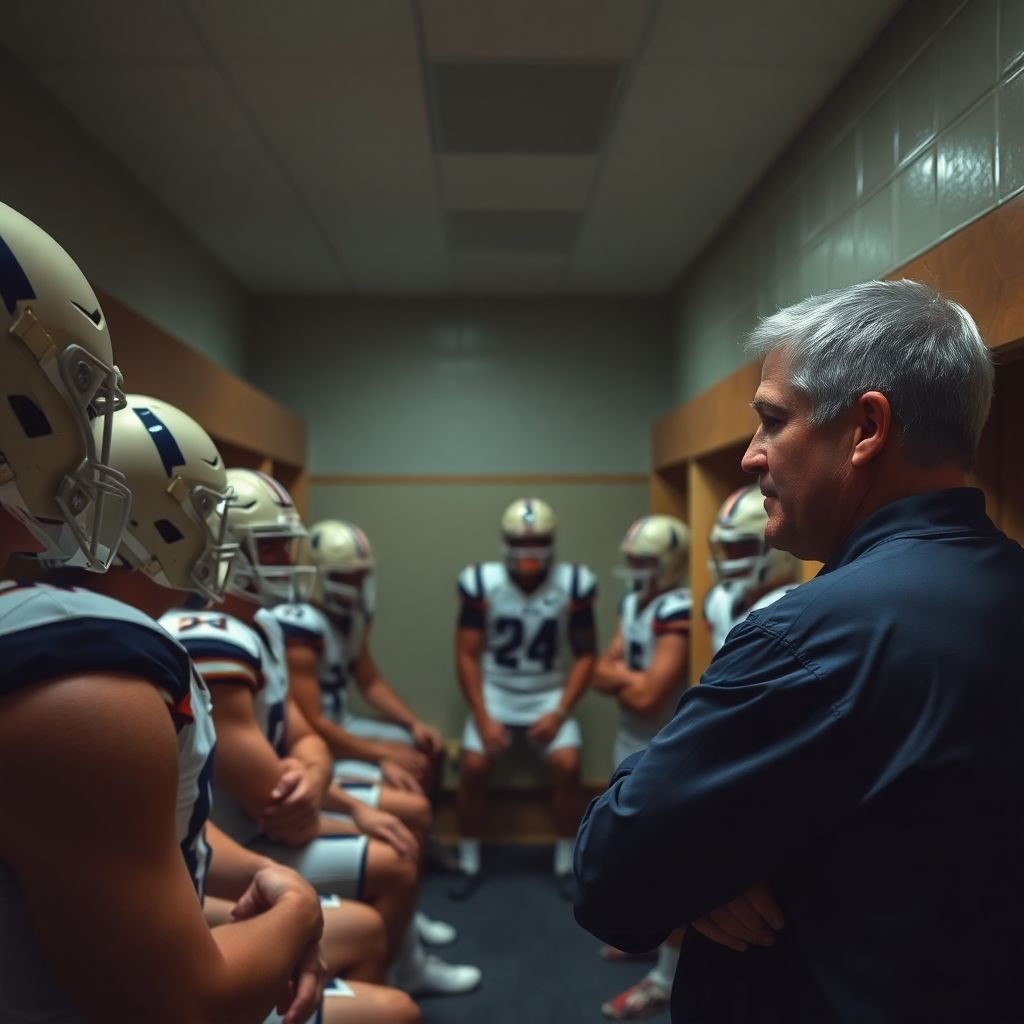
Teams prepare mentally for prime-time games by following clear routines: structured pre-game rituals, short focused locker-room talks, individual mindset plans, and simple tools for managing pressure. Coaches and leaders keep messages consistent, use calm but confident communication, and translate all talk into a few concrete cues players can execute immediately.
Core Mental Prep Principles for Game Night
- Use a consistent pre game mental preparation program that players can predict and trust.
- Keep messages simple: one theme, three key points, one clear standard of effort.
- Blend team mindset coaching for big games with individual coping strategies.
- Rehearse pressure situations mentally before the game, not for the first time under lights.
- Make communication short, specific, and repeatable from coach to captain to player.
- Integrate mental performance training for athletes into warm-ups and drills, not as an add-on.
- Use expert support such as sports psychology coaching for teams or a sports psychologist for professional teams when needed.
Pre-Game Rituals: Building Focus and Routine
Pre-game rituals create a predictable runway into competition. They work best for teams that already have basic discipline and want to sharpen mental consistency, especially under TV lights, playoffs, or rivalry games.
They are less useful when:
- The team is dealing with acute crises (injury shock, major off-field issues) and needs flexibility over strict routine.
- Players have unaddressed mental health concerns that require clinical care, not just performance rituals.
- Coaches try to overhaul everything on game day instead of building habits throughout the season.
Effective game-night ritual design usually covers three phases:
- Arrival and activation
- Same arrival time window and first action (e.g., check in with trainer, quick mobility, light ball-handling).
- Designated quiet zone vs. social zone in the locker room to reduce random distractions.
- Mental centering
- Short breathing pattern (for example: slow inhale, longer exhale) before meetings.
- One team phrase repeated across staff and leaders to set the night’s theme.
- Transition to performance
- Consistent order: athletic trainer – position coach – head coach – captains.
- Same last 3-5 minutes before taking the field/court: huddle, cue words, first-play reminder.
When implemented gradually and tuned with feedback, these rituals form the backbone of a reliable pre game mental preparation program without feeling rigid or superstitious.
Team Talk: Structuring Effective Locker Room Briefings
Prime-time locker-room briefings should be planned, not improvised. Treat them like a short presentation with clear time, roles, and tools.
You will need:
- A simple structure
- Opening reset (1-2 minutes): acknowledge stakes, normalize nerves.
- Game plan clarity (3-5 minutes): what “our game” looks like tonight.
- Emotional ignition (1-2 minutes): connect to pride, purpose, or identity.
- Defined speakers and sequence
- Head coach: theme, standards, final decisions.
- Coordinator/position coach: one or two key tactical reminders.
- Captain: short, authentic message in their own words.
- Minimal but focused tools
- One whiteboard or tablet with 3-5 bullet points (not walls of text).
- Common language anchored in your mental performance training for athletes (e.g., “next play”, “own the tempo”).
- Shared cue words that will also be used on the sideline or bench.
Prepare the talk earlier in the week, then adjust only small details on game day. If you work with sports psychology coaching for teams, align your talk structure with the mental skills vocabulary players already know.
Individual Mindsets: Personal Strategies for Peak Performance
Each athlete needs a simple, safe, personalized routine they can repeat before every big game. Below is a step-by-step process coaches, captains, or a sports psychologist for professional teams can guide players through.
- Clarify your game-night identity
Define who you are at your best in one sentence (for example: “Calm, physical, and relentless from start to finish”). This becomes your mental “job description” for prime-time games.- Write it in your phone or on a card in your locker.
- Share it with a teammate or coach who can repeat it back to you.
- Choose a simple breathing and body reset
Use a safe, comfortable breathing pattern and light movement to drop physical tension.- Example: 4-5 slow breaths with longer exhale, then a brief shakeout of arms and legs.
- Do this before team talks and again right before entering the arena/field.
- Script your self-talk for key moments
Replace vague hype with specific phrases tied to actions.- Pre-play: “See it, trust it, go.”
- After mistakes: “Breathe, learn, next job.”
- Under pressure: “This is what we prepared for.”
- Build a quick focus routine
Link a few actions together the same way every game to trigger focus.- Example: adjust equipment, one breath, look at a fixed point, repeat key word, then move.
- Keep it under 10-15 seconds so it fits real game tempo.
- Rehearse your first moments
Mentally walk through the first few plays, shifts, or points.- Picture your body language, communication, and decisions at full speed.
- Include at least one “things go wrong” scenario and see yourself recovering quickly.
- Agree on a reset cue with a teammate
Choose a discreet word or gesture that means “reset and refocus.”- Use it after errors, bad calls, or momentum swings.
- Make sure both of you practice responding to the cue in training, not only in games.
Fast-Track Version for Individual Mindset Setup
- Write one sentence describing you at your best on game night.
- Pick one short breathing reset and use it before talks and first action.
- Decide on two self-talk phrases: one for before action, one after mistakes.
- Link a 10-second physical routine to your first involvement in the game.
- Pair with a teammate and agree on a quick reset cue.
Managing Pressure: Techniques for Prime-Time Intensity
Use this checklist to see whether your team is handling prime-time pressure well or needs additional team mindset coaching for big games.
- Players can explain, in plain language, what pressure feels like in their body and what they do about it.
- Big-game weeks look similar to regular weeks in structure, with only small emphasis changes.
- Pre-game energy in the locker room is controlled (focused, not flat or chaotic).
- Coaches and captains use the same calm, steady tone regardless of opponent or broadcast.
- There is a shared plan for handling early setbacks (scripted responses, not emotional reactions).
- Timeouts and breaks include at least one grounding action (breath, clear instruction, cue word).
- Players report that nerves drop after the first few minutes rather than building uncontrollably.
- Post-game reviews focus on decisions and processes, not blaming individuals for “choking.”
- Mental skills (breathing, self-talk, visualization) are practiced in training, not reserved only for game day.
- Access to support such as sports psychology coaching for teams is normalized, not stigmatized.
Coach-Player Dynamics: Communication That Calms and Commands
Communication style can either settle a team or amplify pressure. Avoid these common mistakes in high-stakes environments:
- Overloading players with last-minute tactical changes right before kickoff or tip-off.
- Using fear-based language (“don’t embarrass yourselves”) instead of clear, controllable standards.
- Changing emotional tone wildly between games, leaving players guessing which version of you will appear.
- Calling out individuals harshly in front of the full team just before they compete.
- Ignoring quieter players who may be struggling internally while louder personalities dominate the room.
- Using inside jokes or sarcasm that some players interpret as criticism or favoritism.
- Undermining assistants by contradicting them in front of athletes instead of aligning messages beforehand.
- Speaking in vague clichés (“lock in”, “want it more”) without connecting them to specific behaviors.
- Failing to model the same composure and body language you ask from players under pressure.
- Relying only on post-game blowups instead of consistent feedback during the week.
Aligning staff language through a simple framework from your mental performance training for athletes can reduce these errors and keep messages stable.
Translating Talk to Play: Quick Drills and Cues for Game Start
Not every team has access to a dedicated sports psychologist for professional teams, but you can still turn mental plans into on-field behavior through simple, safe alternatives that fit any level.
- “First five minutes” mini-scrimmage
Run a short, high-focus segment in the last training before the game that mimics the opening of a prime-time contest. Emphasize communication, tempo, and body language instead of score. - Situation flash drills
Rapid-fire, whistle-based drills: coach calls out a scenario (early turnover, bad call, early deficit), players execute a set response (breath, cue word, next-play decision). This links pressure language to automatic action. - Walk-through with verbal cues only
Low-speed walk-through where players must say their cues out loud before every rep. This is useful when physical load must stay low but mental sharpness must rise. - Bench/side-line reset routine
Short, repeatable sequence each time players come off: one breath, quick feedback sentence from coach, one key cue before they re-enter. This keeps the pre game mental preparation program alive during the game.
Choose the variant that fits your schedule, athlete experience, and competition level, and rotate them across the season so they stay fresh.
Common Practical Concerns from Players and Staff
How do we start a mental program if we have very limited time on game day?
Begin with a single, consistent breathing reset and one shared team phrase used by all staff. Add one short pre-game routine block (five minutes) each week. Keep it simple and repeatable before expanding.
What if some players resist mental skills or think they are unnecessary?
Frame mental work as performance tools, not therapy. Integrate it into existing drills instead of separate classroom sessions. Highlight respected veterans who already use routines and self-talk effectively.
Can mental routines be too rigid and make players superstitious?
Yes, if they become long checklists where any disruption spikes anxiety. Keep routines short, focused on controllable actions, and practice adapting them when schedules change so players learn flexibility.
How should we involve captains in locker-room preparation?
Give captains clear roles: reinforce the theme in their own words, notice teammates who look overloaded, and lead the agreed reset cues. Support them with brief training in basic communication skills.
When is it worth bringing in external sports psychology help?
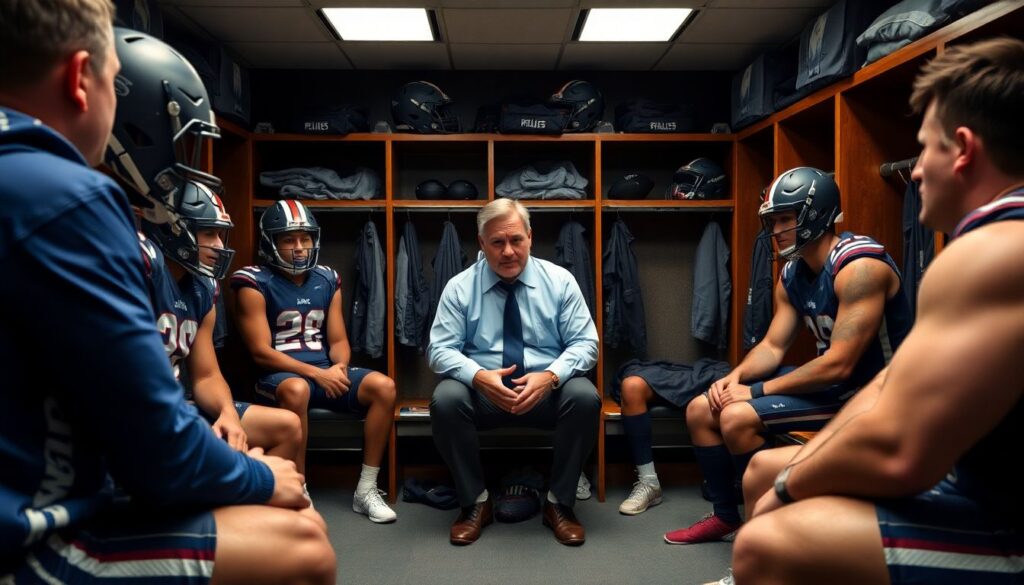
Consider outside support when pressure patterns repeat across seasons, conflicts around big games escalate, or coaches feel out of ideas. Look for professionals experienced in sports psychology coaching for teams, not only individual counseling.
How do we know if our pre-game talks are actually effective?
Ask players directly what they remember and use from the talks. Track whether first periods, quarters, or innings improve over time. Adjust content based on feedback, not on how motivational the speech feels in the moment.
What should we avoid saying right before a prime-time game?
Avoid new tactics, blaming past failures, or catastrophic language about the stakes. Use calm, specific, process-focused messages that athletes have heard and practiced during the week.