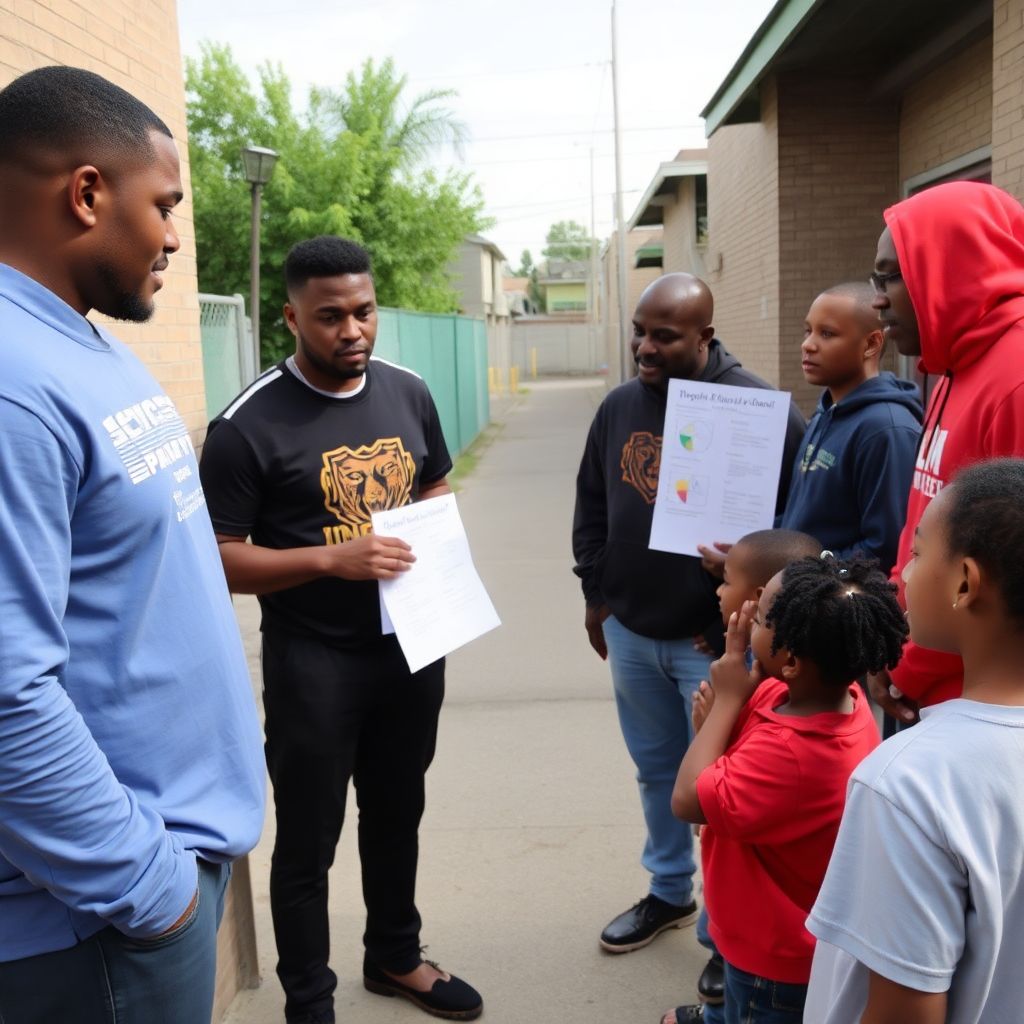
NFL players can create real, lasting community change by focusing on simple, well-governed structures, tightly targeted programs, safe growth, and transparent reporting. This guide shows how to design or support NFL player charity foundations, choose lower‑risk options, and build partnerships so every donated dollar and celebrity moment produces measurable, local impact.
Impact Summary: Measurable Outcomes of Player Philanthropy
- Stronger local impact when programs solve one or two clearly defined problems instead of trying to “fix everything.”
- Lower legal and reputational risk when foundations use independent boards, written policies, and annual reviews.
- Higher donor confidence when NFL players philanthropic organizations publish simple, consistent impact and financial summaries.
- More stable funding when corporate sponsorship NFL charity events are planned on multi‑year agreements, not one‑off galas.
- Better community trust when player appearances connect to ongoing NFL community outreach programs, not only media days.
- Greater scalability when player platforms are linked to experienced local nonprofits and national networks from day one.
Mapping Player-Led Foundations: Structure, Funding, Governance

Player-led philanthropy can be powerful, but a standalone foundation is not always the first or best step. It fits when the player has a sustained cause focus, multi‑year earning power, and a team ready for year‑round administration, not just event days.
Situations where a personal foundation often makes sense:
- Clear, long‑term commitment to a specific issue (for example, youth literacy in home and team cities).
- Reliable income and brand value to attract sponsors who want to donate to NFL player charities over several seasons.
- Access to professional legal, tax, and accounting advisors with nonprofit experience.
- Desire for a distinct brand identity, separate from team or league, that can survive team changes or retirement.
When a standalone foundation is usually a bad fit:
- The player is early in career with uncertain roster status or short contract horizon.
- Motivation is mainly image repair or “everyone else has one,” not a genuine cause link.
- No dedicated staff or advisor is accountable for filings, grant reviews, and compliance.
- Giving plans are vague (“help kids”) and change every season without strategy.
Safer, simpler starting structures include:
- Partnering with an established nonprofit to host programs under a co‑branded initiative.
- Using a donor‑advised fund at a community foundation to centralize gifts and grants.
- Running focused campaigns inside existing NFL community outreach programs from team or league.
Governance basics for any new NFL player charity foundations:
- Independent board: include at least one experienced nonprofit professional not employed by the player.
- Conflict of interest policy: written rules for contracts with player‑owned businesses, family, or agents.
- Gift acceptance policy: what donations are allowed, restricted, or refused.
- Documented decision‑making: minutes for board meetings, written criteria for grants and sponsorships.
Program Design: Targeting Local Needs Effectively
Effective foundations and NFL players philanthropic organizations start with a sharp view of community needs, then select a small set of interventions and partners. Before launching programs, prepare these elements:
- Needs assessment tools
- Simple surveys for schools, community centers, or youth leagues.
- Short interviews with existing service providers in the target neighborhoods.
- Review of city or county public data on education, health, or income where available.
- Stakeholder access and relationships
- Introductions to school districts, parks departments, and local nonprofits.
- Community leaders or mentors who can test ideas and flag blind spots.
- Team community relations staff to align with NFL community outreach programs already running.
- Operational capacity
- At least one staff member or consultant responsible for logistics, not part‑time volunteers only.
- Basic project management tools (shared calendar, task tracker, contact database).
- Templates for event plans, budgets, and post‑event reports.
- Financial infrastructure
- Dedicated bank accounts for the foundation or hosted program.
- Clear rules for expense approvals and reimbursement.
- Bookkeeping support that understands nonprofit categories (program vs. admin vs. fundraising).
- Risk and safety controls
- Background checks for volunteers and staff working with minors where appropriate.
- Signed waivers for events, reviewed by counsel.
- Insurance coverage for events and programs, coordinated with team and venue requirements.
- Player time and brand guidelines
- Clear limits on how often events require player attendance.
- Messaging rules for social media, interviews, and signage.
- Coordination with agents and team PR to avoid conflicts with contracts or sponsors.
Two practical design patterns:
- Local Depth Model – focus on a few neighborhoods with recurring programming (weekly reading clubs, seasonal clinics, mentoring).
- Campaign Model – time‑bound, theme‑driven drives (back‑to‑school supplies, holiday meals) paired with storytelling and fundraising.
Scaling Efforts: From Community Clinics to Nationwide Campaigns

Before scaling, understand key risks and limitations:
- Spreading too thin can weaken existing local programs and damage trust if commitments are not met.
- National visibility increases scrutiny of finances, governance, and any perceived self‑dealing.
- Partnership offers may prioritize publicity over real community benefit; vet them carefully.
- Travel, security, and safety needs grow with larger events and multi‑city tours.
- Player time and energy are finite; overcommitment can harm both performance and philanthropy quality.
- Stabilize and document the local model – Confirm that at least one city has a repeatable, well‑run program with clear objectives, schedules, and budgets. Capture this in a simple playbook: goals, partners, logistics, staffing, and communication timelines.
- Define what “scale” actually means – Decide whether growth is more cities, more people served, deeper services, or more funds raised. Set a small number of measurable targets and avoid changing them mid‑season without strong reasons.
- Choose a scalable program format – Design clinics, workshops, or campaigns that can be replicated with local partners following a standard template.
- Create modular toolkits: agendas, coaching plans, safety checklists, and media scripts.
- Specify minimum requirements for host cities (fields, facilities, security, medical support).
- Build a partnership spine – Select a backbone organization (national nonprofit or trusted agency) to manage multi‑city coordination and quality control across all sites.
- Standardize brand and messaging – Develop shared visual assets, talking points, and social media guidelines so every city reflects the same core story and values.
- Layer in safe fundraising mechanisms – When expanding, use established payment processors and co‑host platforms to collect donations, instead of building custom systems from scratch too early.
- Pilot in 2-3 additional markets – Test the model beyond the home city with carefully chosen partners. Start small, review performance and risks, then adjust the toolkit before wider rollout.
- Invest in training and support – Offer onboarding calls, handbooks, and point‑of‑contact access for each host city to handle questions about operations, brand, and risk management.
- Plan a controlled media strategy – Align national campaigns with team, league, and sponsor calendars. Avoid scheduling conflicts and ensure that media commitments match player capacity.
- Run post‑campaign debriefs – After each scaling cycle, collect data, partner feedback, and incident reports. Decide what to stop, start, or change before the next year.
Replicable player profile example: a veteran linebacker runs a literacy foundation that started as one school partnership, then grew to multiple cities by standardizing reading rallies, teacher mini‑grants, and book distribution days through alliances with national education nonprofits.
Measuring Impact: Metrics, Data Collection, and Reporting
- Define a small set of primary outcomes (for example, number of students in tutoring, mentorship hours delivered, clinics run), and avoid constantly adding new metrics.
- Track both reach (how many people touched) and depth (what changed for them) in every program.
- Use consistent, simple tools across sites: shared spreadsheets, basic databases, and standardized feedback forms.
- Collect stories alongside numbers, but label them clearly as qualitative examples, not proof of overall results.
- Protect privacy: remove identifying information where appropriate, especially for youth, health, and justice‑involved participants.
- Compare yearly results to the same indicators so trends are visible and not distorted by changing metrics.
- Publish at least an annual summary with program activities, metrics, and financial highlights in clear, plain language.
- Share impact data with sponsors and partners before public announcements to correct errors and align messaging.
- Use impact findings to stop or redesign underperforming events, not just to market existing ones.
- Document all assumptions and data limitations so readers understand what the numbers can and cannot prove.
Sustainable Partnerships: Collaborating with Teams, Corporations, and NGOs
Common mistakes that reduce the value of partnerships and corporate sponsorship NFL charity events:
- Accepting every partnership offer without checking alignment with the foundation’s mission and community priorities.
- Relying on handshake agreements instead of written MOUs that define roles, funding, data sharing, and branding.
- Letting sponsors over‑brand events so they feel like product promotions rather than genuine community support.
- Underestimating staff time required to manage relationships, reporting, and joint decision‑making.
- Ignoring power imbalances, which can push small nonprofits into commitments they cannot safely deliver.
- Failing to coordinate with team and league offices, creating overlapping events or sponsor conflicts.
- Not vetting partners’ reputations, leading to associations with organizations facing ethical or legal issues.
- Promising player attendance before checking schedules, health, and travel realities.
- Sticking with a legacy partnership even when evaluation shows minimal community impact.
- Overlooking local grassroots groups in favor of only large national brands, which can weaken neighborhood trust.
Replicable player profile example: a wide receiver partners long‑term with a regional food bank network, using joint branding and multi‑year agreements so off‑season campaigns, game‑day drives, and digital fundraisers reinforce each other instead of competing.
Compliance and Risk Management: Legal, Tax, and Reputational Controls
Sometimes the safest and most effective choice is an alternative to launching a new foundation. These options can reduce legal, tax, and reputational exposure while still delivering strong community benefit.
| Option | When It Fits | Key Advantages | Main Limitations |
|---|---|---|---|
| Hosted program under existing nonprofit | Player wants branded work but not full legal responsibility of a separate entity. | Leverages existing compliance systems, insurance, and staff; faster launch. | Less control over operations; must align with host’s policies and board decisions. |
| Donor‑advised fund | Player wants to centralize giving and plan grants without running programs directly. | Simpler administration; professional oversight; flexibility in choosing grantees. | Limited ability to operate hands‑on programs under a distinct foundation brand. |
| Team or league‑aligned campaigns | Player prefers to work through NFL community outreach programs with established partners. | Immediate infrastructure, media support, and vetted partners; lower individual risk. | Less personal branding; cause focus must fit broader team or league priorities. |
| Sponsorship‑driven initiatives | Corporations want to donate to NFL player charities or co‑create campaigns without a new entity. | Potentially strong funding and amplification; can be run via existing nonprofits. | Requires careful contracts to avoid over‑commercialization and conflicts with other sponsors. |
In each alternative, core risk controls still apply:
- Written agreements that spell out responsibilities, approvals, and exit options.
- Clear separation between personal, team, and charitable funds and accounts.
- Independent legal and tax advice, not only input from agents or sponsors.
- Crisis communication planning in case of injuries, scandals, or partner issues that could affect the charity brand.
Practitioner Concerns and Concise Solutions
How do I safely support or donate to NFL player charities as an individual?
Check if the organization is registered as a nonprofit, review its recent public filings if available, and see whether it publishes basic impact reports. When unsure, give through a known community foundation or established partner that already works with the player.
What is the lowest‑risk way for a new player to start community work?
Begin by partnering with experienced local nonprofits and team community relations, using small, focused events. Delay forming a separate foundation until there is a clear, multi‑year plan, reliable advisors, and evidence that programs deliver value.
How can foundations avoid over‑promising on national expansion?
Translate big visions into specific, time‑bound targets, then test in a few locations before publicizing wider plans. Include written contingency language in announcements so the foundation can adjust or pause if funding or logistics change.
What data is essential to collect without overwhelming staff or participants?
Capture counts of people served, basic demographics where relevant, activities delivered, and short feedback forms about quality. Skip complex surveys until a simple data routine is stable, and never collect personally sensitive information you do not have the capacity to protect.
How should we respond if a partner organization faces public controversy?
Review agreements, gather facts from multiple sources, and pause new commitments while assessing risk. Communicate clearly but briefly, focusing on care for affected communities and adherence to your own values and policies.
What is the best way to balance player time between football, media, and philanthropy?
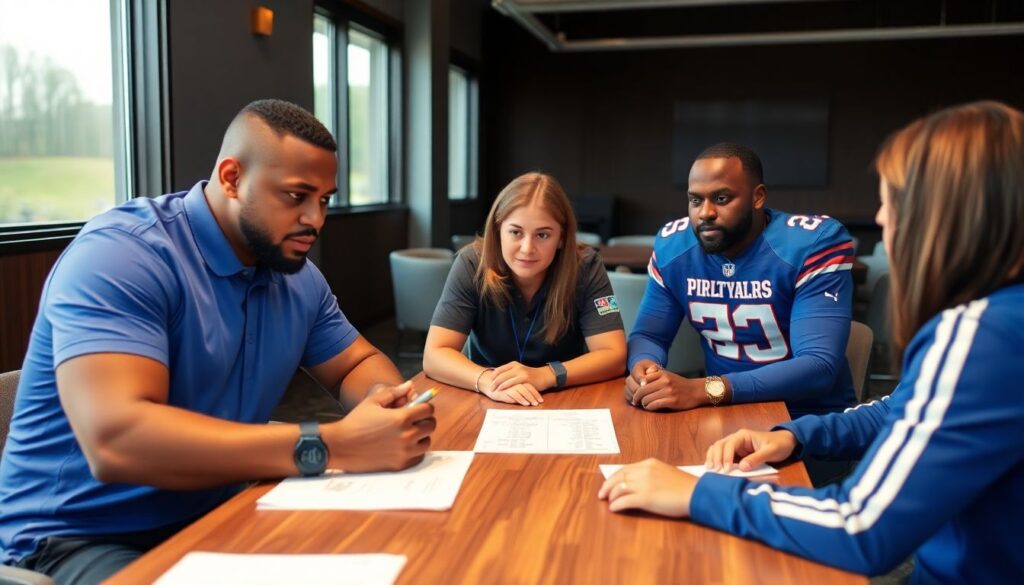
Set a fixed monthly or seasonal time budget for charity activities, agreed with the player, agent, and team where appropriate. Prioritize a small number of high‑impact appearances that connect to ongoing programs instead of many one‑off events.
How can a smaller nonprofit approach an NFL player about partnership without overreaching?
Propose one pilot project you can confidently deliver, with a simple budget and clear impact goals, rather than a sweeping multi‑year plan. Show how your existing work aligns with the player’s interests and what support you need and do not need.