
Offensive lines deserve more credit because they control the timing, angles, and space that make every run and pass possible. Their work shows up in clean pockets, efficient run lanes, low negative plays, and consistent down‑and‑distance. When you study assignments, leverage, and communication, you see the line directly shaping win probability.
Core Claims: Why Offensive Lines Shift Game Outcomes
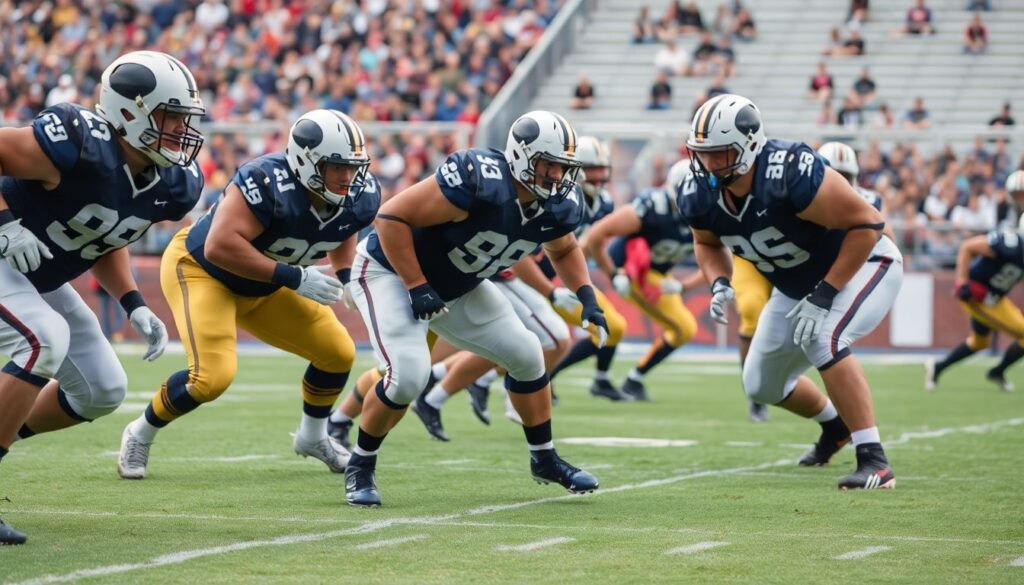
- Offensive line execution decides whether a play call looks brilliant or terrible on film.
- Protection and run lanes are built with technique and communication long before the snap.
- Most explosive plays start with linemen winning leverage and sustaining blocks for a beat longer.
- Quarterback efficiency and running back production both collapse when the line loses consistently.
- Line play is highly coachable and trackable with objective, repeatable performance metrics.
- Better line play reduces negative plays, improving field position, play‑calling freedom, and clock control.
The Hidden Responsibilities of Offensive Linemen
Offensive linemen are responsible for creating a clean operating space for the quarterback and defined lanes for the ball carrier. They do this by handling protection rules, run fits, and line calls that adjust to defensive looks in real time. Every step, hand placement, and communication affects the success of the skill players.
Pre‑snap, they must identify fronts, count the box, and confirm who is responsible for each defender if pressure comes. Post‑snap, they execute footwork patterns like kick steps, drive steps, and combo steps while keeping their shoulders square and hips under control. Their job is not just blocking a man, but protecting space and timing.
For example, on a simple inside zone, the front side guard and tackle might double a defensive tackle to the backside linebacker. If their combination block is even slightly mistimed, the linebacker hits the hole free and the play is stuffed. When done correctly, the running back sees a clear read and a vertical lane.
Actionable details to practice: teach linemen to verbalize the front and their point defender before every rep. Emphasize a consistent stance, eye focus on the near number of the defender, and the first two steps: short, powerful, and in the correct angle rather than wide and off‑balance.
Measuring Line Performance Beyond Sacks Allowed
- Pressure rate allowed, not just sacks. Count how often a defender forces the quarterback off his spot or to speed up his throw, even if there is no sack. Track pressures by lineman and by concept to see who struggles with which looks.
- Run disruption rate. Chart how often defenders cross a lineman's face or penetrate the backfield on run plays. A "win" for the lineman is keeping his play‑side shoulder free and maintaining the track of the run, even if the back only gains a few yards.
- Assignment correctness. Grade whether each lineman blocked the correct defender based on the play call and defensive front. A clean mental grade sheet across the line usually predicts efficient drives even without highlight clips.
- Time to firm pocket. On pass plays, measure how long the quarterback has before he must move off his spot. The goal is a stable "cup" in front of him that holds for the length of the route concept, not just avoiding a sack.
- Double‑team movement and strain. Watch how far combo blocks move the down lineman and whether linemen stay on blocks through the whistle. Even slight vertical movement and sustained contact can turn a crowded run into a manageable gain.
- Penalty discipline. Track holding, false start, and illegal formation penalties per lineman. A technically sound line that plays on time protects drives from self‑inflicted long‑yardage situations.
Micro‑skills to emphasize during evaluation: film how often linemen reset their hands inside the defender's frame after initial contact and how often they finish with their feet still driving. Use simple cut‑ups and, if possible, basic offensive line performance analytics software for coaches to tag pressures, disruptions, and mental errors by player and by concept.
Mini Game Scenarios That Reveal True Line Impact
Scenario 1: third‑and‑medium versus a double A‑gap blitz. The center and guards must correctly identify which backer is green‑dogging and pass off the twist on time. A completed quick game pass looks "easily open" only because the inside three handled a complex picture.
Scenario 2: red zone wide zone run. The tackle reaches the edge defender while the tight end chips and climbs. The guard's ability to torque the 3‑technique just enough creates the crease. On the stat sheet, it's a running back touchdown. On film, it is three linemen winning leverage and angles simultaneously.
Film Study: What Coaches Look For in Elite Line Play
Coaches start by checking the first two steps and pad level from the tight copy on end zone film. Elite linemen stay low, keep their base under them, and get their second step in the ground quickly on every run and pass. Lazy feet or high pads usually predict losses at contact.
Next, they study hand placement and strike timing. Hands that land inside the defender's chest plate with thumbs up allow control without grabbing. On pass pro, coaches want an independent hands strike, not both hands lunging at once. On run blocks, they look for hips rolling through contact instead of stopping on collision.
Coaches also evaluate eyes and targeting. On twists and blitzes, good linemen keep their eyes on the "hip pocket" of the most dangerous threat instead of chasing movement. When you review film from an offensive line training camp for youth football, the most improved players are usually the ones who learned where to look pre‑ and post‑snap.
Another critical element is finish. Elite players sustain blocks through the echo of the whistle, staying square and keeping their feet alive. Coaches will rewind a play just to show a guard staying latched on a backside 3‑technique on an outside zone that cuts back for a long gain.
Practical film habit: when you study, freeze the frame at the second step, at first contact, and at the end of the play. Ask three questions: "Is the base balanced?", "Are the hands inside?", and "Are the feet still driving at the end?" This turns film into a checklist instead of a vague impression.
Run-Game Architecture: How Linemen Create and Sustain Lanes
In the run game, offensive linemen build lanes by controlling angles, double‑teaming down defenders, and climbing to linebackers on schedule. Each scheme has specific tracks for the back and footwork for the line. When everyone hits the correct landmark at the right depth, lanes appear where the design expects them.
Inside zone, outside zone, power, and counter all ask linemen to do different jobs. Zone schemes stress horizontal displacement and combination blocks, while gap schemes focus on down blocks and pullers creating an extra number at the point of attack. The "architecture" is which defender you double, who pulls, and when each lineman leaves the combo.
Practical Upsides of Strong Run-Game Line Play
- More manageable down‑and‑distance, keeping the playbook wide open on second and third down.
- Defenses are forced to add a safety into the box, simplifying coverage pictures for the quarterback.
- Play‑action passes become more effective because linebackers must respect the run fits and step downhill.
- Ball control improves, helping the defense by shortening their time on the field and reducing fatigue.
- Team identity becomes clear on film, which helps OL buy into a physical, finish‑oriented standard.
Limitations and Challenges Even Good Lines Face
- Elite, disruptive interior defenders can blow up even well‑blocked plays with individual wins.
- Injuries and depth issues on the line quickly limit the variety of run schemes a team can execute well.
- Defensive movement, slants, and run blitzes can outnumber the point of attack and force backs to bounce.
- At lower levels, limited practice time and inconsistent attendance make mastering multiple schemes difficult.
- Weather and surface conditions can neutralize footwork advantages and make sustaining blocks harder.
Applied example: when you purchase football playbooks for offensive line schemes, start with a small menu of core runs that fit your personnel. Teach the footwork, aiming points, and combination rules for those concepts repeatedly before adding tags, motions, or exotic wrinkles.
Communication, Assignments and In-Game Adjustments in the Trenches
Many mistakes in line play come from poor communication rather than physical losses. If the center, guards, and tackles do not share the same protection ID or run "point," two linemen may block the same defender and leave a free runner. Great fronts sound loud and clear pre‑snap.
A common error is chasing movement instead of trusting rules. For example, versus a simple T‑E twist, a young guard may follow the looper and vacate his zone, opening a free lane inside. The correct response is to pass the twist off and stay square on your level.
Another myth is that line calls are optional at youth and high school levels. Even at an offensive line training camp for youth football, you can install basic calls like "combo," "solo," and "fan" so players can adjust to over and under fronts. Simple, consistent language reduces confusion against different looks.
Coaches also overestimate how much their players understand from the sideline. Without clear sideline communication plans and quick "fix" phrases (for example, reminding the line to squeeze inside movement or to expect field pressure), the same error can repeat all game. Adjustments must be simple enough to remember under fatigue.
To practice communication, script periods where defenders stem, walk around, and blitz late. Require the line to make loud, correct calls before the snap and then confirm on film which assignments were right or wrong. This is the same process taught in the best offensive line coaching clinic online sessions, just adapted to your level.
From Line Play to Win Probability: Translating Actions into Results
Every correct step and assignment by the offensive line nudges win probability in your favor. Fewer negative plays mean more makeable third downs, more successful red zone trips, and more time of possession. The path from a guard's footwork to the final score is direct once you trace the chain of events.
Consider a drive where the line allows no pressures and no run disruptions. The offense stays on schedule, reaches third‑and‑short instead of third‑and‑long, and converts with simple runs behind double teams. The defense rests longer, special teams work with better field position, and the scoreboard reflects a collection of small trench wins.
In code‑style terms, you can think of each snap as:
Snap outcome = function(assignment_correctness, leverage_won, finish_effort, communication_quality)
Then:
Drive success = aggregation(Snap outcome)
and finally:
Win probability shift = impact(Drive success, explosives_created, negatives_avoided)
When coaches invest in teaching line mechanics, simplify schemes, and even use tools like offensive line performance analytics software for coaches to track these inputs, they move from guessing to managing the exact factors that quietly decide games. The scoreboard rarely mentions them, but the film does.
Even details like outfitting players with custom offensive line football jerseys for teams can help create pride and identity in the unit. When linemen see themselves as a distinct group with clear standards, they are more likely to embrace the technical, often unrewarded work that drives consistent offensive production.
Common Doubts and Practical Clarifications About Line Play
Is good offensive line play mostly about size and strength?
Size and strength help, but balance, footwork, and assignment discipline matter more. A slightly smaller lineman with great angles and hand placement will win more often than a bigger player who is off‑balance or blocking the wrong defender.
How can youth coaches teach complex line concepts without overwhelming players?
Use a small set of core runs and protections with clear, repeated rules. In an offensive line training camp for youth football, focus on stance, first two steps, and simple line calls instead of installing every scheme you see on TV.
Do I need advanced software to grade my offensive line?
No, but basic tagging of pressures, disruptions, and mental errors speeds up learning. As your program grows, affordable offensive line performance analytics software for coaches can help you track trends by player and by concept.
What should I look for when buying materials to improve our line schemes?
When you look for football playbooks for offensive line schemes purchase, prioritize resources that show end zone film, detailed rules, and adjustments versus multiple fronts. Avoid materials that only show diagrams without coaching points.
How many different run schemes should a high school team carry?
Most teams are better off mastering a few base concepts and tagging them than running everything. Choose zone, gap, or a blend that fits your personnel, then rep those footwork patterns until they are automatic before adding wrinkles.
Does giving linemen special gear or attention really matter?
Recognition builds buy‑in. Simple things like custom offensive line football jerseys for teams, unit challenges, and film shout‑outs reinforce that their work is valued, which often improves effort and attention to detail.
Is online coaching useful for improving offensive line play?
Yes, if it includes clear film breakdowns, drills, and feedback loops. The best offensive line coaching clinic online options give you practical teaching progressions you can plug into your weekly practice plan.