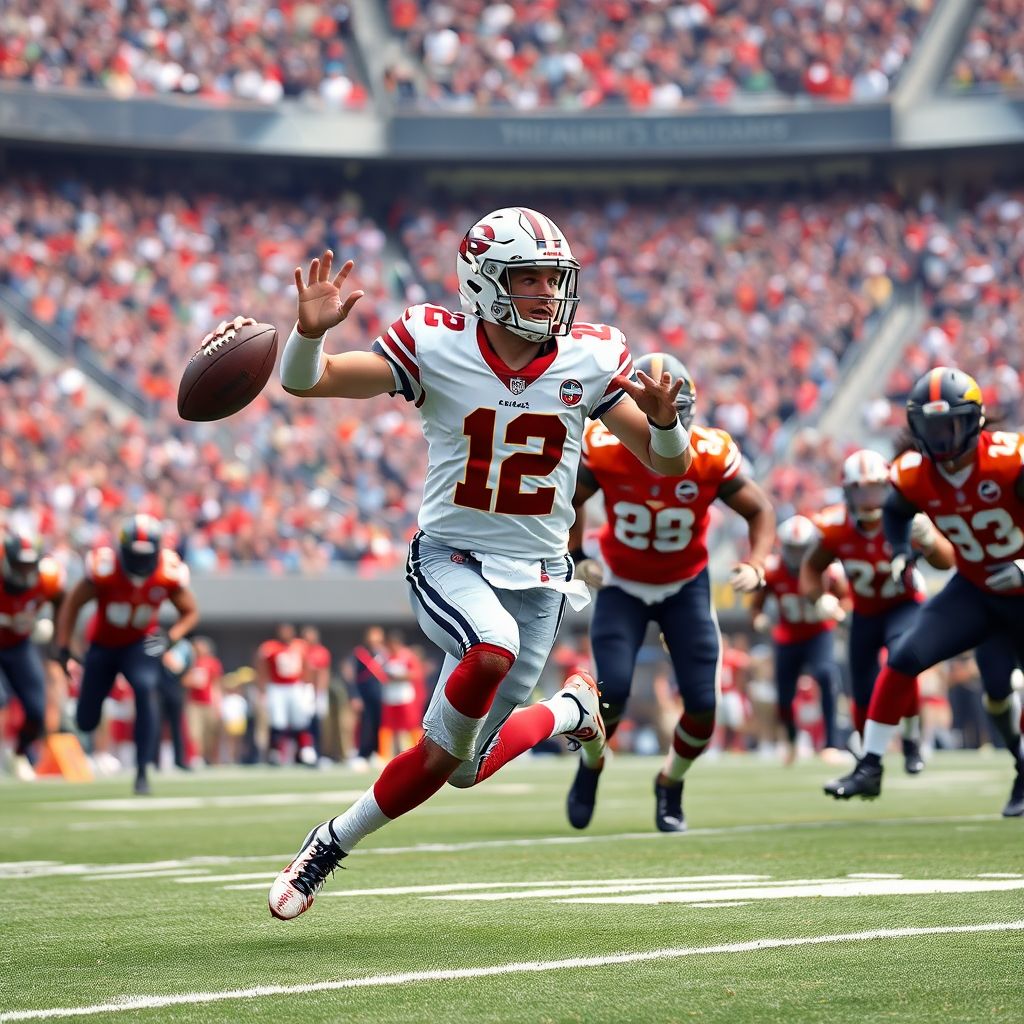
A dual-threat quarterback is a passer who is also a designed runner, stressing the defense with both arm and legs. In college, offenses embraced dual-threat QBs to attack space and tempo. In the NFL, rule changes, spread concepts, and better development gradually turned this style from a gimmick into a mainstream option.
Core Concepts Behind the Dual‑Threat Quarterback
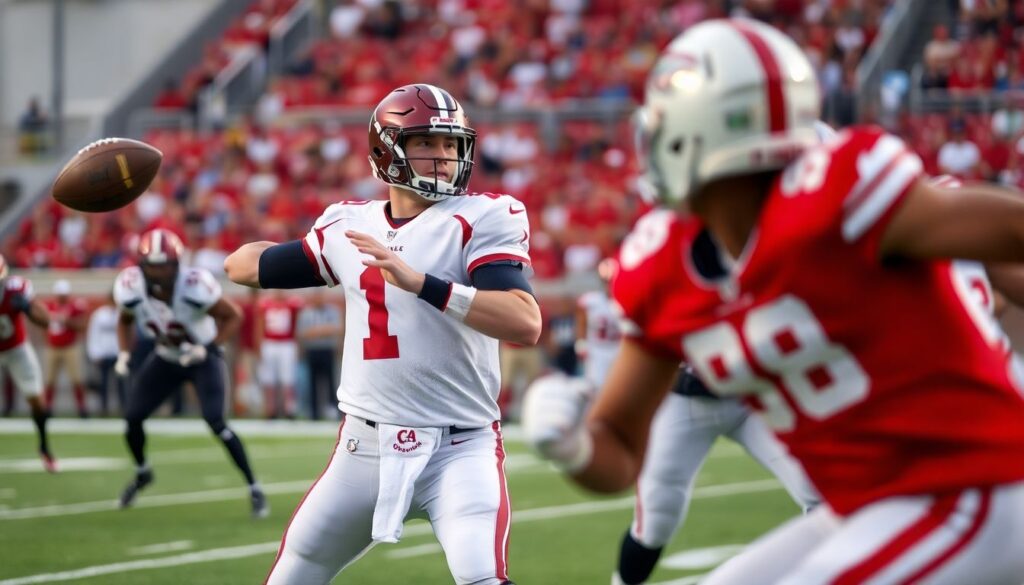
- A dual-threat quarterback must be a credible passer first, then an efficient designed runner.
- College schemes (spread, option, RPO) maximized mobility before the NFL adopted similar concepts.
- Run-pass conflict defenders are the primary target of dual-threat designs.
- Processing speed, not just 40-time, separates elite dual-threat play.
- Durability, slide technique, and usage patterns determine long-term viability.
- System fit and coaching are as important as traits when projecting to the NFL.
Origins and College Blueprint: How Mobility Reshaped Offense
In modern usage, a dual-threat quarterback is a player who can execute a full passing game while also functioning as a primary or secondary ballcarrier in the designed run game. Scrambling ability alone is not enough; the QB must be involved in planned runs and option reads that change defensive math.
College football was the natural incubator. Wide hash marks, more diverse schemes, and flexible recruiting allowed coaches to build entire systems around mobile passers. Dual-threat quarterback recruiting rankings became a distinct category, signaling that high school QBs were evaluated differently if they could carry a run-heavy spread or read-option offense.
As spread and tempo systems grew, mobility stopped being a bonus and became a core assumption in many college playbooks. This led directly to specialized development paths: a dual threat quarterback training program often blends traditional footwork and coverage reads with zone-read meshes, pocket movement under pressure, and sprint-out concepts tailored to the QB’s movement skills.
The NFL initially viewed these players as risky or “system QBs.” Over time, as the best dual threat quarterback prospects NFL draft classes succeeded in pro-style hybrids, front offices shifted from forcing QBs into rigid under-center systems to adapting playbooks around college strengths.
Tactical Edge: Run‑Pass Balance and In‑game Decision Making
The tactical core of dual-threat play is simple: use the quarterback as an extra runner so the offense can win the numbers battle while still threatening explosive passes. That shows up in several repeatable mechanics coaches and analysts can identify on film.
- Defender read mechanics: On zone-read and power-read, the QB is coached to read a specific defender. If that defender closes on the back or gap, the QB keeps; if he widens or hesitates, the ball is handed off.
- Conflict-player targeting: RPOs and bootlegs isolate a flat or hook defender and force a run-fit vs. coverage decision. The QB’s job is to punish whichever choice the defender makes, often in one or two quick steps.
- Vertical leverage manipulation: Dual-threat QBs threaten safeties by climbing the pocket to run. Safeties stepping down open seams, posts, and crossers behind them, especially from spread sets.
- Horizontal stretch via QB run: QB sweeps, speed options, and sprint-outs widen second-level defenders, making inside runs and intermediate throws more efficient.
- Scramble rules as a designed weapon: Receivers are coached on scramble drill landmarks. The QB is taught when to convert a read to a scramble rather than forcing a late throw.
- Situational use: In high-leverage downs (3rd/short, red zone, two-point tries), the QB run game becomes a short-yardage and condensed-space cheat code.
Quick Practical Pivots for Coaches and Trainers
- Script 3-5 designed QB runs per half; track efficiency, hits taken, and ball security on each use.
- Pair every QB run concept with at least one play-action or RPO that looks identical at the snap.
- Grade the QB weekly on “keep or give” decisions in option looks, not just on yardage gained.
- Install clear scramble rules and review two clips per week where the QB should have scrambled earlier.
Physical and Mental Profile: Measurables, Skills, and Mental Processing
The modern dual-threat archetype is broader than just a fast runner. Pocket-first movers, classic spread runners, and power-based QBs can all qualify if they threaten both dimensions within the structure of the offense.
Typical usage scenarios show how the profile plays out in practice:
- Spread-option base offense: The QB is a featured ballcarrier on zone-read, power-read, and QB counter. Passing is built off quick game, RPOs, and shot plays when the safeties bite.
- Pass-first with selective QB runs: The QB lives in the pocket but adds 4-6 designed carries per game, mostly on red-zone keepers, zone reads vs. specific looks, and third-down draws.
- Scramble-centric dual threat: Designed runs are rare; the QB primarily hurts defenses when protection breaks down. This still qualifies if the passer is consistently a first-down threat on scrambles.
- Short-yardage and goal-line specialist: Some teams rotate a bigger dual-threat QB in tight areas, using QB power, sneak variations, and sprint play-action to maximize physicality and conflict.
- Tempo and spacing stressor: In hurry-up situations, a mobile QB running zone-read and quick game can force worn-out defenses into simple structures, creating easy run-pass decisions.
A quarterback coach for dual threat QBs will typically structure development around this profile: speed and agility for open-field running, functional strength for contact balance, plus processing drills that start from the run read and expand to full-field coverage recognition.
Fast-Track Tips: How to Make the Concept Practical
- Build a dual threat quarterback training program with three equal pillars: throwing under movement, option decision-making, and contact-safe running (slides, boundary exits).
- Use film cutups to grade the QB on decision speed: time from snap to decision on reads and RPOs.
- Balance weekly practice reps so designed QB runs never outnumber full-speed pocket pass reps.
Offensive Schemes That Amplify Mobility: Read‑Option, RPOs, and Spread Concepts
Once the mechanics are in place, offensive design determines how fully a team can exploit a dual-threat QB. A few system families consistently unlock that upside, especially at the college level.
Common scheme families include:
- Zone-read and split-flow spread: Inside and outside zone with QB keepers, plus bootlegs off the same looks.
- Power-read and gap schemes: Guard-pull concepts that let the QB follow a lead blocker as a primary ballcarrier.
- RPO-heavy spread: Pairing inside runs with quick slants, hitches, and glance routes, triggered by second-level defenders.
- Empty formations with QB draw: Spreading the field to telegraph pass, then using QB draw and quick-breaking routes as counters.
- Sprint-out and movement passing: Designated edges for the QB to attack, shrinking reads but maximizing run-pass stress on the perimeter.
Applied Game Scenarios Using Dual‑Threat Principles
- 3rd-and-3 midfield: Offense calls zone-read with an RPO slant. QB reads the end: if he crashes, QB keeps; if the linebacker triggers run, QB throws the slant; if the box softens, handoff.
- Red zone on the hash: Sprint-out flood concept with a built-in QB run. If flat and corner are covered and the edge is clean, QB turns the corner and runs to the pylon.
- Two-minute drill: Defense plays two-high, light box. QB runs QB draw vs. dime personnel and slides after the sticks, forcing the defense to choose between numbers in coverage and run fits on subsequent snaps.
Upside and Exposure of Mobility-Centered Schemes
Using the QB as a runner creates significant structural benefits, but it also introduces constraints that coordinators and personnel staff must address.
Advantages of Mobility-Driven Offenses
- Better numbers in the run game because the QB is no longer a “wasted” player post-snap.
- Higher red-zone efficiency with QB power, draws, and option keepers against condensed defenses.
- Increased explosive play potential when safeties misfit runs or overreact to QB movement.
- Flexibility to attack different defensive structures without changing personnel.
- Natural fit with hurry-up tempo, making defenses simplify their calls.
Constraints and Risks with Mobility Emphasis
- More hits on the quarterback, which can shorten seasons if slide and boundary habits are poor.
- Passing concepts may narrow if the staff over-commits to option and QB-run volume.
- Backups often are less mobile, making a full scheme harder to run after an injury.
- NFL defenses can catch up quickly to one-dimensional “college” looks without enough dropback variety.
- Some dual-threat QBs lean on legs early, slowing long-term progression as full-field passers.
Evaluating NFL Transition Risk: Projection, Injury, and System Fit
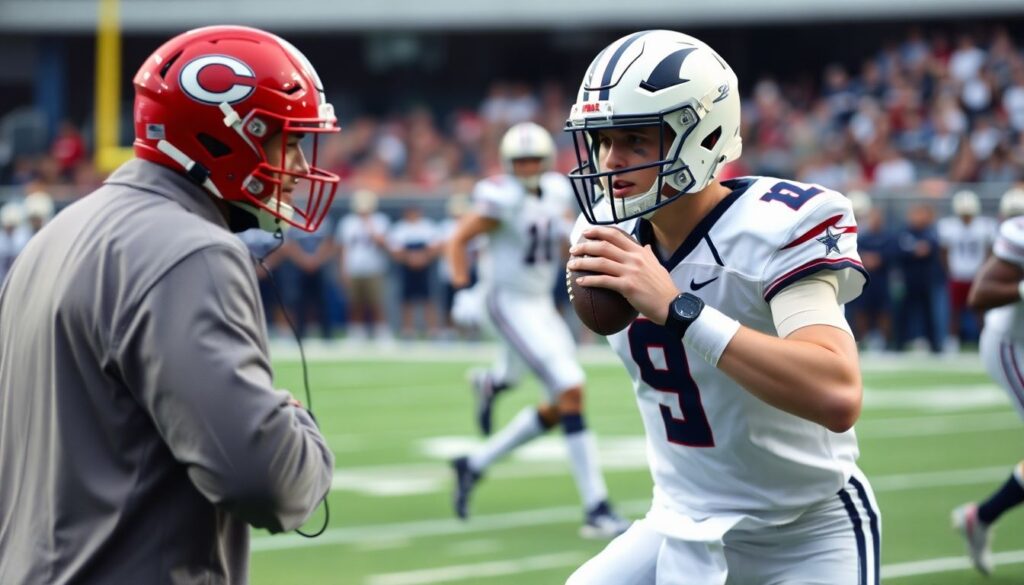
Projecting dual-threat QBs from college to the NFL is less about whether they run and more about how and when they run, plus whether the passing baseline is sturdy enough to survive when athletic advantages narrow.
- Overvaluing raw rushing stats: Big college rushing numbers can hide late processing or an overreliance on broken plays instead of on-schedule throws.
- Ignoring hit profile: Scouts sometimes overlook how a QB gets tackled. Finishing every run like a running back creates far more injury risk than designed runs with clean slides and sideline exits.
- Assuming scheme transfer: Copying a college playbook rarely works. The key is translating staple concepts (reads, motions, formational families) into an NFL protection and timing framework.
- Forcing a pure pocket identity: Some staffs draft a mobile QB, then strip away QB runs and movement. This removes the conflict advantage without guaranteeing polished pocket play.
- Misreading processing vs. arm talent: A big arm plus speed does not equal readiness. Evaluation must emphasize pre-snap organization, post-snap eyes, and progression discipline against NFL coverage.
- Ignoring ecosystem: Line quality, receiver separation, and coaching continuity often matter more than the raw athletic comparison between the best dual threat quarterback prospects NFL draft after NFL draft.
Applied Profiles: Comparative Case Studies of Successful and Failed Transitions
Real and composite examples help clarify why some dual-threat passers thrive at the next level while others stall, even with similar athletic traits.
Consider two simplified trajectories:
- QB A – Structured dual threat: College usage featured balanced RPOs, progression dropbacks, and 6-8 designed QB carries per game. In the NFL, his team kept familiar reads, added under-center play-action, and gradually reduced QB runs while expanding intermediate timing routes. Result: sustainable starter with evolving pocket identity.
- QB B – Chaotic runner: College film showed heavy scramble production, few full-field reads, and limited timing routes. His NFL team drafted him off traits, then installed a traditional dropback system and removed designed runs. Without familiar reads or conflict plays, he reverted to late scrambles and forced throws. Result: brief flashes, then backup role.
From a development standpoint, both QBs might begin with the same dual threat quarterback training program, but only QB A pairs those drills with film-based processing work and a system that keeps his best college concepts. For young players asking how to become a dual threat quarterback, the lesson is clear: build your passing foundation early so mobility becomes a multiplier, not a crutch.
Actionable Micro-Guide for Players and Coaches
- Players: Anchor your off-season around three themes-base mechanics, coverage recognition, and controlled contact running-then assess progress with your quarterback coach for dual threat QBs every 4-6 weeks.
- Coaches: When reviewing dual threat quarterback recruiting rankings, match each prospect’s film to specific concepts you already run; avoid drafting or signing a player whose college tape has no overlap with your system.
- Both: Treat mobility as a tool to win leverage and numbers, not as the primary answer to every bad look.
Practical Concerns and Common Misconceptions
Is a dual-threat quarterback just a running quarterback?
No. A running quarterback may rely almost entirely on legs, while a dual-threat QB must be a legitimate passer within the offense and a designed runner. The defining trait is consistent stress on the defense in both dimensions, not just scramble yardage.
Do dual-threat QBs always get hurt more often?
Not automatically. Risk depends on how often the QB runs, how he finishes runs, and the types of hits he takes. Good slide habits, smart out-of-bounds decisions, and selective usage can keep injury risk comparable to more stationary passers.
Can a pocket passer become a dual-threat later?
Yes, within reason. While elite long-speed is hard to add, better conditioning, improved pocket movement, and specific option-read training can turn a mostly stationary QB into a functional dual threat who can punish defenses when space opens.
Are dual-threat quarterbacks only effective in college systems?
No. Many NFL teams now run spread formations, RPO elements, and movement passes that resemble college systems. The key is integrating those concepts with NFL protections and timing, not assuming that mobility must disappear at the pro level.
Do you need a completely different playbook for a dual-threat QB?
Usually not. Most offenses can layer in QB runs, sprint-outs, and RPOs on top of existing run and pass concepts. The best results come from adapting core plays to the QB’s strengths, not from throwing out the entire playbook.
Is a dual-threat style bad for long-term career length?
It can be if the QB absorbs unnecessary contact or if the offense relies on constant designed runs. When mobility is used selectively and the passer evolves as a reader of defenses, the style can extend careers by creating easier throws and avoiding sacks.
Should young QBs focus more on running or passing?
Passing. Running ability is useful, but arm talent, decision-making, and accuracy determine ceiling. A balanced dual threat quarterback training program will prioritize reads and mechanics, using running drills to complement-not replace-passing development.