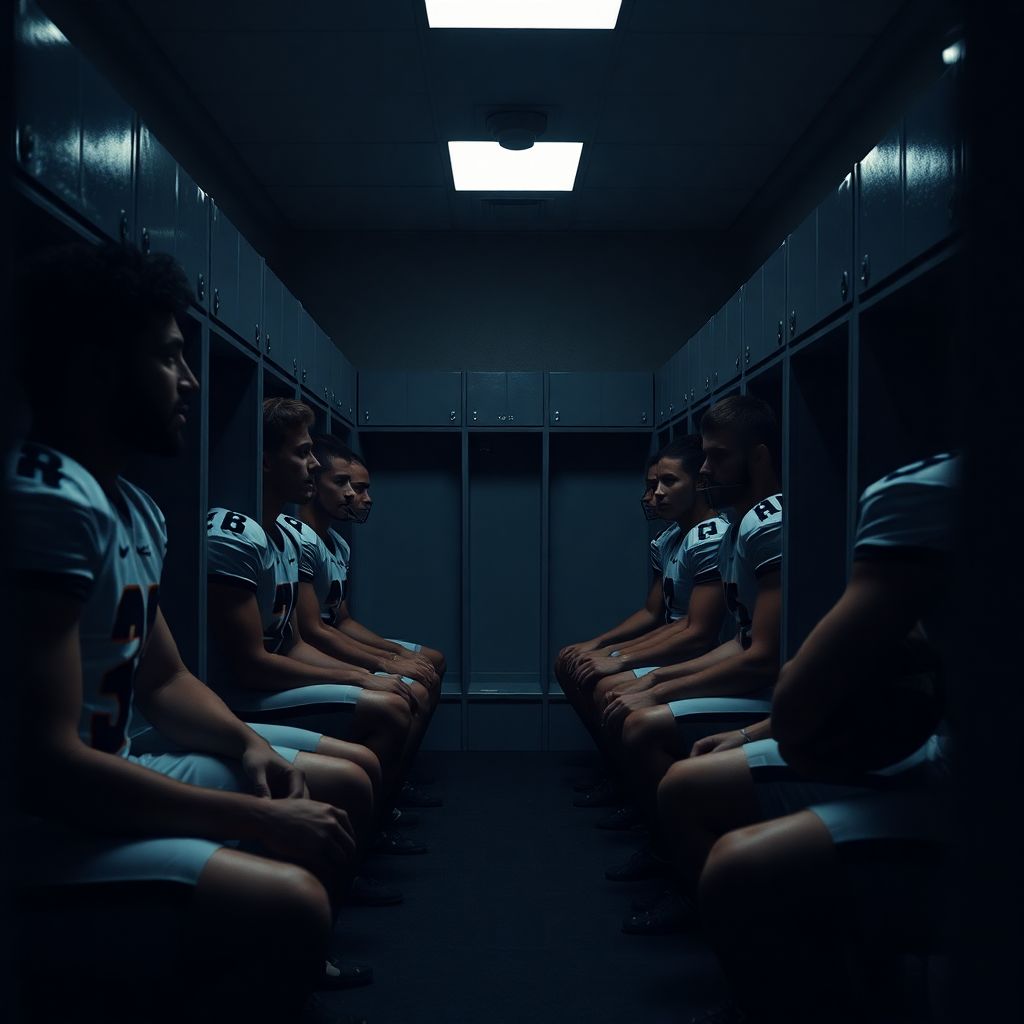
Team culture is the invisible operating system of a locker room: shared values, habits, and expectations that shape how athletes prepare, compete, and respond to pressure. Strong culture turns talent into reliable execution; weak culture leaks effort, focus, and trust, regardless of playbook quality or individual skill.
Core Locker-Room Dynamics That Drive Performance
- Clear, consistent standards for effort, preparation, and behavior on and off the field.
- Trusted formal and informal leaders who model those standards under pressure.
- Daily rituals and routines that translate values into concrete habits.
- Direct, respectful communication that surfaces issues early and resolves conflict fast.
- Fast feedback loops between training, game plans, and player behavior.
- Alignment between locker-room expectations and coaching decisions about roles and playing time.
Defining Team Culture in Competitive Sports
In competitive sports, team culture is the set of shared beliefs, norms, and behaviors that define what is acceptable, rewarded, and unacceptable inside a group. It lives most visibly in the locker room, but it drives preparation, practice intensity, and in-game decisions.
Culture is not slogans on the wall. It is what players and staff actually do when the head coach is not watching: how early they arrive, how they talk after a loss, who gets challenged and who gets protected. A good sports team culture building program does not start with posters; it starts with making these unwritten rules visible and intentional.
Useful boundaries for the concept:
- Culture vs. strategy: Strategy is what you intend to do tactically. Culture is whether players consistently execute that strategy, especially under fatigue or pressure.
- Culture vs. mood: Mood is short-term emotional weather. Culture is the climate that shapes those moods over a season.
- Culture vs. talent: Talent sets the ceiling; culture determines how close you get to it across a schedule.
To define your current culture in practical terms, track a small set of directly observable behaviors over a few weeks: punctuality, communication after errors, body language when benched, and how veterans treat rookies. These concrete signals are more reliable than abstract adjectives like “gritty” or “family.”
Leadership Structures and Influence Patterns
Leadership structure is how authority, responsibility, and influence are distributed among coaches, captains, and informal locker-room leaders. Influence patterns are the real paths by which attitudes and behaviors spread, which may or may not match the org chart.
- Formal roles: Captains, position-group leaders, leadership councils.
- Clarify decisions they own (e.g., warm-up discipline, handling minor conflicts).
- Set expectations for meeting conduct, huddles, and post-game debriefs.
- Informal leaders: Veterans or high-status players whose reactions others mirror.
- Identify who teammates naturally follow in drills, lifts, or social settings.
- Enlist them privately to model desired behaviors, especially after mistakes or role changes.
- Coach-to-leader pipeline: How staff equips player leaders.
- Run short, regular check-ins with captains focused on locker-room temperature, not just tactics.
- Use elements of locker room leadership training for teams: basic conflict scripts, giving peer feedback, handling negativity.
- Peer norms: How teammates correct or reinforce one another without staff involvement.
- Agree simple scripts for calling each other up, not out (e.g., “Next rep we do it this way.”).
- Praise public, correction mostly in small groups or 1:1.
- Back-channel influence: Group chats, car rides, and social media.
- Leaders monitor tone: sarcasm, blame, and excuses spread fast.
- Set norms for what never gets vented online (teammate criticism, internal drama).
For resource-limited programs without access to formal team performance coaching services, a simple alternative is a monthly “leadership huddle” with captains and one assistant coach, using a consistent three-question agenda: What is working in the locker room, what is not, and what will we try this month?
Norms, Rituals and Everyday Habits
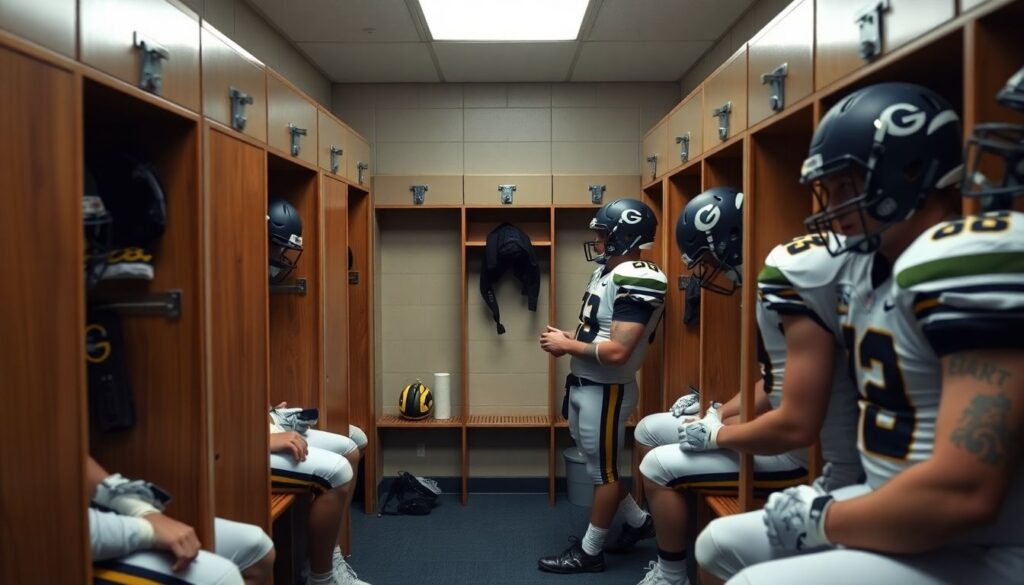
Norms are unwritten rules, rituals are repeated symbolic actions, and habits are the small daily behaviors that turn values into muscle memory. Together they create the real feel of a locker room and strongly predict on-field consistency.
- Pre-practice and pre-game routines:
- Norm: phones away at a set time before meetings, whiteboard focus on roles and matchups.
- Ritual: same short sequence (music off, captain’s words, team clap) that signals “lock-in.”
- Post-game processing:
- Norm: no blaming teammates in the locker room; analysis focuses on controllable factors.
- Habit: each player shares one specific adjustment for next game, win or lose.
- Response to mistakes:
- Norm: the first words after an error are instructive, not emotional.
- Ritual: quick “reset cue” (phrase, gesture, or breath) used in both locker room and field.
- Inclusion and hierarchy:
- Norm: rookies carry gear but are never humiliated or isolated.
- Habit: veterans intentionally sit next to different teammates weekly and ask about off-field life.
- Work ethic and preparation:
- Norm: being early is the standard; “on time” is functionally late.
- Habit: two or three small, non-negotiable preparation actions (film notes, hydration routine, recovery work).
Example: In a soccer team, a simple locker-room ritual after every training session is a two-minute “unit huddle” by position groups (defenders, midfielders, forwards) to share one positive and one improvement from that day. This builds micro-accountability without any extra cost or outside consultants.
For programs that cannot afford external athlete team-building workshops, you can design in-house rituals: player-led warm-up segments, rotating storytellers who share a personal challenge and response, or monthly “legacy sessions” where alumni join by video call to describe what the jersey means to them.
Applied locker-room scenarios across sports
Across sports, similar locker-room culture scripts show up:
- Basketball: A bench unit commits to bringing energy every time they sub in; the ritual is a specific high-five pattern and quick role reminder before checking in.
- Baseball/softball: After errors, infielders use a short mound visit to reset language: what pitch, what positioning, what next play, not who messed up.
- American football: Position groups hold five-minute post-practice film huddles twice a week using mobile devices, focusing only on assignment and effort grades.
Communication Protocols: Feedback, Conflict and Accountability
Communication protocols are agreed ways of giving information, feedback, and correction so that issues are addressed quickly without creating unnecessary drama. Good protocols support both performance and relationships; weak ones breed confusion, gossip, and resentment.
Benefits when protocols are clear and consistently used:
- Feedback reaches the right person fast, in a form they can act on.
- Players know when and how to speak up about concerns without being labeled negative.
- Conflicts are contained and resolved rather than leaking into practice intensity or game focus.
- Coaches can hold players accountable without constant emotional firefighting.
Limitations and risks to watch:
- Over-scripted communication can feel fake and reduce authenticity if leaders never adapt to personality and context.
- Protocols used only “on paper” lose credibility; inconsistency is worse than a simpler but reliable system.
- Some conflicts require private, nuanced conversations that do not fit a standard template.
- Without attention to power dynamics, direct feedback from younger players can be dismissed, breeding quiet disengagement.
Where budgets allow, sports psychology consulting for teams can help design feedback flows, role-clarity meetings, and conflict processes tailored to your roster. With limited resources, small steps work: standardize how you review film, how players request a 1:1 with staff, and how captains escalate issues.
How Culture Manifests in Tactical and Physical Performance
Culture appears in tactical choices, effort, and body language, especially during adversity. It is not a separate “soft” layer; it is the context in which systems, skills, and conditioning express themselves on game day.
Common mistakes and myths about culture and performance:
- Myth: “Culture is about everyone liking each other.”
Reality: High-performing locker rooms tolerate discomfort when challenging standards. Respect and trust matter more than constant harmony.
- Mistake: Equating loud energy with strong culture.
A noisy locker room can still avoid hard conversations. Measure culture by consistent execution under pressure, not just pre-game hype.
- Myth: Culture is fixed once established.
In reality, injuries, role changes, and coaching turnover constantly test norms. Deliberate check-ins are needed each season to re-align expectations.
- Mistake: Outsourcing culture fully to external providers.
Team performance coaching services, clinics, or a sports team culture building program can spark change, but daily enforcement must come from coaches and players inside the locker room.
- Myth: Toughness means hiding emotions.
Suppressing emotion often leads to blow-ups later. Productive culture channels emotion into focus and honest discussion, not silence or outbursts.
- Mistake: Ignoring subcultures within the team.
Position groups, starters vs. bench, and age cohorts each develop their own norms. Misaligned subcultures show up as tactical breakdowns and uneven effort across units.
Quick observational indicators on game day: how fast units reset after big plays (for or against), whether benched players stay engaged with feedback, and whether huddles get more specific and solution-focused late in contests rather than more emotional and vague.
Actionable Interventions to Change a Team’s Culture
Cultural change is behavior change repeated over time, not a single speech or meeting. Effective interventions are specific, observable, and designed to survive the full length of a season.
- Diagnose with simple, low-cost tools:
- Anonymous two-question surveys after a training block: “What helps you perform your role?” and “What gets in the way inside this team?”
- Short debrief with captains and one staff member after every third game to capture patterns while they are fresh.
- Change one or two key locker-room moments first:
- Redesign pre-game talk and first five minutes after games to emphasize controllable behaviors and role clarity.
- Set a new standard for how quickly mistakes are addressed and by whom (coach vs. captain vs. peer).
- Align incentives and decisions to new norms:
- Reward visible cultural behaviors (communication, effort, teachability) with leadership opportunities or playing-time tiebreakers.
- Be explicit when decisions reflect culture: “We chose this lineup because of how they practiced and talked this week.”
- Use external support selectively:
- If budget permits, bring in targeted athlete team-building workshops mid-season to reset focus around agreed standards.
- For lower-resourced teams, exchange best practices with nearby programs or use free online materials from reputable sports psychology consulting for teams to spark internal discussion.
Mini-case: A high school volleyball team struggled with bench disengagement and late-set collapses. The staff and captains created a simple bench code: everyone tracks one teammate and writes down one hustle or communication play per set. After matches, they share these in the locker room before any stats talk. Within a few weeks, bench energy improved, starters reported feeling more supported, and late-set execution stabilized. No new budget, travel, or staff were required; only a clear behavior and consistent follow-through.
For programs exploring a more structured sports team culture building program but lacking funds, consider a “homegrown” model: assign one coach to own culture, schedule quarterly 60-minute sessions that combine film of your own body language and huddles with short teaching segments, and rotate small-group discussions so every player speaks. This approximates aspects of formal locker room leadership training for teams without high external costs.
Practical Questions Coaches and Players Ask
How do we know if our locker-room culture is actually helping performance?
Look for consistency between practice standards and game behavior: effort late in games, communication after mistakes, and engagement from non-starters. If what you preach shows up under pressure without constant reminders, culture is likely supporting performance.
What is the smallest change we can make this month to improve culture?
Redesign one critical moment, such as how you handle post-game locker-room time. Set a short agenda, assign a player leader a clear role, and keep it consistent for several weeks before adding more changes.
Do we need outside experts to fix our team culture?
Not necessarily. External team performance coaching services and workshops can accelerate change, but most progress comes from coaches and players agreeing on clear standards and following through daily. Start with low-cost actions, then add outside help if you hit a plateau.
How can we develop player leaders without a big budget?
Pick two or three emerging leaders and meet briefly with them weekly. Teach simple skills such as starting huddles, giving constructive feedback, and supporting struggling teammates. This structured attention often beats expensive one-time events.
What should we do when a high-talent player undermines culture?
Define specific behaviors that must change, communicate them privately and clearly, and link them to role and playing time. Offer support, not just threats, and involve captains when appropriate. If behavior does not change, be ready to reduce the role to protect the team.
How long does it take to see results from culture changes?
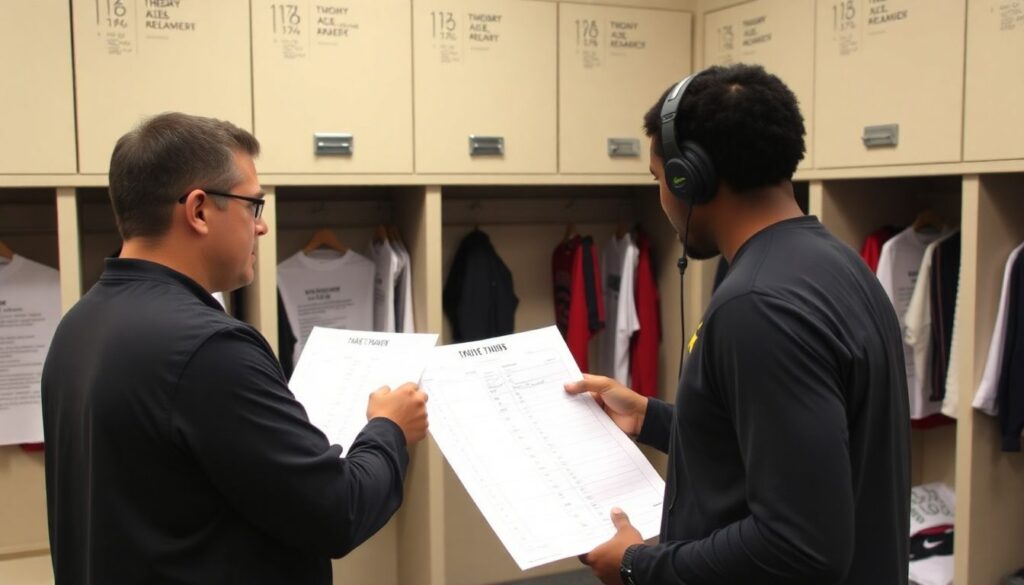
Behavioral shifts in meetings and practices can appear within weeks, but deep trust and identity changes usually take at least a full competitive cycle. Focus on a few measurable behaviors, track them, and communicate progress so players see why persistence matters.
Can culture work be integrated into normal training instead of added on?
Yes. Embed culture habits into existing drills and meetings: who speaks in huddles, how feedback is given in small groups, and how you start and end sessions. This approach is especially useful for teams with limited time and money for separate culture sessions.
Комментарии