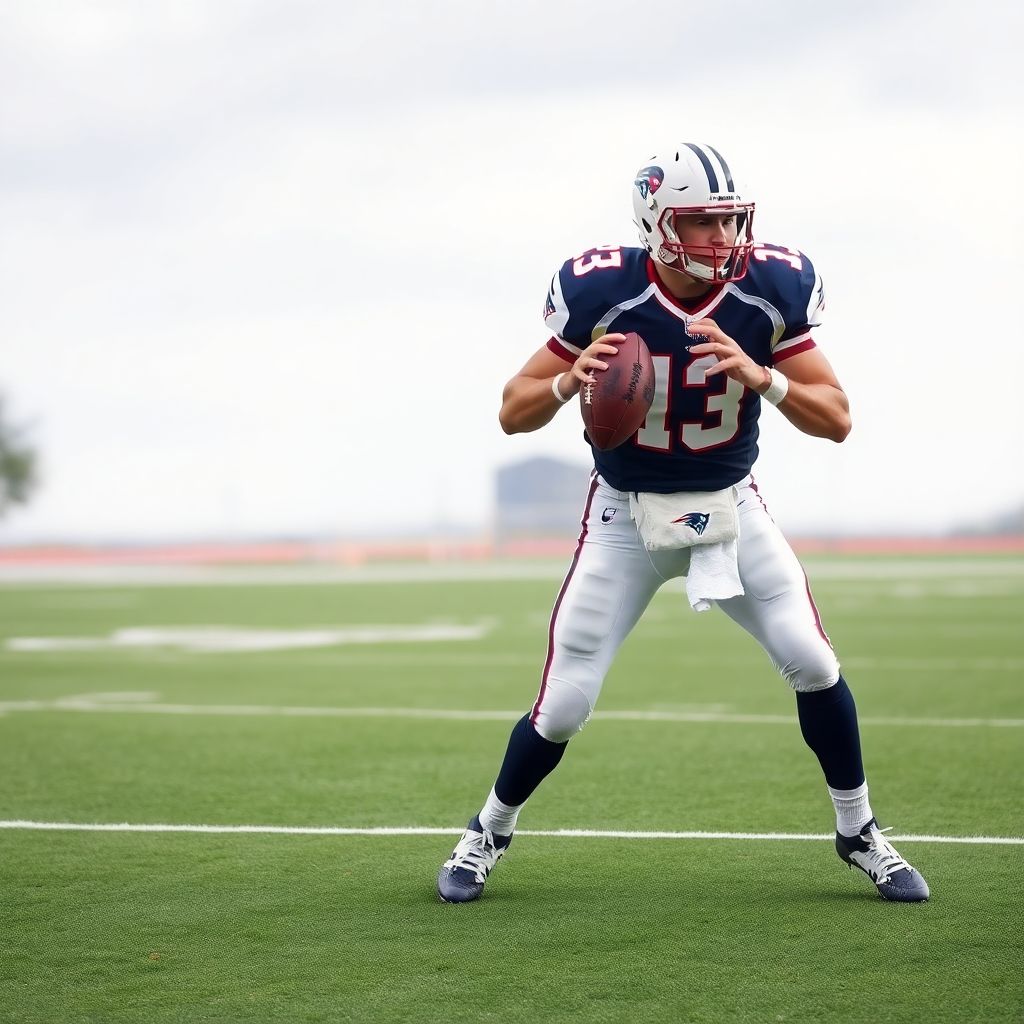
Being a small‑town Friday night star is only step one; becoming an NFL starter means adding year‑round development, exposure, and pro‑level habits. You turn raw talent into repeatable skills, pick the right college fit, train with intent, master football IQ, protect your body, and keep improving after you make a roster.
Misconceptions That Mislead Small‑Town Prospects
- Myth: Dominating local competition guarantees Division I or NFL offers. Reality: coaches recruit verified measurables, film against good competition, and live evaluations.
- Myth: You must attend a powerhouse high school. Reality: small‑town players get noticed when their film, testing numbers, and camp performances match college standards.
- Myth: One viral highlight reel is enough. Reality: scouts study full games, body language, effort on non‑highlight plays, and how you respond to adversity.
- Myth: More stars and followers matter more than development. Reality: a clear strength and conditioning program for aspiring NFL players beats social media hype.
- Myth: You need perfect facilities. Reality: consistent, intelligent work with what you have beats occasional training at fancy complexes.
- Myth: Quarterbacks must move to big cities for coaching. Reality: high‑quality online coaching for quarterbacks aiming for NFL can close most knowledge gaps.
- Myth: Getting to the league is the finish line. Reality: staying healthy, improving your role, and mastering the playbook is what makes you a long‑term starter.
Debunking Myths: How Friday‑Night Stardom Differs from NFL Readiness
Being the best player in your area means you have potential; NFL readiness means you can win matchups against elite athletes who are all fast, strong, and well‑coached. The gap is not just speed and size, but consistency, detail, and how quickly you process the game.
High‑school ball often rewards the most explosive athlete on the field. On Sundays, everyone is explosive. Coaches look for players who can execute their job correctly, on time, in every situation. That includes technique under fatigue, assignment discipline, communication, and the ability to adjust within a play.
For a small‑town athlete, the practical definition of "NFL path" is: build college‑ready measurables, dominate your level with clean tape, gain verified exposure, and then keep stacking those same qualities at each level. Your journey is a series of thresholds-high school to college, college rotation to starter, starter to pro contributor.
The fastest way to understand the difference: measure yourself by objective standards instead of local praise. That means track speed, strength, body weight, position‑specific skills, and game‑grade habits. Compare yourself to what successful college and NFL players at your position actually do all year, not just on game night.
Foundations at Home: Coaching, Facilities, and Skill Habits Built Locally
Even in a small town, you can build NFL‑level foundations with simple, repeatable systems.
- Set clear physical targets for your position.
- Define realistic strength, speed, and bodyweight goals for the next 6-12 months.
- Use an age‑appropriate strength and conditioning program for aspiring NFL players-3-4 lifting days, 2-3 speed/field days, plus mobility.
- Re‑test basics (40 start mechanics, pro‑agility, broad jump) every 8-12 weeks.
- Turn your field into a development lab.
- Use your school field or a local park to run scripted position drills three times per week.
- Film 10-15 minutes of drills (releases, footwork, pass sets, tackling form) and review on your phone.
- Practice game‑like scenarios: two‑minute drill, third‑and‑long, red zone, backed‑up, sudden‑change.
- Upgrade coaching, even if your town is small.
- Ask your high‑school staff for honest feedback: top strengths, biggest weaknesses, and one focus per month.
- Find remote specialists (for example, online coaching for quarterbacks aiming for NFL) for mechanics, reads, or technique breakdowns.
- Study college or NFL clinic talks on your position, then turn one concept per week into a drill.
- Build film habits early.
- Watch your last game every week: first for big mistakes, then for small technical errors.
- Create a simple note system: "mental error," "bad pad level," "late eyes," "poor leverage."
- Re‑practice those situations on the field within 48 hours while the memory is fresh.
- Protect your body with simple routines.
- Sleep enough, hydrate daily, and do 10-15 minutes of mobility most nights.
- Warm up properly (dynamic movement) and cool down (light jog, stretching) every session.
- Report pain early to coaches or a trainer instead of hiding it until it becomes an injury.
- Live like a leader in your town.
- Show up early, stay late, and help younger players.
- Keep your grades up and minimize off‑field drama; colleges will check.
- Let your behavior match your goals-your reputation in a small town follows you to recruiters.
Visibility and Evaluation: What Scouts Actually Look for Beyond Highlight Reels
To move from small‑town standout to recruit, you need to understand how evaluators work and put yourself in their line of sight.
- Game film that tells the full story.
- Highlights get attention; full games get offers. Coaches want to see effort on every snap, not just big plays.
- Include multiple full games against your best opponents, especially playoff or rivalry games.
- Label your position, jersey number, and class clearly on every film you send.
- Verified size and athletic numbers.
- Coaches prefer verified measurements from camps, combines, or trusted high‑school staff.
- Focus on the tests used at recruiting events: 40‑yard dash, pro‑agility, vertical, broad jump, and bench or power tests.
- Many nfl training programs for high school players are built around improving these exact tests; use them as a guide.
- Live evaluations at events.
- Use regional showcases and the best football camps for exposure to NFL scouts or college coaches-as long as your film and conditioning are ready.
- Prioritize camps hosted by schools actually recruiting your level, not just big brand names.
- At camps, win 1‑on‑1s, compete every rep, and show coachability between drills.
- Academic and character checks.
- Coaches ask your high‑school staff about grades, attitude, work ethic, and off‑field behavior.
- Small‑town gossip travels; assume everything can reach a coach.
- Clean social media, no constant complaints, and visible leadership give you an edge over similar athletes.
- Position fit and long‑term projection.
- Scouts ask: "What will this player look like after two years in our program?"
- They may project you to a different position; stay open if it increases your chances to play.
- Frame your training and nutrition around the body type needed for that projected role.
Strategic College Choices: Programs, Playing Time, and Positional Development
A smart college decision is often the hardest but most critical step from Friday nights to NFL Sundays. Your goal is not just to sign; it is to play, develop, and put strong film on record.
Advantages of Choosing the Right Level and Program
- Higher chance of early playing time, leading to more game reps and better film.
- Coaches who have developed players at your position before, with a clear plan for you.
- Strength staff willing to personalize parts of your training based on your goals and body.
- Better fit with academic expectations, making it easier to stay eligible and focused.
- System and scheme that match your strengths-for example, run‑heavy vs pass‑heavy, man vs zone coverage, spread vs pro‑style.
Limitations and Risks You Must Weigh
- Going too big (only chasing famous logos) can mean years on the bench with little film.
- Constantly transferring for more playing time can stall development and scare off coaches.
- Poor academic fit can create eligibility issues that erase your football opportunities.
- A scheme that does not match your skill set can make your numbers look worse than your actual talent.
- Choosing a place without a strong strength and conditioning culture may slow your physical growth.
Pre‑Draft and Pro Prep: Testing, Coaching, and Mental Adjustments for the NFL
Once you are a productive college player, the transition to the NFL is less about hype and more about avoiding common traps.
- Focusing only on combine testing numbers.
Myth: if you crush the 40 and jumps, you are set. Reality: teams weigh years of college tape, durability, and position skill more than a few drills.
- Ignoring scheme and playbook demands.
Myth: physical talent alone will get you on the field. Reality: rookies who master assignments and communicate quickly climb depth charts faster than pure athletes who blow calls.
- Underestimating professional strength and conditioning.
Myth: your college routine is enough. Reality: NFL workloads and travel are different; you need a targeted in‑season and off‑season plan, not random workouts.
- Neglecting mental health and lifestyle.
Myth: toughness means doing everything yourself. Reality: pros use mentors, counselors, and veteran advice to handle pressure, money, and time away from home.
- Thinking the grind ends once you make a roster.
Myth: the goal is signing your rookie contract. Reality: teams replace players every year; if you stop improving your game, someone else will take your snaps.
- Picking marketing over development environments.
Myth: the flashiest trainer or gym guarantees success. Reality: choose environments with a proven, structured approach-similar to serious nfl training programs for high school players, but scaled to pro demands.
Longevity as a Starter: Game‑Planning, Recovery, and Continuous Improvement
Staying a starter is its own job. You need simple, repeatable systems that make improvement part of your normal week, not something you chase only when you struggle.
Below is a practical example of how a small‑town athlete could structure their journey from high school to established NFL starter.
High school (Small town)
1. Three‑day strength block + two‑day speed and fieldwork.
2. Weekly film of games and 1-2 games of a college or NFL player at your position.
3. Target 1-2 regional showcases or the best football camps for exposure to NFL scouts and college coaches.
4. Learn how to get recruited to college football from small town by:
   - Building verified measurables.
   - Emailing coaches with film and academic info.
   - Attending on‑campus camps where there is real interest.

College
1. Treat the strength and conditioning program for aspiring NFL players as non‑negotiable-never skip or coast.
2. Ask position coaches each semester:
   - "What do I need to do to play more?"
   - "Which NFL players should I study for my role?"
3. Build a weekly rhythm:
   - Early‑week corrections (film of last game).
   - Mid‑week game‑plan mastery (tendencies, calls).
   - Late‑week mental reps and recovery (walkthroughs, mobility).

Pro level
1. Off‑season:
   - 8-12 week block focused on speed, strength, and position skills.
   - Film study: your own cut‑ups plus 2-3 top NFL starters at your position.
2. In‑season:
   - Early week: correct your last game, set 1-2 specific goals.
   - Mid‑week: refine technique in individual periods, protect your body in the weight room.
   - End of week: mental rehearsal of calls and situations.
3. Every year:
   - Add one new skill (release, pass‑rush move, coverage tool, protection technique).
   - Clean up one weakness exposed on film.
The core idea: Friday nights prove you love football; your daily systems-from high‑school training blocks to pro game‑planning-are what turn a small‑town star into a reliable NFL starter.
Targeted Answers to Practical Career Questions
How can a small‑town player get on college coaches' radar without big‑school connections?
Build a strong highlight and full‑game film package, then send it directly to position and recruiting coaches with your academic info and measurables. Pair that with attending college one‑day camps and regional events so coaches can evaluate you live.
Which football camps are actually worth it for exposure?
Prioritize school‑run camps at programs that already recruit your area and level, then add a few of the best football camps for exposure to NFL scouts and high‑level colleges. Avoid over‑camping; two to four well‑chosen events with great preparation beat a dozen random ones.
What should a high‑school training week look like for an NFL‑minded player?
Use three strength days, two speed/field days, and at least one focused film session. Many nfl training programs for high school players follow that pattern, mixing compound lifts, sprint mechanics, and position drills, with one lighter recovery or mobility day built in.
How can a quarterback from a small town get top‑tier coaching?
Combine your high‑school coach’s support with online coaching for quarterbacks aiming for NFL standards. Send practice and game clips to a trusted private coach, schedule regular breakdown sessions, and apply that feedback in your weekly on‑field work.
Is it better to walk on at a big school or take a scholarship at a smaller one?
Choose the place where you can realistically earn the most meaningful snaps and development. A scholarship and clear path to playing time at a smaller school often beats walking on at a powerhouse where you may never see the field.
What non‑physical habits matter most for reaching the NFL?
Film study, consistent sleep, strong nutrition, and honest communication with coaches are critical. So are academic discipline and off‑field behavior-coaches at every level factor reliability and maturity into their decisions about who plays and who they recommend upward.
How early should a player start thinking about an NFL path?
In middle school and early high school, focus on broad athletic development and basic skills. By later high‑school years, start using a structured strength and conditioning program for aspiring NFL players, building good film, and learning how to get recruited to college football from small town environments.