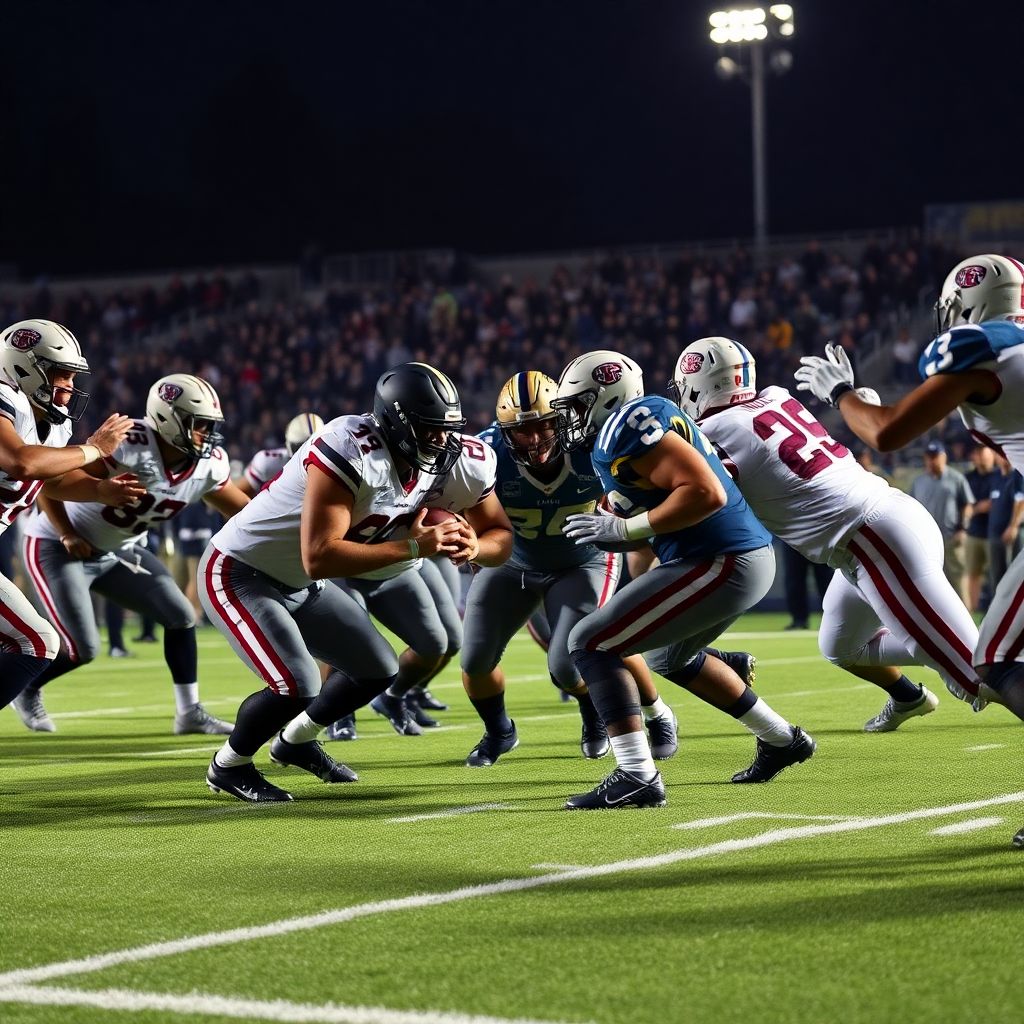
An aggressive football defensive blitz strategy works when pressure disrupts timing, forces bad throws, and fits your personnel and game situation. It backfires when coverage cannot hold, tendencies become predictable, or the offense is prepared with quick answers. Treat every blitz as a calculated risk, supported by rules, film study, and clear communication.
Core Principles of Effective Blitzing
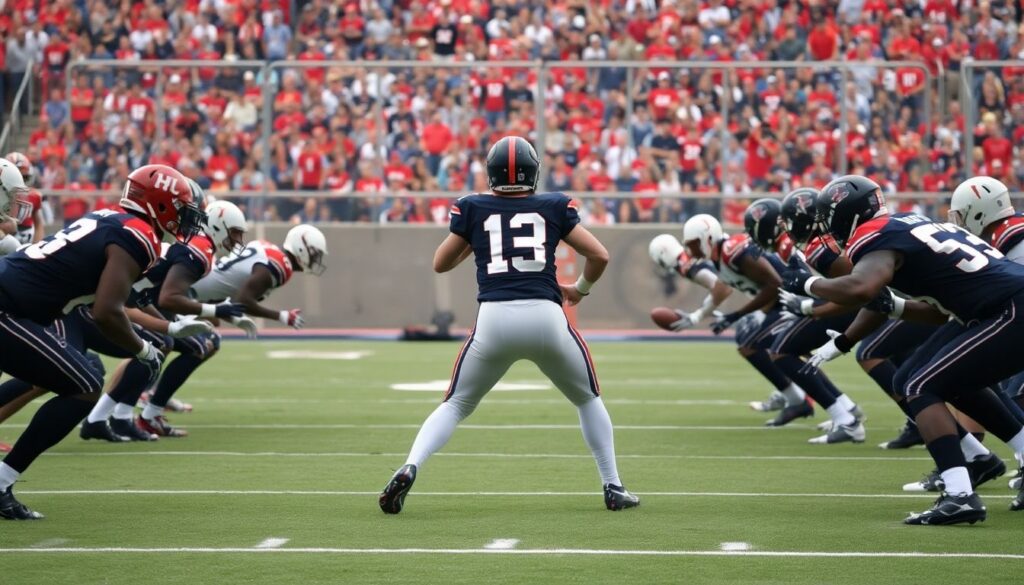
- Blitz to solve a problem (protection, quarterback, run fit), not just to be aggressive.
- Marry every pressure with sound coverage rules and clear hot-route answers.
- Disguise pre-snap pictures so the offense cannot easily identify pressure.
- Teach simple, repeatable rules; avoid constant wholesale changes in the call.
- Self-scout tendencies so your best blitz packages for defensive coordinators stay unpredictable.
- Align blitz volume with player skill, game plan confidence, and in-game communication quality.
When to Call the Blitz: Reading Game State and Personnel
Blitz calls should be driven by context: down-and-distance, field position, offensive tendencies, and your matchups. Learning how to run an effective blitz defense starts with knowing when not to call it.
Situations that favor a well-timed blitz
- Long-yardage pass downs – Third-and-medium to long where the offense is likely to throw deeper concepts and hold the ball.
- Obvious protection weaknesses – A shaky tackle, a backup lineman, or a back who struggles in pass protection.
- Quarterbacks who struggle under pressure – Passers who drop their eyes, drift in the pocket, or panic vs. extra rushers.
- Backed-up field position – Pinning an offense inside its own 20, where a negative play is highly valuable.
- Two-minute or must-pass situations – When the offense cannot afford to run and must push the ball downfield.
Red flags: when an aggressive blitz is more likely to backfire
- Your corners are losing one-on-one matchups or are clearly fatigued.
- The offense is thriving on quick-game, RPOs, and screens that punish pressure.
- Communication is breaking down (noise, tempo, confusion getting calls in).
- Offense is in max protection with extra tight ends or backs ready to block.
- Game situation favors the opponent trading yards for clock (late lead for them).
Simple decision flow: call or withhold the blitz
Before each pressure call, mentally run this checklist:
- Is it a likely pass down? If no, lean to base or simulated pressure.
- Do I like our coverage matchups? If no, avoid zero or heavy man pressures.
- Do players clearly know the call? If you feel doubt, check to a simpler call.
- Has this pressure already shown this drive? If yes, consider a change-up or bluff.
- What happens if they hit a quick throw? If the answer is a touchdown, save the call.
Designing Blitz Packages: Roles, Timing, and Stunts
Building a sustainable package means linking front, coverage, and teaching language. Well-structured defensive playbooks with blitz schemes for sale or online can be useful references, but your design must fit your personnel and practice time.
Core components of a blitz package
- Base coverage families – Decide whether your identity is man, match, or zone; build pressures off what you already play well.
- Personnel roles – Identify who are your best rushers, best cover players, and most reliable communicators.
- Pressure paths and landmarks – Define where each blitzer fits: inside shoulder of guard, outside hip of tackle, or through the B-gap, etc.
- Stunts and games – Design two- and three-man line movements (e.g., T-E, E-T, loops) that pair with your blitz angles.
- Coverage tags – Attach simple words or numbers that tell everyone if the pressure is zone, man, or zero behind it.
Practical design guidelines
- Limit your core package to a handful of pressures you can run from multiple looks (field, boundary, overload, double A-gap).
- Use mirrored versions (same concept both directions) so teaching stays simple: “field fire” vs. “boundary fire.”
- Build one change-up off every core call: bluff-and-drop, simulated pressure, or rush-from-depth variation.
Example: simple five-man fire zone
Diagram in words: Nickel off the field edge and inside linebacker through the B-gap, with defensive end to the blitz side dropping into the flat. The remaining defenders rotate into a three-deep, three-under shell.
- This pressure keeps a three-deep roof while adding one extra rusher.
- It is friendly to intermediate defenders learning zone exchange concepts.
Execution Mechanics: Techniques for Linemen, Linebackers and Secondary
Before detailing steps, recognize key risks and limitations:
- If one player blitzes to the wrong gap or depth, you may uncover an immediate explosive play.
- Overcomplicated tags or wordy calls increase the chance of blown assignments.
- Over-aggressive angles can create open seams in run fits and quick-game windows.
- Poor tackling at the catch point turns a pressure checkdown into a big gain.
-
Clarify the call, strength, and alerts
Huddle or no-huddle, ensure everyone knows the blitz name, strength (field/boundary or formation-based), and any tempo or screen alerts.
- Signal-caller repeats the call and strength word twice.
- Back-end leader (safety/nickel) echoes coverage and any motion checks.
-
Set the front and disguise the picture
Defensive linemen align in their assigned techniques while second-level players show a normal shell as long as possible.
- Coaching point: make pre-snap disguise look the same for pressure and non-pressure calls.
- Safeties show two-high or quarters, rolling late to the final shell.
-
Time the blitz with the snap
Blitzers must hit their aiming points as the ball moves, not early enough to tip the call or late enough to get washed.
- Use the quarterback’s cadence rhythm from film to set “go” triggers.
- Train linebackers to creep, not sprint, until the quarterback’s hands come together or the center’s head returns down.
-
Execute rush lanes and leverage
Linemen and blitzers must maintain lane integrity, avoiding wide loops that open escape alleys.
- Interior rushers work vertical through assigned gaps, keeping shoulders square.
- Edge rushers decide their contain vs. inside move based on call rules, not improvisation.
-
Match routes and eyes in coverage
Back-end players must key route distributions that are common answers to your pressures: slants, hots, and quick outs.
- Zone pressures: three-under droppers relate to nearest receivers, eyes on quarterback.
- Man pressures: defenders play inside leverage, expecting fast-breaking routes and picks.
-
Finish with tackling and turnover opportunities
Blitzes are only as good as the finish: secure sacks, strip attempts, and tight rally on checkdowns.
- Teach “high hands” through the throwing arm and secure wrap on the quarterback.
- Perimeter defenders trigger downhill to limit yards after catch.
Drills to reinforce safe, effective execution
- Blitz path circuit – Cones mark gaps and aiming points; linebackers and defensive backs run their paths on cadence, emphasizing pad level and balance.
- Quick-game hot drill – Offense runs slant/flat, hitch, and fade; defenders run your blitz coverage rules at reduced speed, then full speed.
Risk Assessment: Quantifying Exposure and Win Probability
Use a simple checklist to weigh risk vs. reward for each blitz you install and call.
- Does this blitz remove a deep safety or significantly thin your “roof” coverage?
- How many one-on-one matchups does the coverage create, and are they favorable?
- Is the primary quarterback read likely to be pressured or given a clean hot throw?
- How difficult is the communication (number of tags, motion checks, and coverage rotations)?
- Can all position groups execute their jobs with your current practice time?
- What is the worst realistic offensive answer (screen, max protect shot, quick fade)?
- Do self-scout and film show you tipping this pressure with alignment or body language?
- Does this call align with game situation (score, time, field position, opponent’s confidence)?
- After two failed blitzes, is continuing to call this concept helping or hurting team morale?
Countermeasures: How Offenses Exploit Blitzes and Defensive Responses
Offenses prepare entire segments of their game plans to punish pressure. Understanding their tools lets you build safer answers into your football defensive blitz strategy.
Common offensive counters and how to adjust
- Quick-game and hot throws – Answer with press technique on the outside and rotate a defender into likely slant or speed-out windows.
- Screens (RB, WR, tunnel) – Add a “screen alert” rule for interior linemen and edge players to retrace if the offensive line releases freely.
- Max protection shot plays – Call more simulated pressures that send four but show six or seven to bait heavy protection and shrink route combinations.
- Draws and delays – Teach blitzers to recognize high hat vs. low hat and throttle down if linemen set for pass then release late.
- Pick and rub routes vs. man blitz – Use banjo (switch) rules between defensive backs and linebackers to pass off crossing routes.
- Tempo to freeze your call sheet – Trim to a small, tempo-proof subset of pressures with simple signals and minimal checks.
- Audible away from pressure – Disguise field/boundary pressure and build “check with me” answers of your own (e.g., drop out to cover-2).
Game-Planning and In-Game Adjustments Based on Data and Communication
Blitz planning is not only about the whiteboard. It must live in your weekly process, sideline communication, and ongoing education. An online course on football defensive schemes and blitzing or film-based clinics can support your learning, but your system must be tailored to your roster and level.
Structured weekly approach
- Film-based targeting of protections – Chart where backs scan, how often the offense uses slide vs. man protection, and favorite quick concepts.
- Install progression – Early in the week, teach a small set of blitzes that attack specific protections; late in the week, add disguises and checks.
- Data-informed call sheet – Build a pressure menu for each down-and-distance bucket, field zone, and hash, prioritizing your highest-confidence calls.
In-game communication and adjustments
- Use the press box to chart offensive answers to pressure in real time: quick throws, screens, max protect, or protections sliding toward tendencies.
- Simplify for players: between series, communicate one key adjustment (“vs. trips, we’re checking out of zero blitz” or “vs. back strong, we move to boundary fire”).
- Rotate fresh rushers into your best blitz calls so fatigue does not destroy timing and leverage.
Alternative tools when you want pressure with less risk
- Simulated pressures – Rush four but show six or seven; drop unexpected defenders into coverage to steal hot routes.
- Zone blitz with three-deep shell – Maintain a strong “roof” while exchanging a lineman into coverage to confuse the quarterback.
- Pre-snap bluff, post-snap bail – Show a heavy blitz look, then drop into conservative coverage, forcing the offense into rushed protection checks.
- Four-man twist and stunt packages – Generate pressure with movement up front instead of additional rushers.
Studying high-quality defensive playbooks with blitz schemes for sale, then combining them with your film breakdown and practice constraints, allows you to build a well-rounded, safe, and aggressive pressure system that maximizes your players’ strengths.
Practical Situations and Concise Solutions
How often should I blitz in a typical game?
Base your blitz frequency on opponent tendencies and your personnel, not a fixed percentage. If pressures are generating disruption without exposing major coverage busts, keep them in the mix; if the offense consistently has clean answers, reduce volume and lean on simulated pressures.
What if my corners are average but my linebackers are great rushers?
Favor zone blitz and simulated pressures over all-out man blitz. Keep a two- or three-deep shell, send linebackers from interior and edge, and give your corners help over the top so you can still leverage their rush skills without constant one-on-ones.
How do I teach younger players to handle blitz rules safely?
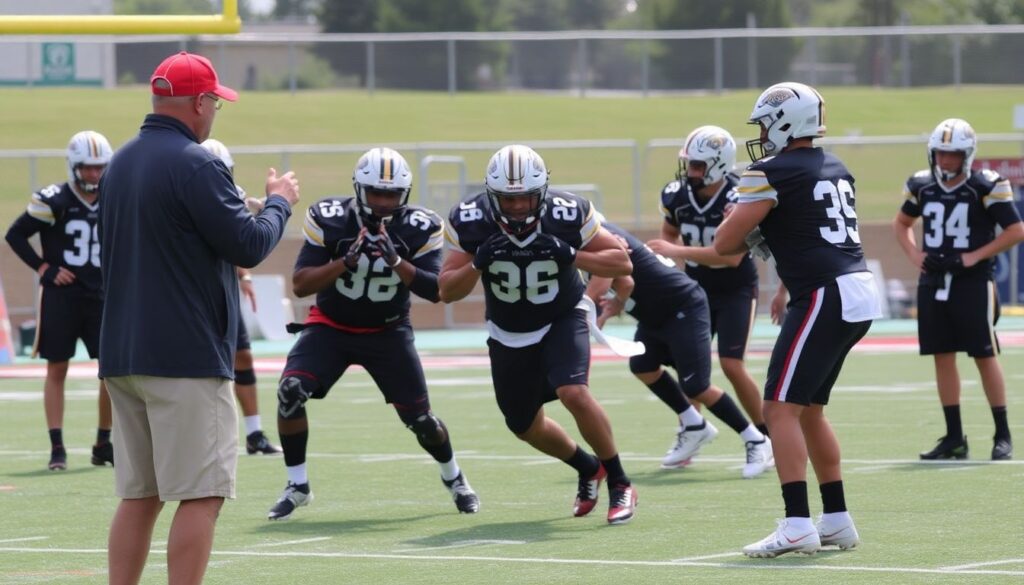
Start with one or two simple pressures from your main front and coverage. Use walk-throughs, on-air blitz path drills, and low-speed team periods before going full speed, emphasizing alignment, assignment, and tackling leverage on every rep.
What is the safest blitz to call in the red zone?
Use five-man zone pressures that keep at least two safeties or a three-deep structure, depending on the field space. Avoid zero blitz unless you fully trust your one-on-one matchups and understand the offense’s favorite red-zone picks and rubs.
How do I handle an offense that is killing us with screens vs. pressure?
Tag a screen alert to your main blitzes and coach linemen and edge defenders to recognize linemen releasing freely. Mix in calls where you bluff pressure and bail into conservative coverage, baiting the screen into a set defense.
Is it worth investing in resources to improve my blitz package?
Yes, if you can translate theory into practice. Use an online course on football defensive schemes and blitzing, clinics, and film study to sharpen your understanding, but always scale concepts down so they fit your players, level of play, and practice time.
How do I self-scout my own blitz tendencies?
After each game, chart every pressure by down, distance, hash, formation, motion, and result. Look for repeated patterns the offense could exploit and create at least one counter call or disguise for each heavy-tendency situation.