
Dual-threat quarterbacks are passers who can legitimately threaten defenses as both pocket throwers and designed or improvised runners. Their rise forces defenses to adjust fronts, coverages, and contain rules, because every snap can stress numbers in the box, conflict defenders’ keys, and punish overaggressive pass-rush plans.
Essential concepts behind the dual-threat quarterback trend
- A dual-threat QB is a primary passer with designed and improvised run value, not just a scrambling athlete.
- The trend accelerated as college spread concepts and QB runs entered NFL and high-level high school offenses.
- Modern defenses must treat the QB as a true run-gap and perimeter threat on every down.
- Front structure, edge integrity, and coverage leverage are more important than single “spy” solutions.
- Preparation now includes specific dual threat quarterback training program work on offense and tailored contain drills on defense.
Historical shift: from traditional pocket passers to mobile playmakers
Traditionally, the ideal quarterback was a pure pocket passer: win from the pocket, operate under center, and hand the ball off in run game. Mobility was “nice to have” for scrambling away from pressure, but not a core part of the offensive identity or call sheet.
The rise of spread offenses in college changed that template. Shotgun, wide formations, and packaged concepts turned the quarterback into an extra runner, stressing defenses that were built to handle 10 offensive threats, not 11. These systems began feeding the league with athletes comfortable making reads on the move.
Today, many of the best dual threat quarterbacks in NFL and college ball are featured as designed runners on zone read, power read, and QB draws, while also executing full-field progressions. The label “dual-threat” now implies a complete quarterback whose legs are a built-in part of the scheme, not a backup plan.
Defensively, this evolution means coordinators must re-think what “sound” structure looks like. Older playbooks assumed the QB was a non-runner; now, every gap and edge must be accounted for with the quarterback included.
- Clarify with your staff: what exactly you mean by “dual-threat” in your scouting reports.
- Tag film where the QB is a designed runner vs. a scrambler.
- Identify when and how the offense first used the QB run to punish defenses.
- Note how your league’s dominant offenses differ from older, under-center systems.
Defining traits: the athletic, cognitive, and technical profile of dual-threat QBs
A dual-threat QB is more than “fast.” It is a specific blend of athletic tools, processing, and technical skills that allow the offense to threaten all 53⅓ yards horizontally and the deep field vertically.
- Functional running ability, not just straight-line speed. Ability to accelerate, change direction, and finish through arm tackles. Enough contact balance to run QB power, counter, and draw without constant injury risk.
- On-the-move decision-making. Comfort reading defenders while rolling, booting, or on RPOs. This is where good quarterback camps for dual threat qbs focus: keeping eyes up and progressing while moving.
- Base-level pocket competence. Can set up, read standard coverages, and hit rhythm throws. Without this, defenses will load the box and dare him to beat them outside.
- Ball-handling and mesh skills. Clean fakes, rides, and pulls on zone read or power read. Hesitation or sloppy mesh points kill the constraint value of these plays.
- Defensive recognition pre- and post-snap. Understanding how fronts and coverages shift when the defense is clearly focused on how defenses stop dual threat quarterbacks, then exploiting over-adjustments.
- Competitive toughness and situational awareness. Sliding vs. taking hits, finding the sideline, and knowing down-and-distance before deciding to scramble or throw it away.
- Confirm: can the QB win from the pocket when the defense takes away QB runs?
- Evaluate his decisions on rollouts, boots, and RPOs, not just straight dropbacks.
- Chart designed runs vs. scrambles across multiple games.
- Assess ball security and durability across an entire season.
Offensive design: schemes and play concepts that maximize QB mobility
Offenses that feature a dual-threat QB build their call sheet around stressing both edges and interior gaps while still protecting the QB’s longevity. The goal is to force defenders into conflict: fit the run or respect the pass.
-
Zone read and power read families.
Classic shotgun looks where the QB reads an edge defender. If the edge crashes the RB, the QB pulls; if the edge sits, the ball is handed off. Power read inverts responsibilities, letting the QB attack outside while backs hit inside.
-
QB-designed runs (draw, power, counter).
These concepts treat the QB like a tailback in structured schemes, particularly in short yardage and red zone. They are often tagged off spread formations to lighten the box.
-
Boot, sprint-out, and movement passes.
Rollouts simplify reads, change launch points, and punish edge pressure. Offenses pair these with deep overs, crossers, and late flats to flood zones horizontally.
-
RPOs and play-action off QB run looks.
Line blocks run; the QB reads a second-level defender and throws behind him if he inserts into the run. When defenses oversell to stop QB runs, glance routes, slants, and glance posts open up.
-
Empty and spread-to-run structures.
Empty formations widen the defense and invite light boxes for QB draws and QB powers. Some of the best dual threat quarterbacks in nfl history have feasted on light-box QB draws from empty.
- Identify your QB’s top 2 run concepts and build play-action and RPOs off them.
- Track hits per game on the QB and cap designed runs accordingly.
- Teach identical motions and formations that can produce runs, RPOs, and shots.
- Self-scout: which formations are obvious “QB run” alerts to defenses?
Defensive disruptions: how dual-threat QBs create assignment and pursuit problems
From the defensive perspective, a true dual-threat QB changes the math. He is an extra gap threat in the box and a speed threat on the perimeter. Standard gap fits and pass-rush plans can quickly become unsound if they ignore the QB.
Dual-threat QBs particularly punish defenses that chase sacks with wide, undisciplined rush lanes, or that over-rotate coverage without adding a corresponding body to contain the perimeter. Poor edge leverage and slow support from safeties show up immediately on tape.
Primary stressors dual-threat QBs impose on defenses
- Run-game arithmetic issues. When the QB carries the ball, the offense can block a defender who would normally be “free,” forcing defenses to either add a hat to the box or live with a light number.
- Edge and contain conflicts. Read schemes target one contain player and force him to be wrong: squeeze the dive and the QB keeps, widen and the back gashed inside.
- Scramble and plaster stress in coverage. When rush lanes break down, QBs extend plays. Zones must “plaster” receivers and man defenders must avoid turning their back completely.
- Tempo and fatigue. Hurry-up plus QB runs wear down heavy personnel and demand frequent substitutions or rotation, which offenses can exploit with tempo.
Constraints and vulnerabilities of dual-threat offenses
- Quarterback health and durability. Frequent designed runs expose the QB to more hits; defenses that tackle well and rally can bank on cumulative wear.
- Passing-game limitations vs. specific shells. Some dual-threat QBs struggle attacking tight quarters or late-rotating coverage; disguised two-high shells can force them to hold the ball.
- Execution burden on zone read and RPO timing. When defenses change the read key or muddy the picture with creepers/simulated pressures, the offense can misread and stall.
- Long-yardage and two-minute scenarios. When the run threat is reduced by situation, defenses can rush more aggressively and stress pure passing ability.
- Diagnose where your current structure loses a gap when the QB runs.
- Chart explosive plays allowed: designed QB runs vs. scrambles.
- Note which coverages your defense plays least confidently vs. mobile QBs.
- Evaluate tackling and pursuit angles on broken plays in recent film.
Countermeasures: personnel choices, front structures, and coverage adjustments
Defensive coordinators often overreact to dual-threat QBs with simplistic answers like “just spy him.” Effective plans combine personnel decisions, front integrity, simulated pressure, and coverage rules that keep vision on the QB without sacrificing numbers elsewhere.
-
Myth: a single spy solves everything.
One defender “spying” can be out-athleted or picked off by route traffic. Better answers involve rush-lane integrity, coordinated edges, and zone-dropping linebackers who rally together.
-
Myth: you must sit in vanilla zones.
Afraid of losing contain, some teams abandon pressure. Well-timed creepers and simulated pressures can still confuse protection while keeping edges disciplined.
-
Mistake: mismatched personnel vs. QB run game.
Light boxes and sub-packages with undersized edges invite QB power and counter. Use bigger bodies or at least strong, physical overhangs who can spill and set edges.
-
Mistake: ignoring your own offensive impact.
Your offense’s tempo, possession time, and ability to score influence how offenses call QB runs. If you fall behind early, expect more QB run stress when you are gassed.
-
Mistake: static week-to-week rules.
Rules for one QB do not always translate to another. A football playbook to defend mobile quarterbacks should include menu-based answers: different for a speed-based QB vs. a power-based one.
- Identify two personnel groupings you trust vs. QB run and scramble stress.
- Define clear rush-lane rules for edges, interior, and contain on passing downs.
- Build a small package of creepers/sims that maintain contain but pressure protections.
- Create specific “menu pages” in your call sheet for different QB archetypes.
Coaching and preparation: training, film study, and situational practice for both sides
Preparation for dual-threat QBs starts months before kickoff. Offenses design off-season work to grow the QB as a passer while safely integrating run threats. Defenses build practice scripts, drills, and film cut-ups centered on edge integrity and pursuit angles, not just coverage chalk-talk.
A structured dual threat quarterback training program typically blends footwork and release work with sprint mechanics, change-of-direction drills, and on-the-move throwing. Many quarterback camps for dual threat qbs add decision-making periods that simulate zone reads and RPOs using live defenders or bags as read keys.
Defenses respond with dedicated “QB run” and “scramble” practice blocks. These emphasize squeeze-and-pop techniques for ends, cross-face pursuit angles for linebackers, and “plaster” rules for defensive backs when plays extend beyond initial timing.
Mini-case: simple review algorithm for your dual-threat QB game plan
Use this short, repeatable process in staff meetings to check if your plan against a mobile QB is complete and coherent.
- Identify the offense’s core QB runs. From film, list their top 3-5 designed QB run concepts and favorite formations/motions for each.
- Assign specific answers. For each QB run, write down your base front, support player, and edge rules (who has dive, QB, and pitch/overhang).
- Stress-test with situations. Ask: “What if they call this in red zone? In backed-up? In 3rd-and-medium?” Adjust calls where you are soft or light on edges.
- Overlay coverage and rush plans. Confirm that your pressure/coverage packages still maintain contain and do not blow gap fits when the QB keeps.
- Simulate on the field. Script 10-12 reps of their best QB concepts vs. your chosen calls. Correct assignment busts immediately and re-run until clean.
- Verify you can name your answers to the opponent’s top 3 QB run concepts.
- Ensure every defender knows his assignment versus zone read, power read, and QB draw.
- Confirm you have at least one safe call for long-yardage, red zone, and 2-minute situations.
- Review practice film to see if scramble lanes and edges remain secure under pressure.
Practical concerns coaches and coordinators commonly face
How do I balance spying the QB with maintaining sound coverage?
Treat the spy as part of a coordinated rush-and-coverage plan, not a standalone answer. Use zone coverages behind simulated pressures so multiple defenders keep vision on the QB, and allow the spy to trigger late rather than mirroring constantly.
What is the first thing to fix if my defense keeps giving up QB scrambles?
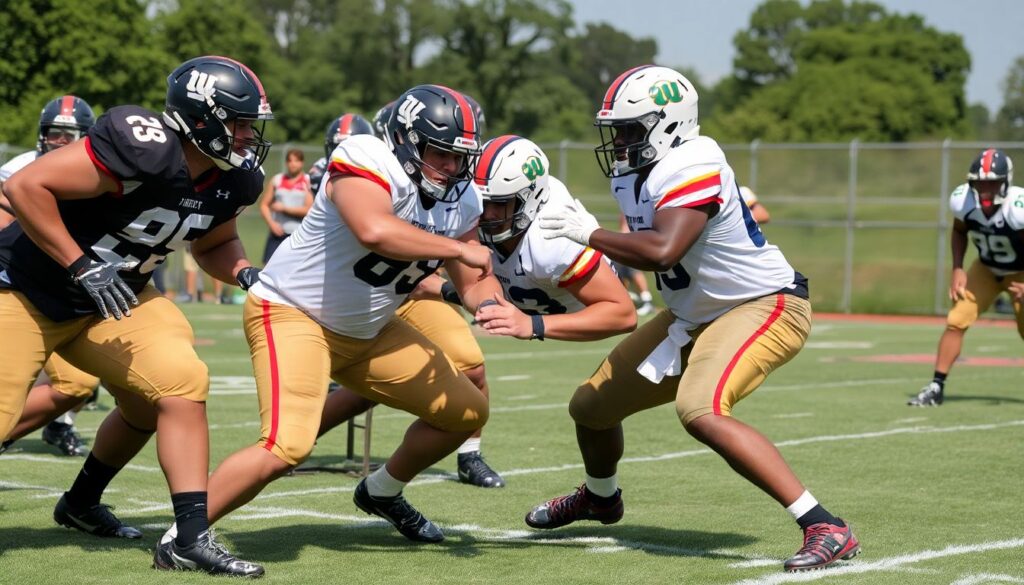
Start with rush-lane integrity. Define clear rules for edges and interior rushers, then drill “cage” rushes in practice. Often, fixing over-widened ends and undisciplined interior loops drastically reduces scramble lanes without changing coverages.
How can a smaller, less athletic defense compete with a top dual-threat QB?
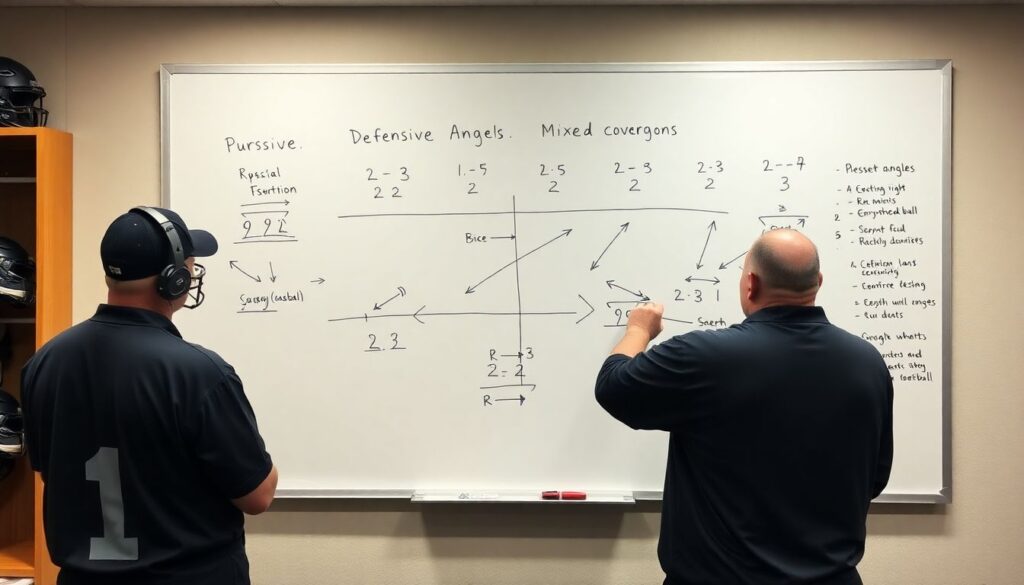
Win with alignment, leverage, and tackling angles. Use tighter fronts, force the ball to help, and emphasize inside-out pursuit. Mix coverages to change post-snap pictures so the QB holds the ball, giving rally defenders time to close.
How should we adjust our offensive approach if we have a dual-threat QB but a thin depth chart?
Feature QB movement in the pass game and selective designed runs in high-leverage spots, rather than high-volume QB carries. Build RPOs and play-action off your base runs so the QB threatens with legs and arm without excessive hits.
Do I need a completely separate playbook just for mobile quarterbacks?
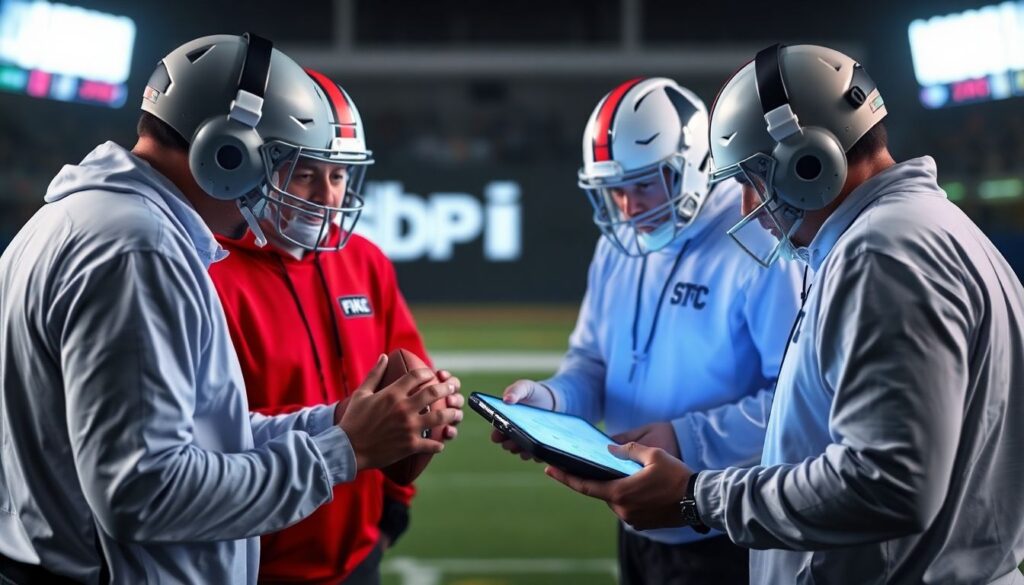
No, but you should maintain a focused sub-section: a football playbook to defend mobile quarterbacks that outlines fronts, pressures, and coverage calls you trust vs. QB run and scramble. Update it yearly based on opponents and personnel.
What practice structure works best the week we face a dual-threat QB?
Use shorter, more frequent QB-run and scramble periods, mixing inside run, perimeter option, and 7-on-7 with scramble rules. Make sure scout QBs are coached on timing and reads so the looks your defense sees mimic game speed and sequencing.
How do I evaluate if our plan against a dual-threat QB actually worked?
Post-game, chart explosives, QB rushing attempts, and scramble conversions on third down. If you forced the QB into more designed runs than scrambles, limited explosives, and kept red-zone QB runs out of the end zone, the structure likely held up.