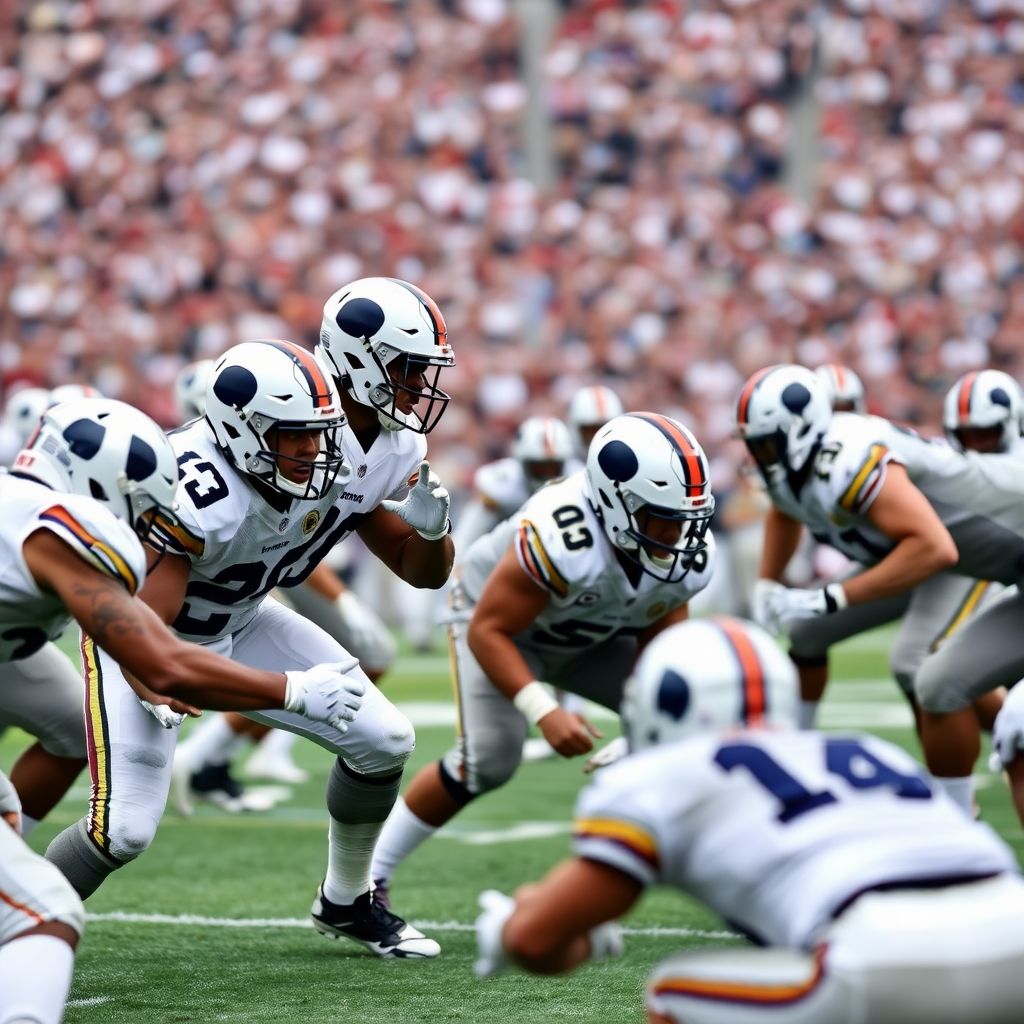
Defensive schemes evolved from the classic 4-3 into hybrid fronts to answer spread offenses, mobile quarterbacks, and versatile personnel. The 4-3 provides clear gap control and simple rules, while hybrids blend 4-3 and 3-4 structures, move the front, and reassign roles so the same players can fit multiple looks without wholesale substitutions.
Core Concepts to Grasp in Defensive Evolution
- The classic 4-3 is a four down lineman, three linebacker structure built on clear gap assignments and simple fits.
- Offensive spread concepts, tempo, and option football exposed rigidity in traditional 4-3 spacing.
- Hybrid fronts merge 4-3 and 3-4 principles, changing who is on or off the line without changing personnel.
- Role flexibility for the SAM, MIKE, edge and nickel is central to modern defensive design.
- Front rotation and disguise target the quarterback's pre-snap reads and protection calls.
- Implementation requires phased teaching, focused drills, and consistent language across calls.
Origins and Principles of the Classic 4-3 Defense
The classic 4-3 defense uses four down linemen and three linebackers as its base structure. Typically you see two defensive ends on the edges and two interior tackles, with a SAM, MIKE, and WILL stacked behind them. Each defender is tied to a primary gap and run fit rule.
Most coaches anchor the front around a 1-technose and 3-tech tackle. The 3-tech lines up on the outside shoulder of the guard, attacking the B-gap, while the 1-tech shades the center, controlling the A-gap. Defensive ends handle C-gaps or force/contain, and linebackers fit off the movement of the front.
The appeal of the 4-3 is clarity. Players can learn consistent day-one rules: MIKE fits strong A-gap to flow, SAM plays over the tight end, WILL tracks the open B or cutback lane. This simplicity is why many american football coaching books on modern defenses still start from a 4-3 teaching model, even when they later introduce hybrids.
Historically, the 4-3 matched up well against two-back, under-center offenses. It created clean angles versus power and iso runs, and four down linemen simplified pass rush rules. If you browse football defensive playbooks for sale, older manuals often show classic 4-3 diagrams versus I-formation and pro sets because that was the dominant offensive environment.
Tactical and Personnel Limits That Drove Innovation
As offenses changed, stresses on the traditional 4-3 became obvious. Several consistent pain points pushed coordinators toward more flexible, hybrid fronts.
- Spread formations and space stress. Three and four wide receiver sets forced SAM linebackers to play in space versus slots, exposing coverage and tackling mismatches on the perimeter.
- Option and RPO conflicts. Read-option and run-pass option concepts put unblocked ends and conflict defenders into difficult decision trees, especially when their rules were tied rigidly to gaps rather than specific threats.
- Pass rush predictability. With four true down linemen every snap, protections became easy to sort. Offenses could slide to the best rusher or set half-slide protections without fear of unexpected fourth or fifth rushers from depth.
- Personnel mismatches at edge. Many rosters lack four natural hand-in-the-dirt linemen. Forcing a tall, lighter end to play every snap in a three-point stance can hurt both run defense and coverage flexibility.
- Tempo and no-huddle issues. Fast offenses limited substitution, trapping base 4-3 personnel on the field versus 10 or 11 personnel where nickel or dime spacing would be preferable.
- Coverage disguise limitations. A static 4-3 shell made it harder to disguise whether the defense was in single-high, two-high, man, or zone because the front and box picture rarely moved.
Defensive coordinator clinics hybrid fronts frequently highlight these issues as the root reasons coordinators began experimenting with 3-4 elements, stand-up edges, and flexible fronts that could morph without changing personnel.
Defining Hybrid Fronts: Alignments, Gaps and Roles
Hybrid fronts combine alignments from the 4-3 and 3-4 into a single language, letting coaches shift between looks on demand. In practice, this means changing how many players are on the line of scrimmage versus stacked at linebacker depth, while preserving clear gap responsibility for each defender.
At a minimum, a hybrid system teaches players both:
- a four-down picture (two ends, two tackles), and
- a three-down picture (two four- or five-tech ends and a nose, with edges or overhangs walked up or back).
Below are typical usage scenarios that show where hybrid fronts shine, along with simple visual and role notes you can mirror in your own downloadable football defensive scheme diagrams.
Scenario 1: Early Downs vs 11 Personnel (Balanced Run-Pass)
Visual alignment: Present a 4-2-5 look with a 3-tech and 1-tech inside, two ends, a nickel over the slot, and two stacked linebackers (MIKE, WILL).
Responsibilities: The front plays traditional 4-3 gap control versus the run, while the nickel acts as an extra force defender. In pass situations, one end can drop to the flat, morphing the front into a three-down simulated pressure without subbing.
Use case: Offenses see a light box and may check into runs; the defense still has firm interior gaps with the flexibility to spin safeties and edges post-snap.
Scenario 2: Passing Downs vs 10 Personnel
Visual alignment: Shift to a 3-2-6 presentation: a nose over the center, two 4i or 5-techs inside the tackles, two box backers, with edges or nickels walked up wide.
Responsibilities: Interior players control A and B gaps while wide rushers attack the tackles. A linebacker or nickel becomes a fifth rusher or buzz-dropper, allowing disguised five-man pressures without obvious tells.
Use case: The front looks like 3-4, but personnel are the same. You gain rush angles and coverage disguise without tipping blitzes.
Scenario 3: Short Yardage and Goal Line
Visual alignment: Present a heavy five- or six-man surface: a nose, two interior tackles, and two or three edges tight to the line, with linebackers stacked tight behind.
Responsibilities: Each interior defender has a gap, while edges handle C or D gaps and set vertical knock-back. Linebackers play low and fast downhill, fitting off interior movement.
Use case: You can walk a SAM or big nickel down as the extra man on the line, essentially shifting from a 4-3 to a 5-2 without changing names or personnel rules.
Scenario 4: Mobile Quarterbacks and Option Teams
Visual alignment: Use a three-down base with a stand-up edge to the quarterback side and a hand-down end away. The nose shades toward the back, with two stacked backers.
Responsibilities: The stand-up edge is the designated quarterback player, squeezing or feathering, while the end crashes the dive. Backers scrape to pitch or cutback, and a safety rotates to support option responsibilities.
Use case: Hybrid rules allow you to tag calls that simply reassign who has dive, quarterback, and pitch, rather than building a completely separate option playbook.
Scenario 5: Pressure Packages versus Protection Schemes
Visual alignment: Start in a 4-2-5 shell, then walk the WILL or nickel down late, creating a five-man line picture.
Responsibilities: The walked-up defender becomes an edge rusher, while a defensive end can drop to the curl-flat. The nose and 3-tech attack interior gaps, stressing slide protections.
Use case: You can show four, rush five, and still play sound coverage behind the pressure, something heavily emphasized in many online course on football defensive schemes 4-3 3-4 hybrid offerings.
Linebacker and Defensive Line Interplay in Hybrid Sets
Hybrid fronts only work when linebackers and defensive linemen understand how their jobs are tied together. The same player may be a 4-3 end on one snap and an outside linebacker on the next, or a MIKE may adjust his fit based on whether the front is even or odd.
Advantages of Hybrid Interplay
- Role versatility for edge players. A defensive end who can play in a two-point stance as a rush backer unlocks both 4-3 and 3-4 looks without changing personnel.
- Better matchup control. Coordinators can move the best run defenders into the most attacked gaps, and place best cover backers on backs or tight ends, independent of base structure.
- Flexible run fits. Linebackers can use plus or minus techniques, scraping over the top or plugging inside based on the front call rather than being locked into static A, B, or C gap rules.
- Disguised pressure and coverage. Linebackers and edges walking up or back create uncertainty for the quarterback and offensive line about who is rushing and who is dropping.
- Roster efficiency. Programs with limited personnel can play multiple looks with the same eleven defenders, essential for smaller rosters and lower levels of play.
Constraints and Coaching Challenges
- Cognitive load. Players must learn multiple alignments and fits; without clear, consistent language, assignment busts increase quickly.
- Technique dilution. Asking one edge to master both hand-in-the-dirt and stand-up roles can water down technique if practice time is not allocated carefully.
- Fit integrity vs. creativity. Over-rotating fronts and moving backers can create open seams if coaches do not emphasize gap soundness before pressure and disguise.
- Communication stress. Hybrids rely on pre- and post-snap communication. In loud stadiums or hurry-up situations, complex tags can break down.
- Development pathway. Younger players may need a simpler sub-package or reduced menu before they can handle a full hybrid call sheet.
Play-Calling, Front Rotation and Situational Usage
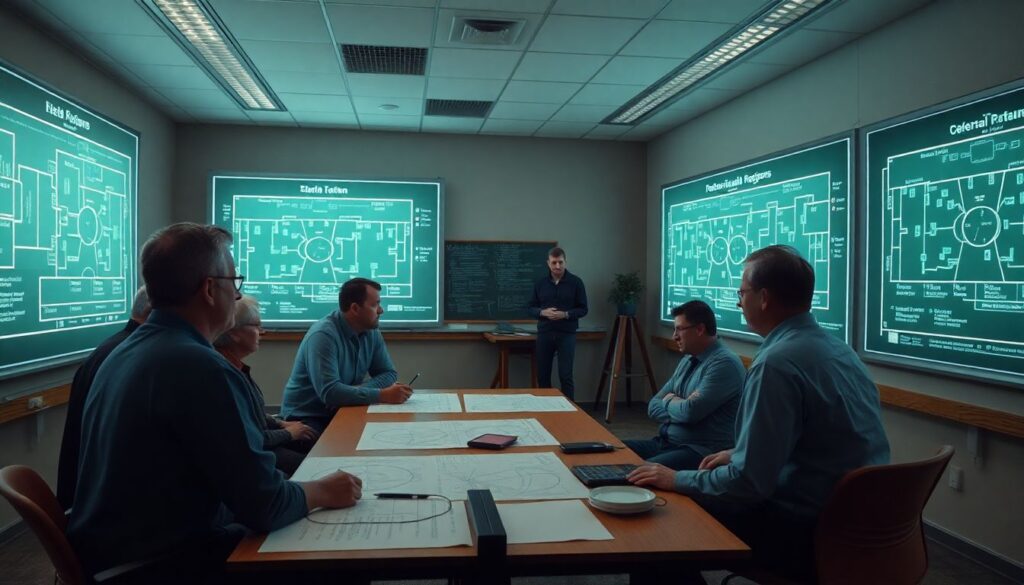
Once the structure is installed, the main coaching art is deciding when and how to rotate fronts and use specific hybrid tools. The goal is to alter the picture for the offense without sacrificing your own clarity.
Frequent Missteps and Persistent Myths
- Myth: more fronts automatically equal better defense. Overloading the call sheet with every possible alignment leads to mental overload. It is more effective to major in a small number of hybrid looks and tag them smartly.
- Mistake: ignoring opponent tendencies. Rotating between 4-3 and 3-4 pictures just to be multiple, without tying calls to formation, field position, and down-and-distance data, wastes the strength of hybrids.
- Myth: hybrid equals constant blitzing. Many successful hybrid defenses rush four most of the time; the advantage comes from who the four are and from where they look like they are coming.
- Mistake: front structure disconnected from coverage. Calling a complex front rotation without considering whether your secondary can hold up in the paired coverage often leads to explosives, even when the front wins.
- Myth: hybrids are only for big-time programs. With good teaching progression, high schools and small colleges can run a simple two- or three-front hybrid package that matches their personnel and practice time.
- Mistake: skipping documentation and study. Coordinators who do not organize their materials, diagrams, and cutups struggle to refine calls. Using downloadable football defensive scheme diagrams and structured notes from defensive coordinator clinics hybrid fronts sessions speeds up self-scout and teaching.
Situationally, many coordinators adopt a base rule of thumb: even fronts (four-down pictures) on early downs against heavier personnel, odd/hybrid fronts (three-down with edges) on passing downs and versus spread sets, then adjust week-to-week based on the opponent's core runs and protections.
Practical Implementation: Practice Drills and Phased Integration
Implementation works best when framed as an evolution of your current system, not as a total replacement. Below is a simple phased plan with practice ideas and short, game-like scenarios for each step.
Phase 1: Language, Landmarks and Core Fronts
Goal: Teach players a common language for gaps (A, B, C), techniques (1-tech, 3-tech, 5-tech, 4i) and key roles (SAM, MIKE, WILL, nickel, edge).
- Drill: Walk-through alignment circuits where the coach calls a front (for example, Over, Under, Mint) and players jog to spots, then point to their primary gap.
- Mini-scenario: Ball on the hash, 11 personnel, twins to the field. Coach calls your base 4-3 front and asks each defender to verbalize gap, coverage responsibility, and primary run threat.
Phase 2: Adding One Hybrid Look to the Base
Goal: Install a single hybrid call that can morph your 4-3 into a three-down picture without substitutions.
- Drill: Half-line inside run where one side plays base 4-3, then on command shifts into the hybrid front pre-snap. Focus on pad level and eyes staying on keys despite movement.
- Mini-scenario: 2nd-and-7 versus trips. Call your hybrid front that walks the SAM down as an edge. Players explain who becomes the new force player and how the MIKE and WILL adjust their fits.
Phase 3: Pressure Tags and Simple Disguise
Goal: Layer in one or two basic pressure tags off the hybrid front, emphasizing who becomes the fourth or fifth rusher.
- Drill: Blitz path work for backers and nickels: start from depth, on cadence trigger, and run the exact pressure lane to a cone representing the quarterback, then finish with a strip or rake.
- Mini-scenario: 3rd-and-5 from the middle of the field. Offense in 3×1. Call a simulated pressure where the boundary end drops and the field nickel becomes the fourth rusher. Review how this changes hot throws and underneath windows.
Phase 4: Coverage Ties and Per-Game Menu
Goal: Connect each front and hybrid pressure to specific coverages you are comfortable playing, then trim to a weekly game plan menu.
- Drill: Team period with restrictions: only use two fronts and two coverages. Emphasize pre-snap disguise (shell, leverages) and post-snap clarity (who fits, who drops, who drives seams).
- Mini-scenario: Red zone, ball on the 12-yard line. Offense in tight bunch. Call a hybrid front with quarters coverage behind it, then walk through how edge and backer fits change versus sprint-out, power, and quick game.
Phase 5: Ongoing Study and Resource Use
Goal: Keep expanding knowledge and sharpening teaching tools without overwhelming players.
- Build a small library of american football coaching books on modern defenses that explain both 4-3 and 3-4 principles in plain language.
- Use video from defensive coordinator clinics hybrid fronts sessions to show players real game examples of the calls you run.
- Supplement your install with an online course on football defensive schemes 4-3 3-4 hybrid so staff members speak a consistent technical language.
- Organize your own football defensive playbooks for sale style binder: create a clean, printable set of downloadable football defensive scheme diagrams that match your terminology and weekly game plans.
Implementation Self-Check Before Using Hybrids as a True Base
- Can every starter explain their alignment, gap, and coverage responsibility in both your base 4-3 and at least one hybrid front?
- Do you have no more than two or three core fronts and a limited, clearly tagged menu of pressures tied to each?
- Are your practice periods structured to rehearse movements, communication, and disguise at game tempo, not just whiteboard understanding?
- Is your staff aligned on terminology, teaching progression, and how to adjust hybrids week-to-week based on opponent tendencies?
- Have you tested your hybrid calls in controlled scrimmage situations before leaning on them in critical game downs?
Common Practical Clarifications on Scheme Transition
How different is teaching a hybrid front compared with a classic 4-3?
The core run-fit rules are similar, but players must learn multiple alignments for the same call and understand how fits change when the front shifts. The main difference is in communication, tagging adjustments, and having clear, repeatable language for each variation.
Do I need new personnel to run hybrid fronts effectively?
Not necessarily. Many teams start by re-labeling an existing defensive end as an edge backer and using their best cover linebacker as a nickel in sub-packages. Over time, recruiting or selection can target more versatile edges and backers, but the first step is role clarity, not new bodies.
How many hybrid looks should a high school team carry?
For most intermediate-level teams, one base hybrid front and one simple pressure variation is enough to start. As players show mastery in practice and games, you can add a second or third look, but the emphasis should remain on execution over volume.
Can hybrid fronts work against power-run heavy offenses?
Yes, as long as your calls stay gap-sound. In those games you may lean more on even fronts that look like a traditional 4-3 or 5-2, using hybrid tags mainly to move your best run defenders into the primary attack gaps rather than to create exotic pressure.
How should I practice communication for rotations and hybrid tags?
Build a short daily period where defenders echo front and strength calls before the snap, then another where you simulate tempo, signaling calls from the sideline. Emphasize concise, consistent words or hand signals, and hold players accountable for echoing and confirming calls.
Where do hybrid fronts fit in my overall playbook structure?
They should be integrated, not bolted on. Place them alongside your base 4-3 calls in the playbook, using the same naming conventions and coverage families. That way, players see hybrids as variations of what they already know, not as a separate, confusing system.
What is the best way for a new coordinator to study modern hybrid defenses?
Combine multiple resources: study film cutups, read a few focused american football coaching books on modern defenses, attend defensive coordinator clinics hybrid fronts sessions, and work through at least one structured online course on football defensive schemes 4-3 3-4 hybrid so your learning is systematic rather than random.