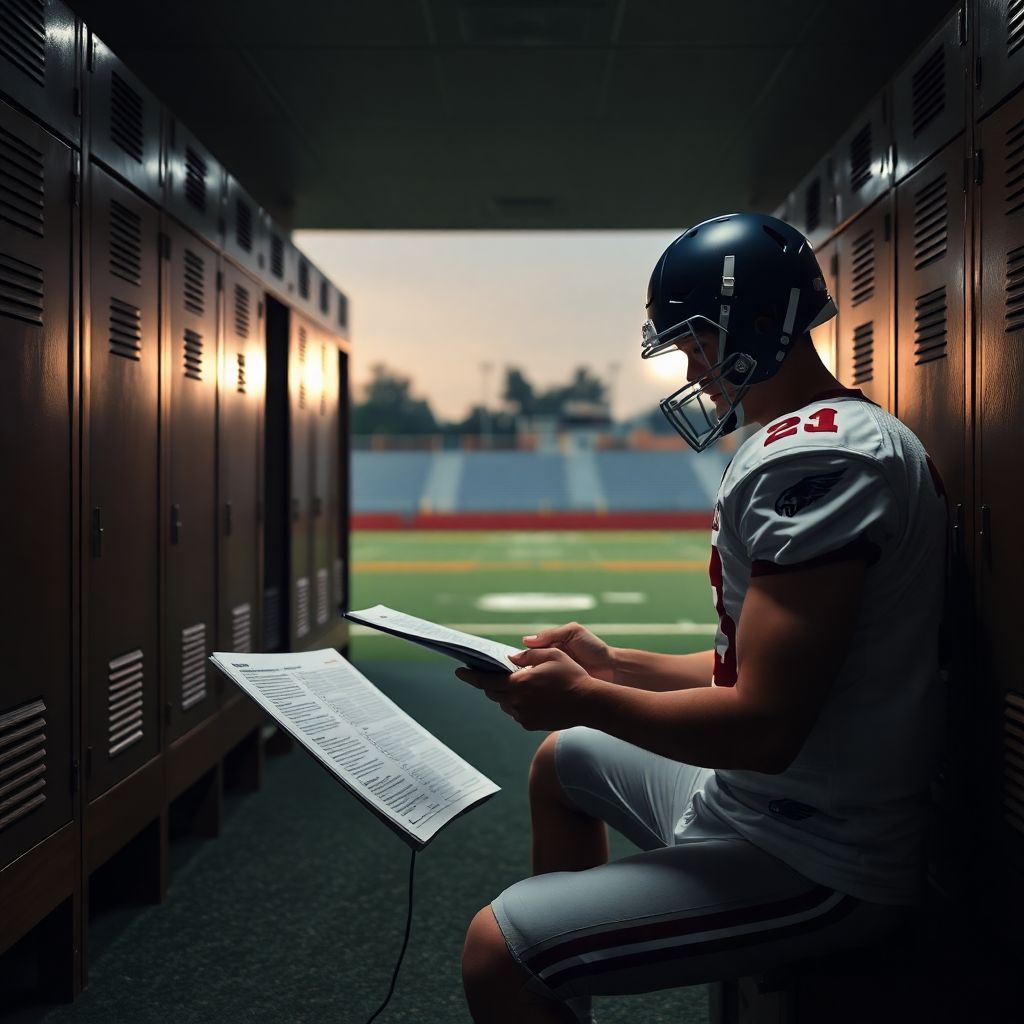
An NFL practice squad player’s week is a tight loop of early arrivals, install meetings, high‑speed scout‑team work, and constant evaluation. The day is built around serving the starters’ preparation while quietly mastering the playbook, protecting the body, and staying ready for a call‑up that can come with a few hours’ notice.
Core Realities of Practice Squad Life
- You are paid professionals, but roster status is week to week and tied to injuries, performance, and team needs.
- Every rep is filmed and graded, even if fans never see you on game day.
- Your main job is to simulate opponents so starters can prepare at full speed.
- Study habits and mental toughness often matter more than raw athletic tools.
- Life logistics, from housing to finances, must adapt to unstable NFL practice squad contracts.
- Daily communication with coaches and your agent shapes future opportunities across the league.
Morning Routine: Arrival, Warm-ups, and Mental Prep
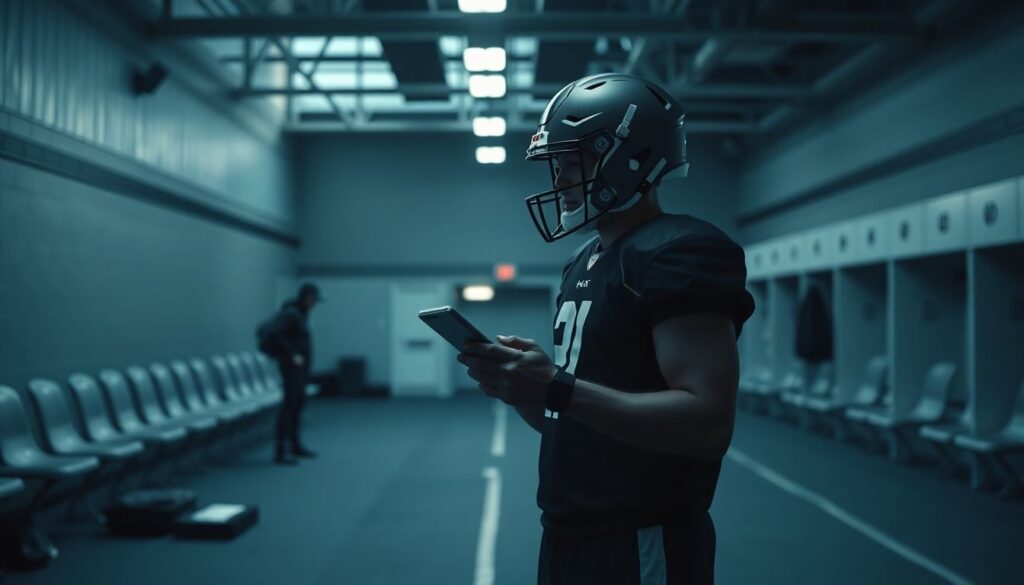
A practice squad day usually starts in the dark. Many players aim to arrive around 6:00-6:30 a.m., well before required time. The building is quiet, trainers are setting up, and this window becomes the first advantage: extra treatment, solo film, or review of the day’s script without distractions.
The definition of a “good morning” for a practice squad player is simple: you show up prepared enough that nothing in meetings or practice script is a surprise. That means checking the install notes the night before, then re-reading them with fresh eyes as soon as you get to your locker.
After a quick bite and any prehab in the training room, the early meeting block begins: special teams, positional, and often a full-team session. This is where the difference between NFL practice squad and active roster can feel sharp. Starters focus on the game plan; practice squad players focus on the opponent cards they’ll be mimicking a few hours later.
On-field warm-ups are intentional, not casual. Bands, rollout work, activation drills, and a few familiar movements from your position coach form a personal checklist: feet, hips, shoulders, hands, breath. The goal is to enter the first period of practice already in “game tempo” so coaches never see you ramping up slowly on film.
Practice Day Flow: Drills, Reps, and Special Teams Work
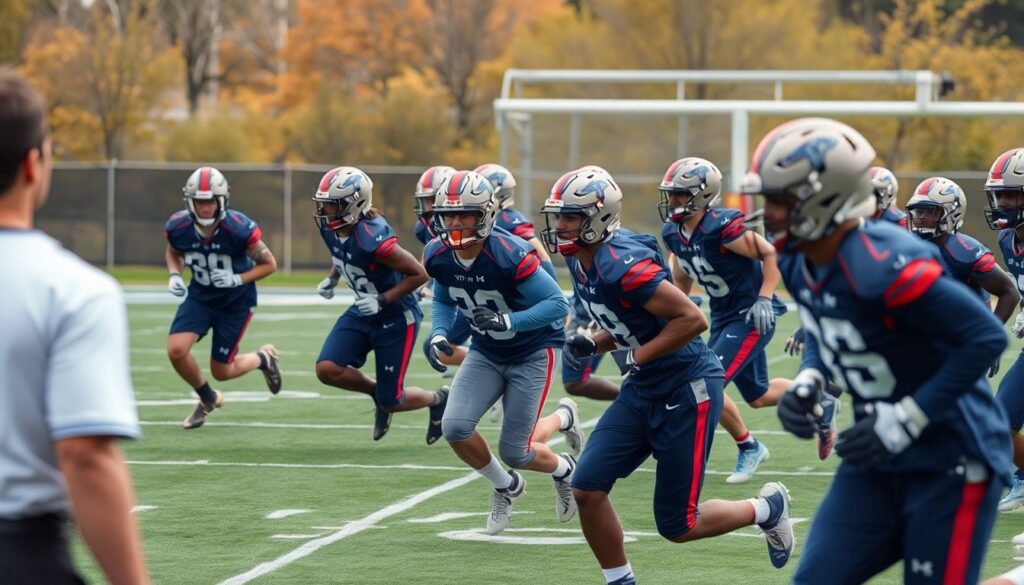
Once practice starts, the day turns into a sequence of timed periods where practice squad players carry most of the physical load. The internal rule: starters win the rep mentally; you win it by making the look as real and demanding as possible.
- Individual period (Indy). You sharpen position-specific skills: stance, get-off, footwork, hand placement, releases, route stems. Coaches watch to see if you can rapidly apply corrections from meetings to the field.
- Group and 7-on-7. Skill positions and linebackers run opponent concepts at near full speed. Quarterbacks and receivers on the practice squad are often tasked with executing the exact timing and spacing of upcoming opponents.
- Team periods (Full 11-on-11). This is where most of your value shows. You run “carded” plays off a scout-team script, wearing colored caps or pinnies. Perfection means: align quickly, match the drawing, finish through the whistle, and sprint back so the next rep starts on schedule.
- Special teams emphasis. Many practice squad careers start on teams. You run down on kick coverage, block on returns, or simulate top opposing gunners. Coaches take notes here when they consider elevating you on game day.
- Situational work. Two-minute, red zone, short yardage. Here you must understand clock, down, and distance, even if you are “pretending” to be the other team. Sloppy situational awareness is something coaches remember.
- Post-practice corrections. Position coaches or assistants may pull you for extra reps on specific techniques that went wrong. This is another hidden evaluation: do you handle fatigue, detail, and coaching in the last 10 minutes as well as in the first?
Film Room and Playbook: Study Habits That Matter
For practice squad players, the film room is where careers are either extended or quietly end. You are judged less on Sunday highlights and more on whether your Tuesday and Wednesday tape shows clean assignments, consistent effort, and obvious improvement from week to week.
Typical, effective study scenarios include:
- Pre-meeting solo review. Arriving early to watch yesterday’s team periods and writing 2-3 quick notes per segment: an alignment error, a hand-usage win, a leverage issue. This makes position meetings more interactive instead of passive.
- Opponent mimic study. If you are playing scout team, you watch a cut-up of the other team’s key players you will be imitating. Your job is to copy their stance, tempo, favorite releases, or pass rush moves so the starters get an honest look.
- Playbook refresh at night. Before bed, you flip through that week’s install: new tags, motions, checks. Many players use simple handwritten flashcards, especially when first learning how to join NFL practice squad rotations on multiple positions or special teams units.
- Self-scout on weak spots. One player might notice he loses inside hand position on third-and-long rushes. Another sees his depth on intermediate routes is inconsistent. Targeted self-scouting tells strength and position coaches where to focus extra work.
- Coach-guided review. Short, focused sessions with your position coach: 10-15 clips, one theme. For example, all failed cut blocks or all missed tackles in space. You leave each mini-session with one specific mechanical change to apply the next day.
When you hear about NFL practice squad tryouts 2025 and beyond, this is the hidden skill teams are really checking: can you absorb and apply film details as fast as a true backup would?
Strength, Conditioning, and Recovery Protocols
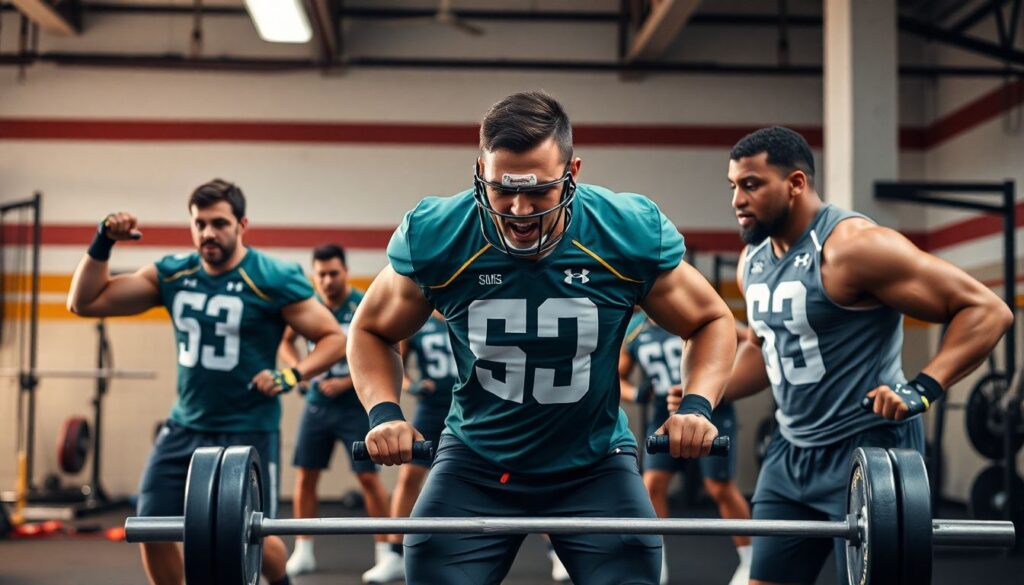
Strength and conditioning for practice squad players is about staying “one phone call away” from playing on Sunday. You must build and maintain power without being too sore or slow to deliver full-speed looks during practice. Recovery becomes a daily job, not an afterthought.
Main advantages of a solid strength and recovery routine:
- More consistent performance across the full week, especially late in the season.
- Lower risk of soft-tissue injuries despite high practice workloads.
- Added trust from coaches and trainers, who know you can handle extra reps.
- Better body composition and movement quality, which show clearly on film.
- Confidence that you could handle a sudden bump in snaps if elevated.
Common limitations and pitfalls practice squad players face:
- Temptation to max out heavy in the weight room to “prove” strength, leaving legs dead for practice.
- Inconsistent sleep and nutrition because of uncertain housing or financial stress tied to NFL practice squad salary realities.
- Skipping prehab or mobility work to save time, then losing weeks to preventable tweaks.
- Relying on pain-killers or stim units instead of addressing movement issues.
- Neglecting simple recovery: hydration, soft-tissue work, and post-practice cooldown runs or bikes.
Players who last multiple seasons usually treat the training room and weight room like mandatory classrooms: every day, same time, same warm-up, same sequence. Small, boring habits stack into durability.
Navigating Roster Status: Communication with Coaches and Agents
Roster status is a moving target. One injury, one strategic change, or one standout practice can change your role. Clear, consistent communication with coaches and your agent is how you steer through that uncertainty without burning bridges or missing chances elsewhere.
Typical mistakes and myths to avoid:
- Assuming silence is bad news. Coaches often have little time for one-on-one updates. No news doesn’t automatically mean you’re about to be cut; it may simply mean you’re doing your job. Still, requesting short feedback conversations is smart.
- Letting agents operate in a vacuum. Your agent needs accurate, current information: where you are on depth charts, how you’re used on scout team, and which coaches speak up for you. Share specifics so they can navigate NFL practice squad contracts across the league effectively.
- Talking about opportunities in front of the wrong people. Casual locker-room speculation can spread. Keep any conversations about potential moves or frustrations private, ideally with your position coach, coordinator, or agent.
- Believing a practice squad spot is “just temporary.” While turnover is high, some players build multi-year careers in this role and graduate into more stable jobs. Treat each week as a full-time audition, not a placeholder.
- Ignoring special teams discussions. When coaches ask if you can cover kicks or block on punts, they are often signaling a path toward elevation. Saying you “prefer offense/defense only” can quietly close doors.
For players plotting how to join NFL practice squad groups around the league, understanding communication timing matters: Mondays and Tuesdays are often when teams shuffle bottom-of-roster spots and check in with agents about availability.
Pay, Benefits, and Life Outside the Facility
Money shapes daily choices even if players rarely talk about it openly. NFL practice squad salary is professional-level pay, but it is usually lower and less secure than active roster compensation, and it can be adjusted or ended quickly as rosters change.
Consider a simple weekly scenario. A young receiver signs a practice squad deal on Tuesday. His agent walks him through the basics of NFL practice squad contracts: pay is calculated week to week, the team can release him with little notice, and any other team can sign him to their active roster if they offer a better role. He chooses a modest apartment close to the facility and a short-term lease, knowing he might be flying across the country in a month.
Outside the building, his week is built around three questions: Can I afford to live near the facility without overcommitting on rent? How can I build emergency savings in case I’m cut? How much work do I put into networking-coaches, former teammates, trainers-so my phone actually rings if I’m released?
A short “result-check” algorithm many veterans use at the end of each day looks like this:
- Review the practice script and mentally replay your 5-10 most important reps.
- Note one assignment mistake, one technique issue, and one clear win.
- Send any required clips or questions to your position coach before film the next morning.
- Adjust tomorrow’s focus: extra film, added lift, or more recovery based on how your body feels.
| Topic | Practice Squad | Active Roster |
|---|---|---|
| Main role | Simulate opponents, develop, support starters in practice. | Play in games, execute game plan, often take fewer practice reps. |
| Game-day status | Usually not suited up, can be temporarily elevated. | Eligible to play if among weekly actives. |
| Financial stability | Less secure, week-to-week, lower typical earnings. | More secure with stronger guarantees and benefits. |
| Opportunity window | Constant audition for promotions and other teams. | Audition is mostly weekly game tape and key practice reps. |
Compact Checklist: A Typical In-Season Practice Squad Day
- Arrive early, get treatment, and review the script and opponent tendencies.
- Lock in during meetings: know the install and your scout-team assignments cold.
- Practice at full speed, finish every rep on film, and seek immediate feedback.
- Lift and recover with intention: prehab, cooldown, and basic mobility every day.
- Close the day with quick film review and your personal result-check algorithm.
Practical Concerns and Clear Answers
How hard is it to make an NFL practice squad?
It is extremely competitive because you are still one of a limited number of professional roster spots. Teams favor players who know their systems, contribute on special teams, and can learn multiple roles quickly. Your best edge is reliability: mentally sharp, durable, and consistent on film.
What is the main difference between NFL practice squad and active roster roles?
Active roster players are paid to perform on game day, while practice squad players are paid to prepare them during the week. Practice squad players often take more practice reps, run opponent plays, and serve as depth that teams can elevate when needed.
How do NFL practice squad contracts usually work?
They are short, flexible agreements that are tracked week to week rather than long, fully guaranteed deals. Teams can release or sign players quickly as needs change, and other clubs can generally sign a practice squad player to their active roster if they offer a promotion.
What should I expect from NFL practice squad salary?
You can expect professional-level pay, but usually below that of most active roster players and with less security. Because deals are week to week, smart budgeting and modest living arrangements are important in case you are released or move to another team.
How can I prepare now for NFL practice squad tryouts 2025?
Prepare by mastering your position fundamentals, building position-specific strength and conditioning, and learning pro terminology. Create cut-ups of your best reps, especially on special teams, and work with coaches who can vouch for your habits, not just your highlight plays.
What is the realistic path for how to join NFL practice squad groups?
Most players are signed after going through college ball, all-star games, the draft or undrafted free agency, plus rookie camp and preseason. Competing well on special teams, learning multiple positions, and showing you can digest a playbook quickly all raise your odds.
Can a practice squad player be signed by another team during the season?
Yes. Other teams can sign you to their active roster if they see a fit, often after injuries or performance issues on their own depth chart. Staying in shape, on top of film, and in touch with your agent keeps you ready for that call.