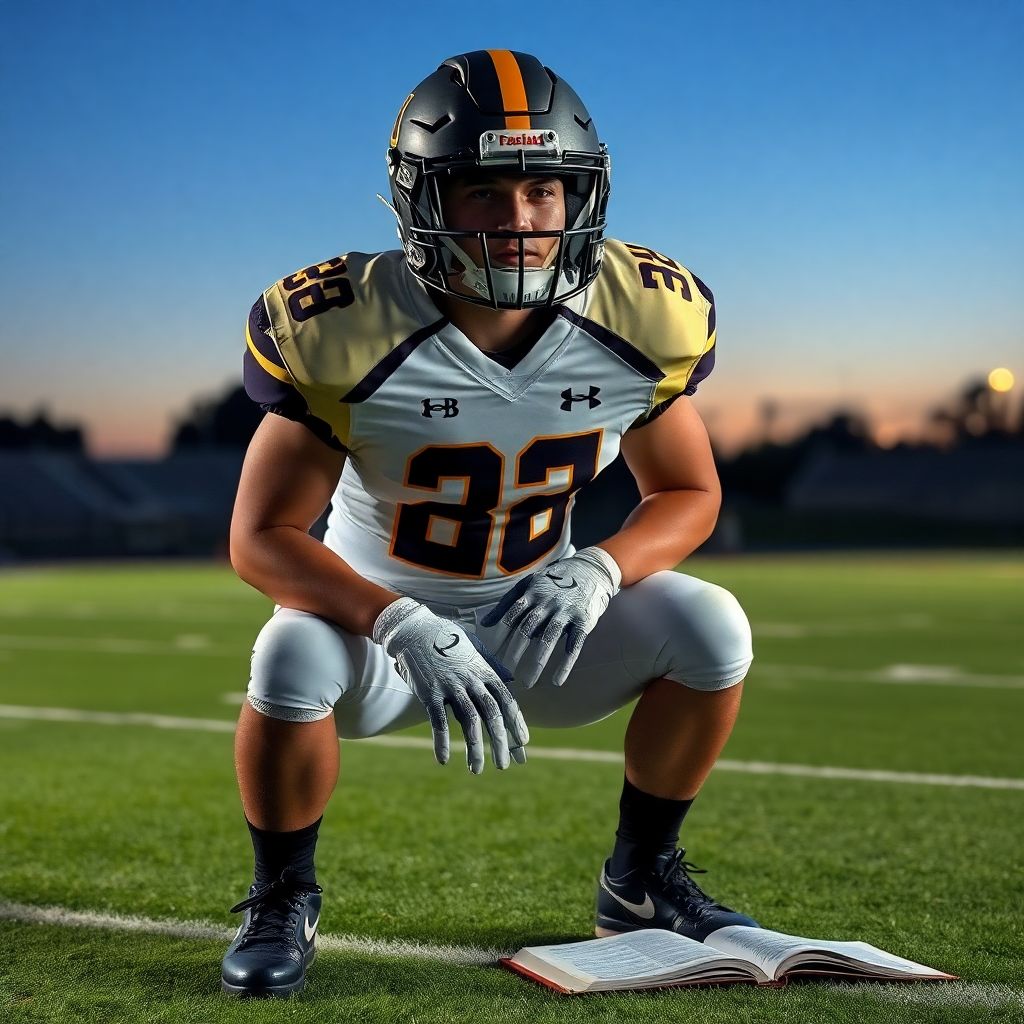
To go from walk-on to star, treat your journey like a job: win the tryout with preparation, dominate effort and consistency, use special teams and niche roles, and stack small daily wins over semesters. Study real college football underdog stories, copy their habits, and follow a measurable, written plan.
Essential Lessons from Walk-On Successes
- Walk-ons succeed by being unignorable in effort, reliability, and preparation, not by flash alone.
- Special teams and niche roles are the fastest and safest launchpad from nobody to trusted contributor.
- Clear academic and time-management systems keep you eligible and available when opportunity appears.
- Coaches reward the players who solve problems: learn the playbook, master roles, and remove excuses.
- Progress comes in semesters, not days; timelines from inspiring college football walk-on stories show steady, compounding improvement.
- Film study and feedback loops turn practice reps and best college football underdog games into specific skill gains.
- The most powerful motivational college football stories for recruits start with honest self-assessment and realistic role targets.
How Walk-Ons Earn Roster Spots: Trials, Mindset, Metrics
This path fits athletes who love football enough to compete without guarantees, are academically solid, and can train year-round. It is not ideal if you cannot stay academically eligible, handle tough feedback, or safely maintain conditioning while balancing work, family, or health needs.
Think of your walk-on attempt as a multi-phase project:
- Information Phase (2-4 months before tryouts) – Learn exact walk-on dates, testing standards, medical clearance requirements, and position needs. Talk with the recruiting coordinator or operations staff, not just players.
- Preparation Phase (8-12 weeks) – Train specifically for the tests and position demands: sprints, shuttle, bench, jump, and conditioning. Build up gradually; prioritize safe progress over reckless intensity.
- Execution Phase (Tryout Week) – Show up early, fully hydrated, warmed up, and professional. Win controllable metrics: hustle between drills, finish through the line, encourage others, demonstrate coachability.
- Integration Phase (If Invited Back) – Learn the playbook, meet academic support staff, and adopt the team’s standards. Focus on mastering your assignments on scout team and special teams.
Coaches largely evaluate three buckets:
- Objective metrics: 40-yard dash or flying 10 time, shuttle, agility, explosiveness, and basic strength levels.
- Practice reliability: Attendance, being on time, assignment correctness, and effort on every rep.
- Team fit: Attitude, communication, emotional control, and ability to accept your role.
Most college football walk-on to star success stories follow a similar pattern: win a roster spot via effort and testing, earn special teams reps, then grow into a stable role player before becoming a starter or impact contributor.
Training and Skill Development Plans Tailored for Underdogs
Walk-ons need efficient, safe, and focused training. You likely juggle school, maybe a job, and limited facility access, so every session should have a clear purpose and measurable target rather than random hard work.
Core Training Requirements
- Space and equipment: Access to a safe weight room, a flat field or turf, and basic tools (barbell, dumbbells, bands, med balls, cones, stopwatch).
- Recovery basics: Reasonable sleep schedule, hydration, and consistent food intake to support training without extreme diets.
- Film access: Game and practice film of your position, plus classic college football underdog stories on video to study effort, angles, and technique.
Weekly Training Structure (Example In-Season Prep)
Adjust this based on your school schedule and recovery, but keep the structure similar:
- Day 1 – Speed & Lower Strength
- Dynamic warm-up and sprint drills (gradual accelerations, safe volumes).
- Short sprints (10-30 yards) with full recovery; focus on posture and first-step mechanics.
- Squats or trap bar deadlifts, lunges, core work, and mobility.
- Day 2 – Position Skills & Conditioning
- Stance and start work, route or footwork drills specific to your role.
- Change-of-direction patterns (ladder optional, but cones are better for realistic angles).
- Short, controlled conditioning blocks (e.g., 6-10 reps of 60-80 yards, full walk-back rest).
- Day 3 – Upper Strength & Power
- Push (bench or push-ups), pull (rows, pull-ups), overhead work, and arm care.
- Med ball throws and plyometrics with low volume and focus on landing safely.
- Stability and prehab: shoulder, hip, and ankle control exercises.
- Day 4 – Football IQ & Mobility
- Film study of your position plus best college football underdog games that showcase discipline and situational play.
- Notebook review of coverages, fronts, and blitz patterns.
- Light mobility, stretching, and breathing work for recovery.
Progress Benchmarks to Track
- Short sprint time (10-20 yards) with safe, consistent timing methods.
- Number of technically clean routes or position drills in a session without fatigue errors.
- Attendance: training days completed per month versus planned.
- Subjective fatigue and soreness ratings to avoid overtraining.
Navigating Team Dynamics and Building Coaches’ Trust
Getting a roster spot is only the start; earning trust decides whether you play. Use this step-by-step approach to integrate without overstepping and to build a reputation that makes coaches comfortable putting you on the field.
- Clarify Your Role on Day One – After you are invited, briefly meet your position coach and ask what success looks like for a walk-on in your room.
- Questions can include: “What are the top two things I must do to help the team this semester?”
- Write down their answers and treat them as your checklist.
- Master the Playbook Before Asking for More Reps – Prioritize assignment correctness over big plays.
- Study 15-20 minutes daily: signals, calls, alignments, and adjustments.
- Use a notebook to redraw plays and write your job in one simple sentence.
- Win Scout Team and Special Teams Every Day – Treat these reps like live auditions.
- Run to and from the huddle; finish every rep through the whistle.
- Limit mental errors; if you are unsure, ask quickly before the rep.
- Communicate Like a Pro – Speak clearly, briefly, and respectfully with staff and teammates.
- Own mistakes with phrases like, “My fault, I will fix it next rep.”
- Avoid complaining, gossip, or excuses; listen more than you talk.
- Build Horizontal Relationships with Teammates – Trust flows through the locker room first.
- Show up early for lifts, help set up or clean up, and be reliable in group work.
- Join position-group study or film sessions; offer help when appropriate.
- Ask for Feedback and Specific Next Steps – Every few weeks, ask your position coach what you must improve to see the field.
- Turn feedback into one or two practice goals per week.
- Track your progress so you can show them what you changed.
Fast-Track Walk-On Action Plan
- Show up early, stay late, and never miss lifts, meetings, or classes.
- Dominate scout team and special teams effort; never loaf on film.
- Study 20 minutes of playbook or film daily and fix one weakness each week.
- Ask for clear feedback monthly and immediately implement one change.
- Stack healthy habits (sleep, nutrition, recovery) so you are always available.
Balancing Academics, Jobs and Football Commitments
Without strong time management, you will either lose your eligibility, your health, or your spot. Use this checklist to audit your balance and adjust before something breaks.
- You maintain eligibility with a safe margin above minimum academic requirements, not just the bare minimum.
- Your weekly schedule is written down, including class times, study blocks, training, meals, and any job hours.
- You can identify at least one recovery window per day (short nap, walk, or quiet time) to manage stress.
- You rarely rush from class to practice without time for a simple pre-practice snack and hydration.
- You communicate conflicts with coaches and professors early, not at the last minute.
- You adjust training volume during exam weeks instead of trying to “grind through” everything.
- You have a short, repeatable morning and evening routine that supports consistent sleep.
- You can name one academic advisor or support staff member you can contact when overwhelmed.
- Your job hours do not regularly force you to skip team activities or essential recovery time.
- You review and tweak your schedule every week based on what actually worked.
Using Special Teams and Niche Roles as Career Accelerants
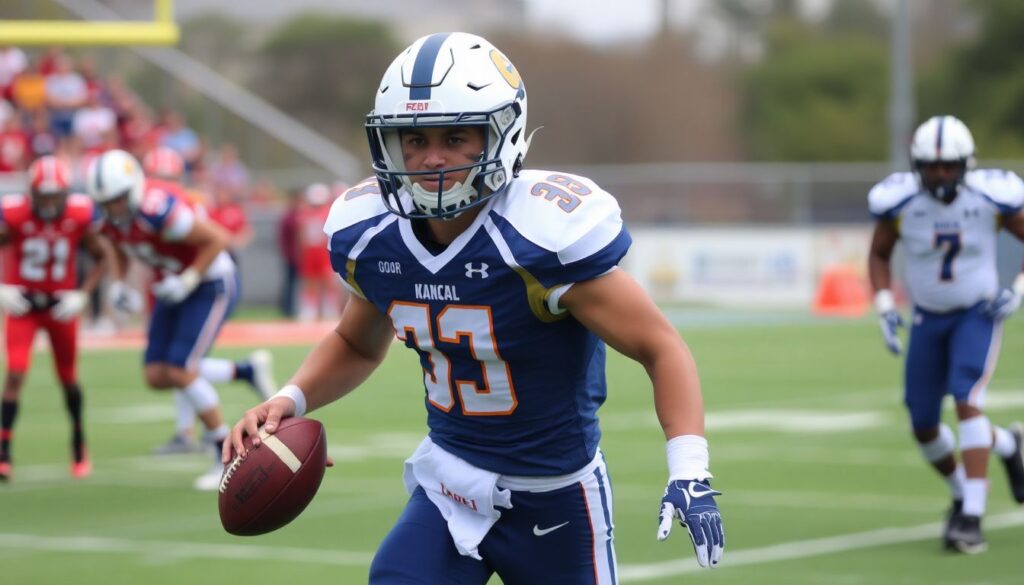
Many college football walk-on to star success stories start on special teams. These units allow walk-ons to display effort, toughness, and assignment discipline in a way coaches can trust quickly. Avoid these common mistakes to keep your trajectory moving upward.
- Ignoring special teams because you want only offense or defense reps instead of embracing them as your fastest path.
- Playing recklessly on coverage units instead of taking controlled, safe angles and using proper tackling technique.
- Failing to learn all units’ calls and adjustments, making you a liability when personnel changes.
- Not specializing in one niche (gunner, personal protector, return-block specialist) where you can become the obvious choice.
- Loafing on film when the play goes away from you; coaches watch entire frames, not just the ball.
- Overtraining contact drills on your own without supervision, increasing injury risk instead of controlled improvement.
- Neglecting fundamentals like stance, get-off, hand placement, and leverage in favor of highlight-chasing plays.
- Letting a single mistake on special teams affect your confidence or effort the rest of practice.
Case Studies: Play-by-Play Analyses of Walk-On to Starter Journeys
Realistic timelines provide context and show how slow, steady progress becomes “overnight” success. While every path is unique, certain patterns repeat across many inspiring college football walk-on stories.
Case Study 1 – The Special Teams Grinder to Starting Linebacker
Starting point: Arrives as a walk-on with average size and speed, strong tackling form, and excellent grades.
Timeline snapshot:
- Semester 1: Earns a scout team spot, quickly becomes known for clean film and high effort.
- Semester 2: Carves out roles on kickoff and punt teams by mastering scheme and angles.
- Year 2: Becomes a core special teamer; gets limited defensive snaps in specific packages.
- Year 3: Steps into a rotational linebacker role after an injury; consistency wins him a starting job.
Key habits: Daily film of his own special teams reps, extra tackling-footwork drills, and constant communication with the special teams coordinator. His story mirrors many classic college football underdog stories where unseen work on coverage units builds trust for defensive opportunities.
Case Study 2 – The Undersized Receiver to Reliable Third-Down Target
Starting point: Walk-on receiver considered too small for scholarship offers, but with strong hands and high football IQ.
Timeline snapshot:
- Semester 1: Redshirts, focuses on strength, speed, and learning all receiver positions in the playbook.
- Semester 2: Becomes a go-to scout team route runner; QBs and coaches trust his timing and spacing.
- Year 2: Wins a slot receiver and punt return role; makes consistent, safe decisions in the return game.
- Year 3: Emerges as the primary third-down option thanks to precise routes and reliable catches.
Key habits: After-practice catching routines, detailed route notes, and studying film of previous team slot receivers and other motivational college football stories for recruits who thrived despite size concerns.
Case Study 3 – The Late-Blooming Lineman Through Developmental Years
Starting point: Walk-on offensive lineman with frame but limited strength and technique.
Timeline snapshot:
- Year 1: Primarily developmental: gains healthy weight, learns stance, hand placement, and footwork.
- Year 2: Earns backup role; becomes a reliable extra lineman in heavy packages and on field goal unit.
- Year 3-4: Moves into the starting lineup as strength, technique, and playbook knowledge align.
Key habits: Strict weight-room progression, daily hand-fighting drills, and consistent use of team nutrition resources. Watching film of the best college football underdog games featuring physical offensive lines reinforces how technique and discipline can neutralize more gifted opponents.
Alternative Paths When Walking On Is Not the Best Fit
- Junior college route: Gain playing time and film at a lower level, develop your body, then transfer with more leverage.
- Smaller-college scholarship: Choose a level where you can contribute earlier instead of chasing a logo.
- Student manager or operations role: Stay around the program, learn, and potentially transition into coaching or support.
- Club or intramural football: Compete, stay healthy, and enjoy the game if full-time commitment is not realistic.
Many college football underdog stories start in these alternative environments, then evolve into coaching or leadership paths that still influence the game deeply.
Practical Answers to Common Walk-On Concerns
How do I know if I am realistically good enough to walk on?
Compare your verified times, strength levels, and film to current players at your target program and level. Ask a neutral coach for an honest evaluation and consider whether your strengths can fill a specific role on that roster.
What should I do in the months before a walk-on tryout?
Gather exact testing and medical requirements, then build an 8-12 week plan around those metrics and your position skills. Emphasize safe progression in sprinting, lifting, and conditioning while keeping academics and recovery in balance.
Can I walk on if I also need to work a part-time job?

It is possible, but only with strict time management and clear communication with coaches and employers. If your job repeatedly forces you to miss team activities or compromises sleep and health, reconsider the timing or level of play.
How quickly can a walk-on earn a scholarship or starting role?
Timelines vary widely, but most college football walk-on to star success stories take multiple semesters. Focus first on earning and keeping a roster spot, then on special teams and role-player snaps before expecting scholarship or starter conversations.
What is the safest way to increase my training volume?
Add small amounts of work each week rather than big jumps, and track soreness and fatigue. If pain, sleep issues, or persistent fatigue appear, reduce volume and seek guidance from qualified strength or medical staff.
How much do inspiring stories actually matter for my own journey?
Stories by themselves do not replace training, but they can guide your habits and expectations. Use inspiring college football walk-on stories to identify patterns in work ethic, patience, and role acceptance, then apply those patterns to your own plan.
What if I do everything right and still do not make the team?
Roster limits, depth charts, and timing affect outcomes beyond your control. Preserve your health, keep your academic and personal progress moving, and consider alternative paths like other levels of play or supportive roles within the sport.
Комментарии