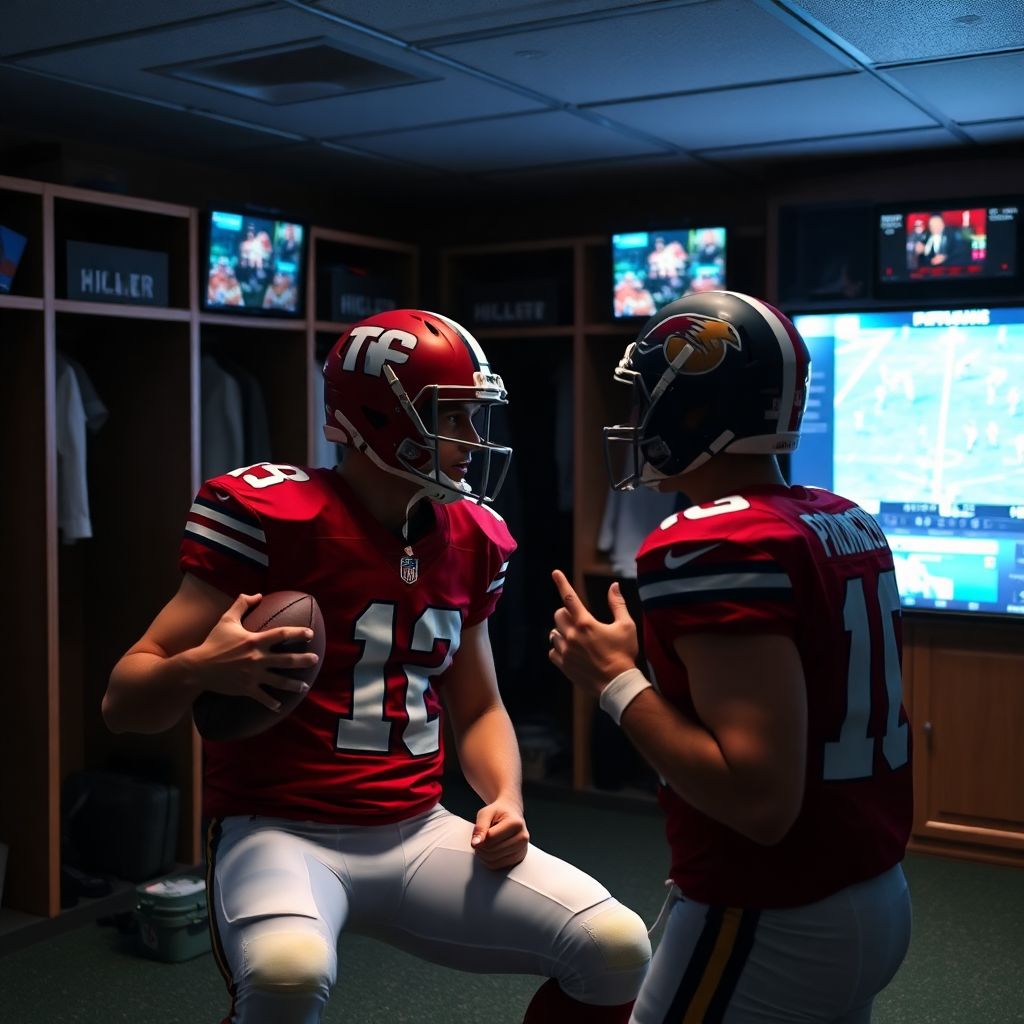
The two-minute drill is a compressed offensive drive executed under severe time pressure, where clock management, pre-planned calls, and practiced communication matter more than raw scheme volume. To master it through film study, you systematically tag situations, recognize defensive patterns, script responses, and rehearse a small, dependable package at game-like tempo.
Two-Minute Drill At-A-Glance
- Define your two-minute identity: 1-2 personnel groups, a handful of formations, and a tight core of concepts you trust under pressure.
- Study film to understand how defenses change in hurry-up, then build answers for sideline, middle, and boundary throws.
- Use a clear clock and timeout plan for >1:20, 0:45-1:20, and <0:45 scenarios with different risk levels.
- Drill fast communication: one-word calls, wristbands, and simple tags beat complex verbiage when the clock is running.
- Grade every rep on execution, tempo, and decision-making, not just result; refine your two minute drill training program accordingly.
- Translate your film notes into a compact, repeatable script rather than a thick football two minute drill playbook pdf that no one can recall in chaos.
Clock Management Principles and Timeout Allocation
Two-minute offense suits teams with a competent passer, receivers who understand spacing, and an offense already comfortable with no-huddle. It is less effective if your quarterback struggles with quick decisions, your protections are unstable, or your substitution process is slow and disorganized.
- Define three phases:
- “Plenty of time” (roughly > 1:20 with timeouts) – mix runs and passes, attack the whole field.
- “Middle window” – prioritize sidelines and chunk throws, preserve the middle for clear explosives.
- “Red alert” (< ~0:30, maybe no timeouts) – pure clock-stop calls and end-zone shots.
- Timeout hierarchy:
- Save at least one for a field-goal attempt or last-chance play call.
- Avoid “wasting” timeouts to fix alignment; train players to line up correctly with simple rules.
- Burn a timeout only to avoid catastrophic errors (e.g., sack with no protection ID, wrong personnel grouping).
- Sideline management:
- Assign one coach to track clock, down, distance, and timeouts; another to track hash and field location.
- Have a designated “kill” and “clock” signal that every offensive player knows.
- Know when not to push tempo:
- Backed up inside your own 10 with a slim lead and a struggling offensive line.
- When your quarterback is injured, rattled, or clearly out of sync.
- In youth or lower levels where players cannot safely function under extreme pace.
Personnel Packages, Formations and Personnel Matchups
Before you build a two-minute package, you need clear personnel and formation rules that players can execute quickly and safely.
- Core personnel packages:
- One primary grouping (e.g., 11 personnel) for most snaps to avoid sub confusion.
- One optional “heavy” or “speed” package for specific matchups or protection needs.
- Formation toolkit:
- 3-4 base formations mirrored left/right so players can flip easily.
- Label formations with simple, memorable words (e.g., “Trips,” “Doubles,” “Bunch”).
- Create one-word tags for small tweaks: stack, motion, boundary/sideline emphasis.
- Matchup principles:
- Identify your “gotta-have-it” targets and isolate them on backers or weaker corners.
- Use bunch and stack sets to protect smaller receivers from press in end-of-game situations.
- Always know where the defense hides its least reliable cover player and build a call to attack that spot.
- Communication tools:
- Use a streamlined signal or wristband system, similar to what a quarterback two minute drill online course would emphasize in classroom work.
- Teach players to echo calls and align quickly; no walking to the huddle.
Route Concepts to Win Sidelines, Middle and Boundary Plays
This section gives a safe, repeatable step-by-step process to build and install your two-minute route menu using film and practice.
- Identify core two-minute situations from film.
Pull clips where you had <2:00 in a half, needed points, and the defense knew you were throwing. This becomes your football film study two minute drill breakdown library.
- Tag down, distance, time, hash, coverage, and result.
- Group clips into sideline throws, middle-of-field throws, boundary shots, and screens/checkdowns.
- Build a sideline-win package.
From those clips, choose 3-5 concepts that consistently get safe, controllable catches near the sideline.
- Examples: speed out + go, smash, scissors, flood to the field.
- Coach WRs on two rules: “win the landmark” (e.g., 5 yards from sideline) and “protect the clock” (get out when instructed).
- Quarterback reads should be 1-2-checkdown at most; no full-field, slow progressions.
- Design middle-of-field access plays.
You still need in-breaking routes to stress linebackers and safeties, especially when defenses overplay the sideline.
- Concepts: dagger, dig-post, seams, shallow cross with a dig behind.
- Pair every middle throw with a clear “clock” rule: spike, tempo to line, or immediate timeout if tackled inbounds.
- Practice catch-and-set-the-ball mechanics so officials can spot it quickly and safely.
- Attack the boundary and end zone.
Short side throws and red-zone shots need their own micro-package because space disappears.
- Use fades, back-shoulder throws, and corner routes from stacks/bunch to help releases.
- Teach QBs pre-snap: “iso check” – if you like the one-on-one, take it; if not, work the concept backside.
- Emphasize “only we can catch it or it’s incomplete” to minimize risky turnovers.
- Standardize QB progression and timing.
For each concept, define a consistent read and footwork pattern so the QB never guesses under pressure.
- Link footwork to routes: 3-step gun for quick outs, 5-step for deeper concepts, with clear hitch rules.
- Use film to show “ball out on hitch” vs. “hold and take sack/throw late” examples.
- Install universal rules: throw it away vs. take a shot vs. check it down, depending on clock and timeouts.
- Translate concepts into a small, scripted menu.
Combine your best sideline, middle, and boundary concepts into one laminated script instead of a bloated football two minute drill playbook pdf.
- Label each play with a simple code or number sequence for fast recall.
- Group plays by situation (need 8-12 yards, need chunk >15, end-zone shot, safe clock-stopper).
- Review the script weekly and cut anything players consistently struggle to execute in practice.
Fast-Track Mode: Compressed Route-Menu Setup
- Pick 2 sideline concepts, 2 middle-field concepts, and 2 end-zone/boundary shots you execute best today.
- Write them on a one-page card with down-and-distance labels (e.g., “3rd & 5-7: Smash / Dagger”).
- Run a short film session to show 1-2 good and 1-2 bad examples for each, emphasizing timing and clock safety.
- Install a weekly 10-snap two-minute period using only those concepts, then adjust based on results.
Pass-Protection and Quick-Release Mechanics for Hurry-Up
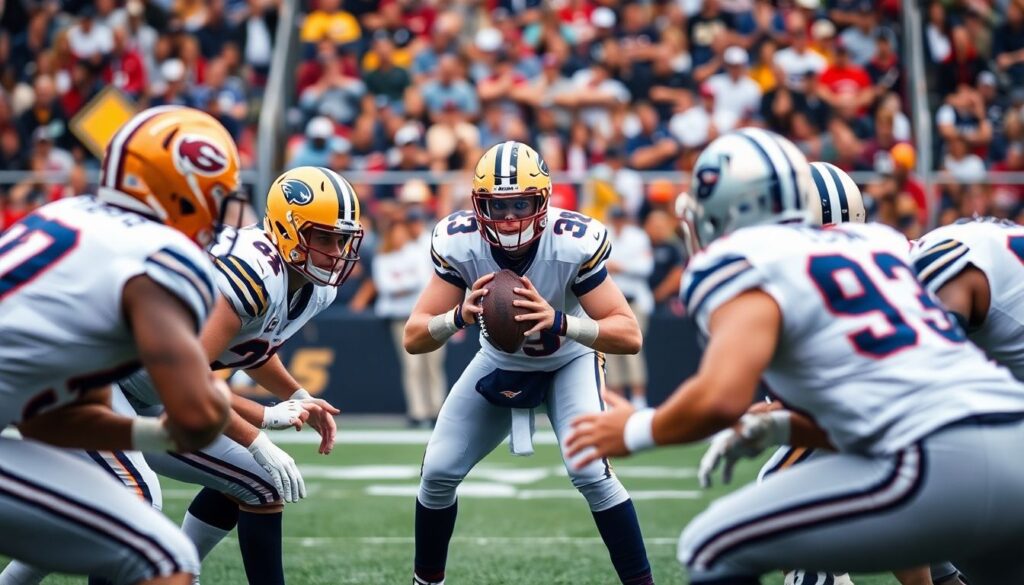
Use this checklist to verify that your two-minute protection and mechanics are safe, repeatable, and game-ready.
- The quarterback can clearly identify the “problem side” of pressure pre-snap and has a built-in hot or sight-adjust answer.
- Running backs know when they are in full protection vs. free release vs. scan rules; no guessing in live reps.
- Your base two-minute protections are simplified versions of what you already run, not brand-new schemes.
- Offensive linemen have clear slide vs. man rules and communicate them with one-word calls at the line.
- QB footwork ties to the protection: no deep drops in quick-game protections, no drifting into edge rushers.
- You routinely drill “catch-and-throw” mechanics with routes on air, then against a controlled rush, then in full team.
- Sack avoidance rules are explicit: where to throw the ball away, when to dirt it to a back, when to take the incompletion.
- Screen and draw tags exist as “pressure punishers” and are safely practiced so timing is consistent.
- Your two minute drill coaching clinic or in-house install materials include clear protection diagrams for every concept.
Sequencing Plays: Rhythm, Tempo and Scripted Calling
Most failures in two-minute sequencing come from avoidable, structural errors rather than bad luck. Watch for these common mistakes.
- Overloading the script with too many concepts so players think instead of reacting.
- Calling back-to-back deep routes without a protection or personnel upgrade, increasing sack and hit risk.
- Ignoring the hash and boundary, which leads to difficult throws and unnecessary clock loss.
- Failing to pre-plan “if-then” branches (e.g., “If we get a sack, go to this safe clock-stopper”).
- Not rehearsing the spike, kill, and clock plays, causing illegal shifts or procedural penalties.
- Changing tempo unpredictably: sprinting early, then suddenly slowing with long verbiage and complex checks.
- Chasing the last play emotionally instead of following the script and game criteria (time, timeouts, field position).
- Never practicing the full two-minute scenario against your own defense, so the first true rep happens on game day.
Film-Study Workflow: Tagging, Pattern Recognition and Practice Drills
If you cannot run a full in-person clinic every week, here are alternative, realistic workflows to develop your two-minute expertise.
- Virtual film-room curriculum.
Create a short, recurring online series for your staff and QBs that mirrors what you might find in a specialized quarterback two minute drill online course.
- Use shared playlists labeled by situation and coverage.
- Assign players to present one or two clips each week, focusing on clock, spacing, and decisions.
- Micro-clinic model within your own program.
Instead of attending an external two minute drill coaching clinic, run a 30-45 minute internal session during the off-season.
- Break the time into: 10 minutes of film, 10 minutes of whiteboard diagrams, 10-20 minutes of walk-through on the field.
- Record these sessions so players can re-watch at their own pace.
- Self-guided cut-up and tagging routine.
For smaller staffs, designate 1-2 coaches or advanced players to build a standing “two-minute” cut-up each week.
- Tag opponent tendencies: pressure vs. drop-eight, man vs. zone, hash-based coverage changes.
- Keep a running log of successful concepts and failures to refine your script over the season.
- Low-contact, high-rep practice scripts.
Use jog-through, 7-on-7, or “thud” tempo to rehearse the mental side of the two-minute drill while keeping players safe.
- Prioritize alignment, communication, and clock awareness over full-speed collisions.
- Pair each practice block with quick video review to close the loop between film and field.
Sample Two-Minute Scripts for Different Clocks
Below are two example scripts you can adapt, focusing on clarity and safety over volume.
Standard Two-Minute Script (about 1:30-2:00 with 2 Timeouts)
- Field-out concept to the wide side (safe sideline gain, 5-8 yards).
- Middle access route (dig or seam) if defense overplays the sideline; tempo to line, “clock” call if tackled inbounds.
- Flood concept toward your best receiver’s side, with built-in checkdown.
- Screen or draw tagged if you feel heavy pressure; otherwise repeat best completed concept.
- Boundary shot or red-zone concept when inside the +25, with timeout preserved for field-goal or final play.
Clock-Constrained Alternate Script (about 0:35-0:45 with 1 or 0 Timeouts)
- Sideline out or comeback to the field for quick yardage and clock stop.
- Pre-planned chunk play: seam, post-corner, or deep over with QB instructed to throw away if leverage is bad.
- Sideline smash or back-shoulder shot; incomplete is acceptable, sack is not.
- When in scoring range, 2-3 rapid end-zone shots with clear “clock” rule if caught inbounds short of the goal line.
Troubleshooting Execution: Common Issues and Fixes
Why does my offense look rushed and confused in two-minute situations?
Confusion usually comes from too much volume and too little rehearsal. Trim your package to a small set of concepts, simplify terminology, and schedule a short two-minute period in practice every week so alignment and communication become automatic.
How can I safely improve my quarterback’s decision-making under pressure?
Use controlled film cut-ups and half-speed practice reps that emphasize reads and clock awareness over hits. Pause film before the throw and ask what the QB would do, then show the result to reinforce good decisions and correct late or risky throws.
What if my offensive line struggles with pass protection in hurry-up?
Build your two-minute package around your most reliable protections, not your fanciest concepts. Add quick-game, screens, and movement throws to change the launch point, and clearly define hot rules so the QB can get the ball out before pressure arrives.
How many two-minute concepts should I carry in a game plan?
Carry only as many as your players can execute confidently at full speed, typically a small fraction of your overall playbook. Focus on a limited set that covers sideline, middle, and end-zone needs rather than trying to include every concept you like on film.
Can I still use the run game effectively in a two-minute drill?
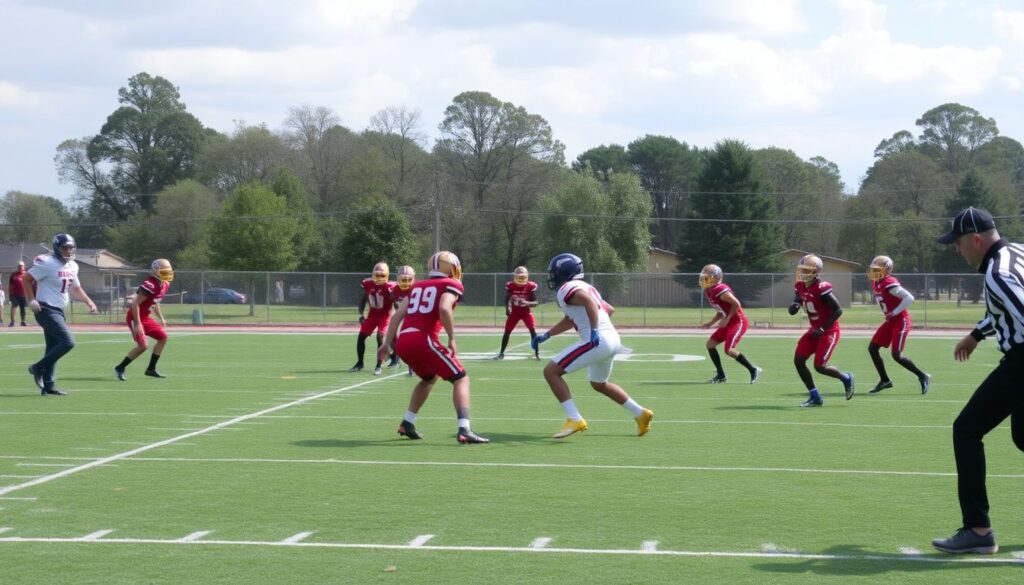
Yes, but runs must be situationally smart. Use draws, traps, or quick perimeter runs when the defense is in light boxes or deep coverage, and pair them with clear clock instructions, such as hurrying to the line with a “clock” call if tackled inbounds.
How do I translate clinic or online material into what my players actually do?
Any material from a clinic, book, or online resource should be reduced into your terminology, your formations, and 6-10 plays you can rep frequently. Test each new idea in practice first, then keep only what your players handle cleanly in live-speed periods.
What’s the safest way to start installing a two-minute package with a young team?
Begin with a very small menu of simple formations and quick concepts, emphasize ball security and clock rules, and use walk-through or jog-through tempos. Gradually increase speed only after the mental side becomes consistent and penalties are minimized.