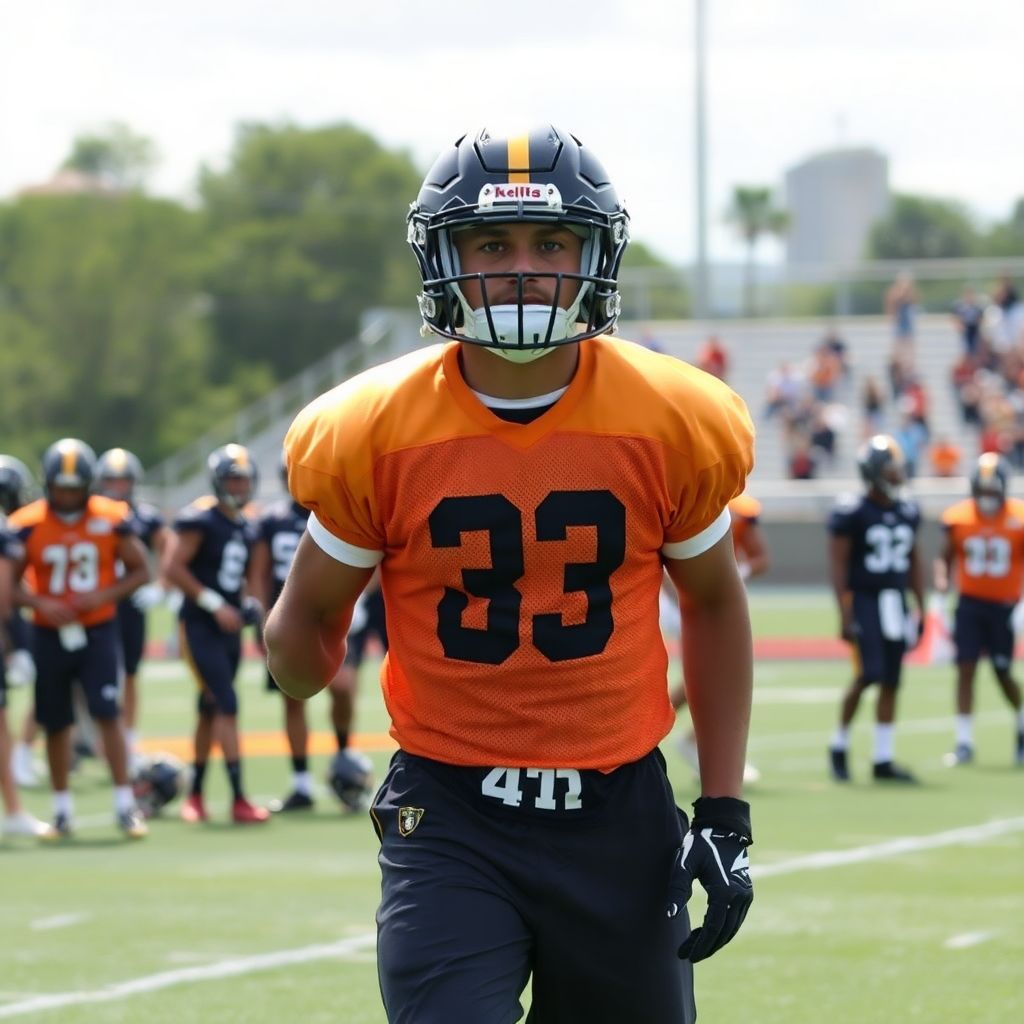
Undrafted NFL hidden gems are players who entered the league without being selected in the draft yet developed into reliable or star contributors. Understanding how they emerge means separating myths from reality, identifying safe evaluation steps, and recognizing real-world limitations on projecting, developing, and using these players in rosters or fantasy lineups.
Core Insights on Undrafted NFL Breakouts
- Undrafted status reflects market perception on draft weekend, not a player’s ceiling or competitiveness.
- Most undrafted free agents never become starters, so “hidden gem” should mean outcome probability, not certainty.
- Scouting blind spots often involve context: scheme, late physical development, injuries, or small-school competition.
- Safe evaluation focuses on stable traits (processing, motor, versatility) over single-year box-score production.
- Development environments, coaching fit, and special teams roles often decide whether a UDFA sticks.
- Rosters gain an edge when teams cap expectations, define clear roles, and regularly churn the bottom of the depth chart.
Debunking Myths About Undrafted Players
Undrafted players are simply prospects teams chose not to spend draft capital on during seven rounds. After the draft, they sign as undrafted free agents, usually to low-risk contracts, and compete for camp, practice squad, or roster spots. The “undrafted but unstoppable” label only fits a small minority.
One persistent myth is that scouts “miss all the best players,” and that the best undrafted NFL players of all time prove the draft is mostly random. In reality, most high-impact undrafted free agents represent outliers who combined unusual development curves, strong internal drive, and excellent organizational fits that were not obvious at draft time.
Another myth is that all draft snubs are secret stars waiting to explode. Most undrafted free agents NFL success stories came from players who were already close to roster-caliber but had a specific concern (injury, testing, scheme) that made teams risk-averse. The safer mindset is to treat UDFAs as probabilistic bets, not guaranteed steals.
A practical boundary: using historical legends among the best undrafted NFL players of all time as a blueprint is risky. They are useful teaching tools but poor baselines for expectation-setting. Safer evaluation means targeting repeatable traits and contexts rather than chasing once-in-a-decade stories.
How Scouts Miss Talent: Common Evaluation Blind Spots
-
Overweighting timed athletic testing
Some prospects test poorly yet show functional, play-speed athleticism on film. When teams prioritize numbers over context, late bloomers or injured testers can slide into the undrafted pool despite having starter-level traits.
-
Underestimating small-school competition
Hidden gem NFL players to watch this season often come from lower-visibility programs. Weak schedules, limited TV exposure, and fewer all-star invites can keep scouts from getting multiple high-quality looks at a player.
-
Role and scheme mismatch in college
Prospects miscast in college schemes (for example, press corners forced to play soft zones) may not “look the part” on tape. Without projecting them into a pro role that fits their skills, teams can misjudge their true value.
-
Anchoring on early-career narratives
Early recruiting rankings, previous injuries, or position switches can bias evaluations. Players who steadily improve may still be viewed through an outdated lens, especially if they break out late in college.
-
Limited special teams projection
For many top undrafted NFL players currently in the league, special teams were the doorway to a roster spot. When scouts do not deeply project kicking-game value, they can miss players whose path to relevance starts on coverage or return units.
-
Incomplete character and work-ethic context
Film and testing cannot fully capture how players respond to adversity, coaching, and role changes. Some undrafted free agents NFL success stories hinge on rare resilience and adaptability that do not show up on a stopwatch.
Predictive Traits and Metrics for Undrafted Success
While no checklist guarantees the next breakout, some traits and indicators are safer to rely on than raw production totals. These do not create stars on their own but help separate priority undrafted targets from camp bodies.
-
Consistent, assignment-sound film
Players who align correctly, communicate, and execute responsibilities at a high rate often transition smoothly to pro systems. Coaches can trust them earlier, which shortens the path from practice squad to game-day active lists.
-
Functional play strength and leverage
Especially in the trenches, tape showing strong leverage, hand usage, and balance is more predictive than isolated weight-room numbers. Undersized linemen with great leverage often turn into core depth pieces or spot starters.
-
Motor, toughness, and pursuit habits
Relentless effort on film is a low-risk bet: it travels well from college to the pros and plays on both defense and special teams. Many sleeper NFL players fantasy hidden gems started as high-motor special teamers before earning positional snaps.
-
Versatility across positions or roles
Undrafted roster spots are fragile. Players who can back up multiple positions or contribute to several special teams units give coaches more ways to justify keeping them over similar athletes.
-
Stable production patterns instead of one peak season
Multiple years of solid contribution, even without flashy totals, are often safer than a single spike year aided by scheme or surrounding talent. Steady output hints at reliable habits and adaptability.
-
Context-aware analytics
Simple box scores can mislead. Film-informed metrics-such as success rate, pressure shares, or targets earned per route-offer better clues about whether a prospect’s game will scale when roles change in the NFL.
Development Pathways: From Practice Squad to Impact Player
The path from overlooked prospect to “undrafted but unstoppable” usually passes through several developmental checkpoints. Understanding safe steps and structural limits helps set realistic expectations for coaches, evaluators, and fans.
Advantages of Investing in Undrafted Development
- Low financial and draft-capital risk, allowing teams to take multiple experimental swings each year.
- Roster flexibility through practice squads, where players can learn schemes, build trust, and refine technique without game-day pressure.
- Opportunities to custom-fit roles-sub-packages, special teams, or situational packages tailored to a player’s strengths.
- Culture benefits when hard-working undrafted players demonstrate that effort and improvement can beat draft pedigree.
- Cap-management upside: contributing UDFAs on cheap deals let teams allocate resources to premium positions.
Limitations and Risk Controls to Keep in Mind
- Roster churn is brutal; many promising UDFAs are cut simply because of numbers, not lack of talent or effort.
- Limited practice reps with starters can slow development, leaving upside untapped before critical decision points.
- Coaching changes or scheme shifts can erase carefully built niche roles and force players to re-compete from scratch.
- Injuries can be especially damaging because undrafted players often have shorter leashes and fewer guaranteed opportunities.
- Overreliance on long-shot UDFAs can weaken depth if teams neglect acquiring solid mid-tier veterans or drafting for need.
Deep Dives: Case Studies of High-Impact Undrafted Breakouts
Real-world undrafted free agents NFL success stories highlight both what works and how narratives can mislead. The spotlight here is not on specific stat lines, but on repeating patterns that coaches and evaluators can apply more safely.
-
Special teams ace to defensive cornerstone
A defensive back enters camp as a long-shot undrafted player, earns a job through standout coverage and tackling on special teams, then gradually wins sub-package snaps. Over time, coaches trust his communication and toughness, turning him into a starter despite modest college production.
-
Practice squad technician to offensive engine
An undersized receiver with excellent route detail signs as a camp body, spends a season on the practice squad, and refines timing with the backup quarterback. When injuries hit the depth chart, his reliability on option routes earns him a larger role and eventually a long-term contract.
-
Position convert to matchup weapon
A college quarterback changes positions to tight end in the pros. Initially undrafted and raw, he leverages his understanding of coverages and spacing to become a versatile matchup problem, lining up in the backfield, in the slot, and in-line as he learns NFL blocking techniques.
From these spotlights, common errors emerge: glorifying unlikely outcomes as if they were typical, ignoring the critical role of organizational patience, and underestimating how much special teams play and positional flexibility matter. A safer approach is to see these as instructive patterns-not promises-for identifying the next wave of hidden gem NFL players to watch this season.
Roster Construction: Leveraging Undrafted Gems for Competitive Advantage
For front offices, the practical question is how to gain a structural edge from UDFAs without betting the entire depth chart on long shots. The goal is a repeatable process that turns a few of many inexpensive bets into real contributors each season.
A simplified, “pseudo-playbook” for integrating undrafted talent can look like this:
- Before the draft, tag priority UDFA profiles by position: high-motor special teamers, versatile backups, and late-blooming technicians.
- Immediately after the draft, aggressively sign and cluster them with coaches who understand their likely paths (special teams coordinators, development-focused position coaches).
- During camp, script evaluation periods where UDFAs work with at least some starters rather than only with the third string.
- Use practice squad spots as a deliberate incubator, not just overflow storage, with individualized development plans and measurable checkpoints.
- Regularly scan your own depth chart for potential sleeper NFL players fantasy hidden gems whose usage could spike if one or two injuries open a lane to playing time.
This process respects both upside and constraint: it maximizes your odds of discovering real top undrafted NFL players currently in the league while acknowledging that most undrafted signings will remain depth or short-term answers. That balance-structured opportunity plus realistic limits-is what turns “undrafted but unstoppable” from a slogan into a sustainable strategy.
Quick Clarifications on Undrafted Pathways
What exactly makes a player “undrafted” in the NFL?
A player is undrafted when he is eligible for the NFL Draft but not selected by any team during all draft rounds. Afterward, he becomes a free agent and can sign with any team, usually on a minimal, low-risk contract.
Are undrafted players more likely to become stars than late-round picks?
No. Late-round picks still have a better chance, on average, to stick and contribute. However, the gap is small enough that well-scouted undrafted players can absolutely become starters or even stars when development and opportunity align.
What are safe ways for teams to use undrafted players in roster planning?
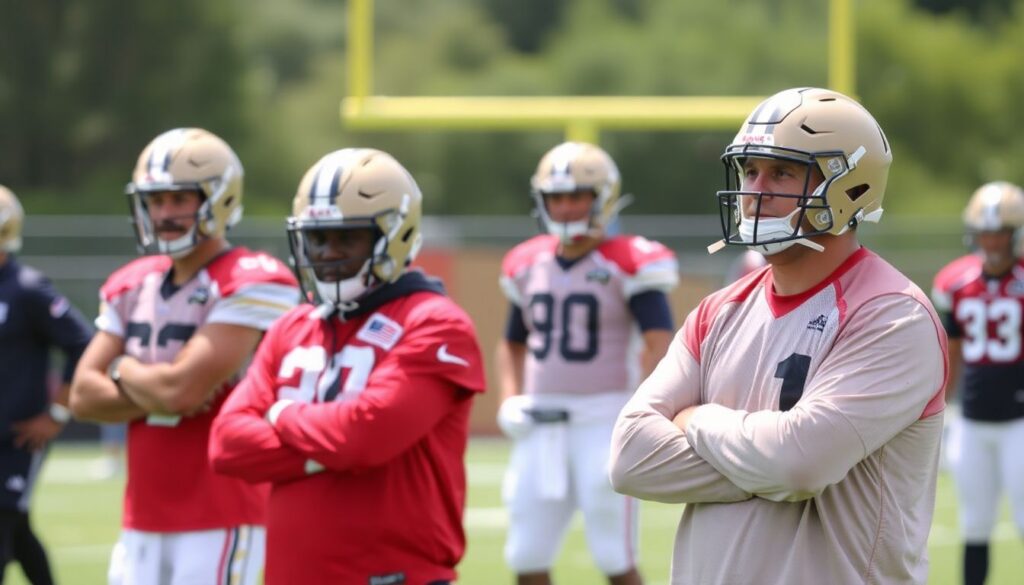
The safest approach is to view them as low-cost depth, special teams candidates, and developmental projects. Teams should avoid counting on multiple UDFAs as primary starters but can intentionally create pathways for one or two to emerge each season.
How should fans think about undrafted hidden gems in fantasy football?
Treat undrafted players as speculative adds, not cornerstone pieces. Target those with clear roles, strong preseason usage, and coaching trust, then monitor depth-chart changes that might unlock volume rather than chasing every training camp headline.
Why do some productive college players go undrafted at all?
Reasons include scheme-dependent production, athletic limitations, injury histories, level of competition, or questions about how their role translates to the NFL. Teams may like the player but not enough to spend a draft pick, preferring instead to compete for him afterward.
Can an undrafted player realistically become one of the best at his position?

It is rare but absolutely possible. Some of the best undrafted NFL players of all time reached elite status. Still, these are exceptions; using them as expectation rather than inspiration leads to unrealistic planning.
How long does it usually take for an undrafted player to break out?
Timelines vary, but many undrafted players need at least a full season on practice squads or in limited roles before gaining significant snaps. Patience, consistent improvement, and staying healthy are key ingredients in that progression.