
Underrated defenders are high-impact defensive players whose real value is masked by low highlight counts, limited marketing, or system roles that are hard to see on TV. To recognize them, combine context-rich stats, film study, and tactical understanding instead of relying only on tackles, interceptions, sacks, or blocks.
Why some defenders remain underappreciated
- Most fans and media overrate visible actions (goals, dunks, sacks) and underrate prevention, positioning, and communication.
- Many systems ask defenders to sacrifice personal stats to unlock teammates, hiding their contribution.
- Broadcast angles and basic box scores miss off-ball work and spatial control.
- Reputations form early; they can lag years behind a player’s real level.
- Contract, market, and award incentives favor attacking players, not stabilizing defenders.
- Defensive skills are highly contextual: a perfect fit in one scheme may look mediocre in another.
Defining the ‘underrated’ defender: criteria and indicators
“Underrated” is not a style of play; it is a gap between a defender’s perceived value and their real impact on winning. A defender is underrated when coaches, front offices, fans, or media consistently value them below what objective evidence and tactical context suggest.
In practice, the best underrated defenders in football, basketball, and American football share three traits. First, their work is mostly preventative: they close passing lanes, communicate coverage, and direct the line. Second, they occupy “thankless” roles that free stars to attack or freelance. Third, they rarely appear in highlight packages or simple stat rankings.
To distinguish an underrated defender from a merely average one, look for three layers:
- Impact on team stability: Does the unit collapse or noticeably dip when this player is absent?
- Role difficulty: Are they handling tough assignments (star matchups, deep coverage, weak-side help) with few mental errors?
- Mismatch between reputation and deployment: Are they paid, discussed, or awarded like a role player while being trusted with elite responsibilities?
This explains why some of the top underrated NBA defenders of all time or the most underrated defensive players in NFL history often emerge as “glue” players. Their teams trust them in critical moments, even if their name rarely appears in headlines or award ballots.
Statistical signals that reveal hidden defensive value
Because defense is collective and contextual, there is no single magic metric. Instead, combine several statistical signals that consistently show up when you examine a list of underrated defensive football players, soccer defenders, or NBA stoppers.
- On/off and lineup impact: How does the team’s defensive efficiency change when the player is on versus off the field or court? Large positive swings hint at hidden value.
- Usage-adjusted defensive contribution: For perimeter or wing defenders, look at how opponents’ efficiency or play types shift when guarded by this player, not just steals or blocks.
- Event quality instead of event count: In soccer, winning duels in dangerous zones matters more than raw tackle totals. In the NFL, disrupting timing or forcing bad reads can be more important than sacks alone.
- Error avoidance metrics: Few fouls in bad zones, low rate of blown coverages, rare positioning mistakes on film. Defensive value often comes from “nothing bad happens here.”
- Team structure indicators: A team that consistently overperforms talent-based expectations on defense usually hides one or two undervalued anchors, even if they lack big numbers.
- Role-consistent stats: Deep midfield screeners, low-block centers, and help specialists should be evaluated on interceptions, pressures, contests, and shots allowed, not just tackles or scoring.
When you study underrated defensive players in soccer 2024, for example, you often see midfielders or full-backs with strong possession-adjusted pressures and interceptions, yet modest tackle counts and almost no goals or assists. In basketball, many top underrated NBA defenders of all time have excellent opponent field-goal percentages when they are the closest defender, even if their block or steal numbers are average.
Mini-scenario: imagine two cornerbacks. Player A has more interceptions but gives up frequent explosive plays. Player B has fewer interceptions yet quietly erases a side of the field, forcing quarterbacks away. Basic stats love Player A; deeper coverage metrics and film reveal that Player B is the truly elite, underrated defender.
Tactical roles often overlooked by mainstream coverage
To move from concept to practice, connect “underrated” to concrete tactical roles that rarely receive spotlight. Across football codes and basketball, certain defensive jobs are vital but visually subtle.
- Defensive organizer / field-general: In soccer, an experienced center-back or holding midfielder that constantly adjusts the line, calls presses, and manages distances. In the NFL, a safety or linebacker relaying calls, adjusting coverages, and aligning teammates. Their communication prevents chaos, but casual viewers mostly see the result: “the line looked organized.”
- Weak-side helper: In basketball, the wing who tags rollers, bumps cutters, and rotates to the rim while guarding a nominal shooter. They rarely guard the star but are critical to maintaining shell integrity and contesting shots.
- Space-denial specialist: Some full-backs or cornerbacks are tasked with funneling play into less dangerous zones. They succeed when opponents simply stop attacking their channel, which produces almost no visible actions or stats.
- First-pressure screeners: For many of the best underrated defenders in football, pressing triggers and cover shadow work are decisive. Their job is to angle runs, cut passing lanes, and force long balls, making teammates’ pressing look easy.
- Gap-and-two-gaps run defenders: In the NFL, interior linemen who occupy multiple blockers, spill runs to teammates, and compress the pocket without obvious sacks. They enable edge rushers to collect numbers and accolades.
- Transition stabilizers: In all invasion sports, certain defenders are tasked with slowing or stopping counters: retreat sprints, professional fouls in safe zones, touchline shepherding. Their reward is usually silence, not highlights.
When building a list of underrated defensive football players, deliberately search for these roles. The player who constantly “fixes” teammates’ mistakes or closes the only escape route in transition is often the real defensive engine.
Scouting methods to spot high-impact defenders early
Effective scouting blends structured observation with targeted metrics. To find the next wave of underrated defensive players in soccer 2024 or other sports, build a repeatable process rather than relying on instinct alone.
Action-oriented scouting checklist
- Context scan: Note formation, role, and teammates’ quality. A defender covering for weak partners should be graded on different expectations.
- First-contact evaluation: Track how often the defender gets first meaningful contact on the ball or opponent in their zone (duels, deflections, body positioning).
- Decision-making under stress: Log choices during counters, long balls, and broken plays. Do they stay calm, delay, or overcommit?
- Scanning and anticipation: On film, count head turns, shoulder checks, and pre-emptive adjustments before the ball arrives.
- Communication and leadership: Even without sound, observe gestures and alignment corrections. Do teammates look at them before set pieces?
- Recovery engine: Time recovery runs and late rotations. Underrated defenders often excel at “saving” situations that should have been goals.
Limitations and guardrails in evaluation
- Small-sample traps: A few games against favorable matchups can distort impressions. Rewatch against different opponent profiles.
- System dependency: Some defenders look elite only in one scheme. Consider how portable their skills are to other tactical environments.
- Stat overfitting: Chasing one metric (pressures, steals, contested catches) can miss context. Always pair numbers with film.
- Level of competition: Dominance in a lower league may not translate; adjust expectations when projecting upward.
- Bias toward visible effort: Big tackles and dives stand out; quiet, economical movement can be more effective.
For scouts evaluating the most underrated defensive players in NFL history or in current leagues, the goal is to detect repeatable habits: scanning, anticipation, and stability under pressure. These travel better across levels and systems than highlight plays.
How coaches and systems can amplify underrated defenders
Once an underrated defender is identified, coaching decisions determine whether their impact grows or stays hidden. Misconceptions about defense often limit how these players are used.
- Mistake: Forcing them into star-marking roles only. Some defenders excel as organizers or helpers, not pure “stoppers.” Myth: the best defender must always guard the opponent’s top scorer.
- Mistake: Judging them on attacking output. Full-backs or wings may be elite defensively yet average in attack. Myth: a modern defender is useless without goals or flashy assists.
- Mistake: Ignoring communication as a skill. Many coaches undertrain defensive language and cues. Myth: leadership automatically appears with age; in reality, it needs explicit coaching.
- Mistake: Over-rotating the back line. Constantly changing defensive partners blocks chemistry for positionally intelligent players. Myth: fresh legs always beat continuity.
- Mistake: Misaligned set-piece roles. Underrated defenders may be your best blockers, zonal anchors, or trackers, yet are left marking space or weaker threats.
- Mistake: One-size-fits-all conditioning. Some defenders need burst training; others rely on repeat high-intensity efforts. Myth: the same running program suits every position and role.
When coaches intentionally design systems that highlight reading of the game, compactness, and coordinated pressing, the true value of underrated defenders surfaces. Their calm in chaos, not their highlight reel, becomes a visible competitive edge.
Career paths and market implications for undervalued defenders
Underrated defenders often follow specific career arcs. They may start as depth pieces or special-teamers, then quietly become irreplaceable, with public recognition and pay arriving much later. Understanding these paths helps clubs and agents find value ahead of the market.
Mini-case pattern:
- Phase 1 – Obscure role player: A young defender breaks in through low-glamour roles (kick coverage, rotational minutes, late-game sub to protect leads). Their box-score numbers look ordinary.
- Phase 2 – Trust and responsibility: Coaches increasingly lean on them in difficult game states: closing tight matches, defending leads, starting away against strong opponents. On/off impact improves, but external perception stays modest.
- Phase 3 – System anchor: They become the reference point for the unit’s shape and communication. Star teammates are rotated more freely; this defender almost never is.
- Phase 4 – Delayed recognition: Awards, better contracts, and media narratives eventually catch up, especially when a new club or coach emphasizes their role.
For front offices assembling a list of underrated defensive football players, basketball wings, or safeties, the practical edge lies in buying during Phases 1-2, before reputation and market value inflate. Recognizing tactical importance and stable habits early allows clubs to secure core defenders at reasonable cost and build sustainable defensive identities around them.
Quick practical clarifications on evaluation and development
How do I quickly tell if a defender might be underrated on my team?
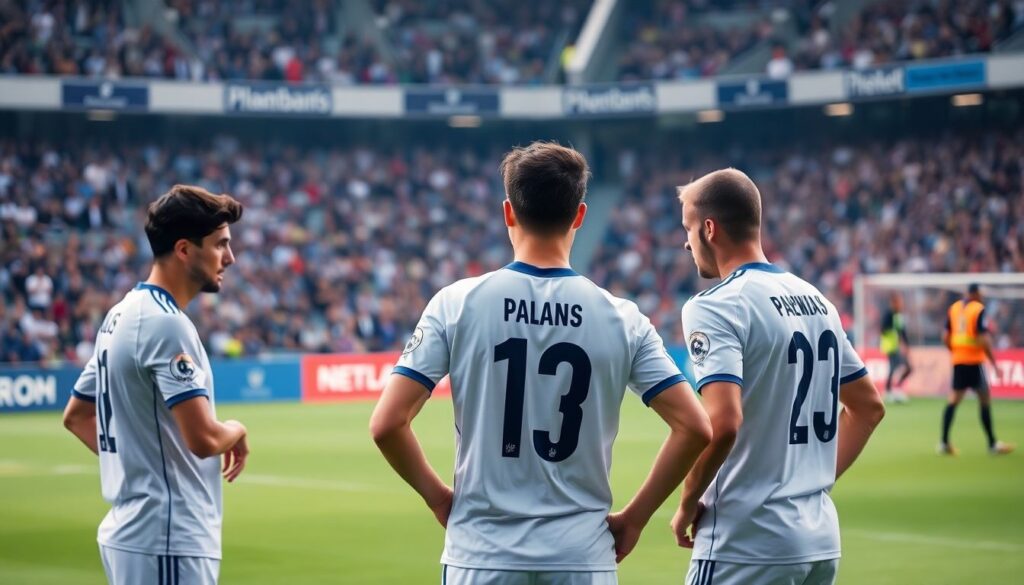
Ask which defender coaches trust most in tough game states, then check whether that player’s reputation and contract match that trust level. If teammates praise their communication and positioning while media barely mention them, you probably have an underrated defender.
What basic stats should I track at amateur level to spot undervalued defenders?
Track goals or big chances allowed when the defender is directly involved, number of successful delays in counters, and clear communication moments per game. Combine these with simple on/off analysis: how often the team concedes when they play versus when they rest.
How can youth coaches develop traits common to underrated defenders?
Emphasize scanning, body orientation, and communication in every defensive drill. Use video feedback to highlight good positioning even when the player does not touch the ball, and reward “prevented danger” in your evaluations, not just tackles or clearances.
Is it possible to be overrated defensively but underrated overall?
Yes. A player can have a reputation as a stopper because of big tackles or blocks but be mediocre in subtle defensive tasks, while being underrated as a passer or build-up option. Evaluate offense and defense separately, then combine them into an overall impact picture.
How should small clubs exploit the market for underrated defenders?
Target defenders who show strong anticipation and communication on film but lack attacking numbers or name recognition. Offer them key roles, tactical clarity, and stability; this can upgrade your defensive unit at a fraction of the price of big-name signings.
Do highlight reels ever help with evaluating underrated defenders?
They can show technique and peak actions, but they almost never capture consistency, positioning, or communication. Treat highlight reels as a first filter only, then use full-match video and context-aware metrics to decide whether a defender is truly undervalued.