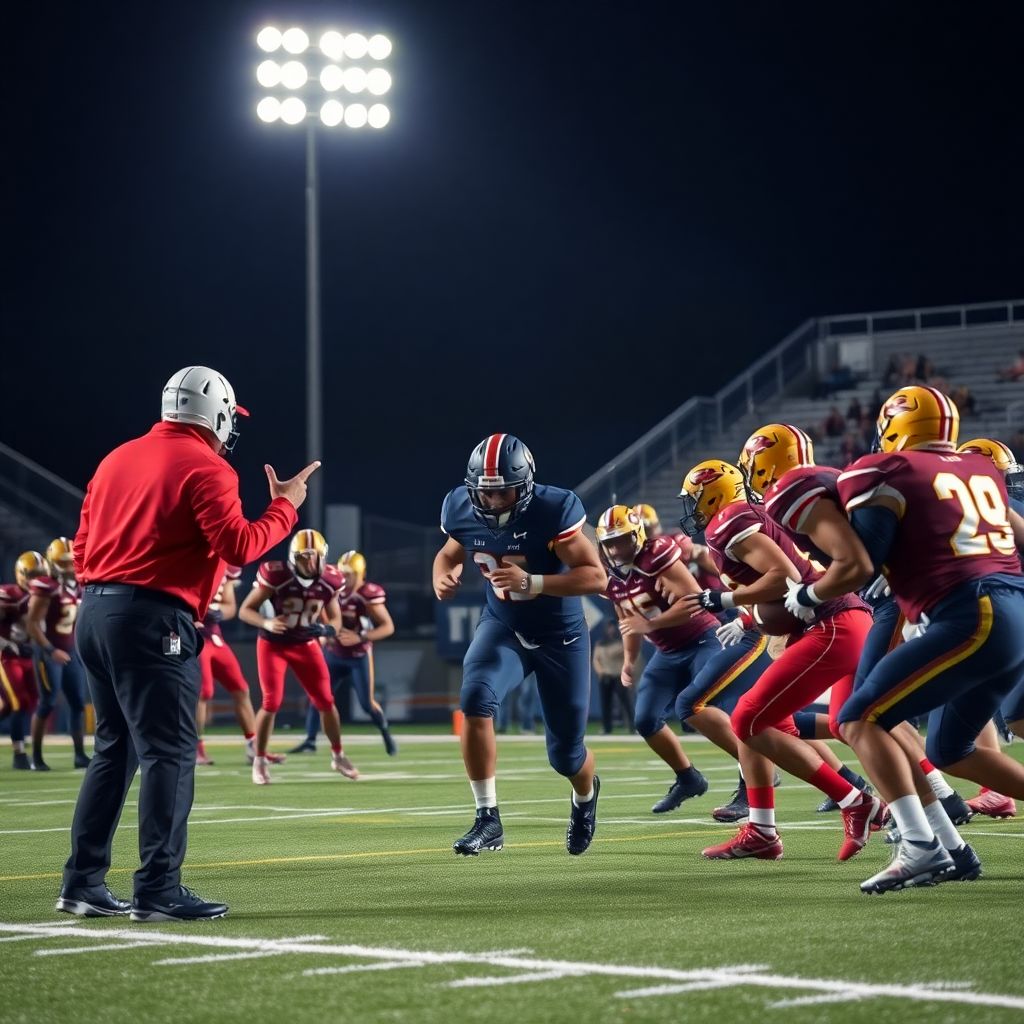
Special teams matter because they trade field position, points, and momentum on just a few snaps. To turn kicks and returns into a weapon, build a simple, repeatable structure: clear field-position goals, safe assignments, core drills for ball security and tackling, and fast sideline adjustments that cut mistakes instead of chasing “trick” plays.
High-Impact Special Teams Principles
- Define a field-position target before each kick, punt, and return instead of calling schemes at random.
- Coach ball security and decision rules first; explosive returns are useless if the ball is on the ground.
- Keep rules simple enough that your least experienced player can repeat them under fatigue.
- Use film and practice data to keep only what you can block, cover, and protect consistently.
- Teach hidden-yardage habits: penalty discipline, smart fair-catch choices, and no wasted sideways running.
- Align your special teams training program football plan with your offensive and defensive identity.
Designing Kickoff and Return Schemes for Field-Flipping Results
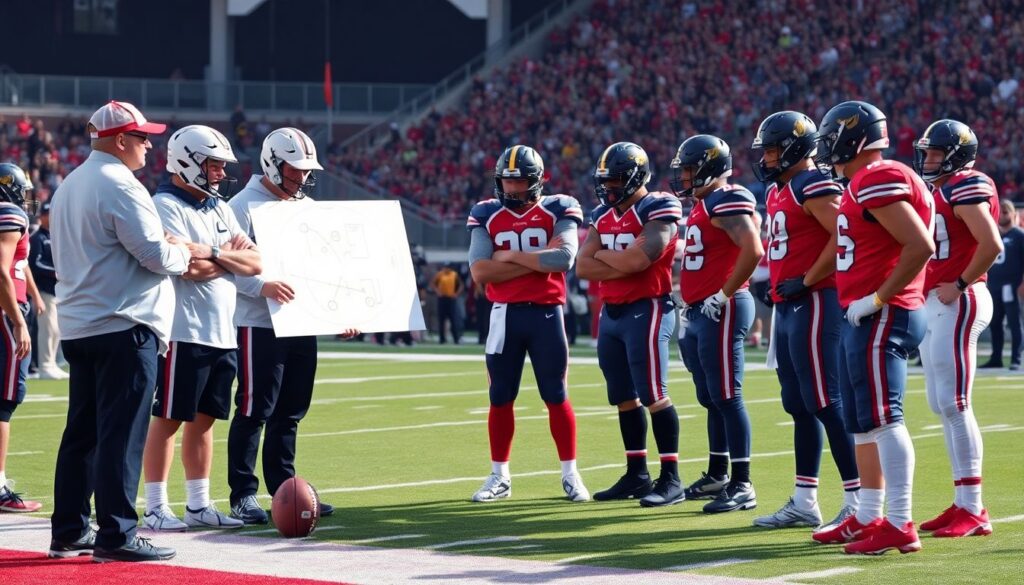
Kickoff and return schemes are most valuable when your roster has a reliable kicker, at least one decisive returner, and a core of tough, coachable coverage players. They become game-changing once players understand that every call is tied to a field-position goal and not just a “cool” drawing.
Be cautious about overloading players with exotic looks if your team is young, plays both ways, or struggles with tackling and alignment on defense. In these situations, strip your menu down to one base kick, one alternative kick, one primary return, and one “safe” return that emphasizes ball security over yardage.
Use your special teams playbook download for coaches as a living document, not a one-time install. For each kickoff and return concept, write down:
- Field-position goal: where you want the ball spotted after the play if executed correctly.
- Risk level: low, medium, or high, based on ball-handling difficulty and block types required.
- Personnel tags: which athletes must be available (kicker type, returner, core blockers).
- Game-use triggers: when you will call it (score, time, wind, opponent’s weaknesses).
To keep learning and refining, consider an online course for football special teams tactics or attending kicking and punting coaching clinics. Both can provide film cutups, teaching progressions, and install calendars you can adapt, rather than inventing everything alone.
Punt Return Concepts: Securing Ball, Exploiting Wedges, and Yards After Catch
Punt return success starts with a returner who catches the ball cleanly, makes one quick decision, and trusts the call. You also need at least one confident communicator who can align the front, call strength, and adjust to unusual formations without panicking the rest of the unit.
Core requirements and tools:
- Reliable returner: emphasize catching technique in traffic and clear “poison” calls when the ball must be avoided.
- Protection identification: players who can recognize shield, spread, and tight punt looks and know the corresponding rush or hold-up rules.
- Sideline communication: a coach or assistant responsible for tracking opponent tendencies: direction, hang, fake alerts, and protections.
- Film and cutups: several examples of your chosen hold-up and return schemes to show aiming points, wedges, and leverage angles.
If budget allows, football return specialist coaching services can sharpen your returner’s vision and footwork and save you practice time. Even without that, you can run short, focused segments in practice: ball-tracking drills, leverage-fit walk-throughs, and full-speed team reps that end the moment the returner is tagged to protect bodies.
Coverage Unit Fundamentals: Lane Discipline, Momentum Control, and Tackling
-
Install clear lane assignments and alignments.
Draw lanes on the field or use cones so players see exact tracks relative to the ball and numbers. Give every coverage player a name and landmark for their lane, then rehearse versus multiple alignments and return looks until they can call it out pre-snap. -
Coach stance, start, and controlled acceleration.
Teach a balanced stance that allows for a clean release without false steps. Emphasize accelerating under control, not full sprint immediately, so players can redirect when the ball is kicked off-target or the return changes direction. -
Maintain lane integrity while defeating blocks.
Show players how to attack blocks without crossing the face of a teammate’s lane. Use leverage techniques: rip, swim, or push-pull while staying on the correct side of the returner based on the call and ball location.- Use fit-and-freeze drills where players beat the block and then hold their lane position on command.
- Rotate different return looks so players learn to maintain spacing, not chase jerseys.
-
Read return keys and squeeze to the ball.
Teach players to read the returner’s first steps and up-front blocking surfaces instead of guessing. Once the ball declares, all inside players “squeeze” toward the tackle point while edge players keep outside shoulders free to contain.- Run pursuit drills where a coach or returner makes a single cut and coverage players adjust together.
- Blow the whistle quickly after proper leverage is established to avoid late collisions.
-
Leverage, contain, and safe pursuit angles.
Reinforce that one player forces the ball back inside, while inside help maintains pursuit angles that avoid blind-side hits or blocks in the back. Never allow players to undercut angles that risk high-speed head or knee contact.- Mark safe pursuit paths on the field and have players run them at submaximal speed first.
- Use thud or wrap-only contact rules during most team periods to protect health.
-
Finish with technically sound, low-risk tackling.
Teach eyes up, near-foot alignment, and contact with the shoulder while wrapping and running feet. Prioritize “safe stop” tackling, where the ball carrier is slowed and redirected, over highlight collisions that risk penalties or injuries.- Pair tackling drills with clear contact levels so players know when to go live.
- End every coverage period with one rep that reinforces textbook form, then praise it by name.
Fast-Track Version for Coverage Fundamentals
- Assign every coverage player a named lane and walk it before each practice.
- Teach controlled acceleration: leave under balance, then build speed after the ball is kicked.
- Beat blocks without crossing teammates; keep leverage based on the call and ball side.
- Squeeze together once the returner declares, with one clear contain player outside.
- Finish with safe, eyes-up tackles using wrap and run, not high-impact launches.
Placekicking Under Pressure: Consistency, Protection, and Situational Choice
Use this checklist to verify that your field goal and extra point unit is ready to perform when it matters most.
- The snap, hold, and kick are all consistently completed in rhythm during practice, even after a hard offensive drive.
- The kicker has a clear pre-kick routine and can repeat it regardless of crowd noise or game situation.
- Edge protectors understand their set angles and never chase inside threats that can be passed to teammates.
- The interior line steps low and firm, avoiding rises that create seams for penetration.
- Communication is clear when the play changes between kick, fake, or going for it on fourth down.
- Your team has a defined maximum realistic distance and does not attempt kicks beyond that in normal game situations.
- Substitution patterns for the unit are practiced so there are no late runs onto the field or missing players.
- Bad-snap responses are rehearsed: when to fall on the ball, when to roll out, and when to throw it away safely.
- After every live rep, someone tracks whether the ball path and timing matched the practice standard.
Mining Hidden Yardage: Blocks, Penalty Management, and Template Reads
Hidden yardage swings games without appearing on highlight films. Avoid these common mistakes that quietly cost field position and points.
- Calling high-risk returns that demand difficult blocks when your unit already struggles with penalties.
- Allowing players to throw late blocks behind the ball that add danger but rarely add meaningful yards.
- Ignoring the importance of letting the ball go into the end zone on kickoffs that are clearly traveling too deep to return safely.
- Failing to coach fair-catch decisions, leading to returns where the ball carrier is tackled quickly with no blocking advantage.
- Not teaching “poison” calls and sideline management when short kicks or bad punts land near multiple players.
- Over-chasing blocked punts instead of securing the ball first and ensuring possession.
- Using complex blocking tags that change weekly, confusing players and increasing holding and block-in-the-back calls.
- Letting emotional players take unnecessary shots at returners near the sideline, resulting in personal fouls.
Measuring and Training: KPIs, Fast-Track Drills, and In-Game Tweaks
You can measure and improve special teams without drowning in numbers. Choose simple, visible indicators and training options that fit your level of experience and available time.
Option 1: Core KPI Tracking and Weekly Review
Track only a few core indicators for each phase, such as net field position after kicks and punts, ball security on returns, and penalties per special teams snap. Review them with your staff weekly and adjust your special teams training program football focus accordingly.
Option 2: Drill-First, Data-Light Emphasis
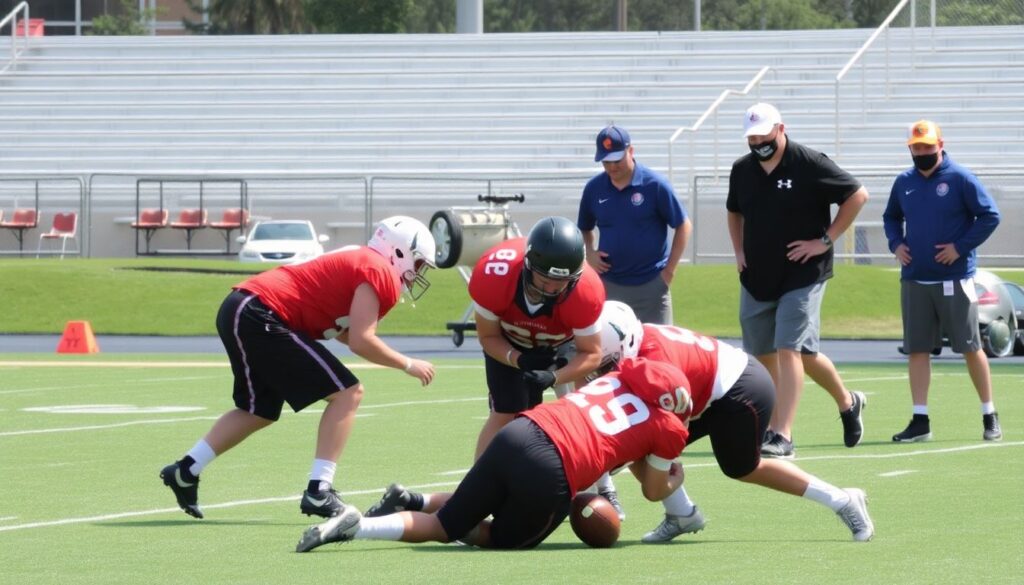
If you lack staff or filming resources, commit to short, high-tempo drills that hit your main issues: coverage angles, catching punts, basic protection fits, and tackling form. Use simple observation: if a mistake repeats across days, make it a drill priority instead of adding new schemes.
Option 3: External Education and Specialist Support
When possible, invest in kicking and punting coaching clinics, an online course for football special teams tactics, or targeted football return specialist coaching services. Borrow drill progressions, install schedules, and cue words that have already been tested, then adapt them to your roster and playbook.
Option 4: Digital Playbook and Shared Resources
Use a special teams playbook download for coaches to centralize calls, diagrams, and rules. Share it digitally with assistants and players so everyone studies the same language and adjustments, reducing errors when you tweak game plans during the season.
Clarifications on Rules, Roles, and Tactical Trade‑offs
How many special teams schemes should an intermediate-level team carry?
Carry only as many schemes as you can execute cleanly in practice every week. For most intermediate teams, one base and one change-up call for each phase is plenty; extra plays are useful only if you can block, cover, and communicate them reliably.
When is it smarter to fair catch rather than attempt a return?
It is usually smarter to fair catch when coverage is tight, blocking is not set, or the ball is drifting toward the sideline with limited space. Prioritize secure possession and avoiding penalties over chasing a small gain in field position.
How should I decide between attempting a long field goal and punting?
Use the kicker’s proven range in practice, game context, and field conditions. If the attempt is beyond your routine range or a miss gives the opponent very favorable field position, punting or going for it on fourth down can be the better long-term choice.
Do I need dedicated special teams-only players at the intermediate level?
Dedicated specialists help, but they are not mandatory. Focus first on identifying your most reliable tacklers, communicators, and ball handlers, then assign them to key special teams roles even if they also play offense or defense.
How often should we practice live tackling on special teams?
Live tackling should be limited to carefully planned, short segments that emphasize safety and technique. Most of your work can be done with controlled contact, thud, or wrap-only drills that build form without exposing players to constant high-impact collisions.
Can I successfully run fakes without advanced personnel or complex schemes?
You can, but fakes should be rare and built off your most common looks so players are not overwhelmed. Choose simple, low-risk concepts where the ball is protected and any failed attempt still avoids disastrous field-position swings.
What is the safest way to introduce new special teams concepts midseason?
Introduce only one change at a time and pair it with existing rules whenever possible. Walk it through, run it at reduced speed, and then get a few full-speed reps before using it in a game, trimming something else if practice time is tight.